What to Do When Your Cat Hides From Guests? Prepare a Safe Room, Manage Scents, and Set Interaction Boundaries
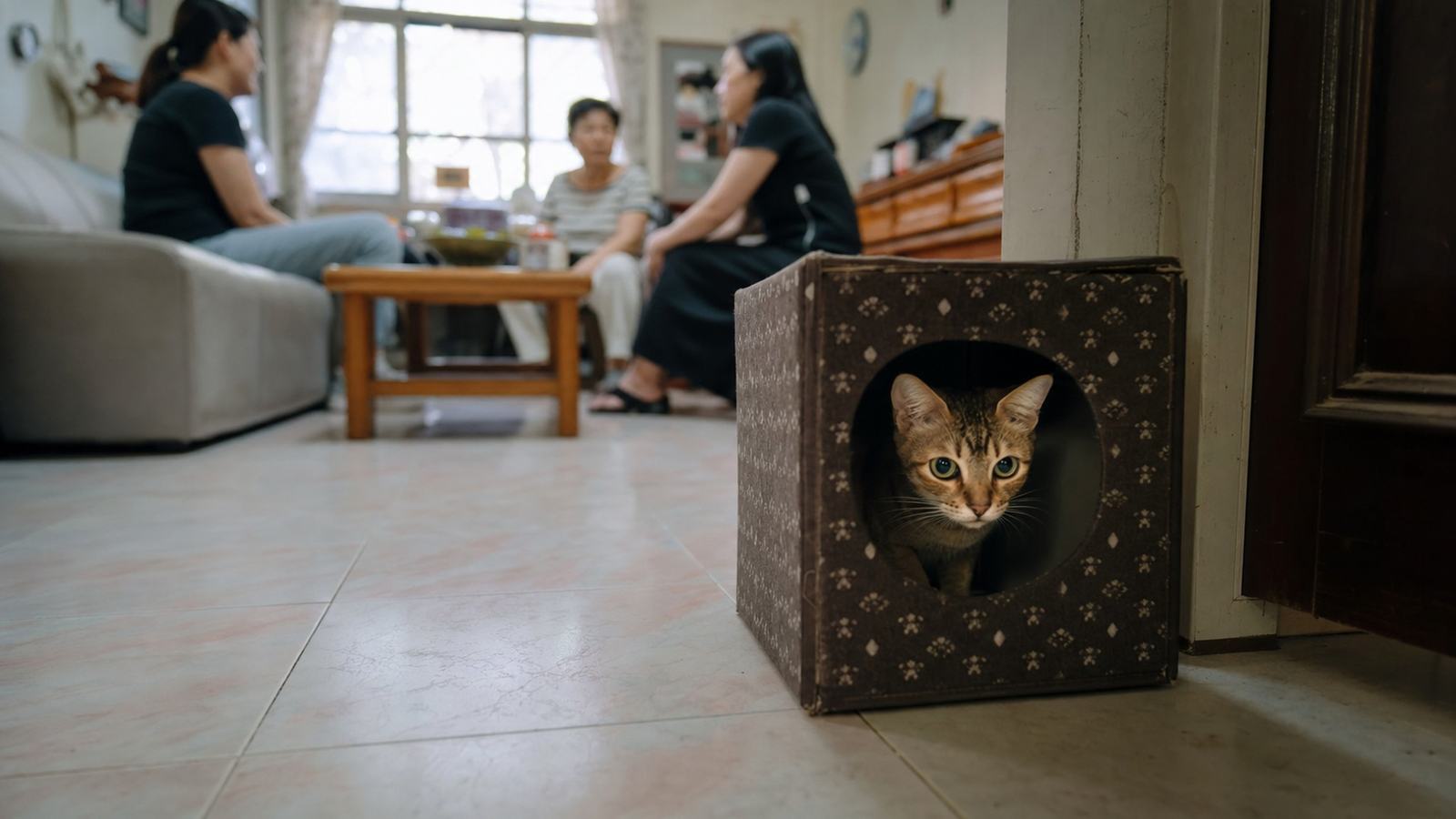
Is it normal for cats to hide when guests visit? First, determine if it's shyness or high stress. It's common for cats to hide when guests arrive, reacting to the doorbell, footsteps, or unfamiliar voices. Cats are highly sensitive to their environment, and their first instinct when faced with unfamiliar sounds is to ensure safety, not socialize.
Key Takeaways
- It's common for cats to hide when guests arrive because they are sensitive to sounds, scents, and movement. Their first reaction is to ensure safety, not socialize. Shyness doesn't mean they aren't affectionate.
- The key difference between normal shyness and high stress: If the cat still eats and drinks and gradually returns to normal after the guests leave, you can observe. If they pant, drool, hiss, attack, refuse to eat or use the litter box all day, be alert and consult a vet.
- Prepare a "safe room" before guests arrive. This room should have a closable door, be quiet, and not be frequently entered by guests. Equip it with a water bowl, litter box, familiar bedding, scratching post, and toys. Don't move the litter box to a far-off location temporarily.
- It's not recommended for guests to approach, pet, or stare at the cat in its hiding spot. Direct eye contact, chasing, or reaching into crevices can be intimidating. The more interaction is forced, the more likely the cat will associate guests with danger.
- After guests leave, the cat may need a few minutes to several hours to emerge. If they refuse to eat for over half a day, or show abnormal litter box habits the next day (especially if a male cat seems to have difficulty urinating), seek veterinary attention promptly.
Is it Normal for Cats to Hide When Guests Visit? Distinguishing Shyness from High Stress
When guests arrive, it's very common for cats to hide at the sound of the doorbell, footsteps, or unfamiliar voices. Cats are highly sensitive to their environment, and their first reaction to unfamiliar sounds, scents, and movements is usually to ensure safety, not to socialize. If your cat is naturally cautious, this "shy cat" behavior doesn't mean they aren't affectionate; they simply need more time to assess the situation.
However, owners need to distinguish between "normal shyness" and "high stress." If your cat merely hides in a familiar corner, still eats and drinks, and gradually returns to normal after the guests leave, you can usually observe. If they exhibit panting, drooling, hissing, aggression, refuse to eat or use the litter box all day, or hide in a place that's difficult to find safely, you should be alert and, if necessary, consult a veterinarian familiar with cat behavior.
How to Prepare Before Guests Arrive: Positioning the Safe Room, Litter Box, and Water Bowl
If you know guests are coming over, it's recommended to prepare a "safe room" for your cat. This space could be a bedroom, study, or a room your cat usually likes to rest in. The key is that the door can be closed, the sound is muffled, and guests don't frequently enter. For a shy cat, a safe room isn't a punishment but gives them a choice, preventing them from being forced to confront strangers.
The safe room should at least have a water bowl, litter box, familiar bedding or blanket, and their favorite scratching post and toys. Don't temporarily move the litter box to a distant location, as this might cause them to hold their urine out of nervousness. In Taiwan's compact urban homes, if you can only cordon off one room, ensure it's quiet and well-ventilated. During hot or humid weather, pay extra attention to stuffiness and moisture.
Scent Affects Cats Even Sooner Than Sound
Before guests enter, place your cat's familiar blankets, bedding, and scratching posts in their safe zone to retain their scent in the environment. If guests carry the scent of other cats or dogs, your cat might be more sensitive. In this case, don't rush to have them interact. You can also ask guests not to place their bags or coats in areas your cat frequently uses, reducing the feeling of unfamiliar scents directly invading their core territory.
Can Visitors Approach and Pet the Cat? Interaction Boundaries and Common Misconceptions
In most situations, it's not recommended for visitors to approach, reach out to pet, or squat in front of a hiding cat and stare. For cats, direct eye contact, chasing, or reaching hands into crevices can feel like intimidation. Especially for a shy cat, the more interaction is forced, the more likely they are to associate "guests" with "danger."
A better approach is to ask guests to treat the cat like a roommate, not the main focus of the visit. Guests can sit down, lower their voices, and not approach proactively, allowing the cat to decide whether or not to come out. If the cat is willing to approach, let them sniff your hand first; don't pet their head directly, pick them up, or get too close for photos.
Common Misguided Comforting Behaviors
Many owners, upon seeing a cat hide, can't resist picking them up and saying, "It's okay," but this usually doesn't comfort the cat. Cats need predictable distance and escape routes, not to be held in front of strangers. Also, don't use treats to force them near guests. While it might seem successful in the short term, it can lead to a long-term distrust of interactive situations.
What If the Cat Doesn't Come Out? Observe Time, Appetite, and Litter Box Habits
While guests are still present, a cat not coming out doesn't necessarily require intervention. As long as they are in a safe location and not overly panicked, you can focus on environmental control rather than trying to "coax" them out. For a shy cat, being able to hide quietly and get through the visitor period is itself a successful coping mechanism.
What truly needs observation is their recovery after the guests leave. Generally, cats may need a few minutes to several hours to come out to explore, drink water, or eat. If they still refuse to eat for over half a day, or if their litter box habits are abnormal the next day, it's more than just shyness. Especially if a male cat appears to have difficulty urinating, seek veterinary attention promptly.
Returning to a Daily Routine is More Important Than Compensation
After guests leave, don't immediately offer excessive treats or keep calling them. You can open the door and let the cat come out on its own, then resume your normal feeding, litter scooping, and playtime routine. A stable daily routine will help reduce their stress more effectively than excessive attention and will prevent them from associating the post-visitor chaos with another form of stress.
For Frequent Guests or Renovations: Using Supplies and Environment to Reduce Stress
If you frequently have friends over, host family gatherings, or undergo renovations, furniture moving, or have cleaning staff entering the home, "reducing stimulation" should be a long-term management strategy. You can permanently install cat trees, hiding nooks, tunnels, or elevated platforms to provide cats with escape routes at different heights and directions. For a shy cat, the more controllable the environment, the less likely they are to have a meltdown every time guests visit.
Product choices should also suit Taiwanese home conditions. During humid summers, pay attention to mold in sleeping nooks, fabric pads, and cardboard boxes. Keep the area around the litter box dry to prevent stress combined with environmental discomfort. For small apartments, consider foldable tunnels, enclosed sleeping pods, wall-mounted shelves, or narrow scratching posts to increase security without taking up too much space.
Helping Cats Gradually Learn "Guests Don't Equal Danger"
If you want your cat to be more accepting of visitors in the future, you can start with low-intensity practice. Have a familiar friend visit for a short period. The guest should not pet or chase the cat, but simply sit quietly in the same room. When the cat is willing to observe from a distance, eat, or play with a wand toy, gradually increase the duration of the visit. This will be much more effective than demanding socialization all at once.
FAQ
Q1: Does a shy cat need special training?
Not necessarily. If your cat only hides when guests are present but has normal appetite, activity, and litter box habits daily, focus on environmental arrangements and respecting boundaries. If their reactions are very intense or affect their daily life, then consider seeking professional help from a vet or behaviorist.
Q2: Can I confine the cat to a room when guests visit?
Yes, but the room must be prepared in advance with water, a litter box, and familiar items. Don't suddenly put the cat in an unfamiliar space, as this may make them more anxious. The safe room should be a place where they can relax.
Q3: How long is too long for a cat to hide?
If they emerge a few hours after guests leave, it's usually within normal observation. If they refuse to eat or drink for over half a day, don't use the litter box the next day, or show signs like panting, hissing, aggression, or difficulty urinating, it's recommended to seek veterinary attention promptly.
Q4: Can I use treats to get the cat out to meet guests?
You can place treats at a safe distance for the cat to choose freely, but don't use treats to lure them near guests and then suddenly pet them. This can easily damage trust. For shy cats, personal space is more important than rapid interaction.
Conclusion: Prioritize Security First, Then Interaction
When guests visit, a cat hiding is usually not bad behavior but their way of protecting themselves. By preparing a safe room, stabilizing scents, clearly defining visitor interaction boundaries, and observing appetite and litter box habits, you can usually significantly reduce their anxiety. If you want your cat to feel more secure during guest visits, renovations, or in a small living space, start by adjusting their environment with appropriate cat beds, scratching posts, litter boxes, water bowls, and stress-reducing toys. CatGarden also offers a variety of practical cat products to help owners gradually create a more secure daily environment based on their home space and their cat's personality.
Further Reading
- Is it Normal for Your Cat to Chatter at the Window? Understanding Hunting Instincts, Frustration, and Window Safety
- Can You Touch Your Kitten's Ears and Paws Daily? Build Trust with 3-Minute Desensitization Exercises
- Does Your Cat See You as a Secure Base? Understanding Trust Through Hiding, Approaching, and Seeking Help
Frequently Asked Questions
Does a shy cat need special training?
Not necessarily. If your cat only hides when guests are present but has normal appetite, activity, and litter box habits daily, focus on environmental arrangements and respecting boundaries. If their reactions are very intense or affect their daily life, then consider seeking professional help from a vet or behaviorist.
Can I confine the cat to a room when guests visit?
Yes, but the room must be prepared in advance with water, a litter box, and familiar items. Don't suddenly put the cat in an unfamiliar space, as this may make them more anxious. The safe room should be a place where they can relax.
How long is too long for a cat to hide?
If they emerge a few hours after guests leave, it's usually within normal observation. If they refuse to eat or drink for over half a day, don't use the litter box the next day, or show signs like panting, hissing, aggression, or difficulty urinating, it's recommended to seek veterinary attention promptly.
Can I use treats to get the cat out to meet guests?
You can place treats at a safe distance for the cat to choose freely, but don't use treats to lure them near guests and then suddenly pet them. This can easily damage trust. For shy cats, personal space is more important than rapid interaction.
Is it helpful to comfort a hiding cat by picking them up?
It's usually not comforting. Cats need predictable distance and escape routes, not to be held in front of strangers. Forcing them out can actually increase their stress.
CatGarden offers curated supplies, cat boarding, and grooming
Book services or shop online.