How Much is the Fine for an Unregistered Cat? Home Cat Microchip Registration Process, Fees, and Owner Checklist
Cat microchip registration is an important legal procedure to protect the human-cat bond. In recent years, various cities and counties in Taiwan have been strengthening source management and registration promotion for pets. Owners should confirm local regulations and qualified registration stations in advance. During the process of hosting resident cats, Cat Garden Hotel observed...
Cat microchip registration is an important legal procedure to protect the human-cat bond. In recent years, various cities and counties in Taiwan have been strengthening source management and registration promotion for pets. Owners should confirm local regulations and qualified registration stations in advance. During the process of hosting resident cats, Cat Garden Hotel observed that cats with completed microchip registration are significantly more efficient in lost cat searches and confirming owner identity during medical treatment. Below is a compilation of the home cat microchip registration process, cost preparation, and an owner checklist to help you fully protect your beloved cat's identity information.
Key takeaways
- Cat microchipping involves a veterinarian implanting a rice-sized identification chip under the cat's skin, then registering the chip number, owner's contact information, and the cat's basic details in a database.
- A cat microchip is not a GPS tracker and cannot track its location in real-time. Its primary function is to display a number when scanned, allowing for the retrieval of registered data to contact the owner.
- The cost of the chip and registration varies by city, veterinary clinic, and subsidy programs. Penalties and regulations should be based on the latest announcements from the Ministry of Agriculture and local animal protection offices.
- When changing phone numbers or moving, owners must proactively apply for data updates with the registration authority to ensure smooth contact if the cat gets lost and needs to be found.
What is "Cat Registration"?
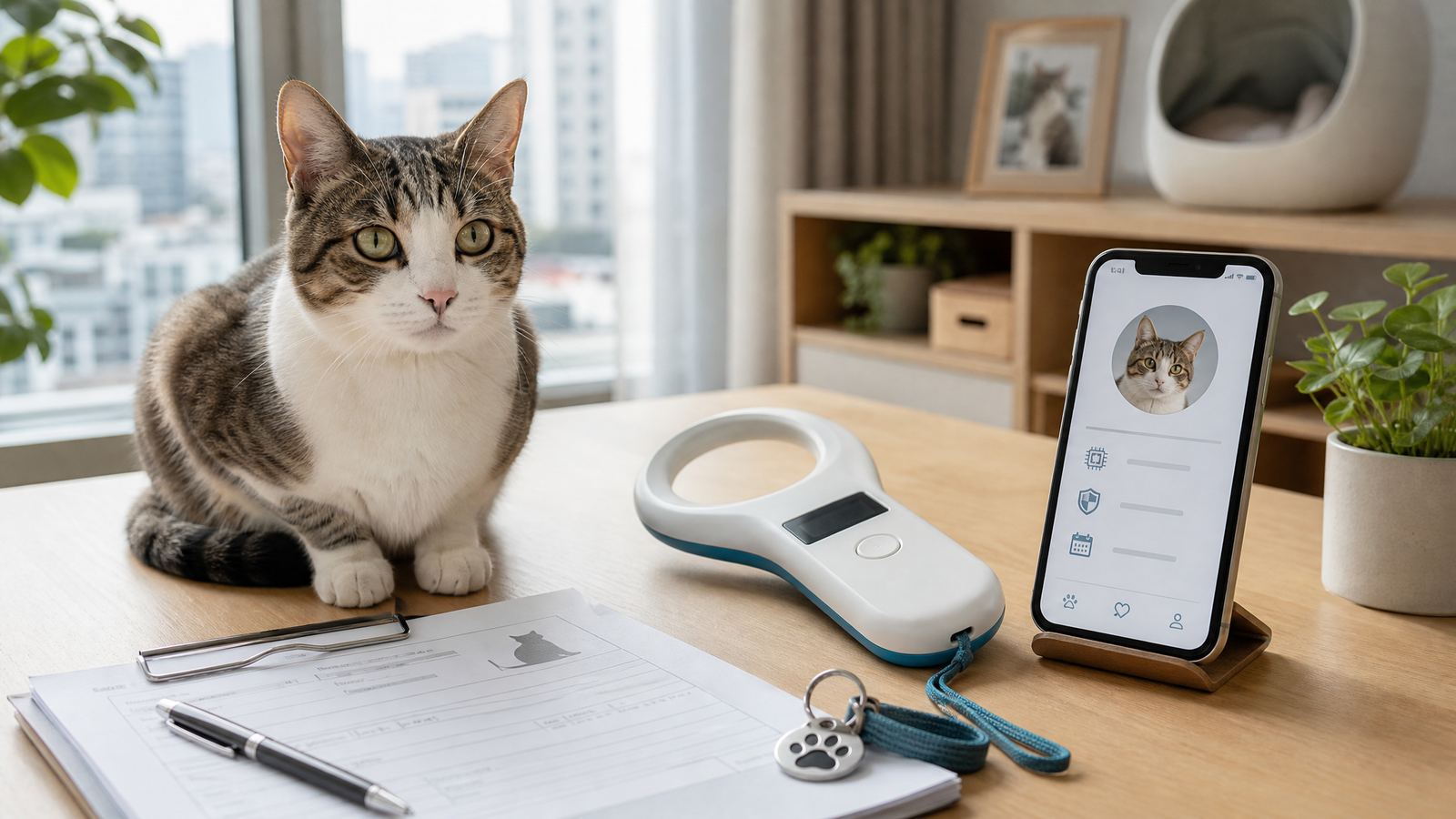
What people commonly refer to as "cat registration" usually means getting a microchip implanted and completing the pet registration. The microchip is a rice-grain-sized identification chip implanted under the cat's skin by a veterinarian. Registration involves creating a database with the microchip number, owner's contact information, and the cat's basic details.
Once completed, if the cat gets lost and is found, or if owner identity needs to be confirmed, animal protection units, veterinary clinics, or shelters can use a microchip scanner to read the number and contact the owner through the registered information. For the cat, this isn't a GPS tracker, but a permanent ID card.
Why Should Owners Pay Special Attention in 2026?
In recent years, various cities and counties in Taiwan have been gradually strengthening source management, sterilization, and registration promotion for pets. Social media frequently discusses whether home cats should be mandatorily registered and potential penalties for non-registration. Actual regulations should still be based on the latest announcements from the Ministry of Agriculture, local animal protection offices, and official updates. However, the trend is clear: owner responsibility is increasingly being emphasized.
- Faster Lost Cat Recovery: Microchips increase the chances of finding a lost cat.
- Avoid Responsibility Disputes: Registration data can prove owner identity.
- Comply with Local Regulations: Some cities or counties may have subsidies, inspections, or promotional periods.
- Establish Health Records: Facilitates subsequent management of vaccinations, sterilization, and medical care.
Cat Microchip Registration Process
1. First, Assess the Cat's Health Condition
If the cat has recently had a poor appetite, fever, diarrhea, or is stressed from a recent move, it's recommended to have a veterinarian assess their condition first. Microchip implantation is usually quick, but for easily stressed cats, the journey itself is the biggest challenge.
2. Schedule an Appointment at a Qualified Pet Registration Station
Most owners choose veterinary clinics that offer pet registration services. When making an appointment, you can inquire in advance if they provide microchipping, registration, data modification, and subsidy application assistance to avoid a wasted trip.
3. Bring Owner's Identification and Cat's Information
Commonly required information includes the owner's proof of identity, contact phone number, address, cat's name, gender, breed, coat color, date of birth, or estimated age. If the cat is sterilized, bring proof of sterilization or medical records.
4. Implant Microchip and Complete System Registration
The veterinarian will implant the microchip subcutaneously and then use a scanner to confirm the microchip number. Afterward, it will be registered in the pet registration system. Upon completion, the owner should verify that the name, phone number, and address are correct.
How to Understand Fees and Penalties?
Microchip and registration fees vary depending on the city/county, clinic, and subsidy programs. Some areas offer free or low-cost microchipping during specific events, while others require self-payment. Penalties may also change due to updated regulations, local ordinances, and individual case circumstances.
Therefore, when you see discussions on social media about "maximum fines," it's not advisable to just screenshot and forward them. The most reliable approach is to check the latest announcements from your local animal protection office or directly ask a qualified registration station. If the information is not yet fully confirmed, completing the registration first is usually more reassuring than waiting to be notified.
Which Cats Should Be Prioritized for Registration?
- Cats that go outdoors: Including free-roaming cats, those with balcony access, or frequent visitors to pet hotels or grooming salons.
- Newly adopted cats: Need to confirm if previous registration information has been transferred.
- Cats in rental households: Higher likelihood of moving, so contact information must be kept up-to-date.
- Multi-cat households: Microchips can prevent confusion regarding medical care, lost pets, and ownership.
- Unsterilized cats: Can be an opportunity to plan sterilization, vaccinations, and health check-ups.
Stress-Reducing Techniques for Taking Your Cat Out for Registration
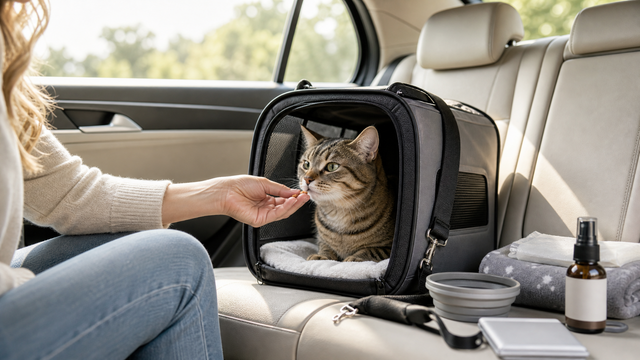
Many cats aren't afraid of the microchip itself, but rather the carrier, car ride, and unfamiliar scents. It's recommended to keep the carrier at home normally, lined with a familiar towel, so the cat sees it as a safe space. Don't chase or force the cat into the carrier before leaving; use treats, toys, or pheromones as aids.
At the veterinary clinic, partially cover the carrier with a towel to reduce visual stimulation. After returning home, let the cat rest in a quiet room first. Avoid immediate bathing, nail trimming, or scheduling other stressful events.
What to Do After Registration is Complete?
- Regularly Confirm Phone Number: Apply for data modification if your phone number changes or you move.
- Keep Registration Records: Take photos of the microchip number and registration certificate.
- Reinforce Escape Prevention Measures: Check window screens, balconies, and entrances.
- Schedule Annual Health Check-ups: Manage registration, vaccinations, deworming, and health check-ups together.
Frequently Asked Questions FAQ
Is a cat microchip a GPS tracker?
No. A microchip cannot track location in real-time. It only displays the microchip number when scanned, and then the owner is contacted through the registered information.
Is implanting a microchip painful for cats?
It feels similar to an injection, and most cats complete it quickly. The real stressor to be mindful of is the outdoor experience; early training with the carrier is recommended.
Do adopted adult cats still need registration?
It's necessary to confirm if they already have a microchip and if the registration details have been transferred to the current owner. If the information is incorrect, you might not be reachable if the cat gets lost.
Is sterilization mandatory for cat registration?
Microchip registration and sterilization are separate matters. However, some subsidies or local regulations might be related to sterilization status. It's recommended to confirm with your local animal protection office or veterinary clinic.
Do indoor cats also need microchips?
It is recommended. Indoor cats can still get lost due to open doors, moving, earthquakes, construction, or during veterinary visits. A microchip is the most basic form of identity protection.
Cat Garden CatGarden | A villa-style pure cat hotel in Banqiao, offering boarding and grooming services.
Further Reading
- Cat Won't Listen to Training? 2026 Positive Reinforcement Training Basics: 5 Techniques to Get Your Cat to Cooperate
- What to Do When Your Cat Goes Wild at Night? 3 Major Reasons and Pre-Sleep Adjustments Every Owner Should Know in 2026
- How to Deal with Cat Separation Anxiety? 5 Common Signs and Improvement Methods for Working Owners
If you are preparing to register your cat, it's recommended to have your identification, carrier, recent health status, and local announcements ready. For a smoother new cat owner checklist, you can also join the Cat Garden LINE account to gradually cover registration, diet, environment, and daily care.
→ Learn about [Cat Garden - The Brand Closest to Cats](/ "Cat Garden")
FAQ
Does a cat microchip have a GPS tracking function?
No, the chip cannot track location in real-time. It serves as a permanent identification card that only displays a number when read by a microchip scanner, which then allows for contact with the owner through the registered data.
Do indoor-only cats that never go outside need a microchip?
It is recommended. Indoor cats can still get lost accidentally due to open doors, moving, earthquakes, construction, or during veterinary visits. A microchip provides basic identification security.
Do adopted adult cats need microchip registration?
Yes. Owners should confirm if the cat already has a microchip and ensure the registration data has been officially transferred to the current owner's name to avoid communication issues if the cat gets lost.
Is the microchip implantation process painful for cats?
The sensation of implantation is similar to an injection. Most cats complete the process quickly. The stress of going outside often requires more preparation from the owner than the implantation itself.
CatGarden offers curated supplies, cat boarding, and grooming
Book services or shop online.