Cats Don't Listen No Matter How You Train Them? Introduction to Positive Reinforcement Training: 5 Techniques to Get Your Cat to Cooperate
When cats don't listen no matter how you train them, it's usually not because they're being deliberately rebellious, but rather because humans are using communication methods unsuitable for cats. Compared to punishment, chasing, or force, positive reinforcement training is more suitable for daily care and helps cats associate "cooperation" with "good things happening."

Cats don't listen no matter how you train them, and it's usually not because they're being deliberately rebellious, but rather because humans are using communication methods unsuitable for cats. Compared to punishment, chasing, or force, positive reinforcement training for cats is more suitable for daily care and helps cats associate "cooperation" with "good things happening."
In 2026, social media and pet media are buzzing about cat behavior classes, petting-induced aggression, midnight meowing, and training techniques. This indicates that more and more owners are realizing: cats aren't untrainable, they just need more nuanced methods that respect their stress signals. By mastering reward timing and steps, nail trimming, carrier training, and responding to their names can all gradually become smoother.
Key takeaways
- For positive reinforcement training, rewards for cats must be given within 1 second of the correct behavior to accurately link the action with the reward.
- Cat training sessions should last 3 to 5 minutes, with 1 to 2 short practices per day. Rest immediately if the cat turns its head, flicks its tail, or flattens its ears.
- Nail trimming training should be broken down into the smallest steps, starting with touching the paws and rewarding. When actually trimming, cut only 1 to 2 nails at a time to maintain the cat's sense of security.
- Punishment, spraying water, forced restraint, and post-incident scolding do not help cats understand rules. Instead, they can lead to hiding, defensive aggression, inappropriate urination, and damage to the human-cat trust.
- If a cat exhibits sudden aggression, decreased appetite, frequent hiding, or abnormal elimination, record the behavior and have a veterinarian assess its health status first. Rule out pain and illness before proceeding with behavioral training.
What is Positive Reinforcement Training for Cats?
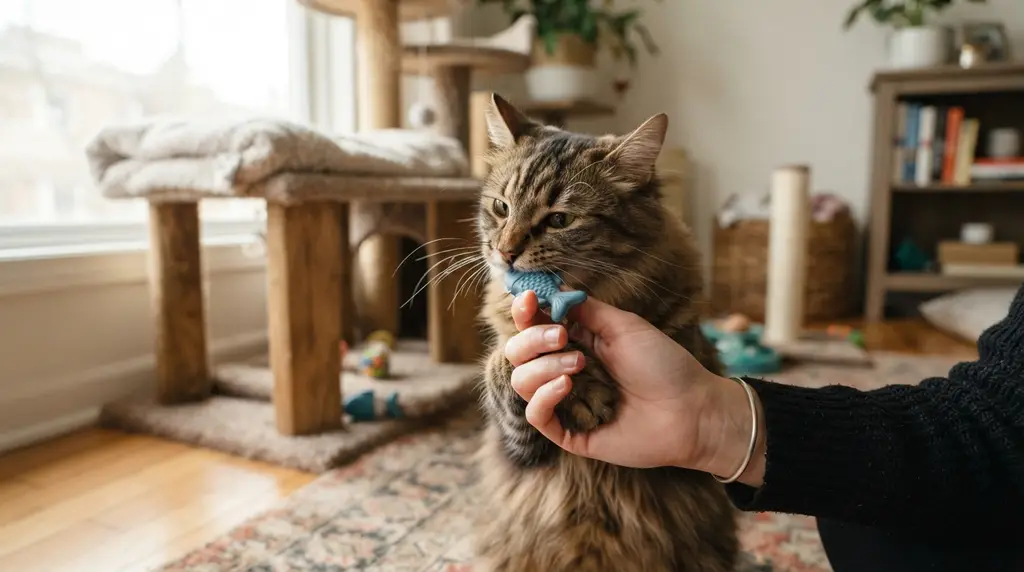
Positive reinforcement involves immediately rewarding your cat with something they like, such as treats, lickable paste, toys, praise, or petting, after they perform a desired behavior. The key isn't to "bribe" the cat, but to make it clear to them that the recent action will lead to a positive outcome.
For example, if your cat walks into their carrier on their own, immediately give them a small treat. The next time they see the carrier, they'll be less likely to associate it solely with vet visits. This method can reduce fear and maintain trust between humans and cats.
Why is Punishment Not Recommended?
Cats understand punishment differently than humans do. You might think your cat knows "not to scratch the sofa," but they might only learn that "the owner approaching is scary." Over time, this can lead to behaviors like hiding, aggression, defensive biting, inappropriate urination, or more severe stress-related issues.
- Punishment can make cats fearful of people, rather than understanding the rules.
- Spraying water can damage trust and make cats avoid you.
- Forcibly holding them can increase struggling and the risk of aggression.
- Punishing after the fact is usually ineffective because cats have difficulty connecting the cause.
5 Training Techniques New Owners Should Learn in 2026
1. Rewards Must Appear Within 1 Second
Cats learn best with "immediacy." When your cat does something right, it's best to give a reward within 1 second so they can easily associate the behavior with the reward. If you wait too long, the cat might think you're rewarding the next action.
2. Start with the Smallest Steps
Don't expect your cat to happily let you trim all four paws right away. You can start by rewarding them for looking at the nail clippers, tolerating the sound of the clippers, letting you touch their paws, or extending one toe, and then gradually move towards actual trimming. When each step is successful, the cat won't feel forced.
3. Find Truly Effective Rewards
Some cats love lickable paste, some love freeze-dried treats, and some actually prefer a feather wand. Test what your cat values most before training. If your cat is already full, stressed, or sleepy, the effectiveness of rewards will decrease, and it's not a good time for forced training.
4. Keep Training Sessions to 3 to 5 Minutes
Cats have limited patience. Short, highly successful sessions are more effective than one long training session. 1 to 2 short training sessions per day are enough to build memory. When the cat turns their head away, flicks their tail, flattens their ears, or walks away, it's time to take a break.
5. Integrate Training into Daily Life
Positive reinforcement isn't just for tricks; it can also be used for care. Reward them when they look back after you call their name, when they enter their carrier, or after a brief grooming session. These small practices will make daily care smoother and reduce stress during vet visits, boarding, or grooming.
How to Handle Common Training Scenarios?
Getting Your Cat to Enter Their Carrier Willingly
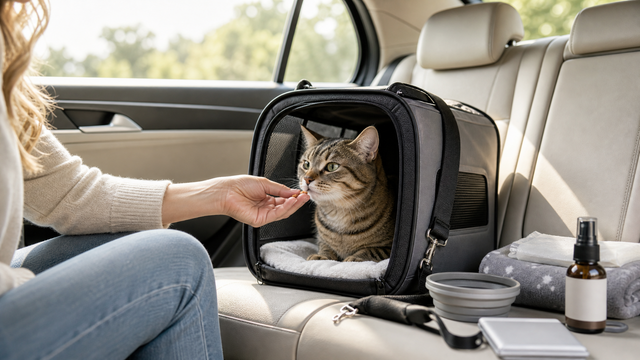
First, make the carrier a permanent fixture in your home, don't just bring it out before vet visits. Place a soft mat, treats, or familiar scents inside the carrier. Reward your cat for simply approaching it, and give a better reward if they go inside.
Improving Biting Hands or Pouncing on Legs
Don't use your hands to play with your cat; use a wand toy to simulate prey. When your cat bites your hand, stop the interaction and withdraw your attention. When your cat bites the toy or chases it, offer praise and continue the play, letting them know the correct outlet.
Training for Nail Trimming
Start by touching their paws, giving a reward for each touch. Once the cat is relaxed, practice extending their claws and trimming a tiny bit. It's okay to trim only 1 to 2 nails at a time; the key is for the cat to retain their sense of security.
When Should Training Be Paused?
If your cat suddenly becomes aggressive, loses their appetite, hides frequently, has abnormal urination, or their vocalizations change significantly, don't just dismiss it as misbehavior. Pain, urinary issues, skin discomfort, stress, or environmental changes can all make them sensitive.
In such cases, it's recommended to record the time, triggering situation, and physical condition, and consult a veterinarian for an evaluation if necessary. Behavior training should be built on a foundation of health and safety, not replace medical examinations.
Frequently Asked Questions FAQ
Can Cats Really Be Trained?
Yes. Cats can learn through repeated experiences, but they are not as highly motivated to please humans as dogs are. Therefore, they require clearer rewards, shorter training sessions, and methods that are more respectful of their willingness.
Does Positive Reinforcement Always Require Treats?
Not necessarily. Treats are usually the easiest way to establish a connection, but toys, petting, opportunities to explore by opening a door, praise, or playtime can also serve as rewards. The key is that the reward must be something the cat genuinely desires at that moment.
Can You Not Stop a Cat When They Do Something Wrong at All?
You can prevent dangerous behaviors, but it's recommended to manage the environment and redirect them to alternative behaviors. For example, if you don't want your cat to scratch the sofa, provide a sturdy scratching post and immediately reward them when they use it, rather than punishing them after they've scratched the sofa.
How Long Does Training Take to See Results?
Simple behaviors may improve within a few days, while overcoming fear of carriers, nail trimming, or chronic hand-biting may take several weeks. The speed depends on the cat's personality, past experiences, health status, and the owner's consistency in practice.
Can You Train Multiple Cats Together?
Initially, it's recommended to train them separately to avoid food competition, jealousy, or mutual interference. Once each cat is familiar with the rules, gradually increase shared scenarios and ensure that each cat has a fair opportunity to receive rewards.
CatGarden | Luxury Cat Hotel in Banqiao offering boarding and grooming services.
Further Reading
- What to Do When Your Cat Goes Wild at Night? 3 Major Reasons and Pre-Sleep Adjustment Methods Every Owner Should Know in 2026
- What to Do About Cat Separation Anxiety? 5 Common Signs and Improvement Methods for Working Owners
- Is Your Cat Playing or Fighting? 5 Relationship Signals and Intervention Times Every Multi-Cat Household Should See in 2026
- Why Do Cats Like to Be High Up? 3 Major Reasons and Adjustment Methods Every Owner Should Know in 2026
If you are preparing for cat boarding, grooming, vet visits, or improving daily care, it's recommended to start with short, low-stress positive reinforcement. CatGarden values your cat's emotions and safety. We also welcome you to discuss your cat's personality, habits, and care needs with us in advance to make every outing more reassuring.
→ Learn about CatGarden - The Brand Closest to Cats.
FAQ
Does positive reinforcement training for cats always require treats as rewards?
Not necessarily. While treats like lickable pastes or freeze-dried snacks can easily establish a connection, toys, petting, praise, playtime, or opening a door for exploration can also serve as rewards. The key is that the reward is something the cat genuinely desires at that moment.
How can I get my cat to willingly enter a carrier on its own?
The carrier should be placed in the home as a piece of furniture, with a soft mat, treats, or familiar scents inside. Reward the cat when it approaches, and offer a better reward when it willingly enters.
What should I do if my cat does something wrong or scratches the sofa?
Address it through environmental management and redirecting alternative behaviors. For example, provide a sturdy scratching post and immediately reward the cat when it uses the post, rather than punishing it after it scratches the sofa.
Can multiple cats be trained together in a multi-cat household?
Initially, it is recommended to train cats separately to avoid food competition, jealousy, or mutual interference. Once each cat is familiar with the rules, gradually increase shared training scenarios, ensuring each cat receives rewards fairly.
CatGarden offers curated supplies, cat boarding, and grooming
Book services or shop online.