How to Choose a Cat Carrier: A Complete Comparison for Vet Visits, Long Trips, and Escape Prevention

A carrier isn't just about fitting your cat inside: vet visits require top-opening access, long trips need ventilation and stability, and escape-prone cats need double locks and seamless construction. This guide compares sizes, materials, and safety features for three common needs.
CatGarden Editorial TeamPublished 2026/08/28Updated 2026/10/06
cat carriernew cat ownervet visit
How to Choose a Cat Carrier: A Complete Comparison for Vet Visits, Long Trips, and Escape Prevention

When choosing a cat carrier, remember three key things: it must be large enough for your cat to stand and turn around, ideally with a top-opening or removable top, and secure latches that can be locked with one hand. If you can only buy one, a "hard-shell carrier with a removable top" is the most recommended – it serves well for vet visits, transport, and even emergency evacuations, making it the most versatile option. Fabric backpacks and space capsules are better suited for specific situations rather than being the primary choice.

Key Takeaways

  • The internal length of the carrier should be at least 1.1 times your cat's "nose-to-tail-root" length, and the height should be at least their sitting shoulder height + 3 cm, allowing them to stand and turn without being forced to hunch.
  • For vet visits, prioritize hard-shell carriers with a "fully removable top": veterinarians can perform examinations directly inside the carrier, reducing struggle and stress for the cat.
  • For average domestic cats (4-6 kg), a practical internal size is approximately 48-55 cm long, 32-36 cm wide, and 32-36 cm high. For cats over 7 kg or large breeds like Maine Coons, opt for a larger size.
  • The most common failure point for fabric carriers is zippers being pushed open from the inside. It's recommended to choose models with "zipper pull locks or safety latches" and to secure the carrier with a seatbelt in the car.
  • It typically takes 7-14 days of daily feeding and napping practice for cats to accept a carrier. Pulling out the carrier the night before an appointment will significantly increase their resistance.

First, Understand: A Carrier Isn't Just for "Fitting In"

We frequently have owners bring their cats for boarding or grooming, and after seeing this hundreds of times, the three most common issues aren't actually about the cat being "naughty":

1. Front-opening only: The cat clings to the bottom, and the owner has to pull them out like extracting a tooth, causing distress to both cat and human.

2. Collapsing fabric bag: The sides cave in when lifted, trapping the cat and making them lose balance, leading to frantic movement inside.

3. Slippery bottom: Without a non-slip mat, the cat slides around during turns, arriving at their destination wet from stress sweat and panting.

These three issues are related to the "carrier's design," not something that can be fixed with training. Therefore, the priority when choosing a carrier should be: Size → Opening Type → Structural Integrity → Material Feel → Appearance. Appearance comes last.

How to Choose a Cat Carrier: Measure These Three Things First

Before buying, measure three dimensions while your cat is relaxed and lying down (you can use a soft tape measure or take a photo with your phone for comparison):

  • Body Length A: From the tip of the nose to the base of the tail. The internal length should be ≥ A × 1.1.
  • Sitting Height B: From the top of the head to the ground when sitting. The internal height should be ≥ B + 3 cm.
  • Weight: This directly determines the load-bearing requirements for the handle and base. For cats over 7 kg, look for models with a stated load capacity of 10 kg or more.

Here's a practical conversion guide:

Cat WeightRecommended Internal Dimensions (L×W×H)
2–3.5 kg (Kitten/Small)Approx. 42×28×28 cm
4–6 kg (Most Domestic Cats)Approx. 48–55×32–36×32–36 cm
7 kg+ / Large Breeds60×40×40 cm or larger, or consider a small travel crate

Don't "Buy a Size Up for Comfort"

This is a common mistake for new owners. If the carrier is too large, the cat lacks support and will slide around, hitting the walls during vehicle movement, increasing stress. The ideal state is "able to stand, turn around, and lie down flat," with a slight sense of being enclosed. Truly large spaces are needed for long journeys where a litter box might be necessary, which falls into a different category (see below).

Cat Carrier Material Comparison: Pros and Cons of Five Common Types

TypeProsConsSuitable For
Hard-shell Plastic (Removable Top)Stable structure, easy to clean and disinfect, vet can open top for examinationBulky, difficult to storeVet visits, transport, evacuations (most recommended primary carrier)
Space Capsule / DomeGood visibility, attractive appearance, some can be worn as a backpackOften poor ventilation, stuffy in summer, dome can scratch easilyShort trips, cool weather, cats that don't mind looking outside
Fabric CarrierLightweight, foldable, easy to carry close to the bodyPoor support, risk of zippers being pushed openCats already accustomed to travel, short vet visits
Backpack StyleFrees up hands, convenient for stairs and subwaysCat's center of gravity is behind you (out of sight), some have small basesWalking commutes, frequent short-distance travel
Rolling / Stroller TypeNo need to carry weight, good for long walks, can hold water bowlHeavy, inconvenient for stairs and taxisLong transfers, multiple cats, owners with limited physical strength

Material Details to Look For

  • Hard-shell: Check the latches. Metal bolts and clasps are much more durable than all-plastic ones and won't fall apart after one drop.
  • Fabric Bag: Check the frame. Aluminum strips or hard boards on all sides provide support to prevent collapse; you should be able to feel them by lifting the lining.
  • Mesh: Finer mesh is better; coarse mesh can easily snag cat claws.
  • Base: It must be flat and removable for washing. Adding a non-slip mat or your cat's usual sleeping mat to the bottom significantly improves stability.

Categorized by Use: What to Buy for Three Needs

1) For Vet Visits: Prioritize a "Removable Top" Hard-shell Carrier

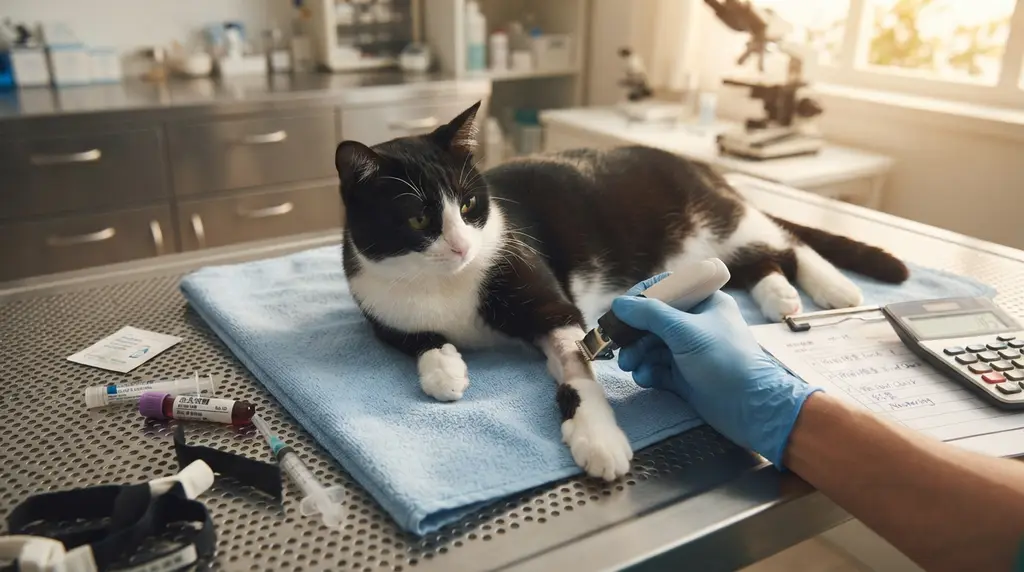
The key for vet visits isn't "how to get them in," but "how to get them out." With a fully removable top, you can detach the upper section in the examination room. The cat remains in the familiar lower half, which smells like them, and the vet can perform basic checks. For shy cats or those who get agitated at the vet, this design reduces stress more effectively than any calming spray.

Additionally, for vet visits requiring blood draws, weight checks, or dental exams, the carrier should also have:

  • Easy to clean (high chance of accidents, so place a pee pad at the bottom)
  • Handle centered (so it doesn't tilt when carried)
  • Seatbelt loops on the side (for securing in the car)

If your cat has a chronic condition requiring frequent blood tests, such as Feline Hyperthyroidism, a user-friendly top-opening carrier will make the next few years much easier.

2) For Long Trips, Returns Home, and Transport: Ventilation, Stability, and Pad Compatibility

The threshold for "long trip" is approximately over 1 hour one way. At this point, consider:

  • Three-sided ventilation: Carriers with only front openings pose a high risk of overheating in the car during summer.
  • Ability to secure to a seat: Use a seatbelt through the handle or loops to prevent the carrier from flying forward during sudden braking; do not place it on the floor by the passenger seat or on your lap.
  • Space for a small pee pad: Most cats won't urinate for 4-6 hours, but accidents due to nervousness are common. Using a pad is easier than cleaning the car.
  • Never open the carrier door in the car: This is the most frequent advice we give. Opening the door mid-journey to "let them drink water" is the moment with the highest risk of escape.

If you're arranging boarding before traveling abroad or need transport services, preparing the carrier is part of the process. You can also refer to How to Arrange Cat Boarding for Overseas Trips: Understanding Duration, Costs, and Pickup Services together. As for the decision of "boarding vs. in-home pet sitting," A Comprehensive Comparison of Cat Boarding vs. In-Home Pet Sitting: Stress, Cost, and Emergencies offers a more detailed analysis.

Airplane Travel Supplement: Airline regulations for cabin pet carriers (dimensions and total weight) vary significantly (and are subject to change). Always refer to the official website of the airline you are flying with and confirm cabin allowance when booking. Remember to prepare necessary quarantine and health certificates in advance.

3) For Escape-Prone Cats or Those with a History of Escaping: Prioritize "Locks"

For these cats, choose models with few openings, multiple latches, and no gaps:

  • Latches that are "two-way" or require two actions to open.
  • Zippered models must have zipper pull locks (where the zipper pull can be secured).
  • The gap between the top and bottom shell should not exceed 1 cm.
  • Handles and strap stitching should be reinforced with backstitching, not single straight lines.

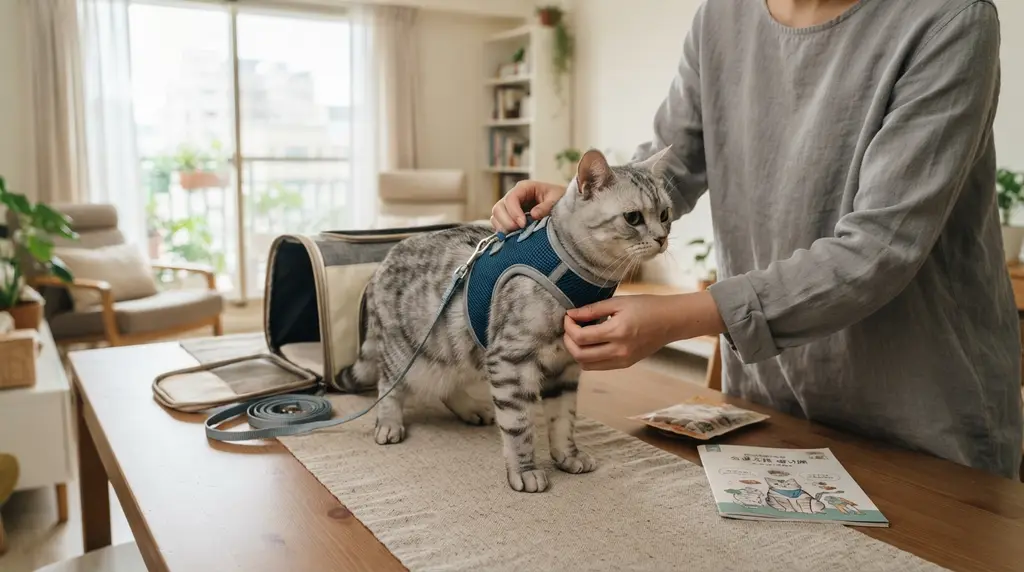
Add an extra layer of security: Put the harness on your cat at home before leaving. The moment the carrier door opens, you have a controllable point of contact. We have a separate guide on choosing cat harnesses: How to Choose a Cat Harness: A Complete Comparison for Vet Visits, Rooftop Freedom, and Escape Prevention. Using both the carrier and harness together provides much better escape prevention than relying on the carrier alone.

On-Site Inspection Checklist: Do These 8 Actions Before Buying

1. Lift the empty carrier by the handle; does it sag inward on the sides?

2. Secure the latch and pull outward forcefully; does it come loose?

3. Can you remove and reattach the top cover by yourself within 20 seconds?

4. Reach inside and feel the inner walls; are there any rough edges or protruding screws?

5. Remove the base; is it flat and washable?

6. Gently snag the mesh with a fingernail; do the holes catch?

7. Press the handle edge against your palm; is it too hard or thin, causing discomfort during long carries?

8. Use a tape measure to check the "internal" dimensions; don't rely on the external measurements shown on the box.

Price Range: What's a Reasonable Cost?

Here are the typical price ranges in the Taiwanese market (prices may vary by brand and retailer):

  • Basic hard-shell carrier: Approx. NT$700–1,500
  • Removable top / with seatbelt loops advanced hard-shell: Approx. NT$1,800–4,000
  • Space capsule style: Approx. NT$900–2,500
  • Fabric carrier / backpack: Approx. NT$800–2,500
  • Rolling / Stroller type: Approx. NT$2,000–6,000

The recommended budget allocation is: Prioritize spending on a good quality, top-opening hard-shell carrier first. Purchase a second carrier (backpack or stroller) only after you've determined your specific travel needs. We've seen many owners buy a beautiful space capsule first, only to find it difficult to get their cat out during their first vet visit, eventually leading them back to buying a hard-shell carrier.

14 Days of Practice to Get Your Cat to Voluntarily Enter the Carrier

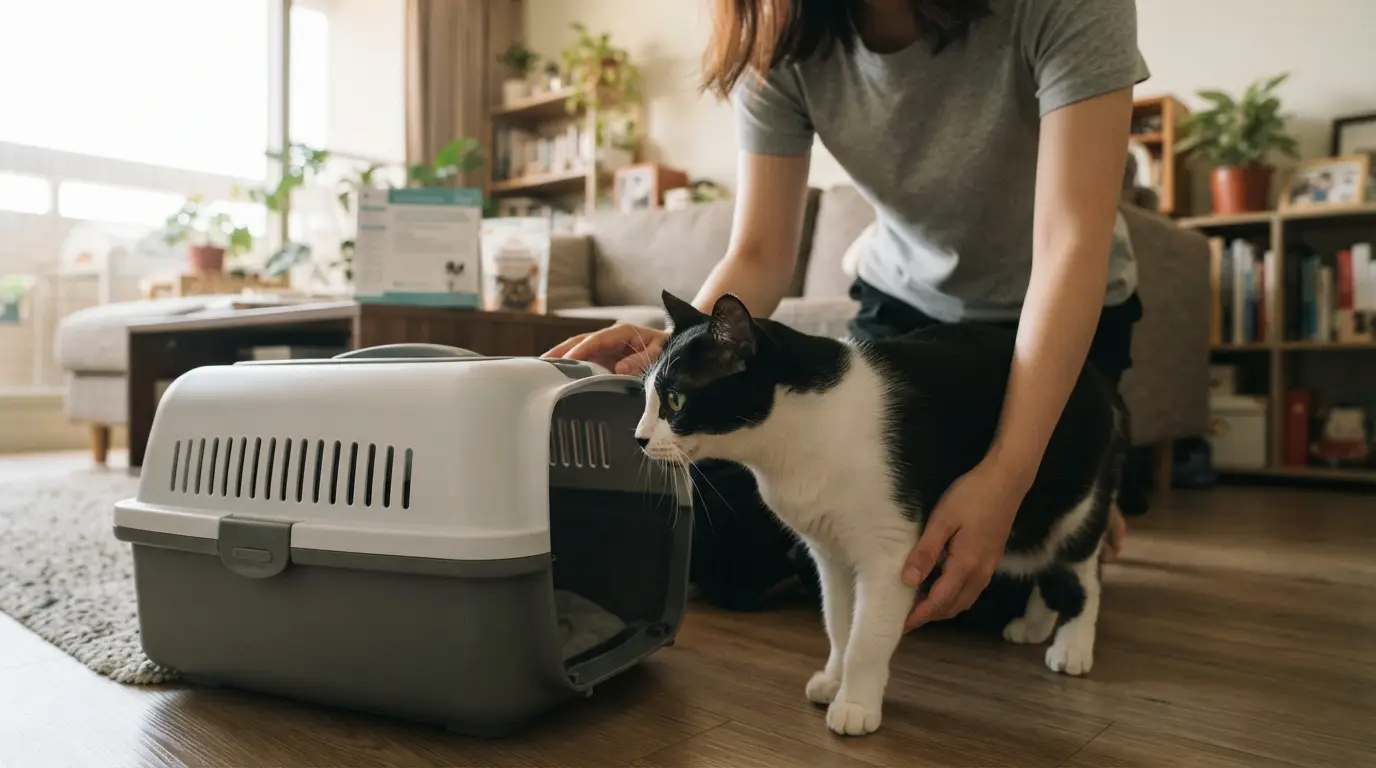
Buying the right carrier solves only half the problem; the other half is "getting them to willingly go inside." The method is simple: the key is to keep the carrier in a common area like the living room regularly, don't just bring it out the night before an appointment:

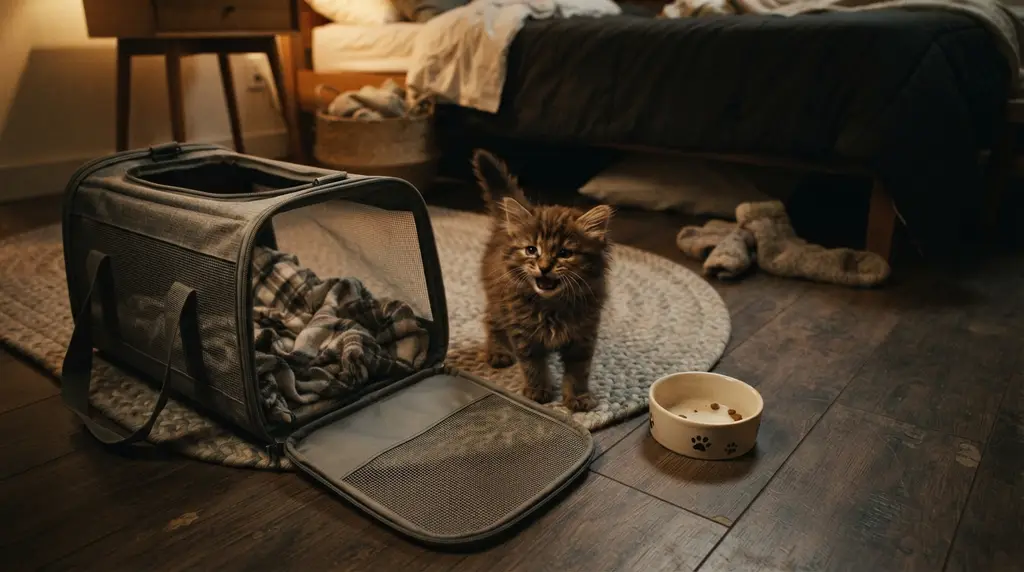
  • Days 1-3: Remove the door and place it in a spot your cat frequents, lining it with a cloth they've slept on. Don't ask for anything.
  • Days 4-7: Place some of their daily treats or wet food near the opening, then gradually move them further inside. It's a success if they eat and leave.
  • Days 8-10: When the cat is resting inside, gently lean the door against the opening for 10 seconds, then open it, gradually increasing the duration.
  • Days 11-14: Close the door, lift the carrier, walk a short distance, place it back, and give a reward.

During this phase, you can sprinkle some Premium Catnip inside to help create positive associations (about one-third of cats are unresponsive to catnip; if yours is, use high-value treats instead). For new cats, it's even more beneficial to start this practice from the first week, combined with the environmental setup described in How to Care for Your New Cat in the First Week: Environment, Diet, and Preparations for Peace of Mind, treating the carrier as one of their resting spots.

Temperature Management in Summer and in the Car

A cat carrier is a semi-enclosed space, and the internal temperature is usually 2-4°C higher than the ambient temperature. This is our biggest concern during summer transport. The principles are:

  • Cool the car interior to about 24-26°C before placing the cat inside. Do not direct the air conditioning vent towards the carrier opening.
  • Wrap a cold pack in a thin towel and place it on the outside or a corner of the carrier base, allowing the cat to choose whether to approach it; do not let it touch their skin directly.
  • Cover only three sides with a cloth, leaving one side open for ventilation; do not cover it completely.
  • Never leave your cat alone in the car under any circumstances, even for "just 5 minutes to run an errand."

If you notice continuous open-mouth panting, purplish tongue, excessive drooling, or a deepening/hoarse meow, pull over immediately, ventilate, cool down, and seek veterinary care as soon as possible. If your cat exhibits Not Eating, Drinking, or Sleeping All Day: Warning Signs for more than 24 hours after arriving at their destination or home, don't just assume they're "tired"; seek veterinary attention.

Incidentally, if you're buying a carrier for boarding, first confirm the facility's drop-off and pickup procedures. We've compiled key selection points in New Taipei Cat Hotel Recommendations: How to Choose in Banqiao, Sanchong, and Xinzhuang?. If you need to make arrangements, you can also Book a Cat Hotel in Banqiao directly and bring the carrier along; we'll use its familiar scent to furnish the room.

Frequently Asked Questions

Do cat carriers have to be hard-shell?

If you're only buying one, a hard-shell (especially with a removable top) is the most versatile, suitable for vet visits, boarding, and emergencies. Fabric bags and backpacks are good as a second carrier for situations where the cat is accustomed to travel and the journey is short.

Can two cats share one carrier?

For short trips (under 30 minutes) and very close cats, it's possible, but separate carriers are still recommended. When stressed, even cats who have lived together for years can become aggressive, and in a confined space, there's no escape, making conflicts more severe than at home.

Should I buy a larger size for a kitten?

It's recommended to buy a size appropriate for an adult cat, but use soft padding inside to reduce the space and provide a sense of enclosure for the kitten. You can remove the padding as they grow. If a kitten needs boarding, check Can Kittens Stay in Boarding? Age, Vaccine Protection, and Separation Anxiety: 3 Judgment Criteria for timing.

My cat keeps meowing and scratching in the carrier; should I open the door to comfort them?

Do not open the door in the car, on the road, or outdoors, as this is the highest risk for escape. Instead, use a cover to reduce visual stimuli, speak in a low voice, and minimize jolting. Open the door only after reaching your destination in a secure indoor environment.

How often should a cat carrier be cleaned?

Clean it after every use. Residual urine and body oils will cause the carrier to accumulate odors, making your cat resistant the next time they smell it. Wash the base and padding with a neutral detergent and air dry. You can replenish other daily necessities by shopping in our store.


CatGarden Editorial Team | This article shares general care and purchasing experience and cannot replace veterinary diagnosis. If your cat exhibits continuous panting, lethargy, incontinence, or loss of consciousness during travel, seek immediate veterinary care at the nearest facility.

CatGarden offers curated supplies, cat boarding, and grooming

Book services or shop online.
Back

Blog

How to Choose a Cat Carrier: A Complete Comparison for Vet Visits, Long Trips, and Escape Prevention

CatGarden Editorial TeamPublished 2026/08/28Updated 2026/10/06
cat carriernew cat ownervet visit
How to Choose a Cat Carrier: A Complete Comparison for Vet Visits, Long Trips, and Escape Prevention

When choosing a cat carrier, remember three key things: it must be large enough for your cat to stand and turn around, ideally with a top-opening or removable top, and secure latches that can be locked with one hand. If you can only buy one, a "hard-shell carrier with a removable top" is the most recommended – it serves well for vet visits, transport, and even emergency evacuations, making it the most versatile option. Fabric backpacks and space capsules are better suited for specific situations rather than being the primary choice.

Key Takeaways

  • The internal length of the carrier should be at least 1.1 times your cat's "nose-to-tail-root" length, and the height should be at least their sitting shoulder height + 3 cm, allowing them to stand and turn without being forced to hunch.
  • For vet visits, prioritize hard-shell carriers with a "fully removable top": veterinarians can perform examinations directly inside the carrier, reducing struggle and stress for the cat.
  • For average domestic cats (4-6 kg), a practical internal size is approximately 48-55 cm long, 32-36 cm wide, and 32-36 cm high. For cats over 7 kg or large breeds like Maine Coons, opt for a larger size.
  • The most common failure point for fabric carriers is zippers being pushed open from the inside. It's recommended to choose models with "zipper pull locks or safety latches" and to secure the carrier with a seatbelt in the car.
  • It typically takes 7-14 days of daily feeding and napping practice for cats to accept a carrier. Pulling out the carrier the night before an appointment will significantly increase their resistance.

First, Understand: A Carrier Isn't Just for "Fitting In"

We frequently have owners bring their cats for boarding or grooming, and after seeing this hundreds of times, the three most common issues aren't actually about the cat being "naughty":

1. Front-opening only: The cat clings to the bottom, and the owner has to pull them out like extracting a tooth, causing distress to both cat and human.

2. Collapsing fabric bag: The sides cave in when lifted, trapping the cat and making them lose balance, leading to frantic movement inside.

3. Slippery bottom: Without a non-slip mat, the cat slides around during turns, arriving at their destination wet from stress sweat and panting.

These three issues are related to the "carrier's design," not something that can be fixed with training. Therefore, the priority when choosing a carrier should be: Size → Opening Type → Structural Integrity → Material Feel → Appearance. Appearance comes last.

How to Choose a Cat Carrier: Measure These Three Things First

Before buying, measure three dimensions while your cat is relaxed and lying down (you can use a soft tape measure or take a photo with your phone for comparison):

  • Body Length A: From the tip of the nose to the base of the tail. The internal length should be ≥ A × 1.1.
  • Sitting Height B: From the top of the head to the ground when sitting. The internal height should be ≥ B + 3 cm.
  • Weight: This directly determines the load-bearing requirements for the handle and base. For cats over 7 kg, look for models with a stated load capacity of 10 kg or more.

Here's a practical conversion guide:

Cat WeightRecommended Internal Dimensions (L×W×H)
2–3.5 kg (Kitten/Small)Approx. 42×28×28 cm
4–6 kg (Most Domestic Cats)Approx. 48–55×32–36×32–36 cm
7 kg+ / Large Breeds60×40×40 cm or larger, or consider a small travel crate

Don't "Buy a Size Up for Comfort"

This is a common mistake for new owners. If the carrier is too large, the cat lacks support and will slide around, hitting the walls during vehicle movement, increasing stress. The ideal state is "able to stand, turn around, and lie down flat," with a slight sense of being enclosed. Truly large spaces are needed for long journeys where a litter box might be necessary, which falls into a different category (see below).

Cat Carrier Material Comparison: Pros and Cons of Five Common Types

TypeProsConsSuitable For
Hard-shell Plastic (Removable Top)Stable structure, easy to clean and disinfect, vet can open top for examinationBulky, difficult to storeVet visits, transport, evacuations (most recommended primary carrier)
Space Capsule / DomeGood visibility, attractive appearance, some can be worn as a backpackOften poor ventilation, stuffy in summer, dome can scratch easilyShort trips, cool weather, cats that don't mind looking outside
Fabric CarrierLightweight, foldable, easy to carry close to the bodyPoor support, risk of zippers being pushed openCats already accustomed to travel, short vet visits
Backpack StyleFrees up hands, convenient for stairs and subwaysCat's center of gravity is behind you (out of sight), some have small basesWalking commutes, frequent short-distance travel
Rolling / Stroller TypeNo need to carry weight, good for long walks, can hold water bowlHeavy, inconvenient for stairs and taxisLong transfers, multiple cats, owners with limited physical strength

Material Details to Look For

  • Hard-shell: Check the latches. Metal bolts and clasps are much more durable than all-plastic ones and won't fall apart after one drop.
  • Fabric Bag: Check the frame. Aluminum strips or hard boards on all sides provide support to prevent collapse; you should be able to feel them by lifting the lining.
  • Mesh: Finer mesh is better; coarse mesh can easily snag cat claws.
  • Base: It must be flat and removable for washing. Adding a non-slip mat or your cat's usual sleeping mat to the bottom significantly improves stability.

Categorized by Use: What to Buy for Three Needs

1) For Vet Visits: Prioritize a "Removable Top" Hard-shell Carrier

The key for vet visits isn't "how to get them in," but "how to get them out." With a fully removable top, you can detach the upper section in the examination room. The cat remains in the familiar lower half, which smells like them, and the vet can perform basic checks. For shy cats or those who get agitated at the vet, this design reduces stress more effectively than any calming spray.

Additionally, for vet visits requiring blood draws, weight checks, or dental exams, the carrier should also have:

  • Easy to clean (high chance of accidents, so place a pee pad at the bottom)
  • Handle centered (so it doesn't tilt when carried)
  • Seatbelt loops on the side (for securing in the car)

If your cat has a chronic condition requiring frequent blood tests, such as Feline Hyperthyroidism, a user-friendly top-opening carrier will make the next few years much easier.

2) For Long Trips, Returns Home, and Transport: Ventilation, Stability, and Pad Compatibility

The threshold for "long trip" is approximately over 1 hour one way. At this point, consider:

  • Three-sided ventilation: Carriers with only front openings pose a high risk of overheating in the car during summer.
  • Ability to secure to a seat: Use a seatbelt through the handle or loops to prevent the carrier from flying forward during sudden braking; do not place it on the floor by the passenger seat or on your lap.
  • Space for a small pee pad: Most cats won't urinate for 4-6 hours, but accidents due to nervousness are common. Using a pad is easier than cleaning the car.
  • Never open the carrier door in the car: This is the most frequent advice we give. Opening the door mid-journey to "let them drink water" is the moment with the highest risk of escape.

If you're arranging boarding before traveling abroad or need transport services, preparing the carrier is part of the process. You can also refer to How to Arrange Cat Boarding for Overseas Trips: Understanding Duration, Costs, and Pickup Services together. As for the decision of "boarding vs. in-home pet sitting," A Comprehensive Comparison of Cat Boarding vs. In-Home Pet Sitting: Stress, Cost, and Emergencies offers a more detailed analysis.

Airplane Travel Supplement: Airline regulations for cabin pet carriers (dimensions and total weight) vary significantly (and are subject to change). Always refer to the official website of the airline you are flying with and confirm cabin allowance when booking. Remember to prepare necessary quarantine and health certificates in advance.

3) For Escape-Prone Cats or Those with a History of Escaping: Prioritize "Locks"

For these cats, choose models with few openings, multiple latches, and no gaps:

  • Latches that are "two-way" or require two actions to open.
  • Zippered models must have zipper pull locks (where the zipper pull can be secured).
  • The gap between the top and bottom shell should not exceed 1 cm.
  • Handles and strap stitching should be reinforced with backstitching, not single straight lines.

Add an extra layer of security: Put the harness on your cat at home before leaving. The moment the carrier door opens, you have a controllable point of contact. We have a separate guide on choosing cat harnesses: How to Choose a Cat Harness: A Complete Comparison for Vet Visits, Rooftop Freedom, and Escape Prevention. Using both the carrier and harness together provides much better escape prevention than relying on the carrier alone.

On-Site Inspection Checklist: Do These 8 Actions Before Buying

1. Lift the empty carrier by the handle; does it sag inward on the sides?

2. Secure the latch and pull outward forcefully; does it come loose?

3. Can you remove and reattach the top cover by yourself within 20 seconds?

4. Reach inside and feel the inner walls; are there any rough edges or protruding screws?

5. Remove the base; is it flat and washable?

6. Gently snag the mesh with a fingernail; do the holes catch?

7. Press the handle edge against your palm; is it too hard or thin, causing discomfort during long carries?

8. Use a tape measure to check the "internal" dimensions; don't rely on the external measurements shown on the box.

Price Range: What's a Reasonable Cost?

Here are the typical price ranges in the Taiwanese market (prices may vary by brand and retailer):

  • Basic hard-shell carrier: Approx. NT$700–1,500
  • Removable top / with seatbelt loops advanced hard-shell: Approx. NT$1,800–4,000
  • Space capsule style: Approx. NT$900–2,500
  • Fabric carrier / backpack: Approx. NT$800–2,500
  • Rolling / Stroller type: Approx. NT$2,000–6,000

The recommended budget allocation is: Prioritize spending on a good quality, top-opening hard-shell carrier first. Purchase a second carrier (backpack or stroller) only after you've determined your specific travel needs. We've seen many owners buy a beautiful space capsule first, only to find it difficult to get their cat out during their first vet visit, eventually leading them back to buying a hard-shell carrier.

14 Days of Practice to Get Your Cat to Voluntarily Enter the Carrier

Buying the right carrier solves only half the problem; the other half is "getting them to willingly go inside." The method is simple: the key is to keep the carrier in a common area like the living room regularly, don't just bring it out the night before an appointment:

  • Days 1-3: Remove the door and place it in a spot your cat frequents, lining it with a cloth they've slept on. Don't ask for anything.
  • Days 4-7: Place some of their daily treats or wet food near the opening, then gradually move them further inside. It's a success if they eat and leave.
  • Days 8-10: When the cat is resting inside, gently lean the door against the opening for 10 seconds, then open it, gradually increasing the duration.
  • Days 11-14: Close the door, lift the carrier, walk a short distance, place it back, and give a reward.

During this phase, you can sprinkle some Premium Catnip inside to help create positive associations (about one-third of cats are unresponsive to catnip; if yours is, use high-value treats instead). For new cats, it's even more beneficial to start this practice from the first week, combined with the environmental setup described in How to Care for Your New Cat in the First Week: Environment, Diet, and Preparations for Peace of Mind, treating the carrier as one of their resting spots.

Temperature Management in Summer and in the Car

A cat carrier is a semi-enclosed space, and the internal temperature is usually 2-4°C higher than the ambient temperature. This is our biggest concern during summer transport. The principles are:

  • Cool the car interior to about 24-26°C before placing the cat inside. Do not direct the air conditioning vent towards the carrier opening.
  • Wrap a cold pack in a thin towel and place it on the outside or a corner of the carrier base, allowing the cat to choose whether to approach it; do not let it touch their skin directly.
  • Cover only three sides with a cloth, leaving one side open for ventilation; do not cover it completely.
  • Never leave your cat alone in the car under any circumstances, even for "just 5 minutes to run an errand."

If you notice continuous open-mouth panting, purplish tongue, excessive drooling, or a deepening/hoarse meow, pull over immediately, ventilate, cool down, and seek veterinary care as soon as possible. If your cat exhibits Not Eating, Drinking, or Sleeping All Day: Warning Signs for more than 24 hours after arriving at their destination or home, don't just assume they're "tired"; seek veterinary attention.

Incidentally, if you're buying a carrier for boarding, first confirm the facility's drop-off and pickup procedures. We've compiled key selection points in New Taipei Cat Hotel Recommendations: How to Choose in Banqiao, Sanchong, and Xinzhuang?. If you need to make arrangements, you can also Book a Cat Hotel in Banqiao directly and bring the carrier along; we'll use its familiar scent to furnish the room.

Frequently Asked Questions

Do cat carriers have to be hard-shell?

If you're only buying one, a hard-shell (especially with a removable top) is the most versatile, suitable for vet visits, boarding, and emergencies. Fabric bags and backpacks are good as a second carrier for situations where the cat is accustomed to travel and the journey is short.

Can two cats share one carrier?

For short trips (under 30 minutes) and very close cats, it's possible, but separate carriers are still recommended. When stressed, even cats who have lived together for years can become aggressive, and in a confined space, there's no escape, making conflicts more severe than at home.

Should I buy a larger size for a kitten?

It's recommended to buy a size appropriate for an adult cat, but use soft padding inside to reduce the space and provide a sense of enclosure for the kitten. You can remove the padding as they grow. If a kitten needs boarding, check Can Kittens Stay in Boarding? Age, Vaccine Protection, and Separation Anxiety: 3 Judgment Criteria for timing.

My cat keeps meowing and scratching in the carrier; should I open the door to comfort them?

Do not open the door in the car, on the road, or outdoors, as this is the highest risk for escape. Instead, use a cover to reduce visual stimuli, speak in a low voice, and minimize jolting. Open the door only after reaching your destination in a secure indoor environment.

How often should a cat carrier be cleaned?

Clean it after every use. Residual urine and body oils will cause the carrier to accumulate odors, making your cat resistant the next time they smell it. Wash the base and padding with a neutral detergent and air dry. You can replenish other daily necessities by shopping in our store.


CatGarden Editorial Team | This article shares general care and purchasing experience and cannot replace veterinary diagnosis. If your cat exhibits continuous panting, lethargy, incontinence, or loss of consciousness during travel, seek immediate veterinary care at the nearest facility.

One email a month of cat-care tips

Hand-picked care, behavior and grooming tips once a month. Subscribe and we will send you our three most-read articles right away.

Keep reading