How to Arrange Cat Boarding When Traveling Abroad? Understanding Stay Duration, Costs, and Pet Taxi Services
Cat boarding stays are typically calculated by "overnights plus check-out time." In Taiwan, a single cat in a private room costs around NT$350–700 per day, with discounts often available for stays over 7 days. Pet taxi services range from NT$300–800 per trip. This article clarifies how to estimate stay duration, understand pricing, and arrange transportation.
The duration of cat boarding stays is almost universally calculated by "number of overnights + check-out time." The day of check-in counts as day 1, and each subsequent overnight adds another day. As long as your cat is picked up before the designated check-out time (usually between noon and early afternoon), no extra charges will apply. In terms of cost, a private room for a single cat in Taiwan typically ranges from NT$350–700 per day. Stays longer than 7 days often come with discounts of around 10%, and pet taxi services can cost NT$300–800 per trip. Prices may increase during peak holiday seasons, or minimum stay requirements may apply.
We operate a cat boarding service in Banqiao, and the most frequent questions we receive around winter and summer breaks, and before the Lunar New Year, are: "My flight is at midnight, how many days should I count?" "Is it cheaper if two cats stay together?" "Can you come to my house and pick up my cat?" Below, we'll address these common concerns in the order that owners typically encounter them.
Key Takeaways
- Cat hotel stays are calculated by "overnights": Check-in day counts as 1 day. Picking up your cat after 5 nights means a 5-day stay. Exceeding the check-out time usually incurs a half-day or full-day fee.
- Taiwan cat boarding rates: A private room for a single cat is typically NT$350–500 per day. Larger suites or private rooms with more amenities can range from NT$600–1,000. Two cats sharing a room are usually charged at a discounted rate for the second cat (70-80% of the single rate), not simply half the price.
- Long-term stays (7+ days) often receive a 10% discount, with stays of 14+ days getting around a 15% discount. Lunar New Year and other major holidays typically incur a 20–50% surcharge or have a minimum stay of 3–5 days.
- Pet taxi services range from NT$300–800 per trip (depending on distance and time), and most providers do not enter the home to retrieve the cat; owners must place their cat in a carrier beforehand.
- Bookings for overseas travel should be made at least 1 month in advance. Ensure vaccinations (FVRCP and rabies) are current and designate an emergency contact person in Taiwan who is reachable.
1. How to Calculate Stay Duration: Understanding "Overnight Stays" and Check-out Times
Basic Calculation: Count the Nights, Not the Hours
The simplest way to determine the number of days for a cat hotel stay is to count how many nights your cat sleeps at the facility.
- Check-in on March 1st afternoon, pick-up on March 6th morning → 5 nights slept → 5 days.
- Check-in on March 1st morning, pick-up on March 1st evening (no overnight stay) → Most facilities will charge for 1 day or a "daycare" fee.
The check-out time is crucial. Most cat hotels set their check-out time between 12 PM and 2 PM. Exceeding this time usually incurs additional charges, often a half-day fee for being 1–3 hours late, or a full day's charge if significantly past the deadline. Therefore, your flight's landing time on the day of return is critical.
Three Common Scenarios Where Owners Miscalculate
1. Early Morning Departure Flights: If your flight departs at 1 AM on March 1st, you'll likely need to leave for the airport on the evening of February 28th. Your cat will probably need to be dropped off during the day on February 28th, which will count as the first day.
2. Late Night Arrival: If you land at 11 PM on March 10th, by the time you clear immigration, collect your luggage, and get home, it will be very late. It's highly unlikely you'll be able to pick up your cat that night. Practically speaking, plan to pick up your cat on the morning of March 11th, adding an extra day is better than calling the hotel frantically at midnight.
3. Time Zone Differences / Flight Delays: For long-haul flights, we recommend owners "book one extra day than your itinerary." If your return is smooth, you can pick up your cat early (most facilities will refund unused days or not charge), and if there are delays, you won't face last-minute overtime fees.
> Our experience: The real disputes aren't usually about price, but about "I thought I could pick them up that day." When booking, note your departure and return flight times in the remarks section. Let the facility help you confirm the duration; it's more reassuring than calculating it yourself.
2. Pricing: What's a Reasonable Daily Rate?
Below are the common price ranges in Taiwan (primarily Northern Taiwan). Actual prices may vary based on space, whether it's a cat-only facility, and location:
| Item | Common Rate (Daily) | Description |
|---|---|---|
| Standard Single Room/Cat Condo | NT$350–500 | 1 cat, includes basic food and litter. |
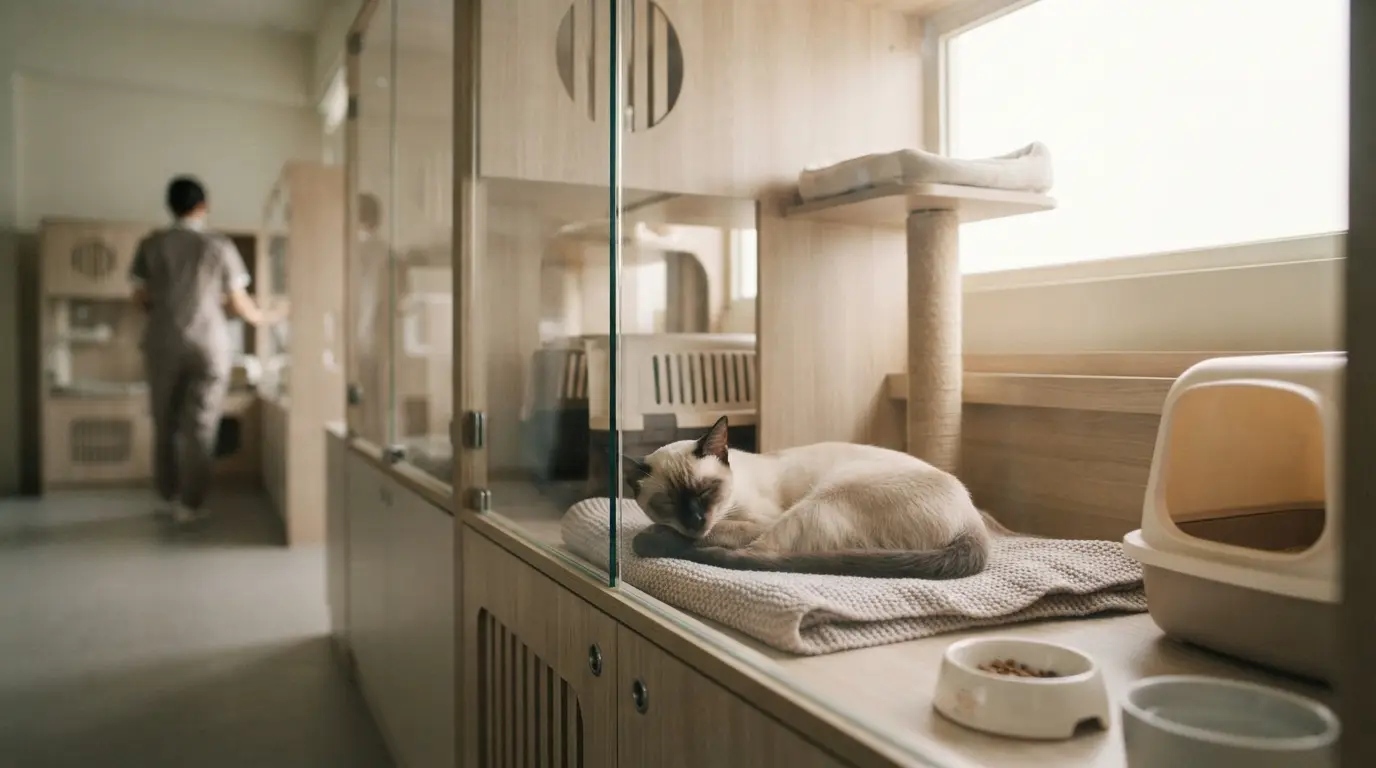
| Large Suite/Private Room | NT$550–1,000 | Includes climbing structures, window views, suitable for active cats or long stays. |
| Second Cat Sharing | 70-80% of original rate | For cats that are bonded and already live together. |
| Holiday Surcharge | +20–50% or NT$100–300 | Often includes a minimum stay requirement. |
| Pet Taxi Service | NT$300–800 per trip | Varies by distance, time of day, and whether stairs are involved. |
| Medication/Chronic Care | NT$50–150 per day | Subcutaneous fluids and medication administration may have separate fees. |
| Specific Canned Food/Fresh Food | NT$0–100 per day | Most facilities don't charge extra for providing your own food. |
How to Save on Long-Term Stays
Cat boarding for extended periods (7+ days) almost always offers discounts. Common structures include:
- 7–13 days: 10% off
- 14–29 days: 15% off
- 30+ days: 20% off or a monthly rate negotiation.
For owners traveling for over a month, don't just compare daily rates. Ask three key questions: How are discounts calculated? Is a deposit required? What are the policies for early pick-up or extensions? We've had owners who needed to extend their stay by two weeks unexpectedly while abroad. Having the terms for extensions agreed upon beforehand saves a lot of stress.
Hidden Costs to Consider
- Grooming Add-ons: For long-haired cats staying over 3 weeks, arranging a bath or partial shave is common. Prices can be found in How to Calculate Cat Grooming Costs? Pricing for Specific Areas, Medicated Baths, and Styles.
- Vet Visit Assistance: If a cat suddenly stops eating or develops diarrhea, someone may need to take them to the vet. This usually incurs transportation and accompanying fees, with medical costs billed separately.
- Late Check-out Fees: As mentioned in the previous section.
3. Pet Taxi Service: Convenient, But With Three Prerequisites
Having your cat picked up for boarding is incredibly convenient, especially when you're juggling luggage and rushing for a flight. However, let's be clear about three things upfront:
1. Retrieving the Cat is Usually the Owner's Responsibility
Most providers (including us) offer pet taxi services for cats that are "already in their carriers at the door/home." The reason is simple: the risk of scratches or escapes is too high when a stranger tries to catch a stressed cat in an unfamiliar environment. Please confine your cat to a single room 30 minutes before the driver arrives, close all doors and windows, and then place them in the carrier once the driver is there.
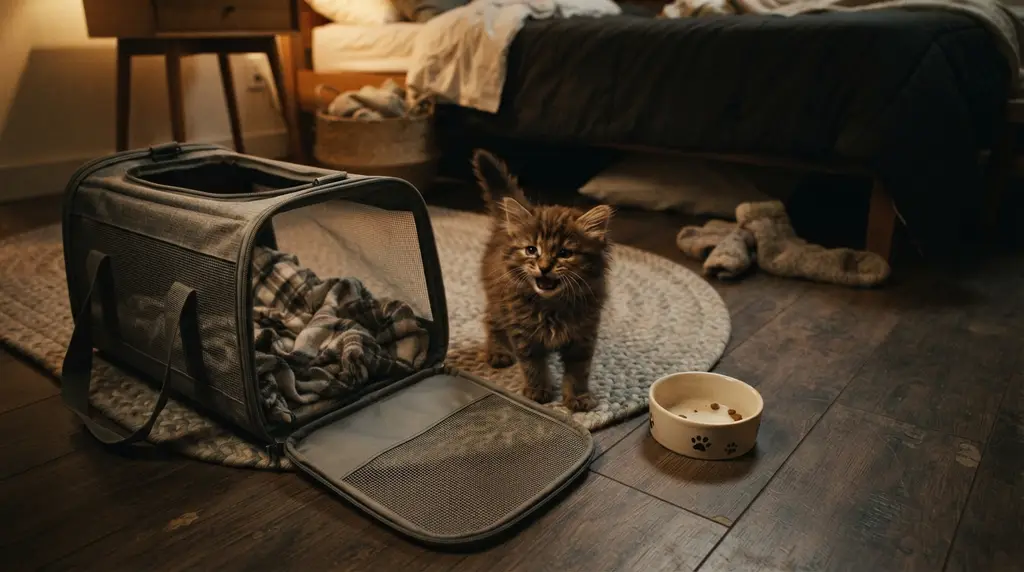
For timid cats, we recommend placing their carrier in the living room as furniture a week in advance, covering it with a familiar-smelling blanket, and leaving the door open for them to explore. This approach is similar to the desensitization principles in What to Do When a Shy Cat Hides? 5 Stages and Expected Timelines for Socializing Fearful Cats: the goal is to make the carrier no longer signal a trip to the vet.
2. The Carrier Must Be Suitable, or Problems Will Arise
- Hard-sided, Top-Opening Carriers Preferred: Top-opening carriers are much safer for staff when removing the cat at the facility compared to front-opening models.
- Sufficient Size for Turning: For long transfers, avoid small tote bags. Cats need to be able to change positions to avoid overheating and excessive drooling.
- Line the Bottom with an Absorbent Pad and a Familiar Old Towel: Nervous urination is common. Using a pad makes cleanup much easier than dealing with a soiled car.
- Secure Zippers: For soft-sided carriers, always use a safety clip. We've seen cats manage to open zippers while in elevators.
For more comprehensive advice on carriers and emergency packing, refer to How to Prepare for Cat Evacuation During a Typhoon? Carrier Checklist and Emergency Kit Essentials. Many of the items needed for boarding overlap significantly.
3. Discussing Fees and Timing
- Fees are typically based on distance tiers or mileage. Short trips within the same city (e.g., Banqiao, Xinzhuang, Sanchong) usually cost NT$300–500 one way. Cross-city trips or those requiring extended waiting times can cost NT$600–800 or more.
- Surcharges often apply during peak hours (8–10 AM, evening) and for early morning or late-night pickups.
- On the day of your flight, schedule your pet taxi pickup at least 2 hours earlier than you think you need. It's better for the cat to arrive at the hotel early than for you to be rushing out the door.
- If your return flight lands very late, arrange for pickup the next day. The extra day of boarding is well worth a good night's sleep.
4. A Preparation Timeline: One Month Before Departure
30 Days Before Departure
- Book Accommodation: Winter and summer breaks, Lunar New Year, and national holidays are peak times for full bookings, especially for longer stays.
- Check Vaccinations: Ensure FVRCP and rabies vaccinations are current. Most facilities require cats to have been vaccinated at least 7–14 days prior to check-in. Allow time for unvaccinated cats to receive their shots.
- External Parasite Treatment: Administer treatment 1–2 weeks before check-in to prevent bringing fleas into shared spaces.
14 Days Before Departure
- Veterinary Check-up: For senior cats or those with chronic conditions (kidney disease, heart disease), schedule a vet visit to get medication refills and obtain clear instructions. Owners of cats with kidney disease should read Why Do Cats Get Kidney Disease? Aging, Diet, Dehydration, and Genetics as Major Causes to understand key indicators to monitor during their stay.
- Avoid Sudden Diet Changes: If you plan to switch your cat's food, complete the transition at least 2 weeks before boarding, or wait until you return. Switching food and environment simultaneously significantly increases the risk of digestive upset.
3–7 Days Before Departure
- Portion Food: Divide food into small bags labeled with dates for each meal. For longer stays, pack the entire bag; this is less prone to error than measuring daily.
- Bring Your Own Litter: This is particularly effective for long-term stays. The texture and scent of familiar litter are important environmental cues for cats. We often suggest owners bring a small bag of their usual litter to mix with the facility's litter. For cats using fine-grained litters like Ultra-Fine Tofu Litter 3.0, switching to a coarser litter can cause them to hold their urine.
- Digestive Support: For cats prone to stress-induced diarrhea, start supplementing with Pro-Probiotics 3–5 days before check-in and continue throughout their stay. It's more effective to prevent issues than to treat them after they occur.
- Create a "Cat's Instruction Manual": Include details like feeding schedule (how many meals, at what times), areas they dislike being petted, whether they tend to dash out doors, how to administer medication, and what their normal stool looks like. This document is invaluable.
1 Day Before Departure
- Trim nails (if you struggle, consider tools recommended in Cat Nail Clipper Recommendations: Tools That Make Nail Trimming Easy Even for Scared Cats).
- Prepare emergency contacts: Designate a trusted individual in Taiwan who can make medical decisions on your behalf, and clearly define the scope of their authorization and any cost limits beforehand. This is a crucial step often overlooked for long trips, with potentially severe consequences.
5. Can Cats Handle Long-Term Boarding?
Yes, but it depends on the cat and the communication system. In our experience, most adult cats begin eating and using the litter box normally by their second or third day. By the fifth day, most maintain a stable routine. Cats staying for over two weeks often relax more than those staying for just three days, as they begin to treat the facility as their temporary territory.
Ask the Facility to Report These 4 Metrics Daily
1. Food Intake: (What percentage was eaten, not just "ate well")
2. Water Intake and Urination Frequency
3. Defecation Frequency and Consistency
4. Weight: For long stays, weigh your cat every 5–7 days. A weight loss exceeding 5% of their original body weight requires attention.
If your cat shows signs of not eating for 24 hours, complete lack of urination, hiding and rapid breathing, this is not just "getting used to the place." Refer to Cat Not Eating, Drinking, or Sleeping All Day: Normal Lethargy or Illness Warning Sign? The Critical 24-Hour Observation and Vet Visit Guide for guidance. Seek veterinary care immediately; don't wait until you return.
Cats That May Require Further Assessment or Alternative Arrangements
- Extremely timid cats who hide for three days at home when visitors arrive.
- Unneutered adult cats with significant aggression issues.
- Cats in acute stages of heart disease or asthma, or those recovering from recent surgery.
- Cats with pronounced separation anxiety who excessively groom to the point of hair loss when their environment changes (consider reading What to Do About Cat Separation Anxiety? Home Adjustment Tips for Routine Changes After School Starts).
In these situations, "in-home feeding" might be a better option, but it means no one is monitoring the cat 24/7. The trade-offs between these approaches are discussed in more detail in How to Arrange Cat Care During the Mid-Autumn Festival Holiday? Choosing Between In-Home Pet Sitting and Cat Boarding.
After Returning Home, Don't Rush to Interact
For the first 48 hours after returning home, your cat may hide, hiss at you, groom excessively, or sleep all day. Provide food and water, and leave the carrier door open, allowing them to come out on their own. Avoid forcing interaction. This approach of "reducing stimulation and letting them set the pace" is similar to the logic in How to Care for a New Cat During Their First Week Home? Environment, Diet, and Preparations to Make Them Feel Secure—for your cat, returning home is also an environmental transition.
If you're planning an overseas trip requiring long-term boarding, it's advisable to have your flight details ready before booking accommodation. We can help you confirm the stay duration and transportation times, and discuss whether mid-stay grooming might be beneficial.
Frequently Asked Questions
How far in advance should I book cat boarding for overseas travel?
For weekdays, at least 2 weeks is recommended. For winter/summer breaks, Lunar New Year, and long weekends, book at least 1 month in advance. For longer stays (14+ days), earlier is better. Many cat hotels open bookings 2–3 months in advance for holiday periods and require deposits.
If my flight departs early morning on the travel day, should the cat be counted from the previous day or the travel day?
Count from the day you actually bring the cat. Early morning flights usually require you to leave the evening before, meaning the cat is often dropped off during the day on the previous day, which counts towards the stay duration.
Is it cheaper for two cats to board together?
Typically, the second cat is charged at 70-80% of the original rate, not half the price. This applies only if the cats have always lived together and have a good relationship. If they exhibit stress or confrontational behavior at the hotel, they may need separate rooms, and the cost will be calculated accordingly.
Will the pet taxi service put my cat into the carrier when picking them up?
Most will not. To prevent scratches and escapes, providers generally pick up cats that are "already in their carriers." Please confine your cat to a single room before the driver arrives, and place them in the carrier once the driver is present.
For long-term boarding, should I bring my own food and litter?
It is strongly recommended to bring your own food to avoid digestive upset from switching diets. Most hotels provide litter, but bringing a small bag of your usual litter to mix in can significantly reduce the chance of your cat refusing to use the litter box during the first few days.
The anxiety before traveling abroad often stems from uncertainty—uncertainty about how stay duration is calculated, how costs might escalate, or whether your cat will be safe. By preparing your flight details, vaccination records, medication instructions, and designating an emergency contact in Taiwan, you can truly relax during your trip. If your cat experiences persistent lack of appetite, rapid breathing, or inability to urinate during their stay, seek immediate veterinary attention; do not wait until you return.
Written by: CatGarden Editorial Team
CatGarden offers curated supplies, cat boarding, and grooming
Book services or shop online.