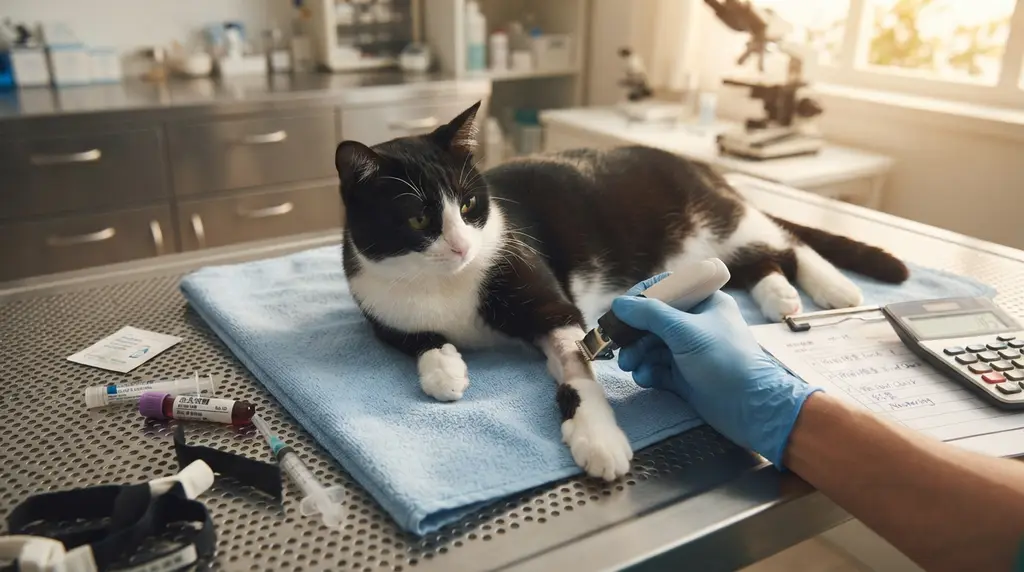
Why Do Cats Get Their Ears Clipped? The Meaning, Pain, and Identification of TNR Ear-Tipped Cats
A clipped ear on a cat is the universal sign for TNR (Trap-Neuter-Return), indicating the cat has been spayed or neutered. This is done during anesthesia, causing no pain and not affecting hearing. This article explains the origin of ear-tipping, how to identify these cats, and what to do if you encounter one.

A cat with a clipped ear (usually a V-shaped notch or a straight cut at the tip) is not a victim of abuse or a fight injury, but rather an internationally recognized mark signifying "this cat has been spayed or neutered." This mark is made during the spay/neuter surgery while the cat is under general anesthesia as part of the TNR (Trap-Neuter-Return) process. The cat feels no pain at the time, the wound heals within a few days, and it does not affect their hearing at all.
At our clinic, we often have owners bring in rescued cats and ask, "Its ear is missing a piece, was it abused?" We also encounter the opposite situation – owners who think it's their cat's "unique feature," when in reality, it's proof the cat underwent TNR on the streets years ago. This article will clearly explain the origin of ear-tipping, how to identify it, and what to do if you encounter an ear-tipped cat.
Key Takeaways
- Ear-tipping on cats is the TNR sterilization mark. Seeing a clipped ear means the cat has been spayed or neutered and does not need to be trapped and operated on again.
- Ear-tipping is performed under anesthesia during the sterilization surgery. About 0.5–1 cm of the ear tip (skin and cartilage edge) is removed. It's not stitched and usually heals completely within 7–10 days after bleeding is controlled.
- Ear-tipping only removes the very tip of the ear flap, not affecting the ear canal or eardrum. It does not impact hearing or the cat's ability to swivel its ears to locate sounds.
- TNR ear-tips have a clean, consistent cut (V-shape or straight diagonal); ear damage from fights or bites has irregular edges, random placement, and often scarring or scabs.
- Most municipalities and animal welfare groups in Taiwan use "tipping one ear" to signify sterilization. Some areas habitually use the left or right ear to denote sex (commonly left for males, right for females), but this is not standardized nationwide. The safest interpretation is always "a clipped ear = sterilized."
Where Did Ear-Tipping Come From? Why Mark the Ear?
The TNR method gradually took shape in Europe (like the UK and Netherlands) starting in the 1970s. By the 1990s, it was widely implemented in the United States, and "ear-tipping" became a globally recognized visual marker during this process. In Taiwan, following the amendment of the Animal Protection Act and the official implementation of the "no-kill" policy in 2017, TNR/TNVR (adding Vaccination) by local governments and private organizations became widespread, leading to a noticeable increase in the number of ear-tipped cats on the streets.
Why is it necessary to leave a mark on the body? Because street cats don't carry their own medical records. The TNR process typically involves volunteers setting up traps at designated feeding spots. They might catch 3-5 cats in a night, take them for sterilization the next day, and return them to their original location after recovery. Without a mark, several issues arise:
- The same cat could be repeatedly trapped and anesthetized, unnecessarily exposing it to risk and stress.
- Limited sterilization funds and slots are wasted, while cats that still need surgery remain uncaught.
- Trappers cannot accurately assess from a distance "how many are left in this area," leading to uncontrolled progress.
Microchips can record identity, but you need to catch the cat first to scan it. The advantage of ear-tipping is that it's visible to the naked eye from three meters away, which is why it remains indispensable today.
Why Not Use Collars, Ear Tags, or Tattoos?
These methods have been tried in practice and discarded: Collars can get caught on branches or fences, causing strangulation. Ear tags (like plastic tags for livestock) can be torn off during fights or get stuck. Tattoos on the belly require flipping the cat over to see, which is impractical for wary street cats. Ear-tipping is the compromise solution: done once, permanent, visible from a distance, and causes no subsequent harm.
Does Ear-Tipping Hurt? How Long Does the Wound Take to Heal?
This is the question owners ask most frequently. Here's the honest answer:
It does not hurt during the surgery. Ear-tipping is always performed under general anesthesia during the sterilization procedure. The veterinarian typically handles it after the spay/neuter is complete, while the cat is still unconscious: about 0.5–1 cm of the ear tip is removed, and bleeding is controlled with electrocautery or hemostatic forceps. Most cases do not require stitches. The entire process takes less than a minute.
There may be mild discomfort for 1–2 days post-surgery. Similar to a dull ache if you cut your fingernail too short, the cat might shake its head a bit more. The pain medication given by the vet usually covers this period.
It heals completely in 7–10 days. After that, the notch becomes a permanent feature. It won't bleed, get infected, or require any special care.
If the ear of an ear-tipped cat you've rescued appears red, swollen, hot, or has a foul odor, this is usually not due to the ear-tip itself. It's more likely an ear infection, ear mites, or another issue. You can refer to What Causes Red and Hot Cat Ears? Differentiating Heatstroke, Inflammation, and Sunburn for initial guidance. If symptoms persist or worsen, consult a veterinarian.
Does Ear-Tipping Affect Hearing?
No. A cat's hearing relies primarily on the ear canal, middle ear, and inner ear. The ear flap (outer ear) functions to collect sound and help with localization. Clipping only removes a small portion of the skin and cartilage edge at the very tip of the ear flap. The ear can still swivel freely and stand erect. We've cared for many ear-tipped cats in our clinic, and they still perk up instantly at the sound of a can opener from three rooms away, reacting no differently than other cats.
The only minor consideration might be ear tip protection in winter and summer: with a small piece missing, theoretically, heat dissipation is slightly reduced, and sun exposure is slightly increased. However, given Taiwan's climate and indoor living conditions, there's no significant clinical impact.
How to Distinguish Between "TNR Ear-Tip" and "Battle Scar"?
This is crucial for determining if a cat has been sterilized. When we bathe and dry cats, we examine their ears up close, and the differences are quite apparent:
| Observation Point | TNR Ear-Tip | Battle Scar / Traumatic Damage |
|---|---|---|
| Location | Fixed at the very apex of the ear tip | Any part of the ear edge, often mid-section or side |
| Shape | Clean V-notch or straight diagonal cut, with a straight edge | Irregular, jagged, possibly multiple notches |
| Edges | Smooth, fur grows naturally | Thickened, scar tissue, fur growth is disordered |
| Symmetry | Usually only one ear is tipped | Both ears may be affected, number varies |
| Associated Signs | None | Common signs include scabs, shrunken ear edges, old scars |
When actually assessing, look at the cat's head from the front. If "one ear looks like a corner was cleanly sliced off, and the other is completely normal," it's almost certainly a TNR ear-tip. If the ear edges look chewed or have multiple indentations, those are scars from life on the streets.
Additionally, two points to remember:
1. An ear-tipped cat isn't necessarily "homeless." Many community cats have regular caregivers (cat mothers/fathers) or people who leave food and water for them at home.
2. Not being ear-tipped doesn't mean it hasn't been sterilized. Domestic cats spayed/neutered at veterinary clinics are typically not ear-tipped. A few TNR cases might also miss the ear-tip due to judgment or procedural variations. A surgical scar on the abdomen or the absence of testicles in a male cat are more direct indicators. To confirm sex, you can refer to How to Tell if a Kitten is Male or Female: 3 Observation Points at Home and Common Misconceptions.
Stray Cat or Lost Pet? Five Observation Points
When encountering a cat, besides checking the ears, we quickly assess these factors:
- Clipped Ear: High probability of being a community cat, already part of TNR management, and likely vaccinated.
- Collar/Tag/Microchip: High likelihood of being a pet or a lost cat. You can take a found cat to a nearby veterinary clinic for a free microchip scan, which is the most reliable clue.
- Coat Condition and Paw Pads: Cats living outdoors long-term often have dry, tangled fur tips and rough, darkened paw pads. Indoor cats have soft fur and tender paw pads.
- Reaction to Humans: Street cats maintain a safe distance of 1–3 meters and retreat if you reach out. Lost pets might meow for help and allow people to approach, but they might also hide due to fear.
- Body Condition and Teeth: Street cats are often thin, have significant dental calculus, and may have fleas or ear mites.
If the cat appears healthy, has a clipped ear, and is repeatedly seen in the same location, it's likely a resident of that area. The best course of action is usually not to take it away. It has a territory, a food source, and caregivers. Forcibly taking it home would cause anxiety, leading to refusal to eat or drink. Intervention is only truly necessary for: obvious injuries, limping, difficulty breathing, eye discharge, extreme emaciation, or kittens that haven't been weaned.
I Want to Bring an Ear-Tipped Cat Home, What Should I Consider?
An ear-tipped cat has experienced life on the streets, and their adaptation curve differs from that of a kitten raised indoors. We've had many "tenants" transition from street life to indoor living, and our experience suggests:
- Get a health check-up before bringing it home. This includes flea/parasite treatment, blood tests (including FeLV/FIV screening), and fecal exams. If you have existing resident cats, quarantine for 2–4 weeks.
- Provide a small, confined space, not a large room. A bathroom or a single room with a hiding box can be more calming than the entire house. The principles are the same as How to Care for a New Cat's First Week Home: Environment, Diet, and Preparations for Peace of Mind, but the adjustment period will be longer.
- Don't rush to cuddle or bathe it. Taming a street cat usually takes weeks. Follow the rhythm outlined in What to Do if Your Shy Cat Keeps Hiding? 5 Stages and Timeline for Socializing a Fearful Cat.
- Start with litter that mimics natural soil. Cats accustomed to burying their waste often accept fine-grained mineral litter best. You can start with Odor Control Mineral Litter 3.0 and switch to other types like tofu litter later if needed. If starting from scratch, the New Cat Starter Kit includes a litter box, litter, and scoop.
- An ear-tipped female or male cat means it's already sterilized. No further surgery is needed. However, if you're unsure, a veterinarian can determine this through a physical exam or ultrasound. If you've taken in an unsterilized cat, refer to Male Cat Neutering Aftercare: Timeline for Swelling, Urination Monitoring, and E-collars (Day 0-14) for post-operative care.
We recommend waiting until the cat has developed basic trust before its first bath, and ideally, have it done in an experienced environment. Street cats often react more intensely to restraint and blow dryers than indoor cats, and forcing a bath can create lasting trauma. If you need assistance, you can book a grooming appointment for us to assess the cat's condition and proceed gradually.
After TNR: How Are Ear-Tipped Cats Cared For Daily?
Ear-tipping is just the "receipt" for TNR. What truly impacts the quality of life for community cats is ongoing care: regular vaccinations, health monitoring, maintaining hygiene at feeding stations, and preventing new unsterilized cats from entering the area.
If you are a community caregiver, here are some practical suggestions:
- Feed at fixed times and locations, and collect bowls afterward. This reduces conflicts with neighbors and pest problems, which is key to the long-term survival of TNR in a community.
- Record each cat's markings, ear tip side, and body condition. Take photos with your phone to keep a file, so you know who still needs to be trapped next time.
- Watch for new faces. The appearance of an un-tipped cat means it's time to schedule the next round of trapping. An unsterilized female cat can have 2–3 litters per year.
- Intervene early if a cat shows a significant decrease in appetite or energy. Street cats have a high pain tolerance, so by the time it's noticeable, the issue may have been ongoing for some time. Refer to the logic in Cat Not Eating, Drinking, or Sleeping All Day: Normal Lethargy or Illness? Golden 24-Hour Observation and Vet Visit Guide for assessment.
Frequently Asked Questions
Is clipping a cat's ear animal abuse?
No. Ear-tipping is a marking procedure performed under anesthesia during sterilization surgery. It removes only 0.5–1 cm from the ear tip, does not affect hearing or quality of life, and aims to prevent repeated trapping and anesthesia of the same cat. It is a recognized standard operating procedure in veterinary circles for TNR.
Is there a difference between clipping the left or right ear?
In most cases, no. A clipped ear signifies sterilization. Some groups in Taiwan use the left or right ear to denote sex (commonly left for males, right for females), but this is not a nationwide standard, so it's not advisable to determine sex based solely on which ear is tipped.
My cat was sterilized at the vet, why wasn't its ear tipped?
Because pet cats have owners, medical records, and microchips, they don't need a visible mark to prevent repeated surgeries. Ear-tipping is specifically designed as an identification method for "street cats/community cats." Standard pet cat sterilization does not and does not need to involve ear-tipping.
Can I take an ear-tipped cat home?
If the cat appears healthy and lives in a specific location, it likely has caregivers and a territory. Taking it away abruptly can cause stress. If it is clearly injured, sick, extremely emaciated, or a pre-weaning kitten, intervention and veterinary care are recommended. It's also advisable to inquire with nearby businesses or residents if anyone is caring for the cat.
Does the ear-tipping wound need medication or an e-collar?
No. The ear-tipping wound is small and has been cauterized. It typically heals on its own within 7–10 days. The focus of post-operative care should be on the sterilization wound on the abdomen or scrotum. If the ear shows persistent bleeding, redness, swelling, heat, or a foul odor, seek veterinary attention promptly.
Finally, a word: every cat with a clipped ear on the street represents someone who spent nights waiting by a trap, someone who paid for surgery out of their own pocket. Seeing them doesn't call for pity; simply avoid feeding them human food, don't chase them, and don't take them away without good reason – that alone is a great help. If you'd like to stock up on daily necessities for your own cat, feel free to browse our online shop.
Article by the CatGarden Editorial Team
CatGarden offers curated supplies, cat boarding, and grooming
Book services or shop online.