How to Choose a Cat Harness: A Comparison of 3 Needs - Vet Visits, Rooftop Lounging, and Escape Prevention
If you only buy one, we recommend a vest-style harness with a 1.5-1.8 meter fixed-length leash. It offers the most coverage and is hardest to escape from. This article compares materials, wearing methods, and cat acceptance for three common needs: vet visits, rooftop relaxation, and escape prevention.
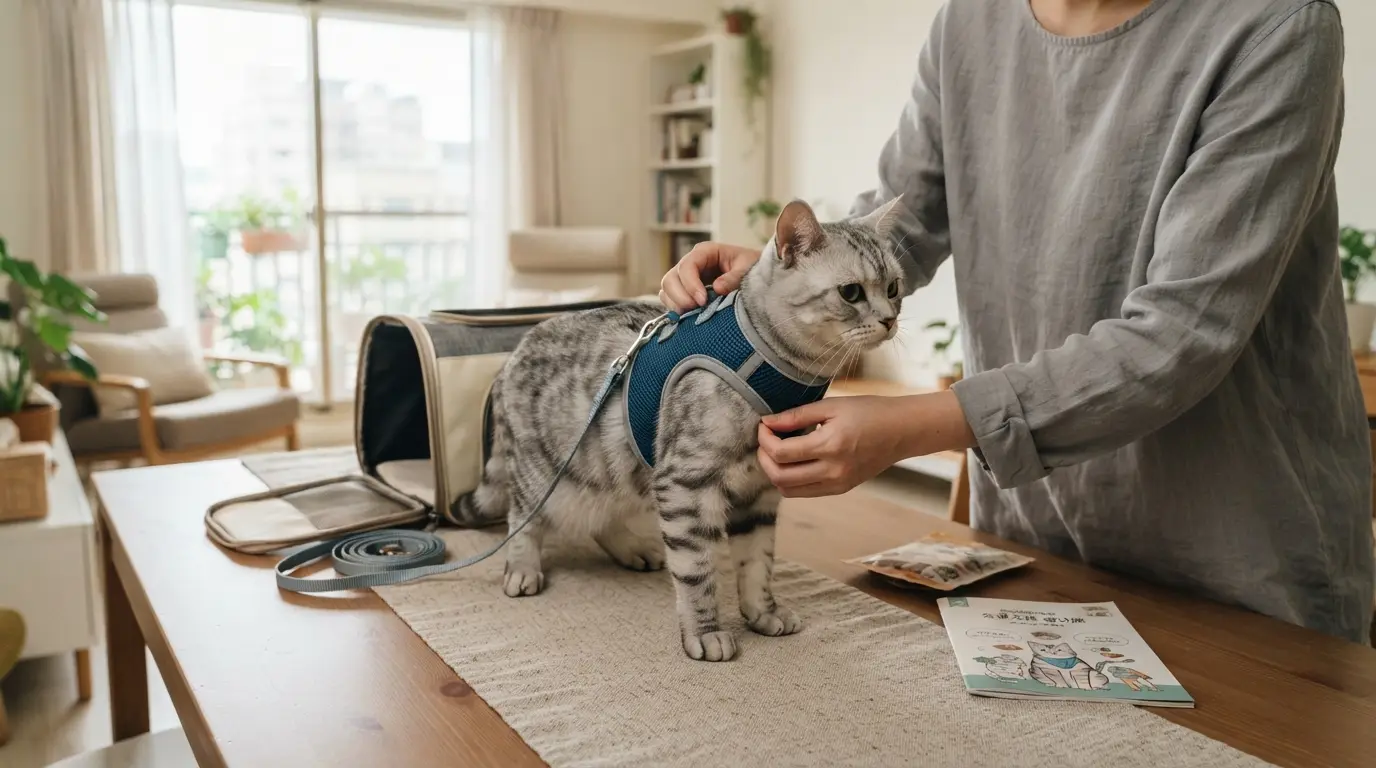
If you only want to buy one harness and use it for the most occasions, our advice is straightforward: choose a "vest-style" harness paired with a 1.5-1.8 meter fixed-length leash. This is because vest-style harnesses offer the largest coverage area across the chest and abdomen, distributing pulling force, and are the most difficult for cats to escape from in our experience at the shop. Conversely, the most common and cheapest H-style (figure-8) harnesses, while lightweight and breathable, are also the ones we've seen cats escape from most frequently – especially in high-stress environments like veterinary clinics.
In this article, we'll address the three most common needs for Taiwanese cat owners: taking your cat to the vet, letting them enjoy fresh air on the rooftop or balcony, and preventing escapes/emergency evacuation. We'll clearly explain the materials, wearing methods, cat acceptance, and a crucial point many overlook: a harness is never the sole line of defense.
Key Takeaways
- Vest-style harnesses offer the most coverage and the lowest escape risk. H-style (figure-8) harnesses are the lightest and most breathable but have the highest escape rate; they are only recommended for well-trained, stable cats in low-risk environments.
- The fit should be snug: "the one-finger rule". After adjustment, you should only be able to fit one finger (about two for larger cats) between the harness and your cat's neck and chest. If you can fit your whole hand, it's too loose, and your cat can slip out by backing away.
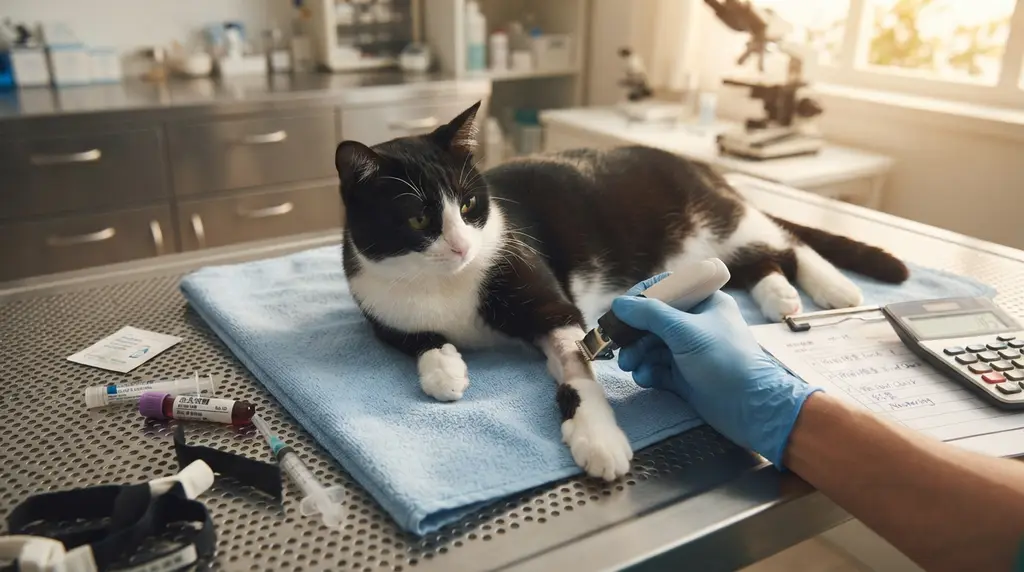
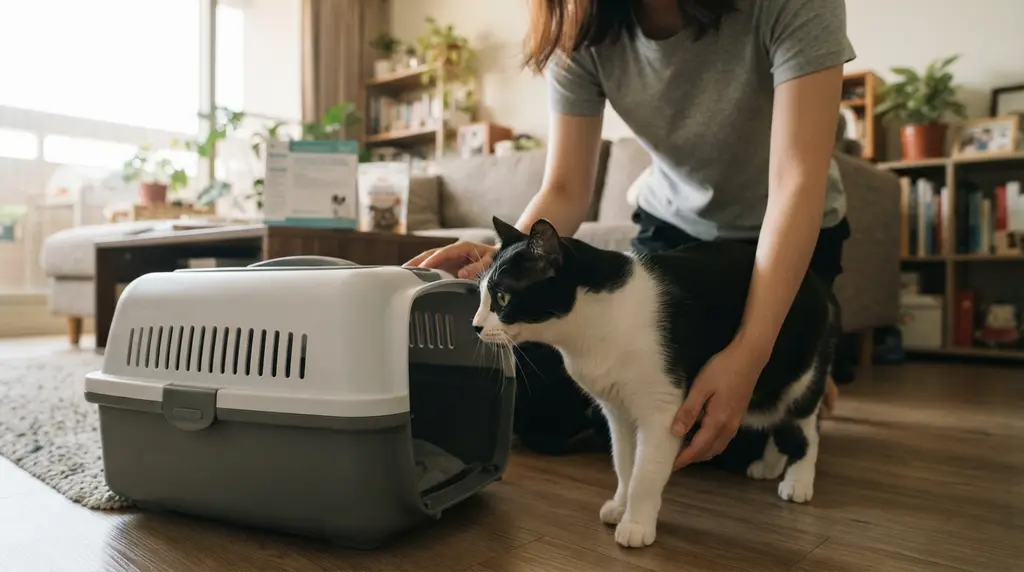
- For vet visits, always use a carrier as the primary restraint, with the harness as a backup. The harness serves as a secondary safety measure when the carrier door is open for examination or weighing, but you should never walk your cat into the clinic on a leash alone.
- Use a fixed-length leash of 1.5-1.8 meters; avoid retractable leashes. Retractable leashes can allow the cat to surge forward uncontrollably and concentrate force on a single point, which is more dangerous for the cat's neck and chest.
- For rooftop lounging, limit sessions to 10-15 minutes. Go before 7 AM or after 6 PM. Test the surface temperature by placing the back of your hand on it for 5 seconds; if it's too hot for you to keep your hand there, it's too hot for your cat's paws.
First, Understand Your Needs
Many people buy the wrong harness, not because it's a bad product, but because they apply the "walking" mindset to "vet visit" equipment. These three needs have entirely different requirements for the product.
Scenario 1: Taking Your Cat to the Vet (Safety > Comfort)
This is our most emphasized scenario. The vet clinic, with its unfamiliar smells, barking dogs, thermometers, and vaccination needles, is one of the most fear-inducing places for a cat. A frightened cat will exhibit behaviors they wouldn't normally: tucking their body backward, ducking their head down, and then slipping out from the front of the harness.
Therefore, the selection criteria for a vet visit harness are:
- A solid fabric panel covering the chest (vest-style or styles with a wide chest panel); avoid harnesses with only thin straps.
- At least 3 adjustment points (neck, chest, and sometimes abdomen) to ensure a snug fit.
- Plastic buckles or double Velcro closures that can be fastened with one hand (you often only have one free hand at the clinic).
- A leash ring located centrally on the back, preferably double-ringed or attached to the fabric panel, not sewn onto strap junctions.
A more important concept: Always use a carrier when going to the vet. The harness's role is to prevent the cat from jumping off the examination table and running into the hallway the moment the carrier door opens. We've seen too many escape incidents in parking lots, all caused by "getting the cat out of the car on a leash alone."
Scenario 2: Rooftop or Balcony Lounging (Balance of Breathability and Control)
Rooftops and enclosed balconies in Taiwanese apartments are often the only places indoor cats can experience fresh air and sunlight. For these short, semi-outdoor sessions, you can lean slightly towards comfort and breathability, but still pay attention to:
- Rooftop surfaces can exceed 50°C in summer. Test the surface temperature by placing the back of your hand on it for 5 seconds. If it's too hot, don't let your cat walk on it.
- 10-15 minutes is sufficient. Cats' heat dissipation efficiency is far lower than humans', and prolonged exposure can lead to heat exhaustion. The after-effects of heatstroke can be significant; you can read more in our article What Are the Long-Term Effects of Cat Heatstroke? Recovery Timeline, Home Care, and When to See a Vet.
- White or light-colored cats, and those with unpigmented ears and noses, need protection from UV rays. See Can Cats Get Sunburned? Skin Cancer Risks for White and Light-Colored Cats & Summer Sun Protection Guide.
- Ensure your cat is up-to-date on internal and external parasite prevention before going out. Bird droppings, stray cats, and insects on rooftops are all potential sources of infection.
- Keep the leash in your hand at all times; do not tie it to railings or pipes.
Scenario 3: Escape Prevention and Emergency Evacuation (Requires "Ready-to-Wear" Gear)
In situations like earthquakes, fires, an unsecured rooftop door, or a cat darting out an opening during a move, you won't have time to adjust multiple buckles. Therefore, the logic for "escape prevention" gear is:
- Keep a pre-adjusted harness readily accessible near the carrier at home. It should take only 5 seconds to put on.
- Pair it with a name tag that includes your phone number (more practical than GPS; the finder can contact you immediately).
- Ensure your cat's microchip is registered and your contact information is up-to-date. This is the most crucial step in finding your cat if they get lost.
- If you want to attach a tracker, choose a model under 15 grams and attach it to the back of the harness, not the collar, to prevent snagging.
Comprehensive Comparison of Three Harness Types
| Type | Coverage / Escape Risk | Breathability | Cat Acceptance | Suitable Scenarios |
|---|---|---|---|---|
| H-Style (Figure-8) | Low / High | Best | High (least restrictive) | Well-trained cats, short balcony time |
| Vest-Style | High / Low | Medium | Medium (initial resistance) | Vet visits, rooftop, outings, escape prevention |
| Step-In | Medium / Medium | Medium | Medium-High (no head-over) | Cats who dislike head-over, daily use |
| Bodysuit (Escape-Proof) | Highest / Lowest | Poorer | Low to Medium | Extremely escape-prone cats, long travel |
In our actual observations at the shop: More cats dislike having something go over their heads than dislike fabric against their bodies. So, if your first attempt with a vest-style harness fails, don't immediately switch types. Try a step-in style instead (where the cat steps its front paws in, and the harness fastens on the back). Many cats' resistance stems simply from "something covering their head."
Choosing Materials: The Truth About Three Common Fabrics
- Air Mesh: Lightest and coolest, ideal for summer. Downsides: claws can snag threads, and it can lose shape after a few washes. Inspect stitching every six months.
- Lycra / Stretchy Knit: Snug fit, good coverage, like a little vest, making escape difficult. Downside: can be warm, not suitable for long summer wear.
- Nylon / Canvas Webbing: Durable, strong, suitable for outdoors. Downside: can be stiff; short-haired or sensitive-skinned cats may develop red spots from friction under the arms.
- Leather: Not recommended. Heavy, stiff, difficult to clean, and unnecessary strength for a cat's weight.
When purchasing, pay attention to two details: whether the underarm area (base of the front legs) has binding or edging, and whether the leash ring is sewn onto the fabric panel or just onto the strap. These are the areas where we most often find abrasions and tears when fitting harnesses for boarding cats.
How to Measure Size? Is There an Objective Standard for Fit?
Don't just rely on the weight charts on the packaging. Cats of the same weight can have chest circumference differences of up to 6 cm. You need to measure two numbers:
1. Neck Circumference: Measure around the thickest part of the neck (not right under the head like a collar).
2. Chest Circumference: Measure around the widest part of the rib cage, just behind the front legs – this is the most critical measurement.
After adjusting, perform two checks:
- The One-Finger Rule: You should only be able to fit one finger (about two for larger cats) between the harness and your cat's neck and chest. If you can fit your whole hand, it's too loose.
- The Backward Test: Gently pull the leash forward at home and observe your cat's reaction when they try to back up. If there's any sliding space when they tense up, tighten the harness by one notch.
A 7-Day Training Plan to Help Your Cat Accept a Harness
Don't rush. There's no shortcut. Our desensitization process for shy cats at the hotel follows the same logic: end each step while the cat is still relaxed.
- Day 1-2: Place the harness near where your cat sleeps, letting them sniff and rub their scent on it. You can sprinkle some Premium Catnip nearby to create positive associations.
- Day 3: Gently place the harness on your cat's back for 3-5 seconds, then immediately give a treat and remove it. Repeat 3 times.
- Day 4: Buckle the harness without tightening, leave it on for 30 seconds, then remove it while feeding a meal.
- Day 5: Adjust to the correct snugness, wear for 3-5 minutes, and allow free movement around the house. If the cat lies down stiffly (as if restrained), shorten the duration and try again later.
- Day 6: Put on the harness and attach the leash, letting the leash drag on the floor (while you supervise) for 5 minutes.
- Day 7: Hold the leash and walk around indoors, letting the cat lead the way without pulling.
Observation indicators: Are the ears pointing forward normally? Are they actively walking? Do they show interest in eating? If the cat lies flat and motionless, ears pinned back, and pupils dilated after putting on the harness, it indicates excessive stress. Return to the previous stage. For timid cats, you can integrate this with the rhythm described in What to Do When Your Cat is Always Hiding? 5 Stages and Timeline for Socializing Shy Cats.
If you've just welcomed a new member to your family, don't rush harness training in the first week. Prioritize making the home a safe base for them. Refer to How to Care for Your New Cat in the First Week? Environment, Diet, and Preparations to Make Them Feel Secure.
5 Common Mistakes We See
1. Using only a collar with a leash: A cat's neck cannot withstand sudden pulling force. Collars are only suitable for ID tags.
2. Using a retractable leash: At the moment the leash extends, the cat may have already surged into the road or down stairs, making it impossible to retract in time.
3. Leaving the harness too loose "to avoid discomfort": Loose means escapable, and the consequences of escape are far more severe than temporary discomfort.
4. Only taking the harness out on the day of the outing: Cats will associate the harness with "bad things," leading to increased resistance.
5. Assuming a harness allows for walks in the neighborhood: Surfaces can be hot, there are dogs and cars, and for most indoor cats in Taiwan, the stress level outdoors far outweighs any potential enjoyment.
Finally, a practical reminder: If you're preparing equipment for a long trip, remember that a harness is just a travel tool. What your cat truly needs is a stable environment and routine. For extended absences, we still recommend boarding at a familiar facility. When booking a cat hotel in Banqiao, bring their usual harness and carrier; we can use them directly if veterinary care is needed. Other daily necessities can be purchased all at once at the shop.
Frequently Asked Questions
What type of cat harness do you recommend for first-time buyers?
We recommend starting with a vest-style or step-in harness. They offer good coverage and the lowest escape risk, covering both vet visits and balcony lounging needs. H-style harnesses, while cheap and breathable, pose too high a risk for cats not yet fully trained.
How to choose a cat leash? Can I use a dog leash?
You can use a lightweight leash for small dogs, but choose a fixed-length model of 1.5-1.8 meters with a lightweight buckle. Absolutely avoid retractable leashes and heavy metal buckles. The leash must attach to the ring on the back of the harness, not the collar.
My cat just lies down when wearing a harness. Is it broken or uncomfortable?
This is usually "tonic immobility" caused by stress, not a sign of compliance. Shorten the wearing time and return to the stage of wearing it for only 30 seconds before removal. Use treats or toys to encourage movement while wearing it.
Besides a harness, what other escape prevention items do I need for my cat?
All three are essential: a microchip with up-to-date registration and contact information, a name tag with your phone number, and a sturdy carrier. A tracker is a bonus; choose one under 15 grams and attach it to the back of the harness.
Is a harness mandatory for vet visits?
Not mandatory, but highly recommended. The carrier is the primary defense, and the harness serves as a secondary layer of security "the moment the carrier door opens," especially for procedures like blood draws, weighing, or dental exams. It significantly reduces the risk of the cat escaping from the examination room.
A final honest word: No matter how well you choose a harness, it's no substitute for "regular practice." A cat willing to spend a week gradually desensitizing will have much easier vet visits in the future. A cat you force the harness onto 10 minutes before leaving will likely result in injury to both of you. If your cat exhibits rapid breathing, continuous open-mouth panting, or becomes limp and unresponsive after wearing the harness or during an outing, stop immediately and seek veterinary attention.
Article by CatGarden Editorial Team
CatGarden offers curated supplies, cat boarding, and grooming
Book services or shop online.