Cat Hotel Visit Checklist: 6 Key Details to Check During Your Tour

When visiting a cat hotel, focus on ventilation, dog-cat separation, double-door safety, 24-hour monitoring, soundproofing, and cleaning procedures. This article provides a checklist and essential questions for your on-site inspection.
CatGarden Editorial TeamPublished 2026/09/01
Cat hotel visitCat boarding inspectionChoosing a cat hotelCat boarding BanqiaoCat boarding
Cat Hotel Visit Checklist: 6 Key Details to Check During Your Tour

When visiting a cat hotel, there are really only six key things to focus on: ventilation, dog-cat separation in traffic flow, double-door safety, 24-hour monitoring, soundproofing and the sound environment, and cleaning/disinfection protocols and vaccination requirements. A beautiful interior or large rooms with "Instagrammable" walls are not the priority. What truly determines whether your cat stays safe, healthy, and secure, preventing escapes, are these details hidden behind walls, above ceilings, and behind doors.

During our in-store tours with owners, we've found that over 80% of people first look at "Is the room big enough? Does it have a window view?" but no one looks up at the ventilation outlets or asks, "If a dog needs a bath, will it pass by the cat rooms?" This article compiles what to look for and what to ask during an on-site cat hotel inspection into a checklist you can screenshot and take with you.

Key Takeaways

  • The six core aspects of a cat hotel visit are: ventilation, dog-cat traffic flow separation, double-door safety, 24-hour monitoring, soundproofing, and cleaning/vaccination requirements. Aesthetic decor is not a factor.
  • Cat boarding spaces should ideally have mechanical ventilation (exhaust fans or air exchangers), not just air conditioning circulation. Insufficient ventilation is the most common cause of upper respiratory infections (cat colds) outbreaks in hotels.
  • A qualified cat hotel must have at least two doors leading to the outdoors or common hallways, ensuring that even if a cat escapes its room, it remains within a contained buffer zone.
  • Cats can hear frequencies up to approximately 64 kHz, far exceeding the human limit of 20 kHz. What sounds "reasonably quiet" to us, like barking dogs or a hairdryer, can be a significant stressor for cats. Therefore, separating dog and cat areas is more critical than soundproofing materials alone.
  • During your visit, request to see actual surveillance footage and angles, not just be told "we have cameras." Confirm that cameras cover every room and have night vision capabilities.

Why You MUST Visit in Person and Not Rely on Photos

Photos are taken from flattering angles, often with wide-angle lenses, and usually right after cleaning. An in-person visit provides three types of information that photos can never convey: smell, sound, and temperature.

These three factors are precisely the main sources of stress for cats in a hotel environment. When a cat enters a new space, its primary assessment of "Is this safe?" for the first 24 hours relies heavily on its nose and ears. If the first thing you notice upon entering is a strong urine odor or the sound of barking dogs next door, no matter how beautiful the room is, your cat might refuse to eat or drink for two days and hide behind the litter box.

Recommended visiting times: Weekdays between 2–4 PM (most hotels have finished their peak cleaning hours, allowing you to see the daily maintenance state), and book your appointment in advance. Establishments willing to let you visit anytime and answer your questions are usually those with more robust care protocols. Conversely, if they refuse a visit citing "fear of disturbing the cats' rest," they should at least offer a live video tour.

If you're still comparing prices and want to understand the local market rates, you can read this article as well: New Taipei Cat Hotel Recommendations: How to Choose in Banqiao, Sanchong, and Xinzhuang? Pricing and 6 Key Selection Points Explained.

Detail 1: Ventilation (Most Overlooked, Yet Most Important)

What to Look For

  • Look up for vents: Are there physical exhaust fans, ductwork, or air exchanger outlets on the ceiling or walls? Air conditioning vents alone mean the same air is just being circulated, not exchanged.
  • Use a tissue to test airflow (with the hotel's permission): If it's pulled towards the vent, it indicates it's actively working.
  • Ask if ventilation runs 24 hours a day or only "when guests are present."
  • Smell the air: When you enter the cat room area, is there a stuffy ammonia smell? This indicates insufficient ventilation or infrequent litter box cleaning. A healthy cat room should have "almost no smell" or "a faint smell of cat litter."

Why It's Important

Feline upper respiratory infections (feline herpesvirus, calicivirus) are primarily transmitted through droplets and contact. In enclosed spaces, virus concentrations can build up. In our experience, hotels with good ventilation have several times lower rates of cat colds during peak seasons. Additionally, the ammonia gas released from litter boxes itself irritates the respiratory tract, especially for cats with sensitive airways or a history of chronic rhinitis.

Incidentally, well-ventilated spaces also prevent excessive sneezing upon entry. If your cat tends to hiccup, sneeze, or breathe loudly, it's recommended to read this article before your visit: Are Cat Hiccups Normal? Distinguishing Between Eating Too Fast, Hairball Irritation, or Warning Signs of Respiratory Illness and inform the hotel staff proactively.

Check Temperature and Humidity Too

Ask the hotel for their temperature range settings for summer and winter. Our practical settings are room temperature 24–27°C and humidity 50–65%, and we have thermometers in the cat areas for owners to see. Establishments that can't provide specific numbers and only say "we have air conditioning" are usually not monitoring these conditions.

Detail 2: Dog-Cat Separation and Traffic Flow (Not Just "Separate Rooms" is Enough)

Many establishments claim "we separate dogs and cats," but the methods vary greatly. During your visit, physically walk the traffic flow and ask three questions:

1. Do dogs pass by the cat room entrances? (During bath times, entry/exit of boarding dogs, or playtime.)

2. Do the cat rooms and dog areas share the same air conditioning ductwork? Shared ducts mean shared air.

3. Do staff have a hand-washing/glove-changing/apron-changing procedure between the dog area and the cat area?

The ideal scenario is different floors or completely separate entrances/exits; the next best is the same floor but with a separate door and ventilation for the cat area, and dog traffic completely avoiding the cat area hallways. If "the cat rooms are right next to the grooming area, with only a sliding door in between," the sound pressure from hairdryers and barking will directly transmit, so be extra cautious with such layouts.

Cats are extremely sensitive to sound—their hearing limit is around 64 kHz, more than three times that of humans. What sounds "tolerable" to us is a constant alarm signal to a cat. The direct consequence of high stress is loss of appetite and refusal to use the litter box, leading to soft stools, dehydration, and even elevated liver enzymes after leaving the hotel.

Detail 3: Double-Door Safety and Escape Risks

This is, in my opinion, the detail that most clearly shows whether a cat hotel "truly understands cats."

On-Site Inspection Points

  • How many doors must be passed from the cat room to the outside? The answer should be at least "two." The first is the room door, and the second is the main cat area door or a buffer entryway, forming a contained zone in between.
  • Does the buffer zone have a screen door/gate? Some establishments install half-height anti-jump doors or a second screen door at the entrance.
  • What type of lock does the room door have? Swivel latches or double bolts are better than simple magnetic closures. Clever cats can indeed open magnetic doors.
  • Are there screen windows, and can they be securely locked? This is especially important for renovated older buildings or spaces with balconies.
  • Where is the handover point for the cat? The professional method is to open the carrier in a contained reception area, not at the shop entrance or in a hallway.

Our hotel's rule is: All carrier openings, litter changes, and feeding must be done after the door is closed, and handovers always occur within the double-door buffer zone. During your visit, you can directly ask: "If my cat bolts out of the room, how far can it possibly go?" If they can answer immediately and point it out, this place has practiced emergency procedures.

Also, check the type of travel carriers they recommend. If your cat's carrier is a zippered soft bag, the escape risk is actually higher than with a hard-shell carrier. You can refer to How to Choose the Best Cat Carrier: A Comprehensive Comparison for Vet Visits, Long Trips, and Escape Prevention.

Detail 4: 24-Hour Monitoring and Cat Observation Services

"We have cameras" is a statement almost every hotel makes; the key is what you can see.

Please request to view the footage on-site and confirm:

  • Do cameras cover every room, or is there just one in the hallway?
  • Is there night vision (infrared)? Cats are most active in the early morning and late night; daytime footage being clear is meaningless.
  • Can owners watch themselves? Some hotels provide login accounts for live streaming, while others send photos and videos daily. Both are acceptable, but the frequency should be clearly communicated beforehand.
  • How many days of footage are saved? At least 7 days are needed for post-incident review.
  • Is there staff overnight? This is a common misunderstanding. Most cat hotels do not have overnight staff (which is actually quieter for the cats). The crucial question is: "If the cameras detect an anomaly overnight, who is notified, and how quickly can they reach the hotel?" An establishment that can answer "staff receive push notifications on their phones and live nearby within X minutes" has a proper system.

Daily video clips also have a practical value: you can personally confirm if your cat is eating and urinating normally. This is especially important for senior cats or those with chronic illnesses, serving as the best remote monitoring tool. For related assessment advice, see Can Senior Cats Stay at a Cat Hotel? A Comprehensive Guide to Boarding Care, Medication, and Choosing the Right Hotel for Elderly Cats.

Detail 5: Soundproofing and Sound Environment

Soundproofing isn't just about "thick walls"; it involves three levels:

1. Between cats: Are rooms directly facing each other? Prolonged eye contact between two unfamiliar cats is a common hidden stressor in hotels. Good design incorporates solid partitions, staggered placement, or provides hiding spaces (cardboard boxes, fabric curtains, cat beds).

2. Between cats and people/equipment: How far are hairdryers, washing machines, dryers, and doorbells from the cat rooms?

3. Between cats and the outside: Ground-floor locations on busy streets can have significant motorcycle noise. Ask if they have soundproof windows.

The simple on-site test is: Stand in the cat room, close your eyes, and listen quietly for 30 seconds. Whatever you hear, the cat hears an amplified version of it.

Detail 6: Cleaning, Disinfection, Vaccination Requirements, and Isolation Protocols

This is where you can most clearly assess a facility's professionalism. Ask these questions:

  • How often are litter boxes cleaned? Ideally, at least twice a day, and cleaned immediately as needed.
  • What disinfectants are used? Answers like "diluted sodium hypochlorite" or products effective against feline calicivirus are acceptable. Simply saying "we use disinfectant" is insufficient. Be aware that phenolic compounds (like some phenol-based cleaners) are toxic to cats; professional establishments avoid them.
  • Are food and water bowls shared or assigned per room?
  • What are the vaccination requirements? At a minimum, require core combination vaccines to be up-to-date. Completely exclude cat hotels that do not require vaccinations, as this means a cat without protection might be housed next door.
  • Do they have isolation rooms? If a cat develops sneezing or diarrhea during its stay, can it be moved to a separate space?
  • Do they have a partner veterinary hospital, and how quickly can they reach it? Ask for its name.

Vaccination requirements for kittens are even stricter. You can refer to Can Kittens Stay at a Boarding Facility? A Complete Guide to Age, Vaccine Protection, and Separation Anxiety Assessment for information on the number of doses required for adequate protection.

Don't Be Fooled by "Surface Decor"

The following are designs that look good but have practical drawbacks:

Looks GreatWhat to Actually Watch Out For
Large glass transparent rooms, visible throughout the facilityCats are constantly observed, lacking hiding places = high stress
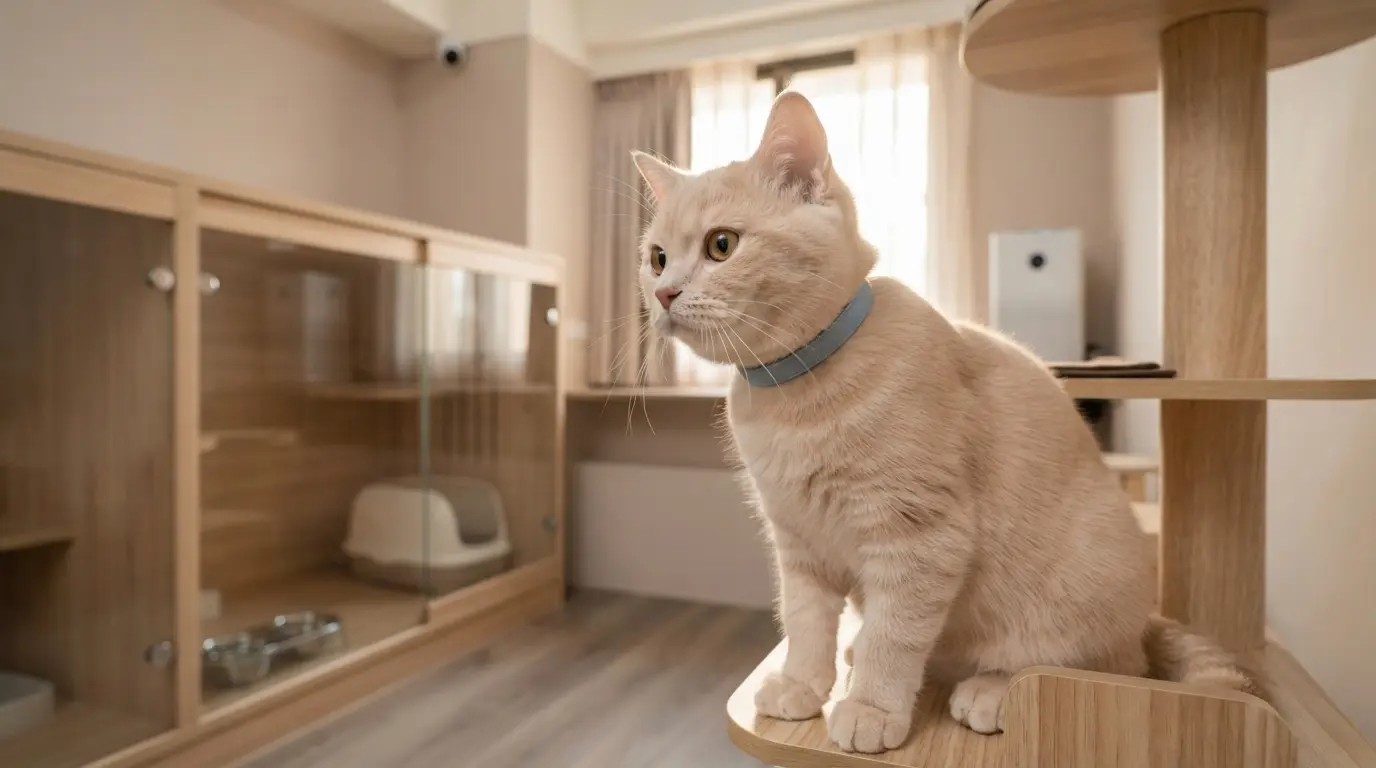
Super large rooms, with stairs and climbing structuresBigger isn't always better; cats on short-term stays usually only use one corner. Stability and privacy are more important than square footage.
Open shared spaces, cats interacting freelyUnfamiliar cats mixing can lead to fights and disease transmission, unless they are from the same household.
Wooden decor, seamless flooring look niceWood absorbs urine and odors, difficult to disinfect; check for mold in seams and baseboards.
Fragrances, diffusers to make the space smell goodEssential oils pose a risk of liver toxicity to cats. Deduct points immediately if you smell strong fragrances.
In-room heating lamps, electric blanketsEnsure they have protective covers and timers; cats could suffer low-temperature burns.

I want to add a note about the fragrance part: we've seen establishments that use diffusers to mask urine odors. A good cat hotel achieves a neutral smell through ventilation and cleaning, not by covering it up with scents.

6 Key Checklist Items for Your On-Site Visit (Can Be Screenshot)

Ventilation

  • [ ] Has physical exhaust/air exchange equipment, operating 24 hours
  • [ ] No ammonia smell or strong fragrances upon entry
  • [ ] Can state temperature/humidity settings; thermometer/hygrometer present

Traffic Flow

  • [ ] Dogs and cats do not share entrances/exits or air ducts
  • [ ] Dogs do not pass by cat room entrances
  • [ ] Staff have cleaning/changing procedures between dog and cat areas

Safety Doors

  • [ ] At least two doors from cat room to outside
  • [ ] Room door lock is not solely magnetic
  • [ ] Handover and carrier opening occur within a contained area

Monitoring

  • [ ] Camera in every room, including night vision
  • [ ] Footage saved for 7+ days
  • [ ] System for overnight anomaly notification and staff arrival
  • [ ] Clear cat-watching/reporting frequency

Soundproofing

  • [ ] Rooms do not face each other directly; has hiding options
  • [ ] Grooming equipment (hairdryers) are distant from cat rooms
  • [ ] Standing in the room and listening for 30 seconds is acceptable

Cleaning & Health

  • [ ] Clear vaccination requirements
  • [ ] Has isolation rooms
  • [ ] Can state disinfectant type and litter cleaning frequency
  • [ ] Has a partner veterinary hospital

Bonus Points: Ability to bring own litter/food/familiar blankets (to maintain scent familiarity); medication administration services for chronic conditions; provision of eating and elimination records before checkout.

Asking About Your Cat's Specific Needs is More Useful Than General Questions

Visiting is not just about inspecting the facility but also testing the staff's professionalism. You can pose your cat's specific issues and see how they respond:

  • "My cat has chronic kidney disease and needs medication/subcutaneous fluids twice a day. Do you offer this service? What is the additional charge?"
  • "He only eats a specific brand of wet food. Can I bring his own?"
  • "She doesn't drink much water. Will you track her water intake?"
  • "If he completely stops eating on the second day of his stay, what is your procedure?"

The last question is crucial. A professional answer would be: try self-provided food first/add water and warm it up, observe for a maximum duration, contact the owner after exceeding that time, and seek veterinary care if necessary. If the response is merely "cats do this sometimes, it'll pass in a couple of days," I would suggest looking elsewhere. A cat not eating for 24 hours requires intervention, not just "normal adaptation."

If your cat is elderly and underweight, this article is also worth reading: Is It Normal for Senior Cats to Lose Weight? 5 Major Disease Warning Signs and Nutritional Care Guide for Weight Gain in Elderly Cats.

Also, if your assessment suggests your cat is extremely sensitive to new environments, a hotel stay might not be the best option. Consider comparing Who Should Care for Your Cat When You Travel? A Comprehensive Comparison of Cat Boarding vs. In-Home Pet Sitting for Stress, Cost, and Emergencies before deciding.


The act of visiting is beneficial for both parties: you gain peace of mind, and we gain a clearer understanding of your cat's needs. CatGarden's facility in Banqiao was designed according to these six standards—independent cat area, 24-hour mechanical ventilation, double safety doors, and full room monitoring including night vision. You are welcome to visit during weekday afternoons to see for yourself before deciding, or directly book your Banqiao cat hotel stay and note "Request to visit" in the remarks. We will arrange a time to show you the complete traffic flow.

> Reminder: This article provides recommendations for evaluating boarding environments. If your cat experiences persistent vomiting, stops eating for over 24 hours, has not urinated for over 24 hours, or exhibits rapid breathing before or after boarding, seek immediate veterinary care and do not wait for observation at home.

Frequently Asked Questions

Do I need an appointment to visit a cat hotel? Can I just walk in?

An appointment is highly recommended. Staff may be busy with grooming or cleaning during walk-in times and unable to provide a tour. Furthermore, unexpected visitors entering the cat area can disturb resident cats. When booking your appointment, you can also ask "What time is best to observe daily operations?"

Can I bring my cat during the on-site visit?

Bringing your cat for a short visit is not recommended. The stress of an extra outing for just a viewing outweighs the benefits. A better approach is for you to visit first, confirm your booking, and then consider a one-night "trial stay" to help your cat acclimate to the environment.

Is it okay to stay at a cat hotel without overnight staff?

Yes, most cat hotels do not have overnight staff, which can actually be quieter for the cats. The key is to confirm they have 24-hour surveillance (including night vision), a system for anomaly notifications, and a defined response time for staff to reach the hotel. Ensure you have emergency contact information beforehand.

Are the size of the cat rooms and the presence of climbing structures important?

For short-term boarding (under a week), prioritize "quietness, hiding spots, and enough space to safely stand, turn, and stretch." Overly large rooms can make some cats more anxious. For medium to long-term boarding (over two weeks), consider vertical activity space and daily playtime arrangements.

Is it troublesome to require vaccination records from a hotel?

Quite the opposite. Requiring vaccination records indicates that the hotel prioritizes the health and safety of all its resident cats. Hotels that don't check vaccinations mean that a cat without protection might be housed next door, significantly increasing the risk of contagious diseases. It's best to avoid such establishments.


Article by CatGarden Editorial Team

CatGarden offers curated supplies, cat boarding, and grooming

Book services or shop online.
Back

Blog

Cat Hotel Visit Checklist: 6 Key Details to Check During Your Tour

CatGarden Editorial TeamPublished 2026/09/01
Cat hotel visitCat boarding inspectionChoosing a cat hotelCat boarding BanqiaoCat boarding
Cat Hotel Visit Checklist: 6 Key Details to Check During Your Tour

When visiting a cat hotel, there are really only six key things to focus on: ventilation, dog-cat separation in traffic flow, double-door safety, 24-hour monitoring, soundproofing and the sound environment, and cleaning/disinfection protocols and vaccination requirements. A beautiful interior or large rooms with "Instagrammable" walls are not the priority. What truly determines whether your cat stays safe, healthy, and secure, preventing escapes, are these details hidden behind walls, above ceilings, and behind doors.

During our in-store tours with owners, we've found that over 80% of people first look at "Is the room big enough? Does it have a window view?" but no one looks up at the ventilation outlets or asks, "If a dog needs a bath, will it pass by the cat rooms?" This article compiles what to look for and what to ask during an on-site cat hotel inspection into a checklist you can screenshot and take with you.

Key Takeaways

  • The six core aspects of a cat hotel visit are: ventilation, dog-cat traffic flow separation, double-door safety, 24-hour monitoring, soundproofing, and cleaning/vaccination requirements. Aesthetic decor is not a factor.
  • Cat boarding spaces should ideally have mechanical ventilation (exhaust fans or air exchangers), not just air conditioning circulation. Insufficient ventilation is the most common cause of upper respiratory infections (cat colds) outbreaks in hotels.
  • A qualified cat hotel must have at least two doors leading to the outdoors or common hallways, ensuring that even if a cat escapes its room, it remains within a contained buffer zone.
  • Cats can hear frequencies up to approximately 64 kHz, far exceeding the human limit of 20 kHz. What sounds "reasonably quiet" to us, like barking dogs or a hairdryer, can be a significant stressor for cats. Therefore, separating dog and cat areas is more critical than soundproofing materials alone.
  • During your visit, request to see actual surveillance footage and angles, not just be told "we have cameras." Confirm that cameras cover every room and have night vision capabilities.

Why You MUST Visit in Person and Not Rely on Photos

Photos are taken from flattering angles, often with wide-angle lenses, and usually right after cleaning. An in-person visit provides three types of information that photos can never convey: smell, sound, and temperature.

These three factors are precisely the main sources of stress for cats in a hotel environment. When a cat enters a new space, its primary assessment of "Is this safe?" for the first 24 hours relies heavily on its nose and ears. If the first thing you notice upon entering is a strong urine odor or the sound of barking dogs next door, no matter how beautiful the room is, your cat might refuse to eat or drink for two days and hide behind the litter box.

Recommended visiting times: Weekdays between 2–4 PM (most hotels have finished their peak cleaning hours, allowing you to see the daily maintenance state), and book your appointment in advance. Establishments willing to let you visit anytime and answer your questions are usually those with more robust care protocols. Conversely, if they refuse a visit citing "fear of disturbing the cats' rest," they should at least offer a live video tour.

If you're still comparing prices and want to understand the local market rates, you can read this article as well: New Taipei Cat Hotel Recommendations: How to Choose in Banqiao, Sanchong, and Xinzhuang? Pricing and 6 Key Selection Points Explained.

Detail 1: Ventilation (Most Overlooked, Yet Most Important)

What to Look For

  • Look up for vents: Are there physical exhaust fans, ductwork, or air exchanger outlets on the ceiling or walls? Air conditioning vents alone mean the same air is just being circulated, not exchanged.
  • Use a tissue to test airflow (with the hotel's permission): If it's pulled towards the vent, it indicates it's actively working.
  • Ask if ventilation runs 24 hours a day or only "when guests are present."
  • Smell the air: When you enter the cat room area, is there a stuffy ammonia smell? This indicates insufficient ventilation or infrequent litter box cleaning. A healthy cat room should have "almost no smell" or "a faint smell of cat litter."

Why It's Important

Feline upper respiratory infections (feline herpesvirus, calicivirus) are primarily transmitted through droplets and contact. In enclosed spaces, virus concentrations can build up. In our experience, hotels with good ventilation have several times lower rates of cat colds during peak seasons. Additionally, the ammonia gas released from litter boxes itself irritates the respiratory tract, especially for cats with sensitive airways or a history of chronic rhinitis.

Incidentally, well-ventilated spaces also prevent excessive sneezing upon entry. If your cat tends to hiccup, sneeze, or breathe loudly, it's recommended to read this article before your visit: Are Cat Hiccups Normal? Distinguishing Between Eating Too Fast, Hairball Irritation, or Warning Signs of Respiratory Illness and inform the hotel staff proactively.

Check Temperature and Humidity Too

Ask the hotel for their temperature range settings for summer and winter. Our practical settings are room temperature 24–27°C and humidity 50–65%, and we have thermometers in the cat areas for owners to see. Establishments that can't provide specific numbers and only say "we have air conditioning" are usually not monitoring these conditions.

Detail 2: Dog-Cat Separation and Traffic Flow (Not Just "Separate Rooms" is Enough)

Many establishments claim "we separate dogs and cats," but the methods vary greatly. During your visit, physically walk the traffic flow and ask three questions:

1. Do dogs pass by the cat room entrances? (During bath times, entry/exit of boarding dogs, or playtime.)

2. Do the cat rooms and dog areas share the same air conditioning ductwork? Shared ducts mean shared air.

3. Do staff have a hand-washing/glove-changing/apron-changing procedure between the dog area and the cat area?

The ideal scenario is different floors or completely separate entrances/exits; the next best is the same floor but with a separate door and ventilation for the cat area, and dog traffic completely avoiding the cat area hallways. If "the cat rooms are right next to the grooming area, with only a sliding door in between," the sound pressure from hairdryers and barking will directly transmit, so be extra cautious with such layouts.

Cats are extremely sensitive to sound—their hearing limit is around 64 kHz, more than three times that of humans. What sounds "tolerable" to us is a constant alarm signal to a cat. The direct consequence of high stress is loss of appetite and refusal to use the litter box, leading to soft stools, dehydration, and even elevated liver enzymes after leaving the hotel.

Detail 3: Double-Door Safety and Escape Risks

This is, in my opinion, the detail that most clearly shows whether a cat hotel "truly understands cats."

On-Site Inspection Points

  • How many doors must be passed from the cat room to the outside? The answer should be at least "two." The first is the room door, and the second is the main cat area door or a buffer entryway, forming a contained zone in between.
  • Does the buffer zone have a screen door/gate? Some establishments install half-height anti-jump doors or a second screen door at the entrance.
  • What type of lock does the room door have? Swivel latches or double bolts are better than simple magnetic closures. Clever cats can indeed open magnetic doors.
  • Are there screen windows, and can they be securely locked? This is especially important for renovated older buildings or spaces with balconies.
  • Where is the handover point for the cat? The professional method is to open the carrier in a contained reception area, not at the shop entrance or in a hallway.

Our hotel's rule is: All carrier openings, litter changes, and feeding must be done after the door is closed, and handovers always occur within the double-door buffer zone. During your visit, you can directly ask: "If my cat bolts out of the room, how far can it possibly go?" If they can answer immediately and point it out, this place has practiced emergency procedures.

Also, check the type of travel carriers they recommend. If your cat's carrier is a zippered soft bag, the escape risk is actually higher than with a hard-shell carrier. You can refer to How to Choose the Best Cat Carrier: A Comprehensive Comparison for Vet Visits, Long Trips, and Escape Prevention.

Detail 4: 24-Hour Monitoring and Cat Observation Services

"We have cameras" is a statement almost every hotel makes; the key is what you can see.

Please request to view the footage on-site and confirm:

  • Do cameras cover every room, or is there just one in the hallway?
  • Is there night vision (infrared)? Cats are most active in the early morning and late night; daytime footage being clear is meaningless.
  • Can owners watch themselves? Some hotels provide login accounts for live streaming, while others send photos and videos daily. Both are acceptable, but the frequency should be clearly communicated beforehand.
  • How many days of footage are saved? At least 7 days are needed for post-incident review.
  • Is there staff overnight? This is a common misunderstanding. Most cat hotels do not have overnight staff (which is actually quieter for the cats). The crucial question is: "If the cameras detect an anomaly overnight, who is notified, and how quickly can they reach the hotel?" An establishment that can answer "staff receive push notifications on their phones and live nearby within X minutes" has a proper system.

Daily video clips also have a practical value: you can personally confirm if your cat is eating and urinating normally. This is especially important for senior cats or those with chronic illnesses, serving as the best remote monitoring tool. For related assessment advice, see Can Senior Cats Stay at a Cat Hotel? A Comprehensive Guide to Boarding Care, Medication, and Choosing the Right Hotel for Elderly Cats.

Detail 5: Soundproofing and Sound Environment

Soundproofing isn't just about "thick walls"; it involves three levels:

1. Between cats: Are rooms directly facing each other? Prolonged eye contact between two unfamiliar cats is a common hidden stressor in hotels. Good design incorporates solid partitions, staggered placement, or provides hiding spaces (cardboard boxes, fabric curtains, cat beds).

2. Between cats and people/equipment: How far are hairdryers, washing machines, dryers, and doorbells from the cat rooms?

3. Between cats and the outside: Ground-floor locations on busy streets can have significant motorcycle noise. Ask if they have soundproof windows.

The simple on-site test is: Stand in the cat room, close your eyes, and listen quietly for 30 seconds. Whatever you hear, the cat hears an amplified version of it.

Detail 6: Cleaning, Disinfection, Vaccination Requirements, and Isolation Protocols

This is where you can most clearly assess a facility's professionalism. Ask these questions:

  • How often are litter boxes cleaned? Ideally, at least twice a day, and cleaned immediately as needed.
  • What disinfectants are used? Answers like "diluted sodium hypochlorite" or products effective against feline calicivirus are acceptable. Simply saying "we use disinfectant" is insufficient. Be aware that phenolic compounds (like some phenol-based cleaners) are toxic to cats; professional establishments avoid them.
  • Are food and water bowls shared or assigned per room?
  • What are the vaccination requirements? At a minimum, require core combination vaccines to be up-to-date. Completely exclude cat hotels that do not require vaccinations, as this means a cat without protection might be housed next door.
  • Do they have isolation rooms? If a cat develops sneezing or diarrhea during its stay, can it be moved to a separate space?
  • Do they have a partner veterinary hospital, and how quickly can they reach it? Ask for its name.

Vaccination requirements for kittens are even stricter. You can refer to Can Kittens Stay at a Boarding Facility? A Complete Guide to Age, Vaccine Protection, and Separation Anxiety Assessment for information on the number of doses required for adequate protection.

Don't Be Fooled by "Surface Decor"

The following are designs that look good but have practical drawbacks:

Looks GreatWhat to Actually Watch Out For
Large glass transparent rooms, visible throughout the facilityCats are constantly observed, lacking hiding places = high stress
Super large rooms, with stairs and climbing structuresBigger isn't always better; cats on short-term stays usually only use one corner. Stability and privacy are more important than square footage.
Open shared spaces, cats interacting freelyUnfamiliar cats mixing can lead to fights and disease transmission, unless they are from the same household.
Wooden decor, seamless flooring look niceWood absorbs urine and odors, difficult to disinfect; check for mold in seams and baseboards.
Fragrances, diffusers to make the space smell goodEssential oils pose a risk of liver toxicity to cats. Deduct points immediately if you smell strong fragrances.
In-room heating lamps, electric blanketsEnsure they have protective covers and timers; cats could suffer low-temperature burns.

I want to add a note about the fragrance part: we've seen establishments that use diffusers to mask urine odors. A good cat hotel achieves a neutral smell through ventilation and cleaning, not by covering it up with scents.

6 Key Checklist Items for Your On-Site Visit (Can Be Screenshot)

Ventilation

  • [ ] Has physical exhaust/air exchange equipment, operating 24 hours
  • [ ] No ammonia smell or strong fragrances upon entry
  • [ ] Can state temperature/humidity settings; thermometer/hygrometer present

Traffic Flow

  • [ ] Dogs and cats do not share entrances/exits or air ducts
  • [ ] Dogs do not pass by cat room entrances
  • [ ] Staff have cleaning/changing procedures between dog and cat areas

Safety Doors

  • [ ] At least two doors from cat room to outside
  • [ ] Room door lock is not solely magnetic
  • [ ] Handover and carrier opening occur within a contained area

Monitoring

  • [ ] Camera in every room, including night vision
  • [ ] Footage saved for 7+ days
  • [ ] System for overnight anomaly notification and staff arrival
  • [ ] Clear cat-watching/reporting frequency

Soundproofing

  • [ ] Rooms do not face each other directly; has hiding options
  • [ ] Grooming equipment (hairdryers) are distant from cat rooms
  • [ ] Standing in the room and listening for 30 seconds is acceptable

Cleaning & Health

  • [ ] Clear vaccination requirements
  • [ ] Has isolation rooms
  • [ ] Can state disinfectant type and litter cleaning frequency
  • [ ] Has a partner veterinary hospital

Bonus Points: Ability to bring own litter/food/familiar blankets (to maintain scent familiarity); medication administration services for chronic conditions; provision of eating and elimination records before checkout.

Asking About Your Cat's Specific Needs is More Useful Than General Questions

Visiting is not just about inspecting the facility but also testing the staff's professionalism. You can pose your cat's specific issues and see how they respond:

  • "My cat has chronic kidney disease and needs medication/subcutaneous fluids twice a day. Do you offer this service? What is the additional charge?"
  • "He only eats a specific brand of wet food. Can I bring his own?"
  • "She doesn't drink much water. Will you track her water intake?"
  • "If he completely stops eating on the second day of his stay, what is your procedure?"

The last question is crucial. A professional answer would be: try self-provided food first/add water and warm it up, observe for a maximum duration, contact the owner after exceeding that time, and seek veterinary care if necessary. If the response is merely "cats do this sometimes, it'll pass in a couple of days," I would suggest looking elsewhere. A cat not eating for 24 hours requires intervention, not just "normal adaptation."

If your cat is elderly and underweight, this article is also worth reading: Is It Normal for Senior Cats to Lose Weight? 5 Major Disease Warning Signs and Nutritional Care Guide for Weight Gain in Elderly Cats.

Also, if your assessment suggests your cat is extremely sensitive to new environments, a hotel stay might not be the best option. Consider comparing Who Should Care for Your Cat When You Travel? A Comprehensive Comparison of Cat Boarding vs. In-Home Pet Sitting for Stress, Cost, and Emergencies before deciding.


The act of visiting is beneficial for both parties: you gain peace of mind, and we gain a clearer understanding of your cat's needs. CatGarden's facility in Banqiao was designed according to these six standards—independent cat area, 24-hour mechanical ventilation, double safety doors, and full room monitoring including night vision. You are welcome to visit during weekday afternoons to see for yourself before deciding, or directly book your Banqiao cat hotel stay and note "Request to visit" in the remarks. We will arrange a time to show you the complete traffic flow.

> Reminder: This article provides recommendations for evaluating boarding environments. If your cat experiences persistent vomiting, stops eating for over 24 hours, has not urinated for over 24 hours, or exhibits rapid breathing before or after boarding, seek immediate veterinary care and do not wait for observation at home.

Frequently Asked Questions

Do I need an appointment to visit a cat hotel? Can I just walk in?

An appointment is highly recommended. Staff may be busy with grooming or cleaning during walk-in times and unable to provide a tour. Furthermore, unexpected visitors entering the cat area can disturb resident cats. When booking your appointment, you can also ask "What time is best to observe daily operations?"

Can I bring my cat during the on-site visit?

Bringing your cat for a short visit is not recommended. The stress of an extra outing for just a viewing outweighs the benefits. A better approach is for you to visit first, confirm your booking, and then consider a one-night "trial stay" to help your cat acclimate to the environment.

Is it okay to stay at a cat hotel without overnight staff?

Yes, most cat hotels do not have overnight staff, which can actually be quieter for the cats. The key is to confirm they have 24-hour surveillance (including night vision), a system for anomaly notifications, and a defined response time for staff to reach the hotel. Ensure you have emergency contact information beforehand.

Are the size of the cat rooms and the presence of climbing structures important?

For short-term boarding (under a week), prioritize "quietness, hiding spots, and enough space to safely stand, turn, and stretch." Overly large rooms can make some cats more anxious. For medium to long-term boarding (over two weeks), consider vertical activity space and daily playtime arrangements.

Is it troublesome to require vaccination records from a hotel?

Quite the opposite. Requiring vaccination records indicates that the hotel prioritizes the health and safety of all its resident cats. Hotels that don't check vaccinations mean that a cat without protection might be housed next door, significantly increasing the risk of contagious diseases. It's best to avoid such establishments.


Article by CatGarden Editorial Team

One email a month of cat-care tips

Hand-picked care, behavior and grooming tips once a month. Subscribe and we will send you our three most-read articles right away.

Keep reading