What to Do With a New Cat and an Old Cat? Vet-Approved "Gradual Introduction Method" in 5 Steps to Create a Harmonious Multi-Cat Household!
In a multi-cat environment, felines primarily establish peaceful coexistence through scent marking, spatial separation, and food resource allocation. The core principle of the gradual introduction method is to allow new and existing cats to get to know each other through scent first, then gradually reduce the distance for visual and physical contact.
In a multi-cat environment, felines primarily establish peaceful coexistence through scent marking, spatial separation, and food resource allocation. The core principle of the gradual introduction method is to allow new and existing cats to get to know each other through scent first, then gradually reduce the distance for visual and physical contact. During our extensive experience hosting multiple cats at CatGarden, we've observed that providing ample buffer time during initial introductions is the most critical factor for successful multi-cat household integration. Here's a 5-step gradual introduction method to help you smoothly create a harmonious multi-cat family.
Key takeaways
- In multi-cat households, felines primarily establish coexistence through scent marking, spatial separation, and resource allocation. Providing ample buffer time for integration is crucial for success.
- Regarding pairing difficulty, 'two kittens' are the easiest to bond, and 'one adult cat + one kitten' also have a high success rate. 'Two adult cats' are the most challenging due to strong territorial instincts.
- The gradual introduction method includes 5 steps: 'scent exchange, spatial isolation for at least a week, feeding through the door, brief visual introductions through a barrier, and supervised interaction'. The entire process can take several weeks to months.
- Feeding through the door is a key step in building positive associations. By placing food on both sides of the isolation room door and gradually moving the bowls closer, cats can associate the other's presence with delicious food.
First, Assess! Success Rates for Different Age Combinations
Before bringing a new cat home, understanding the "pairing difficulty" for different age combinations can better prepare you mentally.
1. [Easiest] Two Kittens
This is the ideal combination! Kittens are more curious than territorial, possess strong social skills, and like two young children, they can quickly build a deep "camaraderie" through playful roughhousing and mutual learning. They usually maintain a good relationship as they grow older.
2. [Quite Easy] One Adult Cat + One Kitten
This is also a combination with a high success rate! For the resident adult cat, a smaller kitten poses less of a threat and is less likely to be seen as a competitor for territory. In most cases, the adult cat will be tolerant of the kitten and may even take on a "caretaker" role.
3. [Most Difficult] Two Adult Cats
This is the most challenging combination! Two mature cats with established personalities have strong territorial instincts and set habits. When they meet, they can easily develop a "king-doesn't-meet-king" competitive mentality, vying for food, litter boxes, and the owner's attention, potentially leading to intense fights.
From Rivals to Buddies! The 5-Step "Gradual Introduction Method" Guide
Regardless of your combination, remember the golden rule: "Isolate first, then introduce gradually." Never throw a new cat directly in front of an existing cat and force them to "become friends." This will only backfire!
Step 1: Scent Exchange, Familiarize Each Other
For the first few days after the new cat arrives, confine them to a separate room (isolation room) with their own food, water, and litter box. During these days, let them "hear but not see" each other.
- Method: Use a clean sock or towel to gently rub the cheeks (where pheromones are located) of each cat, then swap them for the other cat to smell. This allows them to become familiar with each other's scent before seeing each other.
Step 2: Spatial Isolation, Draw Boundaries
Keep the new cat in the isolation room for at least a week, while the existing cat can move freely in the rest of the house. This gives the new cat time to adapt to the new environment's smells and sounds, while also letting the existing cat know "there's a new member, but my territory is still mine."
Step 3: Feed Through the Door, Build Positive Associations
This is the most crucial step! Use the cats' favorite "food" to build positive associations.
- Method: During meal times, place each cat's food bowl on opposite sides of the isolation room door, allowing them to eat while separated by the door. Start with the bowls a bit further from the door and gradually move them closer. This is a great time to bring out your secret weapon, such as CatGarden Luxury Functional Cans. Its rich aroma and delicious meat texture will help them associate "the other cat's presence" with "awesome treats"!
Step 4: Brief Encounters, Short and Sweet
Once they are completely relaxed eating through the door, with no hissing or growling, you can attempt brief meetings.
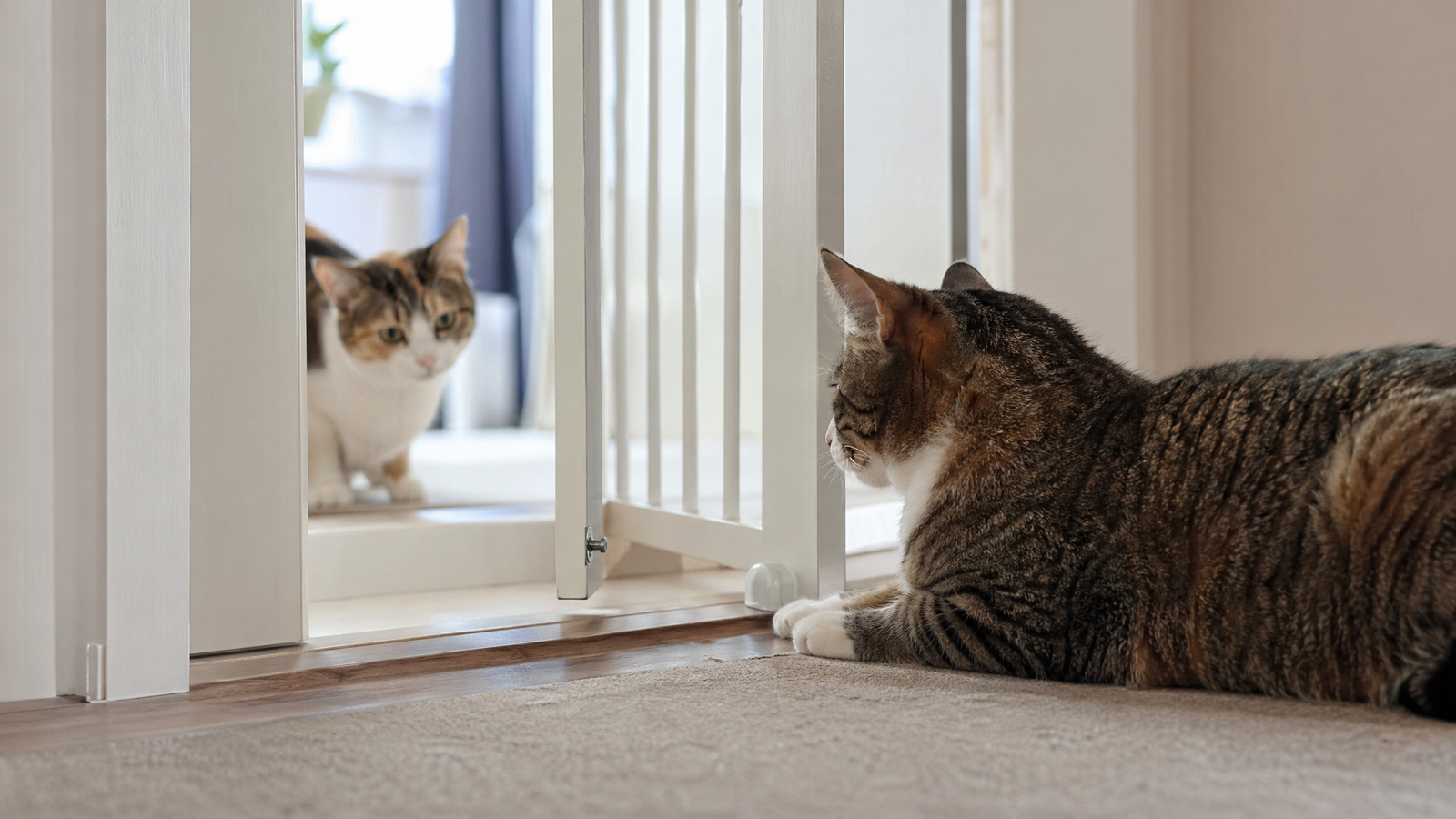
- Method: Use a pet gate or leave the door slightly ajar, allowing them to see each other but not make direct contact. Start with meetings lasting a few minutes. If the atmosphere is good, reward them with treats. If either cat shows signs of stress, immediately end the meeting and return to the previous step.
Step 5: Supervised Interaction
If all goes smoothly, you can allow them to interact in the same space under your supervision.
- Method: Have toys like feather wands ready to redirect their attention. Make their first shared experiences filled with fun activities like play and rewards. Delicious treats are also very important during this phase. Timely offering of CatGarden Luxury Functional Cans can effectively reinforce their peaceful bond.
The entire process may take several weeks or even months. Patience is the only and most important key.
Is your home also a multi-cat household? How did you get your masters to coexist peacefully? Feel free to share your unique tips in the comments below!
Further Reading
- Decoding Cat Body Language: Understand Emotions and Needs Through 9 Actions
- Signs Your Cat Loves You: 4 Protective Behaviors and Affectionate Signals Explained
- Signs of Cat Stress: Common Warnings, Causes, and Relief Methods
\n
→ Learn about CatGarden - The Brand Closest to Cats\n
FAQ
Which cat age combination is easiest to pair successfully?
'Two kittens' are the most ideal and easiest combination, as kittens are more curious than territorial; 'one adult cat + one kitten' also has a high success rate, with adult cats generally being more tolerant of kittens.
How should new cats be spatially isolated when first brought home?
The new cat should be housed in a separate room with its own food, water, and litter box for at least a week, maintaining a 'hear but not see' state, allowing the resident cat to retain its original territory.
How do you perform 'scent exchange' for new and resident cats?
Use a clean sock or towel to gently rub the cheeks (where pheromones are located) of each cat, then swap them for the other cat to smell, allowing them to familiarize themselves with each other's scent before meeting in person.
What should be done if new and resident cats hiss or show tension during brief introductions?
Brief introductions should be done using a pet gate or a gap in the door. If either cat shows signs of tension, hissing, or growling, the introduction must be immediately ended, and you should revert to the previous step.
CatGarden offers curated supplies, cat boarding, and grooming
Book services or shop online.