Can Cats Get Sunburned? Skin Cancer Risks for White and Light-Colored Cats & Summer Sun Protection Guide
Cats can get sunburned, especially on their ear tips and noses, particularly if they are white or light-colored. Prolonged exposure can even lead to skin cancer. This article will help you identify signs of sunburn, differentiate it from heatstroke and ear infections, and provide practical tips for sun protection at home.
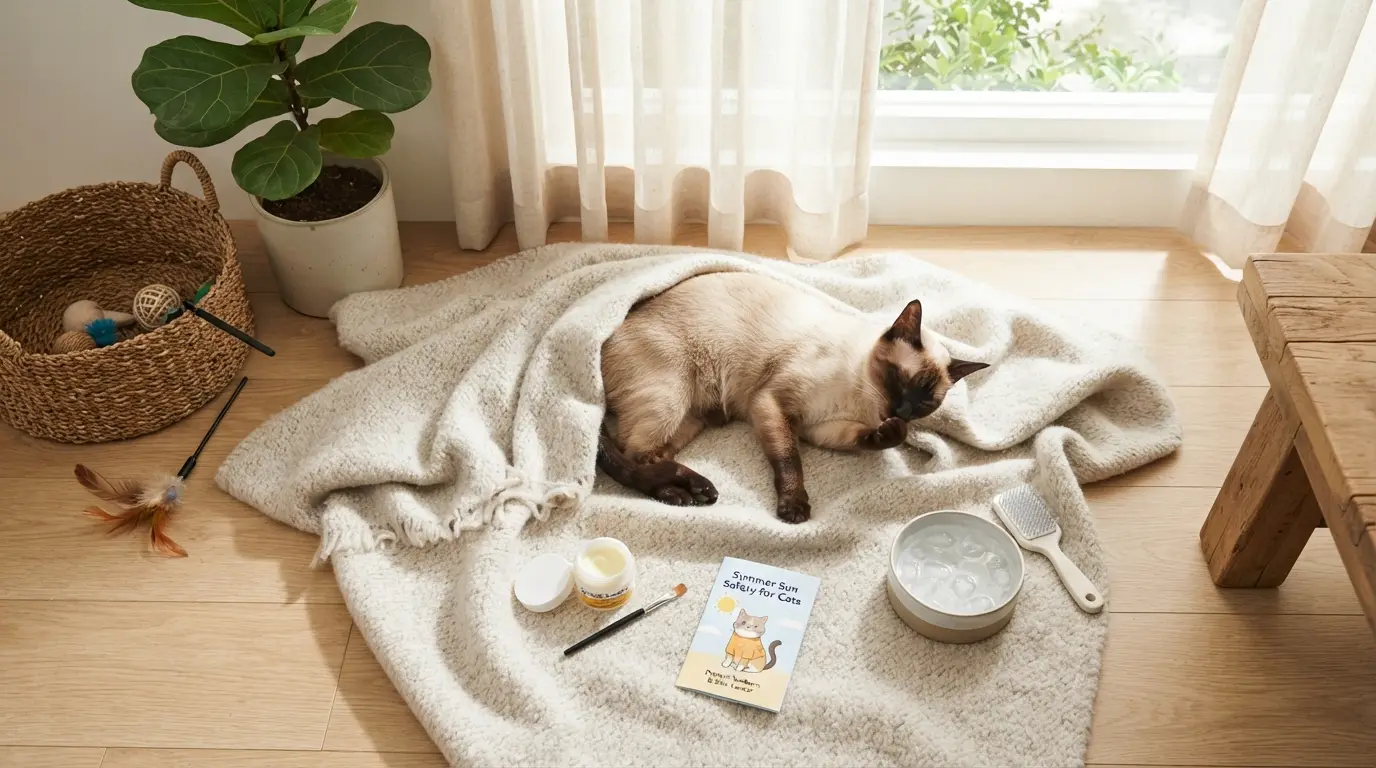
Cats can indeed get sunburned, and it's not just about "getting red"—areas with sparse fur like ear tips, noses, and around the eyes can develop hair loss, scabs, and eventually lead to squamous cell carcinoma (a type of skin cancer) with prolonged sun exposure. The highest risk is for white and light-colored cats, as their skin lacks melanin, a natural sunblock, making them several times more susceptible to damage from the same amount of sun as darker cats.
Key Takeaways
- Cat sunburn most commonly occurs on the ear tips, bridge of the nose, nose tip, eyelids, and around the lips—these five areas have thin fur and are directly exposed to the sun.
- White and light-colored cats have a significantly higher risk of solar dermatitis and squamous cell carcinoma than dark-colored cats due to their lack of melanin protection; the ear tips and noses of pure white cats are typical sites for these conditions.
- Standard clear glass blocks most UVB rays, but UVA rays can still penetrate, meaning cats lounging by the window all afternoon can accumulate long-term damage.
- In Taiwan, the strongest UV rays during summer are between 10 AM and 4 PM. During this period, avoid prolonged direct sun exposure for cats on uncovered balconies or in front of floor-to-ceiling windows.
- After shaving (especially shaving down to the skin in summer), the 2-3 months following are a high-risk period for sunburn, as the pink skin offers almost no protection.
- Human sunscreens containing zinc oxide or salicylates are toxic to cats if ingested.
Why Do Cats Get Sunburned? Their Fur Isn't as Protective as You Think
Many owners instinctively think, "Cats have fur, they shouldn't get sunburned." However, a cat's fur distribution is uneven: the ear flaps (especially the outer edges of the tips) have very short and sparse fur, the bridge of the nose to the tip is almost bare skin, and the areas around the eyes and lips also have thin fur. These areas are essentially "unclothed" in the sun.
Furthermore, cats' favorite napping position is often lying on their side, belly up, with their head turned towards the light source—this posture exposes their ears, nose, and belly to the sun simultaneously, hitting three of their most vulnerable spots.
When we examine cats during health checks or grooming at our facility, cats with rough, sandpaper-like peeling on their ear tips are almost exclusively white or cream-colored cats from homes with large south- or west-facing windows where they are allowed to sunbathe freely.
Why White and Light-Colored Cats Are Particularly Prone to Sunburn
The key is melanin. Melanin absorbs ultraviolet radiation and acts as the skin's natural sunblock. White cats, cream-colored cats, light calicos, and light-colored pointed breeds (like Ragdolls, or the non-face areas of Siamese) have very little melanin in their skin. UV rays can directly damage the DNA in their epidermal cells, causing cumulative damage.
This damage isn't a one-time event; it accumulates year after year, like savings. This is why clinically, the white cats that develop skin cancer are often middle-aged to elderly (over 8 years old)—their skin has been slowly damaged by years of sun exposure.
High-Risk List: See If Your Cat Is On It
- Pure white cats, or cats with predominantly white fur (larger white areas, white ears are most dangerous)
- Cream, light cream, pale silver cats
- Cats recently shaved or with shaved bellies or armpits
- Hairless breeds (like Sphynx) and elderly cats with very sparse fur
- Cats with large floor-to-ceiling windows, balconies, or those allowed on rooftops/in yards
- Cats with a history of ear edge skin conditions or chronic hair loss
If you have a pure white cat living in a west-facing home, please read on.
What we use for this
CatGarden’s own products, shipped from Taiwan Quick-Dry Pet TowelFrom CA$49.35 per pieceFree shipping on multi-packs
What Does Cat Sunburn Look Like? Four Stages from Redness to Skin Cancer
Sunburn isn't an "on or off" state; it's a continuum. Here are the typical disease progression stages we've confirmed with our collaborating veterinarians, which owners can use to assess their cat's condition.
Stage 1: Acute Sunburn (From Exposure to 2-3 Days Later)
- Ear tips and nose tip are red and feel warmer to the touch than other areas.
- The cat may shake its head or flinch when its ears are touched, showing discomfort.
- Skin may be slightly swollen and dry.
- Some may experience mild peeling.
Moving to a cool, shaded area and avoiding further sun exposure usually resolves this within a few days.
Stage 2: Repeated Sunburn, Solar Dermatitis (Weeks to Months)
- Hair loss on the edges of the ear tips, revealing pink skin.
- Skin becomes rough and flaky, like fine sandpaper.
- Ear edges may start to curl slightly and become thinner.
- Clear pink patches appear on the bridge of the nose.
Stage 3: Precancerous Lesions (Carcinoma in Situ)
- Crusting or small ulcers appear on the ear tips or nose tip, healing and breaking open repeatedly.
- Lesions do not heal for over 2-4 weeks.
- Occasional bleeding or oozing.
- The cat may frequently scratch its ears or rub its nose.
This stage is the most critical time to seek veterinary care. Early intervention (e.g., partial ear amputation) has an excellent prognosis; delaying treatment until it invades deeper layers changes the outcome significantly.
Stage 4: Squamous Cell Carcinoma
- Obvious ulcers, lumps, or tissue loss (ear edges may look as if bitten off).
- Bleeding, odor.
- Nasal tip deformation, affecting breathing or eating.
Please remember one thing: a wound on a cat's ear tip or nose that doesn't heal for "more than two weeks" is never a minor issue. Don't dismiss it as a scratch from a fight or flea allergy and just keep observing.
Sunburn, Heatstroke, and Ear Infections: How to Differentiate?
These three conditions can be easily confused during summer because the initial symptom is often "red and hot ears." Here's a simple breakdown:
| Condition | Primary Location | Systemic Symptoms | Timing |
|---|---|---|---|
| Sunburn | Outer ear tips, bridge of the nose (sun-exposed areas) | Normal energy, normal appetite | Appears after sun exposure |
| Overheating/Heatstroke | Entire ears + paw pads, body feels hot | Panting, tongue out, weakness, drooling | During or immediately after high-temperature exposure |
| Otitis Externa/Infection | Inner ear canal, inner ear flap | Scratching ears, head shaking, ear discharge or odor | Unrelated to sun exposure, often unilateral |
The key differentiator: Sunburn causes redness on the "outer, sun-exposed surface," while inflammation causes redness "inside the ear canal opening," and heatstroke causes overall body heat. For a more detailed diagnostic process, refer to What Causes Red and Hot Cat Ears? Differentiating Heatstroke, Infection, and Sunburn – follow it if you encounter this during summer.
If your cat exhibits rapid panting, instability, or red/purple gums or tongue, prioritize heatstroke over sunburn. Refer to Are Cats Sensitive to Heat? Heatstroke Signs, Panting, and Summer Cooling Guide and seek immediate veterinary care. Post-heatstroke care and potential complications are detailed in What Are the Long-Term Effects of Heatstroke in Cats? Recovery Timeline, Home Care, and When to See a Vet.
Summer Sun Protection Guide for Cats: 7 Practical Tips
The focus of sun protection isn't "applying products" but rather controlling sun exposure dosage. This is far more effective for cats than applying sunscreen, as they will lick it off.
1. Avoid Direct Sun Between 10 AM and 4 PM
This is when UV levels are highest in Taiwan during summer. The solution is simple: partially close the curtains on your cat's favorite window during these hours, or move their favorite resting spots or scratching posts 1-2 meters away from direct sunlight. You don't need to forbid sunbathing entirely; just encourage it during the cooler morning or evening hours.
2. Install UV-Blocking Window Film or Use Sheer Curtains
Regular glass blocks most UVB rays, but UVA penetrates—this is a common oversight for many owners: "My cat is strictly indoors, how could it get sunburned?" Indoor cat sunburn almost always occurs near windows. Installing a UV-blocking window film or hanging sheer white curtains that allow light but block direct sun is a highly cost-effective measure.
3. Provide an Alternative "Warm but UV-Free" Spot
Cats seek warmth, not necessarily UV rays. Before removing the sunbathing spot, prepare an alternative nearby: a soft cushion against a wall, a heated mat (unplugged in summer; cats appreciate the plushness), or their favorite high perch. Cats usually adapt quickly. This is why, as mentioned in How to Choose a Cat Tree That Won't Be Ignored? A Complete Guide to Height, Stability, and Cat Acceptance, "location is more important than style"—placing a cat tree in a well-lit but not directly sunlit corner will ensure it's frequently used.
4. Treat Cats as "Sensitive Skin" for 2-3 Months After Shaving
Many owners shave their cats in summer for cooling, but the exposed skin has little protection, especially large areas of pink skin on the back and belly. We always advise during grooming consultations: avoid direct sun exposure for 2-3 months after shaving until the fur grows back. For white cats, we often recommend a trim rather than a full shave, or only shaving areas like the belly and armpits that don't face the sun. For details on shaving options and pricing, refer to How Much Does Cat Shaving Cost? A Breakdown of Add-ons, Medicated Baths, and Styling Prices. If unsure about the extent of shaving, it's best to discuss your cat's skin color and living environment directly with the groomer when you book an appointment.
5. Sunscreen: Only "Pet-Specific" Products Are Acceptable, and Avoid Certain Ingredients
Human sunscreens should not be used directly on cats. Be aware of these two problematic ingredients:
- Zinc Oxide: A primary ingredient in many physical sunscreens and diaper creams. Ingesting large amounts can cause gastrointestinal issues and, in severe cases, affect red blood cells.
- Salicylates (e.g., Octyl Salicylate): Cats have a very poor ability to metabolize these aspirin-related compounds, posing a clear toxicity risk.
If absolutely necessary, choose pet-specific physical sunscreens primarily containing titanium dioxide, apply a thin layer only to the ear tips and bridge of the nose, and immediately distract your cat with treats or toys for 5-10 minutes to allow it to adhere. The same "ingredient safety" logic applies to other summer products; we have a more comprehensive list in Can Cats Use Mosquito Repellent? Summer Insect Protection and Toxic Ingredients Explained.
6. Home Care for Sunburn
- Immediately move the cat to a cool, well-ventilated area.
- Gently apply a cool (not cold), damp towel to the ears for 5-10 minutes; repeat as needed.
- Do not apply human after-sun lotions, aloe vera gels (often contain alcohol, fragrances), or essential oils.
- Do not pick at peeling skin or apply ointments that the cat might lick.
- If there is significant pain, swelling, blistering, or oozing, seek veterinary attention; prescription medication is needed, not home remedies.
7. Take "Ear Tip Photos" Monthly
This is a habit we highly recommend for white cat owners: take photos of your cat's ears and nose from the same angle and under the same lighting conditions each month. Skin changes are very gradual and hard to notice with the naked eye; however, comparing photos from three months apart will clearly reveal if "the ear edges are getting thinner" or "this patch of hair loss has grown larger." Showing these photos to your veterinarian during a visit is more helpful than a verbal description.
White Cat Skin Cancer: Top 3 Owner Questions
Is it inevitable? No. White cats are a high-risk group, but they don't necessarily develop the condition; cumulative sun exposure is the determining factor. A white cat living on a west-facing rooftop and sunbathing for four hours daily faces a vastly different risk than an indoor cat whose windows have UV film.
Where does it most commonly occur? Ear tips, nose tip (rhinarium), and eyelid edges—the same areas most prone to sunburn, which clearly illustrates the causal link to sun exposure.
Can it be treated? When detected early and localized, surgery (e.g., partial ear amputation) has a good prognosis, and many cats live normal lives afterward. The real problem arises from delays. This is why we constantly emphasize seeking veterinary care for "lesions that don't heal within two weeks."
Elderly cats should have regular skin checks as part of their routine care. If your cat is entering its senior years, comprehensive health management is crucial, including tracking weight and appetite as mentioned in How Much Should a Senior Cat Eat Daily? Calculating Portions, Wet Food Ratios, and Meal Frequency. This all stems from the same principle of "early detection."
When to See a Vet Immediately
Do not delay seeking veterinary care if any of the following occur:
- Wounds or crusts on the ear tips or nose tip that haven't healed in over two weeks.
- Lesions that bleed, ooze, or have an odor.
- Ear edges showing loss of tissue, deformation, or noticeable lumps.
- The cat shows pain, avoids head contact, or has a decreased appetite.
- Sunburned areas develop blisters or widespread peeling.
If symptoms persist or worsen, seek veterinary attention. Diagnosing skin lesions often requires cytology or biopsy and cannot be replaced by photos.
If you plan to travel during the summer, remember to include "sun protection" in your cat-sitting instructions. When we board cats, we ask owners to note their cat's skin color and condition; white cats are placed in rooms without direct sun. Clarifying such details when you book a stay at our cat hotel in Banqiao ensures we can provide more tailored care.
Frequently Asked Questions
Should cats sunbathe at all? Is it okay to completely prevent it?
Moderate sun exposure can help cats regulate their body temperature and improve their mood; complete prevention is unnecessary. However, it's important to know that unlike humans, cats' skin synthesizes vitamin D very inefficiently; they primarily obtain it from their diet. Therefore, sunbathing isn't for vitamin D synthesis—it's purely for the warmth. This means you can safely replace direct sunbathing spots with "warm but not directly sunny" locations.
Can cats get sunburned through glass?
Yes. Standard glass blocks most UVB rays, but UVA still penetrates, leading to cumulative skin damage over time. This is why some strictly indoor white cats develop ear tip hair loss and skin lesions. It's recommended to install UV-blocking window film or add a layer of sheer curtains.
How long does it take for a cat's sunburn to heal?
Simple, mild sunburn (redness, slight warmth, mild peeling) usually improves within 3-7 days after avoiding further sun exposure. If redness, pain, crusting, or spreading occurs after a week, it's not just simple sunburn and requires veterinary evaluation.
Can I use baby sunscreen on my cat?
Not recommended. Baby sunscreens often contain zinc oxide, which is toxic if ingested by cats. Some products also contain salicylates, which are even more dangerous for cats. Instead, use pet-specific physical sunscreens based on titanium dioxide, applying a thin layer to the ear tips and bridge of the nose.
Do dark-colored and tabby cats not need sun protection?
Their risk is lower, but not zero. Dark-colored cats' ears usually have melanin protection. However, pink skin after shaving, lighter areas on the bridge of the nose, and thinning fur in older cats can still be susceptible to sunburn. The principle remains the same: avoid direct midday sun and protect shaved areas.
This article was written by the CatGarden editorial team. The content provided is general care advice and cannot replace veterinary diagnosis. If your cat has a lesion that has not healed for over two weeks, please seek veterinary attention promptly.
CatGarden offers curated supplies, cat boarding, and grooming
Book services or shop online.