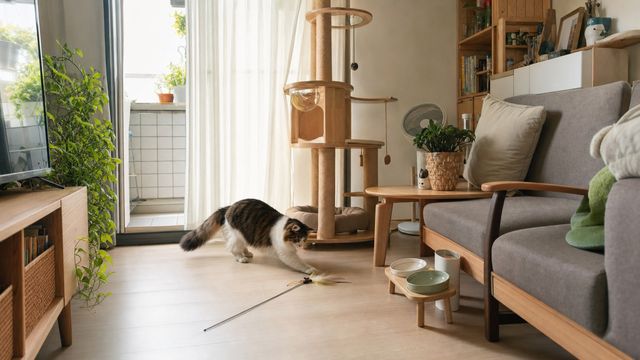
Cat Runs Away When You Try to Pick Them Up? You're Doing It Wrong! Learn "Cat Ergonomics" in 3 Steps and Your Feline Friend Will Be a Lap Cat in No Time!

See your furry friend's soft fur and innocent eyes and just want to scoop them up for a cuddle? But as soon as you reach out, they bolt like they've seen a ghost... leaving you heartbroken? Don't despair!
CatGarden Editorial TeamPublished 2025/05/04Updated 2026/10/05
Behavioral ScienceCat Psychology
Cat Runs Away When You Try to Pick Them Up? You're Doing It Wrong! Learn "Cat Ergonomics" in 3 Steps and Your Feline Friend Will Be a Lap Cat in No Time!

See your furry friend's soft fur and innocent eyes and just want to scoop them up for a cuddle? But as soon as you reach out, they bolt like they've seen a ghost... leaving you heartbroken?

Don't despair! Nine times out of ten, your cat doesn't run away because they dislike you, but because your "holding technique" scares them and makes them feel insecure! Cats are naturally cautious creatures, and to gain their trust, you need to learn the most "cat-ergonomic" way to hold them.

Master these techniques, and we guarantee your feline friend will go from "escape artist" to a cuddly cat who loves being held!

Key takeaways

  • The best time to pick up a cat is when they are relaxed, actively rubbing against you, purring, or drowsy. Never pick them up while they are eating, intensely playing, deep sleeping, or showing signs of stress (like airplane ears or a rapidly flicking tail).
  • The most crucial step when holding a cat is to always support their hind legs and rear with one hand. Never let their hind legs dangle, as this lack of support and security will cause them to struggle.
  • The 'cradle hold' exposes the cat's vulnerable belly and should only be used with cats that are extremely trusting and have a gentle temperament. If the cat struggles, immediately switch to the 'mountain hold' which supports both chest and hindquarters.
  • When a cat starts to squirm and wants to get down, gently but firmly put them down immediately. It's better to stop while you're ahead to avoid them resorting to scratching, thus preserving your bond.

"Reading the Room" Before Picking Up Your Cat: Timing and Mood are Key

Before you make a move, learn to observe the timing. Choosing the right moment can boost your success rate by 80%!

  • Best Times ✅: When your cat is relaxed, actively rubbing against you, purring, or drowsy.
  • Avoid These Times ❌: When they are eating or drinking, intensely playing, in deep sleep, or showing signs of stress (ears flattened like airplane wings, tail flicking rapidly).

Cat Owners Must-Know! 3 "Cat Ergonomic" Secure Holds

1. Beginner-Proof: The "Rock-Solid" Hold

This is the most basic and crucial hold, providing maximum security for your cat.

  • Lower Your Stance: Squat down to be at eye level with your cat and call their name softly.
  • Support the Chest: Slide one hand under your cat's chest, gently supporting their front legs and chest area.
  • Support the Hindquarters: This is the most critical step! Use your other hand to firmly support your cat's hind legs and rear, ensuring their lower body is fully supported.
  • Hold Close: Slowly lift your cat and gently bring them close to your chest.

Key Point: Never let your cat's hind legs dangle! This makes them feel like they're falling and will immediately cause them to struggle.

2. For Cuddles: The "Baby Cradle" Hold

This pose is incredibly soothing and perfect for belly rubs or whispering sweet nothings.

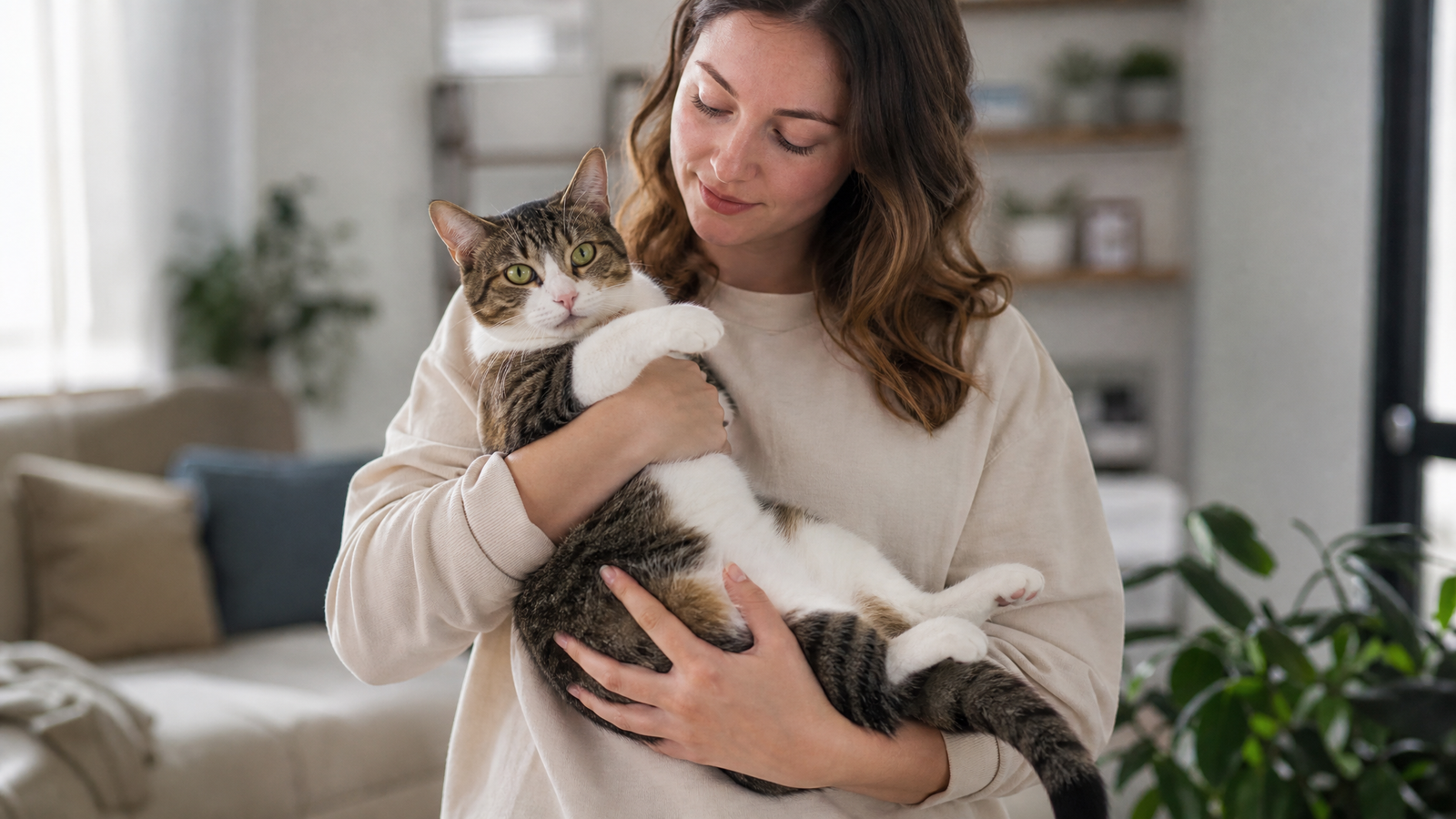
  • How-To: Hold your cat horizontally across your arms like a baby. Let their back rest against your arm, supporting their head and neck with one hand, and their rear with the other.
  • Caution: This hold is only suitable for cats who trust you implicitly and have a gentle temperament. Many cats dislike exposing their vulnerable bellies. If your cat starts to struggle, switch back to the "Rock-Solid" hold immediately.

3. For Quick Moves: The "Side Football" Hold

This is the most convenient hold when you need to move your cat from point A to point B temporarily.

  • How-To: Wrap one arm around your cat's chest and use the other hand to support their rear. Tuck the cat's body sideways between your arm and torso, much like holding a football.
  • Benefits: This hold offers good control and security for your cat, while also allowing you to monitor their condition and put them down immediately if anything seems off.

"Bonus Points" for Making Your Cat Love Cuddles

After mastering the correct holds, you can use these tips to help your cat associate "being held" with "good things."

  • Start with Petting: Before picking them up, begin by petting them in their favorite spots, like their cheeks or chin.
  • Utilize "Happy Hormones": In the early stages of practicing holds, you can use some "secret weapons" that make cats happy. For example, give a small reward before or after holding them. CatGarden's Premium Catnip is an excellent choice. Its natural aroma triggers a pleasant response in cats, helping them link "being held" with feelings of "happiness and relaxation." Over time, your cat will become less resistant to your embrace.
  • Respect Their Wishes, End on a High Note: This is the most crucial part of building trust. When your cat starts to squirm or try to get away, gently but firmly put them down. Don't wait until they resort to scratching. Ensure each holding experience ends on a positive note.

Conclusion:

Holding your cat is never just an action; it's a process of building trust. Use the right methods, give them enough respect and patience, and your warm embrace will undoubtedly become your feline friend's safest and most desired haven!

Further Reading

FAQ

Why do cats always try to escape when I pick them up?

In 90% of cases, it's not because they dislike you, but because the way they are held lacks proper support (e.g., letting their hind legs dangle), making them feel insecure and scared.

When is the best time to pick up a cat?

The best time is when the cat is relaxed, actively rubbing against you, purring, or drowsy. Picking them up at these times increases the success rate by 80%.

What are the key steps for the 'mountain hold' technique?

First, crouch down to their eye level. Slide one hand under their armpit to support their chest, and use the other hand to firmly support their rear and hind legs, preventing them from dangling. Finally, slowly lift them up and hold them close to your chest.

How can I build trust with my cat while holding them?

Start by petting their cheeks and chin. Give them rewards like catnip before and after holding them to create positive associations. Crucially, if the cat starts to squirm or struggle, put them down immediately to maintain trust.

CatGarden offers curated supplies, cat boarding, and grooming

Book services or shop online.

Back

Blog

Cat Runs Away When You Try to Pick Them Up? You're Doing It Wrong! Learn "Cat Ergonomics" in 3 Steps and Your Feline Friend Will Be a Lap Cat in No Time!

CatGarden Editorial TeamPublished 2025/05/04Updated 2026/10/05
Behavioral ScienceCat Psychology
Cat Runs Away When You Try to Pick Them Up? You're Doing It Wrong! Learn "Cat Ergonomics" in 3 Steps and Your Feline Friend Will Be a Lap Cat in No Time!

See your furry friend's soft fur and innocent eyes and just want to scoop them up for a cuddle? But as soon as you reach out, they bolt like they've seen a ghost... leaving you heartbroken?

Don't despair! Nine times out of ten, your cat doesn't run away because they dislike you, but because your "holding technique" scares them and makes them feel insecure! Cats are naturally cautious creatures, and to gain their trust, you need to learn the most "cat-ergonomic" way to hold them.

Master these techniques, and we guarantee your feline friend will go from "escape artist" to a cuddly cat who loves being held!

Key takeaways

  • The best time to pick up a cat is when they are relaxed, actively rubbing against you, purring, or drowsy. Never pick them up while they are eating, intensely playing, deep sleeping, or showing signs of stress (like airplane ears or a rapidly flicking tail).
  • The most crucial step when holding a cat is to always support their hind legs and rear with one hand. Never let their hind legs dangle, as this lack of support and security will cause them to struggle.
  • The 'cradle hold' exposes the cat's vulnerable belly and should only be used with cats that are extremely trusting and have a gentle temperament. If the cat struggles, immediately switch to the 'mountain hold' which supports both chest and hindquarters.
  • When a cat starts to squirm and wants to get down, gently but firmly put them down immediately. It's better to stop while you're ahead to avoid them resorting to scratching, thus preserving your bond.

"Reading the Room" Before Picking Up Your Cat: Timing and Mood are Key

Before you make a move, learn to observe the timing. Choosing the right moment can boost your success rate by 80%!

  • Best Times ✅: When your cat is relaxed, actively rubbing against you, purring, or drowsy.
  • Avoid These Times ❌: When they are eating or drinking, intensely playing, in deep sleep, or showing signs of stress (ears flattened like airplane wings, tail flicking rapidly).

Cat Owners Must-Know! 3 "Cat Ergonomic" Secure Holds

1. Beginner-Proof: The "Rock-Solid" Hold

This is the most basic and crucial hold, providing maximum security for your cat.

  • Lower Your Stance: Squat down to be at eye level with your cat and call their name softly.
  • Support the Chest: Slide one hand under your cat's chest, gently supporting their front legs and chest area.
  • Support the Hindquarters: This is the most critical step! Use your other hand to firmly support your cat's hind legs and rear, ensuring their lower body is fully supported.
  • Hold Close: Slowly lift your cat and gently bring them close to your chest.

Key Point: Never let your cat's hind legs dangle! This makes them feel like they're falling and will immediately cause them to struggle.

2. For Cuddles: The "Baby Cradle" Hold

This pose is incredibly soothing and perfect for belly rubs or whispering sweet nothings.

  • How-To: Hold your cat horizontally across your arms like a baby. Let their back rest against your arm, supporting their head and neck with one hand, and their rear with the other.
  • Caution: This hold is only suitable for cats who trust you implicitly and have a gentle temperament. Many cats dislike exposing their vulnerable bellies. If your cat starts to struggle, switch back to the "Rock-Solid" hold immediately.

3. For Quick Moves: The "Side Football" Hold

This is the most convenient hold when you need to move your cat from point A to point B temporarily.

  • How-To: Wrap one arm around your cat's chest and use the other hand to support their rear. Tuck the cat's body sideways between your arm and torso, much like holding a football.
  • Benefits: This hold offers good control and security for your cat, while also allowing you to monitor their condition and put them down immediately if anything seems off.

"Bonus Points" for Making Your Cat Love Cuddles

After mastering the correct holds, you can use these tips to help your cat associate "being held" with "good things."

  • Start with Petting: Before picking them up, begin by petting them in their favorite spots, like their cheeks or chin.
  • Utilize "Happy Hormones": In the early stages of practicing holds, you can use some "secret weapons" that make cats happy. For example, give a small reward before or after holding them. CatGarden's Premium Catnip is an excellent choice. Its natural aroma triggers a pleasant response in cats, helping them link "being held" with feelings of "happiness and relaxation." Over time, your cat will become less resistant to your embrace.
  • Respect Their Wishes, End on a High Note: This is the most crucial part of building trust. When your cat starts to squirm or try to get away, gently but firmly put them down. Don't wait until they resort to scratching. Ensure each holding experience ends on a positive note.

Conclusion:

Holding your cat is never just an action; it's a process of building trust. Use the right methods, give them enough respect and patience, and your warm embrace will undoubtedly become your feline friend's safest and most desired haven!

Further Reading

FAQ

Why do cats always try to escape when I pick them up?

In 90% of cases, it's not because they dislike you, but because the way they are held lacks proper support (e.g., letting their hind legs dangle), making them feel insecure and scared.

When is the best time to pick up a cat?

The best time is when the cat is relaxed, actively rubbing against you, purring, or drowsy. Picking them up at these times increases the success rate by 80%.

What are the key steps for the 'mountain hold' technique?

First, crouch down to their eye level. Slide one hand under their armpit to support their chest, and use the other hand to firmly support their rear and hind legs, preventing them from dangling. Finally, slowly lift them up and hold them close to your chest.

How can I build trust with my cat while holding them?

Start by petting their cheeks and chin. Give them rewards like catnip before and after holding them to create positive associations. Crucially, if the cat starts to squirm or struggle, put them down immediately to maintain trust.

One email a month of cat-care tips

Hand-picked care, behavior and grooming tips once a month. Subscribe and we will send you our three most-read articles right away.

Keep reading