Cat Constipation: When to See a Vet? Check Stool Frequency, Straining Posture, and Litter Box Cues
Cat constipation: When to see a vet? Check stool frequency, straining posture, and litter box cues. How many days without a bowel movement is considered constipation in cats? First, look at their usual defecation rhythm. Most healthy adult cats defecate about once a day, while some may go once every 1 to 2 days.
Key takeaways
- Most healthy adult cats defecate about once a day, while some may go once every 1 to 2 days; the key to determining constipation in cats is to compare it to their usual bowel movement rhythm, rather than just a single day's count.
- If a cat hasn't defecated for 2 to 3 days, or if the stool becomes dry and hard like small pebbles, it could be a sign of constipation. If accompanied by decreased appetite, lethargy, and a tense abdomen, it's not recommended to rely solely on home remedies.
- Frequent trips to the litter box and prolonged squatting don't always mean constipation; it could also indicate difficulty urinating. When it's unclear whether it's constipation or a urinary issue, prioritize it as an emergency, as inability to urinate cannot wait.
- Common signs of constipation include straining with an arched back, tail raised, and finally passing small amounts of dry, hard feces or none at all. Urinary issues often present with small urine clumps, bloody urine, constant urge to urinate with no output, or inappropriate urination outside the litter box.
- Do not self-administer human laxatives, force-feed oil, or forcefully press the abdomen, as this can worsen the condition. A veterinarian may use palpation, X-rays, blood tests, or stool analysis to determine if hydration, stool softeners, enemas, or treatment for an underlying disease are necessary.
Cat Constipation: When to See a Vet? Check Stool Frequency, Straining Posture, and Litter Box Cues
How Many Days Without a Bowel Movement is Considered Constipation in Cats? First, Look at Their Usual Defecation Rhythm
Most healthy adult cats defecate about once a day, while some may go once every 1 to 2 days. As long as their stool consistency, appetite, and energy levels are stable, it doesn't necessarily indicate an abnormality. When assessing cat constipation, it's most important to compare it to their usual rhythm, rather than just looking at a single number of days. For some cats that normally have a bowel movement every day, a sudden absence of defecation for over 48 hours warrants observation.
If your cat hasn't had a bowel movement for 2 to 3 days, or if their stool has become dry and hard, resembling small pebbles, it could be a sign of constipation. If this is accompanied by a decrease in appetite, lethargy, or a tense abdomen when touched, it's advisable not to delay seeking professional help with home remedies alone. Cat constipation can sometimes be due to insufficient water intake, but it can also be related to pain, poor intestinal motility, or other underlying diseases.
What we use for this
CatGarden’s own products, shipped from Taiwan Pro ProbioticsFrom CA$26.60 per boxFree shipping on multi-packs
Straining for a Long Time, Constantly Entering and Exiting the Litter Box: How to Differentiate Constipation from Urinary Blockage
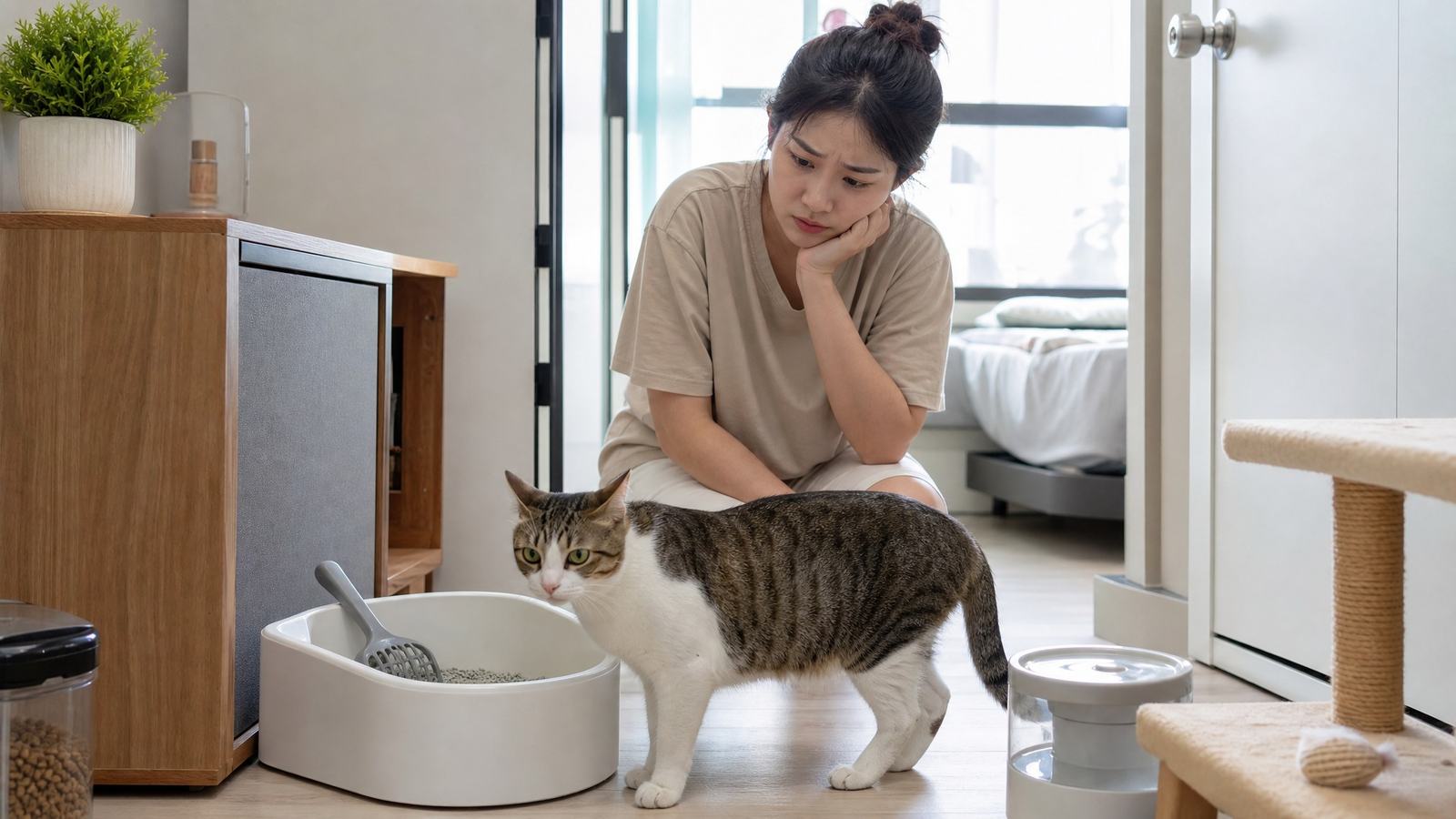
Many owners see their cat repeatedly entering and exiting the litter box and squatting for extended periods, initially assuming it's constipation. However, this behavior can also indicate a "urinary blockage." Urinary blockage is particularly dangerous for cats, more common in males, and can become a critical emergency in a short amount of time. If your cat frequently uses the litter box but produces little to no urine, or if they are constantly licking their genital area, crying out in pain, or appear restless, seek veterinary attention immediately.
Constipation typically involves the cat arching its back, lifting its tail, and possibly passing small amounts of dry, hard feces, or no feces at all. Urinary issues, on the other hand, often present with small urine clumps, blood in the urine, frequent attempts to urinate with little success, or even inappropriate urination outside the litter box. When you're unsure whether your cat is constipated or experiencing a urinary problem, prioritize it as an emergency, because a urinary blockage cannot wait.
Common Causes: Low Water Intake, Hairballs, Stress, Pain, and Dietary Changes
In Taiwan's humid and hot climate, many cats have low activity levels and live in small urban apartments, making insufficient water intake common. When cats drink less water, their feces remain in the intestines longer, becoming drier and harder, making them more difficult to pass. Eating only dry kibble, disliking the placement of their water bowls, or having stale water can all contribute to constipation.
During shedding seasons or humid, muggy periods like the plum rain season, cats groom themselves more, ingesting more hair. Hairballs can increase the burden on their gastrointestinal tract. Stress is also an often-overlooked cause. Events like moving house, the introduction of a new cat or furniture, or changes in litter box location can all affect defecation. Older cats with joint pain may find squatting in the litter box uncomfortable, leading them to hold their stool or not defecate completely.
When Should You See a Veterinarian Immediately? Warning Signs Related to Appetite, Energy Levels, and Abdominal Pain
If your cat hasn't had a bowel movement for over 2 to 3 days and shows a significant decrease in appetite, lethargy, or reluctance to move, it's recommended to take them to the vet for an examination as soon as possible. If they are vomiting, their abdomen is distended, or they react with avoidance or aggression when their belly is touched, don't just observe. These symptoms may indicate more than just general cat constipation, such as intestinal obstruction, severe dehydration, or other internal medical issues.
Do not self-medicate with human laxatives, administer oils, or forcefully press on their abdomen. These actions can worsen the situation. Your veterinarian may perform a physical examination, X-rays, blood tests, or analyze stool samples to determine if fluid therapy, stool softeners, enemas, or treatment for an underlying disease is necessary. This is especially true for kittens, senior cats, cats with chronic kidney disease, or those with a history of megacolon; any abnormal defecation should be treated with greater caution.
How to Prevent Constipation at Home: Hydration, Wet Food, Grooming, and Litter Box Records
The first step in preventing cat constipation is to increase their water intake. You can place water bowls in different locations around the house, use a pet drinking fountain, or switch a portion of their diet to wet food or pâté-style cans. If your cat is reluctant to drink water, you can add a small amount of water to their wet food, but do so gradually to avoid them rejecting the food due to a change in texture.
Regular grooming can reduce hairballs. Long-haired cats, cats in shedding seasons, or those prone to hairballs require consistent grooming. Litter boxes should also be kept clean. The recommended number of litter boxes is at least one more than the number of cats, placed in quiet, easily accessible locations. Keeping a simple daily record of defecation frequency, stool size, consistency, and changes in urine output can help you detect cat constipation or urinary abnormalities earlier.
FAQ
Does my cat need to see a vet if they haven't pooped in a day?
If your cat normally defecates once every 1 to 2 days, and their appetite, energy levels, and urine output are normal, you can observe them for now. However, if they usually defecate daily and suddenly miss a day while frequently using the litter box, you should be vigilant.
Can I give my constipated cat hairball paste?
Hairball paste may help with defecation issues related to hairballs, but it's not suitable for all cases of constipation. If your cat hasn't had a bowel movement for several days, is vomiting, or seems lethargic, it's not recommended to rely solely on hairball paste.
Can I massage my cat's belly if they are constipated?
Gentle touching for observation is acceptable, but avoid forceful pressing or pushing on their abdomen. If your cat resists, shows signs of pain, or their abdomen appears noticeably distended and hard, they should be examined by a veterinarian.
Can changing cat food cause constipation?
Yes, some cats may experience changes in their bowel movements when switching foods, altering their fiber intake, or reducing their water consumption. When changing food, it's recommended to gradually mix the new food with the old over at least 7 to 10 days, while simultaneously monitoring their stool consistency.
Cat Daily Care Starts with Choosing the Right Supplies
To reduce the chances of overlooking cat constipation and litter box issues, everyday supplies are crucial. Suitable drinking fountains, wet food, grooming tools, cat litter, and easy-to-clean litter boxes can help owners more consistently monitor their cat's condition. CatGarden's cat supplies are selected based on Taiwan's home environment and feline habits, making drinking, defecation, cleaning, and care more convenient. If your cat has recently had unstable bowel movements, start by keeping good records and adjust their daily-use supplies to be more comfortable.
Further Reading
- How to Track Cat Heart Disease at Home: Monitor Breathing, Activity, and Appetite Changes
- How to Accurately Measure Your Cat's Heart Rate: Understand Normal Ranges, Recording Methods, and Vet Warning Signs Before Home Monitoring
- Does Your Cat Need Genetic Disease Testing? Consider These Points Before Getting a Purebred Cat, Adopting, or During a Health Check-up
CatGarden offers curated supplies, cat boarding, and grooming
Book services or shop online.