Black Specks on Your Cat's Chin? Check Bowls, Cleaning, and Skin Condition First
When petting your cat's chin, you suddenly notice tiny black specks, like cinders, sesame seeds, or small pimples. Many cat parents' first reaction is: "Is it dirty? Should I give it a bath right away?" Actually, black specks on a cat's chin aren't always just dirt; they can also be related to oil secretion, food bowl materials, saliva residue, environmental cleanliness, or even skin inflammation.
When petting your cat's chin, you suddenly notice tiny black specks, like cinders, sesame seeds, or small pimples. Many cat parents' first reaction is: "Is it dirty? Should I give it a bath right away?" Actually, black specks on a cat's chin aren't always just dirt; they can also be related to oil secretion, food bowl materials, saliva residue, environmental cleanliness, or even skin inflammation. The key isn't to forcefully remove them, but to first find out why they keep coming back.
Key takeaways
- Plastic bowls can easily get scratched and harbor grease and bacteria. If your cat's chin repeatedly develops black spots, consider switching to a flat-bottomed ceramic, stainless steel, or glass bowl.
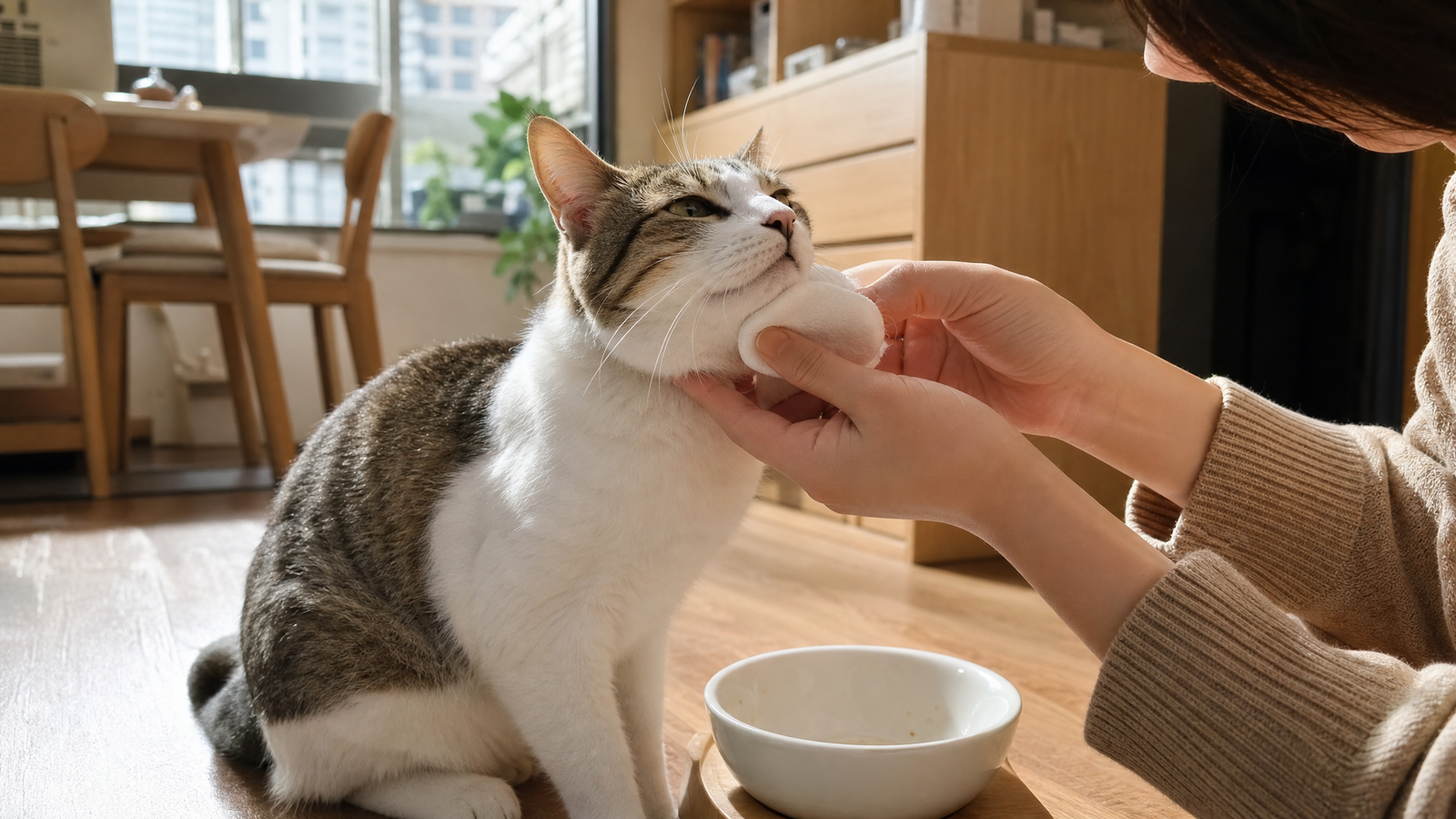
- When cleaning your cat's chin at home, do not use your fingernails to pick at the black spots or use human cleansers or alcohol. First, soak a cotton pad or gauze in warm water and gently press it on the affected area for 20 to 30 seconds to soften the dirt, then wipe along the direction of the fur.
- Wash water and food bowls daily. For wet food bowls, it's best to clean them after each meal and rinse thoroughly to remove detergent. After cleaning your cat's chin, pat it dry with a clean cloth to prevent the fur from staying damp for extended periods.
- If the condition repeatedly worsens after switching bowls and cleaning for 2 to 3 weeks, or if symptoms such as redness, swelling, heat, pain, pus discharge, thick scabs, noticeable hair loss, or scratching leading to bleeding occur, seek veterinary examination and treatment.
What Are Common Causes of Black Specks on a Cat's Chin?
Cats have sebaceous glands on their chin, around their mouth, and lips. When oil, dead skin cells, food debris, or bacteria accumulate, it can form black, dot-like grime. In mild cases, it looks like black sesame seeds stuck to the hair roots, and the cat might not feel anything at all. In severe cases, it can lead to redness, swelling, hair loss, scabs, or even the cat scratching it open.
If the black spots can be wiped away, the skin isn't red, and the cat isn't constantly scratching, you can usually start with daily cleaning and food bowl management. However, if the same area repeatedly becomes inflamed, or if you feel a lump or abscess, don't just treat it as a cleaning issue.
What we use for this
CatGarden’s own products, shipped from Taiwan Quick-Dry Pet TowelFrom CA$49.35 per pieceFree shipping on multi-packs
Check These 4 Things First
1. Is the Food Bowl Made of Plastic?
Plastic bowls are prone to scratches, and tiny crevices can harbor oil and bacteria. For cats whose chins tend to get oily or are sensitive, prolonged friction and contact with dirt can cause the black spots to reappear. It's recommended to switch to ceramic, stainless steel, or glass flat-bottomed bowls, and ensure the rim doesn't constantly rub against the chin.
2. Are the Bowls Washed Daily?
Dry food powder, wet food oils, and saliva mix together, becoming sticky easily by the next meal. Even if they don't look dirty, it's recommended to wash water and food bowls daily. Bowls used for wet food should ideally be cleaned after each meal. After cleaning, rinse thoroughly to remove all detergent residue, which can irritate the skin around the mouth.
3. Is the Chin Fur Consistently Damp or Greasy?
Some cats get their chin wet after drinking water, and eating canned food can also bring meat paste and gravy to the hair roots. If your home has high humidity, and the fur doesn't dry, it's more likely to accumulate odor and dirt. You can prepare a soft gauze pad or cotton pad, gently wipe with warm water, and then pat dry with a clean cloth.
4. Have You Recently Changed Food, Treats, or Cleaning Products?
Sudden changes in diet, foods with higher fat content, or strongly scented cleaning sprays can destabilize skin condition. If the black spots appeared shortly after changing products, note the timing, discontinue the suspicious product, and observe for 1 to 2 weeks to see if there's improvement.
How to Clean Safely at Home
When dealing with black specks on a cat's chin, the biggest fear is using human exfoliants, alcohol, essential oils, or irritating ointments. Cats groom themselves, and their skin is more sensitive than human skin. Improper cleaning can turn a minor issue into redness and hair loss.
- First, dampen a cotton pad or gauze with warm water and gently press on the chin for 20 to 30 seconds to soften the grime.
- Wipe gently along the direction of the fur; do not use fingernails to pick at it, and do not scrub hard.
- After wiping, pat dry with a clean towel to prevent the chin from staying damp for too long.
- Keep each cleaning session short to help your cat relax; stop if they resist.
If your veterinarian has recommended using a cat-specific antibacterial cleaning solution, follow the dosage and frequency instructions. Do not double the dose on your own. Cleaning isn't better the more frequently it's done; excessive wiping can actually damage the skin barrier.
When Do You Need to See a Veterinarian?
If the black specks on the chin are few and there's no redness or swelling, adjusting the environment usually suffices. However, if any of the following occur, it's recommended to schedule a veterinary appointment:
- The chin is red, swollen, hot to the touch, or the cat flinches when you touch it.
- There are abscesses, discharge, thick scabs, or noticeable hair loss.
- The cat is constantly scratching its face, rubbing its chin, or even scratching until it bleeds.
- The condition repeatedly worsens after 2 to 3 weeks of cleaning and changing bowls.
- There are accompanying symptoms like decreased appetite, lethargy, or noticeable bad breath.
The veterinarian may check for bacterial infections, fungal infections, parasites, allergies, or other skin problems. If medication is required, complete the full course of treatment and do not stop taking it just because the black spots have reduced.
Daily Prevention is More Important Than Forceful Cleaning
To reduce the recurrence of black specks, the most practical approach is to establish simple, regular care: wash bowls daily, check the chin weekly, and wipe the area around the mouth for cats prone to getting messy after eating wet food. If you have multiple cats sharing bowls, pay attention to whether a particular cat gets oily more easily or is pushed away by other cats during feeding. If necessary, use separate bowls or feeding areas.
You don't need to suddenly increase bathing frequency just because of black specks on the chin. Most cats don't need frequent baths; localized cleaning and environmental management are usually gentler. If your cat is already afraid of water, avoid turning the chin pimple issue into a highly stressful full bath.
Frequently Asked Questions (FAQ)
Can I just pick off the black specks on my cat's chin?
It is not recommended. Picking with fingernails can cause tiny wounds, making it easier for bacteria to enter. You can try softening them with warm water first, then gently wiping with a soft gauze pad. If they don't come off or the skin becomes red, stop and observe.
Will chin pimples on cats go away on their own?
Mild cases may improve after switching to easy-to-clean bowls, cleaning food bowls daily, and keeping the chin dry. However, if there is repeated redness, scabbing, or pus formation, veterinary assistance is needed for diagnosis.
Do I absolutely have to switch from plastic bowls?
If black specks on your cat's chin repeatedly appear, it is recommended to prioritize switching to ceramic, stainless steel, or glass bowls. These materials are less likely to harbor dirt and are easier to clean, making them a low-cost, common first step with noticeable results.
Can I use human facial cleanser or alcohol to wipe my cat's chin?
No. Human cleaning products, alcohol, and essential oils can irritate a cat's skin and pose a risk of ingestion. Please use warm water, veterinarian-recommended products, or cleaning products specifically labeled for cats.
Are chin black specks related to diet?
They might be related, but it's not necessarily the sole reason. Foods with higher fat content, residue from wet food, or gastrointestinal or skin sensitivities can make the condition more apparent. It's recommended to observe in conjunction with food bowl cleaning and dietary records.
Further Reading
- Your Cat Smells After Coming Inside? Don't Rush to Bathe: Try Spot Cleaning Instead
- Should You Choose One-on-One Cat Grooming? 5 Questions to Ask Before Bathing a Shy Cat
- What to Do If Your Cat Suddenly Develops More Dandruff? Check Bathing Frequency, Humidity, and Diet First
- How to Choose Cat Food Recommendations? A Buying Guide for Picky Cats, Ingredients, and Nutritional Ratios
If you are adjusting your cat's cleaning products, food bowls, and daily care, start with "minimal irritation, easy cleaning, and daily observation." Cat Hotel Garden also offers cat hygiene, boarding, and daily care services, ensuring that even shy or sensitive cats can receive gentle and proper care.
FAQ
Can I directly pick off the black spots on my cat's chin?
It is not recommended to pick them off directly, as using fingernails can cause tiny wounds that allow bacteria to enter. It's better to first soften the dirt with warm water and then gently wipe with a soft gauze. If the spots don't come off or the skin becomes red, stop immediately.
Do I absolutely need to replace the plastic bowl if my cat develops black spots on its chin?
If the black spots repeatedly appear, it is recommended to switch to ceramic, stainless steel, or glass bowls. These materials are less likely to harbor dirt and are easier to clean.
Can I use human facial cleanser or alcohol to clean my cat's chin?
No. Human cleaning products, alcohol, and essential oils can irritate a cat's skin and pose a risk of poisoning if ingested. For daily cleaning, use warm water or products specifically recommended by your veterinarian for cats.
When should I take my cat to the vet for chin black spots?
You should seek veterinary care promptly if the chin shows redness, swelling, heat, pain, pus discharge, hair loss, thick scabs, or bleeding from scratching, or if the condition does not improve or worsens after 2 to 3 weeks of changing bowls and adjusting cleaning routines.
CatGarden offers curated supplies, cat boarding, and grooming
Book services or shop online.