Senior Cat Crying All Night? 3 Major Causes & Soothing Care for Dementia, Hyperthyroidism, and Pain

Senior cats crying at night are usually not "intentionally noisy" but are signals for help due to cognitive dysfunction (cat dementia), hyperthyroidism, or pain. This article helps you identify the 3 major causes, record observations at home, and provides practical nighttime soothing adjustments.
CatGarden Editorial TeamPublished 2026/09/01
Senior Cat CareCat DementiaCat HyperthyroidismSenior CatCat Behavior
Senior Cat Crying All Night? 3 Major Causes & Soothing Care for Dementia, Hyperthyroidism, and Pain

When a senior cat cries incessantly at night, it's almost never due to a "bad mood" or "intentionally trying to disturb you." Instead, it's a cry for help because something is wrong with their body or brain. For cats over 11 years old who suddenly start howling loudly at night, have reversed sleep cycles, or pace back and forth in the hallway, the three most common clinical reasons, in order, are: Feline Cognitive Dysfunction Syndrome (CDS), hyperthyroidism (overactive thyroid), and chronic pain (degenerative joint disease, dental issues, constipation). All three require veterinary examination for confirmation, and all can be improved—the real golden period is often missed during those months when owners think, "They're just getting old."

Key Takeaways

  • Feline Cognitive Dysfunction Syndrome (CDS) affects about 28% of cats aged 11–14 with at least one related behavioral change. This proportion exceeds 50% in cats over 15, with "nighttime howling" being the most frequently noticed first symptom by owners.
  • Hyperthyroidism is one of the most common endocrine diseases in cats over 10 years old. The typical combination includes "eating a lot but losing weight rapidly, increased activity, nighttime crying, and a heart rate exceeding 220 beats per minute." A single blood T4 test can provide initial screening.
  • Osteoarthritis (OA) in senior cats is highly prevalent on imaging studies, with over 80% of cats over 12 showing degenerative joint changes. Pain is often "felt" by the cat only after they quiet down at night, leading to localized howling or hesitation before jumping onto a platform.
  • The first step for nighttime crying in senior cats is a "continuous 3-day recording": note the time, location, posture, what they do after crying, and if they can be soothed. This record is more useful to the veterinarian than any description.
  • If accompanied by weight loss, a noticeable increase in water intake, vomiting, rapid breathing, staggering gait, or inability to be soothed all night, don't wait—arrange for blood tests, blood pressure measurement, and thyroid evaluation as soon as possible.

First, Distinguish: Is the Cat "Calling to You" or "Calling to the Void"?

Having cared for many senior cats over 13 years old in our facility, we've found that nighttime crying can generally be divided into two categories, with entirely different implications:

1. Needs-Based Nighttime Crying (Calling to You)

The cat stands by the bedroom door, your bedside, or their food bowl and cries. When you get up, turn on the light, pet them, or add food, they stop. This type is often related to hunger, thirst, a dirty litter box, simple sleep cycle disruption, or separation anxiety. Adjusting the environment and feeding schedule can lead to significant improvement.

2. Disoriented/Pain-Based Nighttime Crying (Calling to the Void)

The cat cries facing a corner, the end of a hallway, or under the sofa, with a vacant stare. They don't respond clearly when you approach and might even be startled when petted. Some will pace or circle while crying. This type almost always points to cognitive dysfunction, sensory decline, high blood pressure, or pain, requiring veterinary investigation.

The key diagnostic action is simple: When they cry at night, don't speak first. Stand in the dark and observe for 30 seconds to see if they are "looking for someone" or "lost themselves." The information gathered in these 30 seconds is more valuable than recalling a whole week afterward.

Cause 1: Feline Cognitive Dysfunction Syndrome (Feline Dementia, CDS)

What are the Common Symptoms of Feline Dementia?

Similar changes to human Alzheimer's disease can occur in the brains of senior cats. Clinically, six major aspects are often assessed (acronym DISHAA), translated into terms owners can understand:

  • Disorientation: Standing still in the middle of a room, getting stuck behind furniture, crying at a wall corner, unable to find a familiar litter box.
  • Changes in Interaction: A formerly affectionate cat becomes reclusive; or conversely, becomes extremely needy, crying incessantly when out of sight.
  • Altered Sleep-Wake Cycles: Sleeping more deeply and for longer periods during the day, becoming active, howling, and pacing between 2–4 AM. This is the most typical pattern of nighttime crying in senior cats.
  • Inappropriate Urination/Defecation: Urinating or defecating outside the litter box, with no other identifiable cause after ruling out urinary tract diseases.
  • Changes in Activity and Exploration: Aimless pacing, repeatedly walking the same route, losing interest in toys and treats.
  • Anxiety and Decreased Learning Ability: Overreacting to sounds, startling when petted, forgetting learned routines.

Why Specifically at Night?

As night falls and the house becomes quiet and still, cats lose their usual environmental "cues." Coupled with age-related decline in vision and hearing, it's like having both navigation and maps turned off. This disorientation anxiety, the feeling of "waking up and not knowing where I am," is expressed through howling. When we care for senior cats in our boarding facility, we always leave a dim nightlight on and keep the room's layout consistent. These two simple measures can significantly reduce nighttime restlessness in many senior cats.

What Can Be Done?

CDS cannot be "cured," but its progression can be slowed, and quality of life can be improved: maintain a stable environment, establish a regular routine, provide moderate cognitive stimulation during the day (e.g., scent games to find food, slow-paced play with a wand toy), and consult your veterinarian for a prescription or supplement regimen containing SAMe, Omega-3 fatty acids (DHA/EPA), and antioxidants. In some cases, anti-anxiety medication may be used. The key is—always have your veterinarian rule out other medical conditions before labeling it "dementia." The order is crucial.

Cause 2: Hyperthyroidism (Overactive Thyroid)

This is one condition we least want to be overlooked because it's diagnosable and treatable, yet often mistaken for dementia.

Cats with hyperthyroidism produce excess thyroid hormone, making their entire system run at high speed: metabolism skyrockets, they become restless, pace at night, and their cries are loud and urgent. The typical combination includes:

  • Increased appetite, even voracious eating, yet persistent weight loss (a weight loss of over 10% in six months warrants high alert).
  • Nighttime activity and howling, a change in temperament to irritability or excessive excitement.
  • Increased thirst and urination, occasional vomiting or soft stools.
  • Dry, unkempt fur; some may exhibit excessive grooming.
  • Rapid heart rate (over 220 beats per minute at rest).

The crucial point is: Cats with hyperthyroidism often "appear to be in good spirits," leading owners to believe, "They eat so well and have so much energy, they must be fine." However, the combination of weight loss and nighttime crying in cats over 10 years old almost necessitates a blood test. For a detailed breakdown of symptom severity, diagnosis, and treatment options (oral medication, prescription diet, radioactive iodine), we have compiled them in this article: Complete Guide to Feline Hyperthyroidism: 3 Major Symptoms of Weight Loss Despite Eating & Rapid Heart Rate, and Treatment Options.

As a reminder, hyperthyroidism often co-exists with chronic kidney disease and high blood pressure. It's recommended to include kidney function tests and blood pressure measurement during blood draws. Increased thirst and urination, and nighttime restlessness caused by kidney disease are also common. For background information on the causes of kidney disease, refer to Why Do Cats Get Kidney Disease? Understanding the 4 Major Causes: Aging, Diet, Dehydration, and Genetics.

Cause 3: Pain—Joints, Teeth, Constipation

Sudden howling in senior cats, especially a "sharp, short, explosive cry," should first make you consider pain.

Degenerative Joint Disease (Osteoarthritis)

Cats don't limp obviously like dogs; they express pain by "not doing certain things." Observe these details:

  • Hesitation before jumping onto a sofa or cat tree, opting for a "two-stage jump," or simply refusing to jump up at all.
  • Slower movements when entering or exiting the litter box, needing to brace with their front paws on the edge; starting to urinate or defecate near the litter box.
  • No longer stretching fully, reduced grooming area (more matting in the fur around the back and hindquarters).
  • A brief cry when changing position at night, or getting up after sleeping for a while and lying down again.

Nighttime symptoms are often more pronounced because joints become stiff after prolonged immobility, and the distractions of the day disappear, amplifying the pain.

Oral and Dental Pain

Severe tartar buildup and tooth resorption lesions (TR) can cause pain that affects eating. If you also notice slower eating, taking food out of the bowl to eat, chewing on one side, or worsening bad breath, have their mouth checked as well. For more on the connection between appetite and dental health, read What to Do If Your Senior Cat Isn't Eating? From Dental Issues and Decreased Sense of Smell to Chronic Disease Screening, 5 Tips to Safely Boost Your Senior Cat's Appetite.

Constipation and Difficulty Urinating

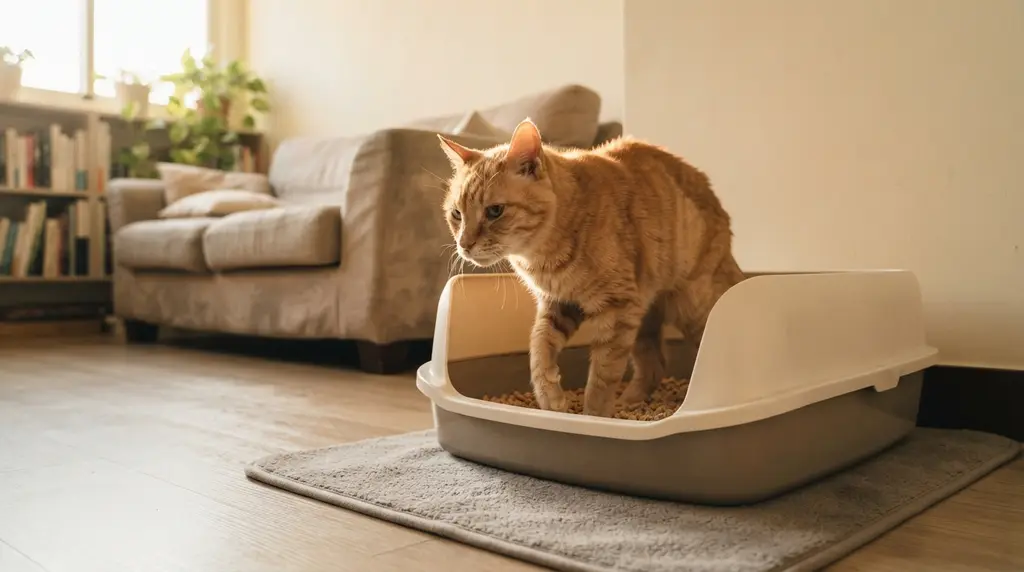
This is one of the most easily overlooked causes of "nighttime crying": the cat squats in the litter box for a long time, cries while squatting, and then gets out only to go back in. If a male cat cries in the litter box and cannot urinate, it is an emergency. Seek veterinary care immediately, do not wait until morning.

If the howling is accompanied by a feverish body, or asymmetrical temperature in the ears and paws, it's advisable to check their temperature as well. For methods and dangerous temperature ranges, refer to What to Do If Your Cat Has a Fever? Normal Temperature, How to Measure It, and Danger Signs.

Other Possibilities Not to Miss

  • High Blood Pressure: Often accompanies hyperthyroidism, kidney disease, or heart problems. It can cause restlessness, nighttime crying, dilated pupils, and retinal changes leading to sudden vision loss. Measuring blood pressure in senior cats should be part of their annual check-up.
  • Hearing Loss: Cats with poor hearing don't perceive the volume of their own vocalizations, so their cries become louder and more "raspy."
  • Vision Loss: Difficulty seeing clearly at night can lead to bumping into things, getting stuck, and crying out for help.
  • Hunger and Gastric Acidity: Changes in metabolism and gastric emptying in senior cats can cause discomfort and crying when their stomach is empty for too long, sometimes leading to vomiting yellow bile in the early morning.
  • Anxiety and Routine Changes: Changes in family members' work schedules, moving house, or new additions to the household can cause anxiety and restlessness in senior cats at night.

Home Investigation: Start with This 3-Day Nighttime Crying Log

Prepare your information before the vet visit to save time and avoid detours. For three consecutive days, use your phone's memo app to record:

1. Time: What time was the first cry, how many times did they cry in total, and how long did each episode last?

2. Location and Direction: Facing a wall? In the litter box? At the door?

3. Posture and Actions: Pacing, circling, squatting, attempting to jump up then giving up.

4. Nature of the Cry: Long, low growl / sharp, short cry / continuous calling.

5. Soothability: Did they stop after being held / spoken to / having the light turned on / being fed? How long did it take?

6. Concurrent Changes: Weight (weigh once a week at a fixed time), appetite, water intake, urine clump size and frequency, vomiting, defecation frequency.

7. Video Recording: A 30-second video at night is most effective; the vet can often tell if it's disorientation, pain, or a need-based cry at a glance.

Basic tests recommended during a vet visit include: complete blood count, biochemistry panel, total T4, urinalysis, blood pressure measurement, oral examination, and, if necessary, joint palpation or imaging. Senior cats are recommended to have a check-up every 6 months.

Soothing Nighttime Crying in Senior Cats: 8 Practical Adjustments

These are practices we actually implement in our boarding facility and often receive positive feedback on from owners:

1. Leave a Warm-Colored Nightlight On: Place a low-brightness light in the hallway, near the litter box, and near the water dispenser to reduce disorientation anxiety.

2. Play for 5–10 Minutes Before Bedtime Until "Slightly Breathless": Use a wand toy for slow-paced chasing (senior cats don't chase high, only low to the ground). Immediately after playing, offer a small portion of wet food. This utilizes the natural "hunt-eat-sleep" cycle to encourage sleep.

3. Schedule a Late-Night Snack: Leave a small portion of wet food before bed or set a timed feeder for 3 AM. This can resolve many cases of nighttime crying due to hunger. High-moisture, easily digestible wet foods like our Luxury Functional Cans can also help senior cats with hydration; for portioning advice, refer to How Much Should a Senior Cat Eat Daily? Calculating Portions, Wet Food Ratio, and Arranging Small, Frequent Meals.

4. Reduce All Height Differences: Switch to a litter box with an entry less than 10 cm high or add a ramp, place low steps next to the sofa, and move their favorite sleeping spot to ground level.

5. Increase Litter Box Availability and Proximity: Senior cats may not be able to hold it for long and can't walk far. Ensure at least one litter box is easily accessible along their nighttime routes.

6. Don't Let Them Sleep All Day: Open curtains for sunlight at fixed times, encourage movement, and use scent games to stimulate their brains, reserving sleep pressure for the night.

7. Maintain Environmental Stability: Keep furniture, litter boxes, and water bowls in fixed positions. Also, maintain a stable room temperature between 24–27°C (75–81°F), as being too cold can stiffen joints.

8. Respond, But Don't "Reward Success": Avoid rushing to feed them when they are crying the loudest, as this can reinforce the behavior. Instead, wait 5–10 seconds after they stop before offering comfort. Absolutely do not scold or spray them with water, as this will only increase anxiety in cats with cognitive decline.

If you need to travel and have a senior cat with nighttime crying issues, be sure to confirm with the boarding facility beforehand if they can administer medication, if a lower floor or quiet room can be arranged, and if there are nighttime checks. We have listed the assessment criteria in a checklist in Can Senior Cats Stay in Cat Hotels? A Comprehensive Guide to Evaluating Senior Cat Boarding, Medication Administration, and Choosing the Right Facility. Booking a cat hotel stay after confirming the conditions are met will provide greater peace of mind.

These Situations Require Immediate Veterinary Attention, Don't Wait Until Morning

  • Crying in the litter box and unable to urinate (especially in male cats).
  • Sudden howling followed by collapse, hind limb weakness, or cold hind limbs (possible blood clot).
  • Rapid breathing, open-mouth breathing, bluish tongue.
  • Persistent vomiting, complete refusal to eat or drink for over 24 hours.
  • Staggering gait, head tilt, inability to stop circling, seizures.
  • Inconsolable all night, with piteous cries and stiff body, refusing to be touched.

Frequently Asked Questions

Does a senior cat crying at night mean they are close to passing away?

Not necessarily. The three most common causes of nighttime crying (cognitive dysfunction, hyperthyroidism, pain) are all manageable chronic conditions that can be treated effectively and do not indicate end-of-life. Situations requiring emergency care include difficulty breathing, inability to urinate, hind limb weakness, or seizures.

At what age should I start worrying about feline dementia symptoms?

Generally, start paying attention from age 11, and be more proactive with observation from age 15. If you notice disorientation behaviors like "crying at a wall corner, getting stuck behind furniture, reversed sleep cycles, or forgetting litter box location," it's recommended to schedule a comprehensive senior wellness check-up. Rule out hyperthyroidism, kidney disease, high blood pressure, and pain first, then consider CDS.

Can I buy sedatives or melatonin for my senior cat myself?

Not recommended. Human sedatives and some supplements carry a risk of liver toxicity in cats, and dosages are completely different. Senior cats often have co-existing kidney or heart problems, and medication must be assessed by a veterinarian. If nighttime anxiety is severe, please consult your veterinarian for a prescription specifically for cats.

Is it effective to confine my senior cat to a room at night when they cry?

In most cases, it makes things worse. Cats with cognitive decline and anxiety may cry for longer periods when confined because they cannot find an exit. It's more effective to allow free movement, leave a nightlight on, place litter boxes and water bowls along their nighttime routes, and maintain a consistent pre-sleep play and feeding routine.

My cat cries so much at night that the whole family can't sleep. What can I do in the short term?

Do two things first: play before bed + a late-night snack (or a timed feeder for early morning), and leave your bedroom door slightly ajar so the cat can come and go freely and see you. Simultaneously, start your 3-day nighttime crying log and schedule a vet appointment as soon as possible to identify the root cause, which is the true solution.


Nighttime crying in senior cats is never about being difficult; it's simply their only remaining way to express themselves. Record "the time, place, and appearance" of their crying, film it, and then take it to your veterinarian for blood tests and pain assessment—most families can regain a full night's sleep within 2–4 weeks after addressing the specific cause.

Article by CatGarden Editorial Team

CatGarden offers curated supplies, cat boarding, and grooming

Book services or shop online.
Back

Blog

Senior Cat Crying All Night? 3 Major Causes & Soothing Care for Dementia, Hyperthyroidism, and Pain

CatGarden Editorial TeamPublished 2026/09/01
Senior Cat CareCat DementiaCat HyperthyroidismSenior CatCat Behavior
Senior Cat Crying All Night? 3 Major Causes & Soothing Care for Dementia, Hyperthyroidism, and Pain

When a senior cat cries incessantly at night, it's almost never due to a "bad mood" or "intentionally trying to disturb you." Instead, it's a cry for help because something is wrong with their body or brain. For cats over 11 years old who suddenly start howling loudly at night, have reversed sleep cycles, or pace back and forth in the hallway, the three most common clinical reasons, in order, are: Feline Cognitive Dysfunction Syndrome (CDS), hyperthyroidism (overactive thyroid), and chronic pain (degenerative joint disease, dental issues, constipation). All three require veterinary examination for confirmation, and all can be improved—the real golden period is often missed during those months when owners think, "They're just getting old."

Key Takeaways

  • Feline Cognitive Dysfunction Syndrome (CDS) affects about 28% of cats aged 11–14 with at least one related behavioral change. This proportion exceeds 50% in cats over 15, with "nighttime howling" being the most frequently noticed first symptom by owners.
  • Hyperthyroidism is one of the most common endocrine diseases in cats over 10 years old. The typical combination includes "eating a lot but losing weight rapidly, increased activity, nighttime crying, and a heart rate exceeding 220 beats per minute." A single blood T4 test can provide initial screening.
  • Osteoarthritis (OA) in senior cats is highly prevalent on imaging studies, with over 80% of cats over 12 showing degenerative joint changes. Pain is often "felt" by the cat only after they quiet down at night, leading to localized howling or hesitation before jumping onto a platform.
  • The first step for nighttime crying in senior cats is a "continuous 3-day recording": note the time, location, posture, what they do after crying, and if they can be soothed. This record is more useful to the veterinarian than any description.
  • If accompanied by weight loss, a noticeable increase in water intake, vomiting, rapid breathing, staggering gait, or inability to be soothed all night, don't wait—arrange for blood tests, blood pressure measurement, and thyroid evaluation as soon as possible.

First, Distinguish: Is the Cat "Calling to You" or "Calling to the Void"?

Having cared for many senior cats over 13 years old in our facility, we've found that nighttime crying can generally be divided into two categories, with entirely different implications:

1. Needs-Based Nighttime Crying (Calling to You)

The cat stands by the bedroom door, your bedside, or their food bowl and cries. When you get up, turn on the light, pet them, or add food, they stop. This type is often related to hunger, thirst, a dirty litter box, simple sleep cycle disruption, or separation anxiety. Adjusting the environment and feeding schedule can lead to significant improvement.

2. Disoriented/Pain-Based Nighttime Crying (Calling to the Void)

The cat cries facing a corner, the end of a hallway, or under the sofa, with a vacant stare. They don't respond clearly when you approach and might even be startled when petted. Some will pace or circle while crying. This type almost always points to cognitive dysfunction, sensory decline, high blood pressure, or pain, requiring veterinary investigation.

The key diagnostic action is simple: When they cry at night, don't speak first. Stand in the dark and observe for 30 seconds to see if they are "looking for someone" or "lost themselves." The information gathered in these 30 seconds is more valuable than recalling a whole week afterward.

Cause 1: Feline Cognitive Dysfunction Syndrome (Feline Dementia, CDS)

What are the Common Symptoms of Feline Dementia?

Similar changes to human Alzheimer's disease can occur in the brains of senior cats. Clinically, six major aspects are often assessed (acronym DISHAA), translated into terms owners can understand:

  • Disorientation: Standing still in the middle of a room, getting stuck behind furniture, crying at a wall corner, unable to find a familiar litter box.
  • Changes in Interaction: A formerly affectionate cat becomes reclusive; or conversely, becomes extremely needy, crying incessantly when out of sight.
  • Altered Sleep-Wake Cycles: Sleeping more deeply and for longer periods during the day, becoming active, howling, and pacing between 2–4 AM. This is the most typical pattern of nighttime crying in senior cats.
  • Inappropriate Urination/Defecation: Urinating or defecating outside the litter box, with no other identifiable cause after ruling out urinary tract diseases.
  • Changes in Activity and Exploration: Aimless pacing, repeatedly walking the same route, losing interest in toys and treats.
  • Anxiety and Decreased Learning Ability: Overreacting to sounds, startling when petted, forgetting learned routines.

Why Specifically at Night?

As night falls and the house becomes quiet and still, cats lose their usual environmental "cues." Coupled with age-related decline in vision and hearing, it's like having both navigation and maps turned off. This disorientation anxiety, the feeling of "waking up and not knowing where I am," is expressed through howling. When we care for senior cats in our boarding facility, we always leave a dim nightlight on and keep the room's layout consistent. These two simple measures can significantly reduce nighttime restlessness in many senior cats.

What Can Be Done?

CDS cannot be "cured," but its progression can be slowed, and quality of life can be improved: maintain a stable environment, establish a regular routine, provide moderate cognitive stimulation during the day (e.g., scent games to find food, slow-paced play with a wand toy), and consult your veterinarian for a prescription or supplement regimen containing SAMe, Omega-3 fatty acids (DHA/EPA), and antioxidants. In some cases, anti-anxiety medication may be used. The key is—always have your veterinarian rule out other medical conditions before labeling it "dementia." The order is crucial.

Cause 2: Hyperthyroidism (Overactive Thyroid)

This is one condition we least want to be overlooked because it's diagnosable and treatable, yet often mistaken for dementia.

Cats with hyperthyroidism produce excess thyroid hormone, making their entire system run at high speed: metabolism skyrockets, they become restless, pace at night, and their cries are loud and urgent. The typical combination includes:

  • Increased appetite, even voracious eating, yet persistent weight loss (a weight loss of over 10% in six months warrants high alert).
  • Nighttime activity and howling, a change in temperament to irritability or excessive excitement.
  • Increased thirst and urination, occasional vomiting or soft stools.
  • Dry, unkempt fur; some may exhibit excessive grooming.
  • Rapid heart rate (over 220 beats per minute at rest).

The crucial point is: Cats with hyperthyroidism often "appear to be in good spirits," leading owners to believe, "They eat so well and have so much energy, they must be fine." However, the combination of weight loss and nighttime crying in cats over 10 years old almost necessitates a blood test. For a detailed breakdown of symptom severity, diagnosis, and treatment options (oral medication, prescription diet, radioactive iodine), we have compiled them in this article: Complete Guide to Feline Hyperthyroidism: 3 Major Symptoms of Weight Loss Despite Eating & Rapid Heart Rate, and Treatment Options.

As a reminder, hyperthyroidism often co-exists with chronic kidney disease and high blood pressure. It's recommended to include kidney function tests and blood pressure measurement during blood draws. Increased thirst and urination, and nighttime restlessness caused by kidney disease are also common. For background information on the causes of kidney disease, refer to Why Do Cats Get Kidney Disease? Understanding the 4 Major Causes: Aging, Diet, Dehydration, and Genetics.

Cause 3: Pain—Joints, Teeth, Constipation

Sudden howling in senior cats, especially a "sharp, short, explosive cry," should first make you consider pain.

Degenerative Joint Disease (Osteoarthritis)

Cats don't limp obviously like dogs; they express pain by "not doing certain things." Observe these details:

  • Hesitation before jumping onto a sofa or cat tree, opting for a "two-stage jump," or simply refusing to jump up at all.
  • Slower movements when entering or exiting the litter box, needing to brace with their front paws on the edge; starting to urinate or defecate near the litter box.
  • No longer stretching fully, reduced grooming area (more matting in the fur around the back and hindquarters).
  • A brief cry when changing position at night, or getting up after sleeping for a while and lying down again.

Nighttime symptoms are often more pronounced because joints become stiff after prolonged immobility, and the distractions of the day disappear, amplifying the pain.

Oral and Dental Pain

Severe tartar buildup and tooth resorption lesions (TR) can cause pain that affects eating. If you also notice slower eating, taking food out of the bowl to eat, chewing on one side, or worsening bad breath, have their mouth checked as well. For more on the connection between appetite and dental health, read What to Do If Your Senior Cat Isn't Eating? From Dental Issues and Decreased Sense of Smell to Chronic Disease Screening, 5 Tips to Safely Boost Your Senior Cat's Appetite.

Constipation and Difficulty Urinating

This is one of the most easily overlooked causes of "nighttime crying": the cat squats in the litter box for a long time, cries while squatting, and then gets out only to go back in. If a male cat cries in the litter box and cannot urinate, it is an emergency. Seek veterinary care immediately, do not wait until morning.

If the howling is accompanied by a feverish body, or asymmetrical temperature in the ears and paws, it's advisable to check their temperature as well. For methods and dangerous temperature ranges, refer to What to Do If Your Cat Has a Fever? Normal Temperature, How to Measure It, and Danger Signs.

Other Possibilities Not to Miss

  • High Blood Pressure: Often accompanies hyperthyroidism, kidney disease, or heart problems. It can cause restlessness, nighttime crying, dilated pupils, and retinal changes leading to sudden vision loss. Measuring blood pressure in senior cats should be part of their annual check-up.
  • Hearing Loss: Cats with poor hearing don't perceive the volume of their own vocalizations, so their cries become louder and more "raspy."
  • Vision Loss: Difficulty seeing clearly at night can lead to bumping into things, getting stuck, and crying out for help.
  • Hunger and Gastric Acidity: Changes in metabolism and gastric emptying in senior cats can cause discomfort and crying when their stomach is empty for too long, sometimes leading to vomiting yellow bile in the early morning.
  • Anxiety and Routine Changes: Changes in family members' work schedules, moving house, or new additions to the household can cause anxiety and restlessness in senior cats at night.

Home Investigation: Start with This 3-Day Nighttime Crying Log

Prepare your information before the vet visit to save time and avoid detours. For three consecutive days, use your phone's memo app to record:

1. Time: What time was the first cry, how many times did they cry in total, and how long did each episode last?

2. Location and Direction: Facing a wall? In the litter box? At the door?

3. Posture and Actions: Pacing, circling, squatting, attempting to jump up then giving up.

4. Nature of the Cry: Long, low growl / sharp, short cry / continuous calling.

5. Soothability: Did they stop after being held / spoken to / having the light turned on / being fed? How long did it take?

6. Concurrent Changes: Weight (weigh once a week at a fixed time), appetite, water intake, urine clump size and frequency, vomiting, defecation frequency.

7. Video Recording: A 30-second video at night is most effective; the vet can often tell if it's disorientation, pain, or a need-based cry at a glance.

Basic tests recommended during a vet visit include: complete blood count, biochemistry panel, total T4, urinalysis, blood pressure measurement, oral examination, and, if necessary, joint palpation or imaging. Senior cats are recommended to have a check-up every 6 months.

Soothing Nighttime Crying in Senior Cats: 8 Practical Adjustments

These are practices we actually implement in our boarding facility and often receive positive feedback on from owners:

1. Leave a Warm-Colored Nightlight On: Place a low-brightness light in the hallway, near the litter box, and near the water dispenser to reduce disorientation anxiety.

2. Play for 5–10 Minutes Before Bedtime Until "Slightly Breathless": Use a wand toy for slow-paced chasing (senior cats don't chase high, only low to the ground). Immediately after playing, offer a small portion of wet food. This utilizes the natural "hunt-eat-sleep" cycle to encourage sleep.

3. Schedule a Late-Night Snack: Leave a small portion of wet food before bed or set a timed feeder for 3 AM. This can resolve many cases of nighttime crying due to hunger. High-moisture, easily digestible wet foods like our Luxury Functional Cans can also help senior cats with hydration; for portioning advice, refer to How Much Should a Senior Cat Eat Daily? Calculating Portions, Wet Food Ratio, and Arranging Small, Frequent Meals.

4. Reduce All Height Differences: Switch to a litter box with an entry less than 10 cm high or add a ramp, place low steps next to the sofa, and move their favorite sleeping spot to ground level.

5. Increase Litter Box Availability and Proximity: Senior cats may not be able to hold it for long and can't walk far. Ensure at least one litter box is easily accessible along their nighttime routes.

6. Don't Let Them Sleep All Day: Open curtains for sunlight at fixed times, encourage movement, and use scent games to stimulate their brains, reserving sleep pressure for the night.

7. Maintain Environmental Stability: Keep furniture, litter boxes, and water bowls in fixed positions. Also, maintain a stable room temperature between 24–27°C (75–81°F), as being too cold can stiffen joints.

8. Respond, But Don't "Reward Success": Avoid rushing to feed them when they are crying the loudest, as this can reinforce the behavior. Instead, wait 5–10 seconds after they stop before offering comfort. Absolutely do not scold or spray them with water, as this will only increase anxiety in cats with cognitive decline.

If you need to travel and have a senior cat with nighttime crying issues, be sure to confirm with the boarding facility beforehand if they can administer medication, if a lower floor or quiet room can be arranged, and if there are nighttime checks. We have listed the assessment criteria in a checklist in Can Senior Cats Stay in Cat Hotels? A Comprehensive Guide to Evaluating Senior Cat Boarding, Medication Administration, and Choosing the Right Facility. Booking a cat hotel stay after confirming the conditions are met will provide greater peace of mind.

These Situations Require Immediate Veterinary Attention, Don't Wait Until Morning

  • Crying in the litter box and unable to urinate (especially in male cats).
  • Sudden howling followed by collapse, hind limb weakness, or cold hind limbs (possible blood clot).
  • Rapid breathing, open-mouth breathing, bluish tongue.
  • Persistent vomiting, complete refusal to eat or drink for over 24 hours.
  • Staggering gait, head tilt, inability to stop circling, seizures.
  • Inconsolable all night, with piteous cries and stiff body, refusing to be touched.

Frequently Asked Questions

Does a senior cat crying at night mean they are close to passing away?

Not necessarily. The three most common causes of nighttime crying (cognitive dysfunction, hyperthyroidism, pain) are all manageable chronic conditions that can be treated effectively and do not indicate end-of-life. Situations requiring emergency care include difficulty breathing, inability to urinate, hind limb weakness, or seizures.

At what age should I start worrying about feline dementia symptoms?

Generally, start paying attention from age 11, and be more proactive with observation from age 15. If you notice disorientation behaviors like "crying at a wall corner, getting stuck behind furniture, reversed sleep cycles, or forgetting litter box location," it's recommended to schedule a comprehensive senior wellness check-up. Rule out hyperthyroidism, kidney disease, high blood pressure, and pain first, then consider CDS.

Can I buy sedatives or melatonin for my senior cat myself?

Not recommended. Human sedatives and some supplements carry a risk of liver toxicity in cats, and dosages are completely different. Senior cats often have co-existing kidney or heart problems, and medication must be assessed by a veterinarian. If nighttime anxiety is severe, please consult your veterinarian for a prescription specifically for cats.

Is it effective to confine my senior cat to a room at night when they cry?

In most cases, it makes things worse. Cats with cognitive decline and anxiety may cry for longer periods when confined because they cannot find an exit. It's more effective to allow free movement, leave a nightlight on, place litter boxes and water bowls along their nighttime routes, and maintain a consistent pre-sleep play and feeding routine.

My cat cries so much at night that the whole family can't sleep. What can I do in the short term?

Do two things first: play before bed + a late-night snack (or a timed feeder for early morning), and leave your bedroom door slightly ajar so the cat can come and go freely and see you. Simultaneously, start your 3-day nighttime crying log and schedule a vet appointment as soon as possible to identify the root cause, which is the true solution.


Nighttime crying in senior cats is never about being difficult; it's simply their only remaining way to express themselves. Record "the time, place, and appearance" of their crying, film it, and then take it to your veterinarian for blood tests and pain assessment—most families can regain a full night's sleep within 2–4 weeks after addressing the specific cause.

Article by CatGarden Editorial Team

One email a month of cat-care tips

Hand-picked care, behavior and grooming tips once a month. Subscribe and we will send you our three most-read articles right away.

Keep reading