返回

Blog

What to Do If Your Cat Has a Fever? Normal Temperature, How to Measure It, and Danger Signs All in One Place

CatGarden Editorial TeamPublished 2026/07/06
cat fevercat temperaturecat healthcat care
What to Do If Your Cat Has a Fever? Normal Temperature, How to Measure It, and Danger Signs All in One Place

A cat's normal body temperature is around 38–39.2°C (100.4–102.6°F). A temperature exceeding 39.5°C (103.1°F) is considered a fever, and anything over 40.5°C (105°F) is a high fever requiring prompt veterinary care. The most accurate way to determine if a cat has a fever isn't by touching their ears or nose, but by using a digital thermometer to take a rectal temperature—this is the first check we perform at CatBackyard when a boarding cat seems unwell.

This article will help you understand: what temperature constitutes a fever, how to measure it at home, common fever symptoms, how to differentiate it from heatstroke, and when to rush to the emergency vet.

What is a Cat's Normal Body Temperature? What Temperature is Considered a Fever?

Cats are warm-blooded animals, and their normal body temperature is slightly higher than humans'. You can use this range for quick reference:

  • Normal: 38.0–39.2°C (100.4–102.6°F)
  • Slightly High / Observe: 39.3–39.5°C (102.7–103.1°F)
  • Fever: 39.5–40.5°C (103.1–105°F)
  • High Fever / Dangerous: Above 40.5°C (105°F), seek immediate veterinary care
  • Hypothermia (Also Dangerous): Below 37.5°C (99.5°F)

It's important to note that a cat's temperature might temporarily rise by a fraction of a degree after intense play, a full meal, during hot weather, or when stressed. This is a normal fluctuation. A true fever, however, will typically persist at elevated levels and be accompanied by changes in behavior and appetite.

Can "My Cat's Ears Feel Hot" or "My Cat's Nose Is Wet" Indicate a Fever?

This is a common myth, and the answer is: No, these are not reliable indicators.

Many owners ask, "My cat's ears feel hot, does that mean they have a fever?" In reality, a cat's ears have rich blood vessels, and their temperature can be affected by ambient temperature, just waking up, or sun exposure, and doesn't necessarily correlate with core body temperature.

As for the belief that "a wet nose means a healthy cat, and a dry nose means illness," this is also a misconception. A cat's nose moisture level changes constantly with drinking, licking, and environmental humidity. A slightly dry nose doesn't automatically mean a fever, nor does a wet nose guarantee everything is fine. To be sure, you must take their temperature.

What Are the Symptoms of a Cat Fever?

Cats are adept at hiding discomfort, so a fever often first reveals itself through behavioral changes. Common symptoms of a cat fever include:

  • Lethargy and increased sleepiness, hiding and wanting to be left alone
  • Decreased appetite or complete refusal to eat
  • Changes in water intake (drinking more or less)
  • Shivering, curling into a ball, arching their back
  • Rapid breathing, increased heart rate
  • Significantly reduced grooming frequency, leading to a messy coat
  • Feeling hot to the touch all over, with warmer paws and ears
  • In severe cases, vomiting, dehydration, nasal or eye discharge

If you notice your cat showing a lack of interest even in their favorite Luxury Functional Cans, along with several of the above signs, it's time to check their temperature.

How to Take Your Cat's Temperature at Home (Step-by-Step Guide)

The most accurate method is rectal temperature. While it might sound daunting, it can be done quickly within 30 seconds with gentle handling and a helper for restraint.

Tools Needed

  • Digital thermometer (it's recommended to have one specifically for cats and not share it with humans)
  • Petroleum jelly or water-soluble lubricant
  • A towel (to wrap the cat and minimize struggling)
  • One assistant

Rectal Temperature Measurement Steps

1. Gently wrap the cat in the towel like a "sushi roll," exposing only the hindquarters to reduce movement.

2. Apply a thin layer of lubricant to the tip of the thermometer.

3. Gently lift the tail with one hand and gently insert the thermometer into the anus about 1–2 cm (0.4–0.8 inches). Do not force it.

4. Hold still until the digital thermometer beeps (approximately 10–60 seconds).

5. Remove, read the temperature, and disinfect the thermometer with an alcohol wipe.

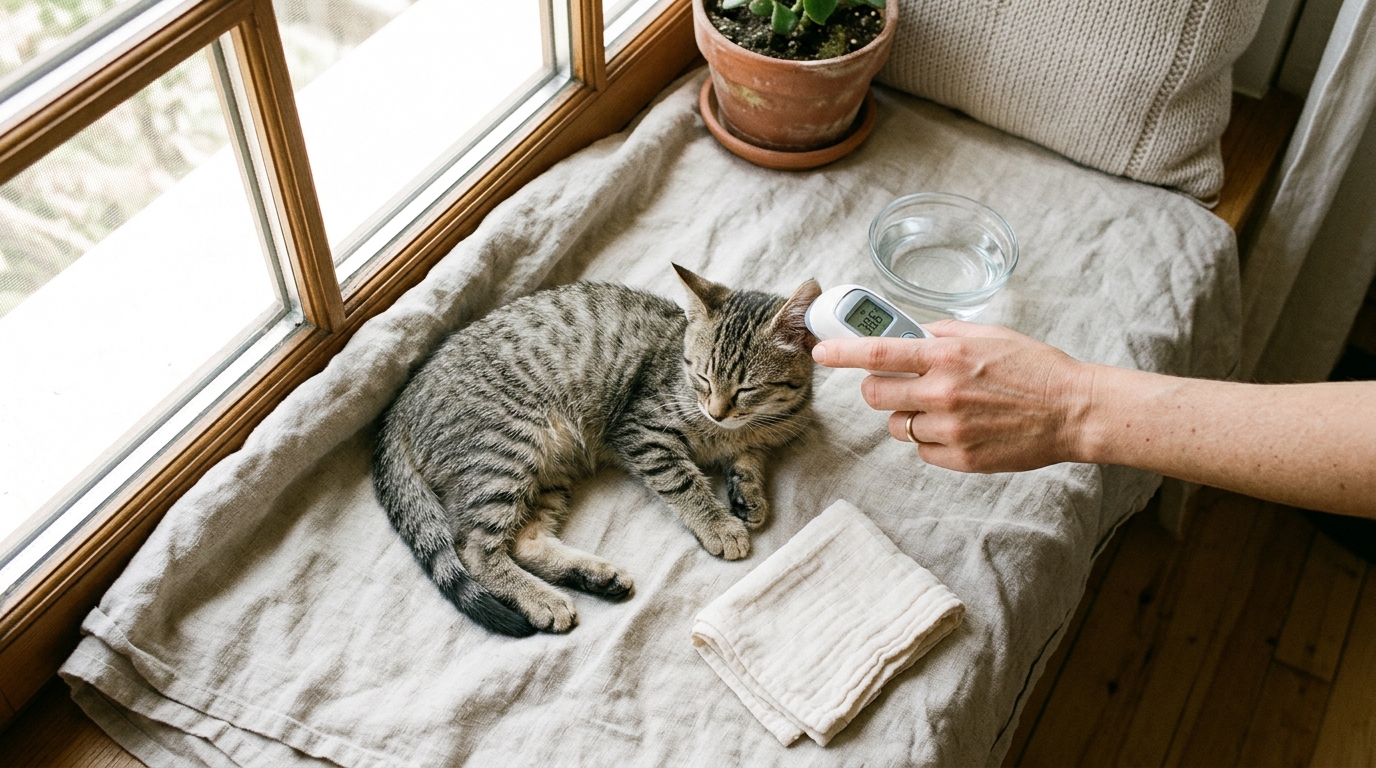
Important Tip: Remain gentle and speak soothingly throughout the process. If the cat struggles intensely or cries out in pain, stop and do not force it, as this could cause injury or damage your bond. If a rectal thermometer is unavailable, a pet-specific ear thermometer can be used as a supplement, but its accuracy is lower, and the readings should be considered only for reference.

After taking the temperature, record the number, time, and the cat's condition. Measure again in a few hours to track the trend—this information is very helpful for the veterinarian during the examination.

Fever or Heatstroke? How to Differentiate

The most common confusion, especially in summer, is between fever and heatstroke. Both can cause a spike in body temperature, but their causes and treatments are entirely different.

ComparisonFeverHeatstroke (Heat Exhaustion)
CauseInfection, inflammation, immune responseHigh ambient temperature, failure to dissipate heat
TemperatureTypically 39.5–41°C (103.1–105.8°F)Can exceed 41°C (105.8°F)
Preceding SituationNot necessarily related to the environmentOften occurs after being in a hot car or poorly ventilated space
Typical PresentationLethargy, hiding, decreased appetitePanting with mouth open, drooling, unsteady gait
First AidDo not attempt to reduce fever yourself; seek veterinary care immediatelyMove to a cool, shaded area; cool with room-temperature water before seeking veterinary care

If your cat is panting with their mouth open, sticking out their tongue, and drooling excessively, heatstroke is more likely, and this is an emergency. For comprehensive advice on cooling your cat in summer and recognizing signs of heat exhaustion, we recommend reading our related article, "Are Cats Sensitive to Heat? Signs of Heatstroke, Panting, and Summer Cooling Guide."

Important Reminder: While you can use room-temperature (not ice-cold) water to help cool a cat suspected of heatstroke, do not self-medicate a fever with fever reducers or use ice packs. Human fever reducers (like acetaminophen/paracetamol) are toxic to cats and can be fatal. For a list of other dangerous household items for cats, please refer to "What Can't Cats Eat? Common Dangerous Foods and Signs of Poisoning."

Red Flag Signs Requiring Emergency Vet Visit

If any of the following signs appear, take your cat to the vet immediately, do not wait until the next day:

  • Temperature exceeding 40.5°C (105°F), or persistently above 39.5°C (103.1°F) for over 24 hours
  • Complete refusal to eat or drink for over 24 hours
  • Rapid breathing, open-mouth panting, purple tongue or gums
  • Extreme lethargy, minimal response to stimuli, wobbly gait
  • Repeated vomiting or diarrhea, or blood in stool or urine
  • Signs of significant dehydration (skin tenting when pinched on the back of the neck, dry and sticky gums)
  • Seizures, weakness, loss of consciousness
  • Kittens, senior cats, or cats with chronic illnesses: seek veterinary care promptly if they develop a fever.

Senior cats have weaker temperature regulation and immune systems, and their symptoms can easily be mistaken for "just sleeping because they're old." For detailed care tips, refer to "How Old is a Senior Cat? Key Points for Diet, Vet Visits, and Home Care for Older Cats."

Home Care After Fever Subsides

After seeing the vet and confirming there are no serious underlying issues, home care focuses on hydration, nutrition, and monitoring:

  • Maintain Hydration: Fever can lead to dehydration. Provide multiple water bowls or a water fountain.
  • Palatable Food: When appetite is low, slightly warmed wet food or canned food is more aromatic and appealing than dry kibble. For daily portion sizes and wet/dry food ratios, refer to "How Much Should a Cat Eat Per Day? Key Points for Dry Food, Wet Food, and Water Intake."
  • Quiet Rest: Place your cat in a quiet, well-ventilated area that is neither too hot nor drafty.
  • Continuous Temperature Monitoring: Take the temperature 1–2 times a day and record the readings.
  • Gastrointestinal Support: If prescribed antibiotics or if the digestive system is sensitive post-illness, consult your vet about using Specialty Probiotics to help stabilize gut health.

If you need to travel and your cat requires post-illness care and medication administration, you can learn about booking boarding in advance. We can assist with monitoring their energy levels, appetite, and elimination.

Frequently Asked Questions

Does a hot ear mean my cat has a fever?

Not necessarily. Ear temperature is greatly influenced by the environment, sleep, and sun exposure and cannot be used to diagnose a fever. The most accurate method is taking a rectal temperature with a digital thermometer.

Does a dry nose mean my cat is sick?

It's not a reliable indicator. Nose moisture changes constantly with drinking and environmental humidity. A slightly dry nose is usually fine. If accompanied by lethargy and lack of appetite, further temperature measurement is needed.

Can my cat take human fever medication?

Absolutely not. Human fever reducers (especially those containing acetaminophen/paracetamol like Tylenol) are toxic to cats and can be fatal, even in small doses. Always consult a veterinarian for proper diagnosis and medication.

At what temperature should a cat see a vet for a fever?

A temperature above 39.5°C (103.1°F) warrants observation and veterinary consultation. If the temperature exceeds 40.5°C (105°F) or is accompanied by symptoms like lack of appetite, lethargy, or rapid breathing, seek immediate veterinary care.

How do I distinguish between fever and heatstroke?

Heatstroke often occurs after exposure to hot environments and presents with open-mouth panting, drooling, and unsteady gait. Fever is not necessarily linked to the environment and commonly involves lethargy and decreased appetite. Heatstroke can be initially managed with cooling, but fever should not be self-treated. Both conditions require prompt veterinary attention.

---

*This article was compiled by the CatBackyard editorial team. The content provides general care advice and cannot replace veterinary diagnosis. If your cat's symptoms persist or worsen, please seek veterinary care immediately.*

Subscribe to CatGarden cat-care tips

One email a month: hand-picked cat care tips and new arrivals. No spam.

Keep reading