What Does Your Cat's Sleeping Spot Reveal? Decoding Trust from Sleeping Beside You to at the Door
The closer your cat sleeps to you, the higher its trust usually is. Sleeping by your pillow or on your chest signifies deep dependence, while sleeping at your feet indicates comfort with a bit of distance. Sleeping by the door often suggests alertness or territorial guarding.
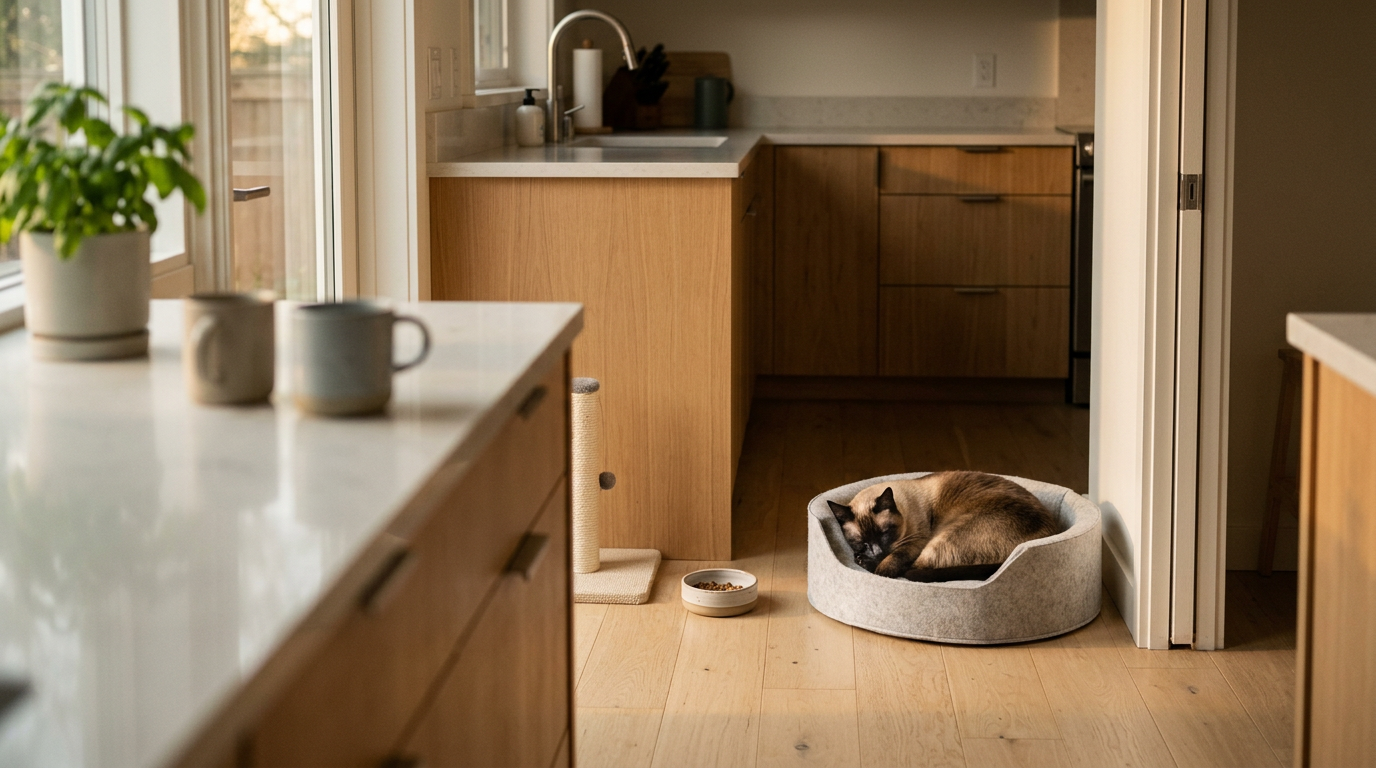
Your cat's sleeping spot actually holds a secret code to its trust in you: the closer it sleeps, the more it usually sees you as a safe base. Sleeping by your pillow or on your chest is a sign of high dependence, sleeping at your feet means "I trust you but keep an escape route," and sleeping by the bedroom door or in the hallway is often related to alertness, territorial guarding, or wanting to maintain distance.
Many owners ask us, "If it doesn't sleep with me, does it not love me?" Not necessarily. At the cat hotel, we observe how hundreds of cats choose their sleeping spots daily and find that "distance" can reflect trust levels more than "sleeping posture." This article uses our frontline observations to help you understand what your cat's sleeping position signifies.
Key Takeaways
- The closer a cat's sleeping spot is to its owner, the higher the trust; sleeping by the pillow or chest is usually the highest level of dependence.
- Sleeping at your feet is the most common "comfortable but with an escape route" pattern, balancing intimacy with easy escape, and is considered normal, healthy behavior.
- Sleeping by the bedroom door or in the hallway is often related to alertness, territorial guarding, or temperature regulation, and doesn't necessarily mean it doesn't love you.
- Cats prefer sleeping in high places or small spaces due to instincts for security and thermoregulation, unrelated to the depth of their affection.
- A sudden change in sleeping location (e.g., a usually clingy cat hiding) could be a sign of discomfort and requires observation of other symptoms.
Why "Location" Reveals More Trust Than "Sleeping Posture"
Cats are both predators and prey. When sleeping, they are most vulnerable. Therefore, where a cat chooses to sleep is essentially answering the question: "Am I safe enough here?"
Sleeping posture (like exposing the belly or the "loaf" position) reflects the current level of relaxation or alertness. We discuss this in detail in What is the Cat Loaf Position? Understanding Your Cat's Body Language and Emotions. "Location," on the other hand, reflects a longer-term, more stable trust relationship—whether it's willing to spend its "most vulnerable moments" near you.
If you want a more complete understanding of both sleeping posture and location, you can read our related article What Does Your Cat's Sleeping Position Mean? Decoding Affection Through Posture and Location.
Decoding by Distance: The Meaning Behind Your Cat's Sleeping Spot
Sleeping by Your Pillow or Head: The Highest Level of Dependence
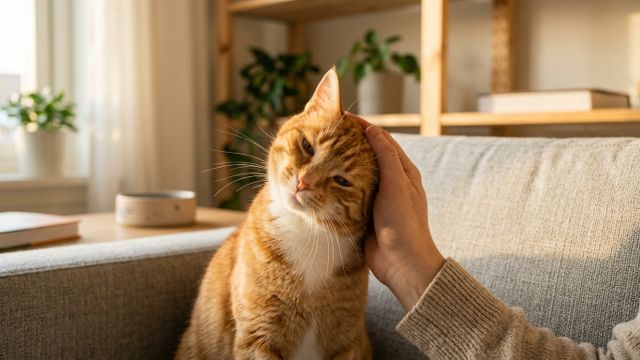
The head emits body heat and carries your scent. Sleeping near your face signifies complete trust that you won't harm it. Cats willing to sleep near your head are usually those with a close bond since kittenhood or those with a particularly clingy personality.
In our facility, we've observed that boarding cats brave enough to sleep near their caregiver's face often adapt the fastest. This is a sign they consider you their "safety center."
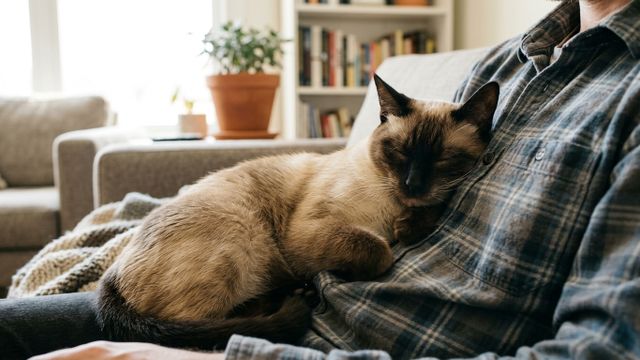
Sleeping on Your Chest or Stomach: Seeing You as Mom
These cats often retain the habit of lying on their mother's body from kittenhood. Your heartbeat and breathing movements provide them with comfort. This is often accompanied by kneading—for the emotions behind this action, see Why Do Cats Knead? Understanding Kitten Habits and Emotional Cues.
Cat Sleeping Beside You or Near the Bed: Trusting Yet Independent
This is one of the healthiest and most common intimate patterns. A cat sleeping beside its owner but not necessarily touching them signifies that it trusts you and wants to be near your scent, while still maintaining its own space. Many adult cats prefer this "intimacy with distance."
Sleeping at Your Feet: Comfortable and With an Escape Route
Your feet are one of a cat's favorite spots. The reasons are practical:
- Being near you provides a sense of security and allows them to smell your scent.
- Feet are easier to escape from than the head, allowing them to dart away quickly if needed.
- You're less likely to roll over and crush them.
So, sleeping at your feet absolutely does not mean "doesn't love you"; rather, it's a rational and trusting choice.
Sleeping in the Same Room but at a Distance: Trust is Building
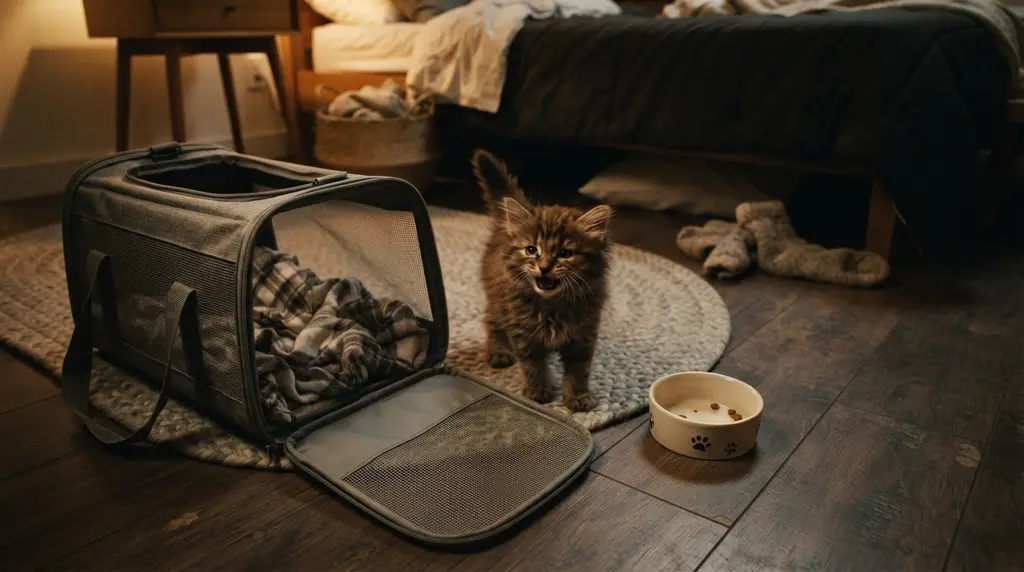
New cats or cautious cats often exhibit this behavior. They want to be with you but are still observing the environment. At this point, don't force them onto the bed; just give them time.
Sleeping by the Bedroom Door or in the Hallway: Alertness or Territorial Guarding
The doorway is a main thoroughfare. Cats sleeping here are often "patrolling" or guarding their perceived territory. In multi-cat households, the cat sleeping by the door is often the one with a stronger desire for control or a higher level of alertness.
However, environmental factors should also be considered. In summer, cats may seek out cool surfaces like tiles or well-ventilated areas to cool down, and doorways can be drafty. For information on how cats regulate their body temperature, refer to Do Cats Feel Hot? Cat Heat Tolerance, Cooling Methods, and Summer Heatstroke Warnings.
Hiding in Closets, Boxes, or Under the Bed: Seeking Security, Not Disliking You
Small, enclosed spaces make cats feel safe; this is instinctual. For a detailed explanation, see Why Do Cats Love Boxes and Hiding in Them?. As long as they are eating, drinking, and willing to interact, there's no need to worry.
Other Factors Influencing a Cat's Sleeping Spot Choice
Location doesn't just reflect affection; it's also influenced by these conditions:
- Temperature: In winter, they seek warm spots (near you, appliances); in summer, they look for cool places (tiles, doorways).
- Age: Senior cats prefer low places that are easy to access and close to food and litter boxes.
- Multi-Cat Dynamics: Social hierarchy and the level of peaceful coexistence can change how close they are willing to sleep.
- Environmental Changes: Moving, adding a new member, or rearranging furniture can cause cats to temporarily change their sleeping spots.
To help your cat sleep more soundly, the key is to provide an environment with "multiple levels, a sense of enclosure, and varied temperature zones," allowing them to choose the most comfortable spot themselves.
Sudden Change in Sleeping Spot: Should You Be Concerned?
This is the point we most want to emphasize to owners. A sudden change in sleeping location can sometimes be the first sign of discomfort.
Situations to watch out for:
- A usually clingy cat suddenly hides or seeks out secluded corners to sleep.
- The cat suddenly hesitates to jump onto previously familiar high places (potential joint or pain issues).
- Abnormally long sleeping hours, or lethargy even when called.
- Lying still in particularly cool or icy places (potential fever or illness).
Cats are adept at hiding pain, and behavioral changes often appear before obvious symptoms. If accompanied by decreased appetite, lethargy, or abnormal body temperature, it's recommended to first observe using our guide What is a Normal Cat Body Temperature? From Touch to Danger Signs. If symptoms persist for more than a day or two or worsen significantly, seek veterinary attention promptly; do not self-diagnose.
Want Your Cat to Sleep Near You More Often?
Trust is built gradually. Here are a few methods that have proven effective in our facility:
1. Don't Force It: Interact gently when they approach; don't scoop them up and prevent them from leaving.
2. Leave Your Scent: Place a soft mat in places you frequent; cats are attracted to familiar scents.
3. Maintain a Routine: Cats thrive in predictable environments. Consistent feeding and companionship times help them relax.
4. Give Them Choices: Provide multiple high perches, cat beds, and cozy corners, allowing them to choose the safest spot.
If you're going away and worried about your cat being alone, instead of letting them face the unfamiliar emptiness, consider an environment with dedicated staff observing their routine. Our Boarding Services specifically record each cat's chosen sleeping spot and adaptation status, which is actually the most direct indicator of their comfort level.
Frequently Asked Questions
Does my cat sleeping at my feet mean it doesn't love me?
No. Sleeping at your feet is a spot that balances security with an easy escape route, indicating that your cat trusts you while maintaining its independence. It's a very healthy form of intimacy.
My cat sleeps near me but not touching; does that mean we have a good relationship?
Yes, it's considered a very good relationship. Wanting to be close to your scent while maintaining a little space is typical of adult cats' "intimacy with distance" and reflects a stable trust relationship.
Why does my cat like to sleep by the door?
It's often related to guarding territory or alert patrolling, or it could simply be because the doorway is drafty and cool. If there are no other abnormal signs, it's usually not a cause for concern.
Should I see a vet if my cat suddenly changes its sleeping spot or hides?
If it's just a temporary change in location and eating/drinking habits are normal, you can observe further. However, if accompanied by decreased appetite, lethargy, or hiding, it could indicate discomfort, and seeking veterinary attention promptly is recommended.
Which is a better indicator of affection: a cat's sleeping posture or sleeping location?
Location is a better reflection of long-term trust, while sleeping posture reflects the current level of relaxation. Looking at both together is most accurate. You can refer to our comprehensive guide on sleeping positions and locations.
This article was written by the CatGarden editorial team, combining frontline cat hotel care experience. It is for general care reference only and cannot replace veterinary diagnosis.
CatGarden offers curated supplies, cat boarding, and grooming
Book services or shop online.