返回

Blog

What Does Your Cat's Sleeping Position Mean? Decoding Sleep Habits, Locations, and Affection Levels

CatGarden Editorial TeamPublished 2026/07/06
cat behaviorcat sleeping positionscat care knowledge
What Does Your Cat's Sleeping Position Mean? Decoding Sleep Habits, Locations, and Affection Levels

What does your cat's sleeping position mean? Simply put: the closer your cat sleeps to you, and the more "defenseless" their posture (like sleeping on their back with their belly exposed), the higher their trust in their environment and in you. A cat's choice of sleeping location actually reflects three things: security, temperature regulation, and health status.

At CatBackyard's boarding facility, we observe hundreds of cats sleeping and their chosen spots daily. These details often "speak" louder than owners might think. Here's a comprehensive guide to understanding their sleeping locations, postures, and seasonal behaviors.

Key Takeaways

  • A cat sleeping next to you or on you signifies they view you as a source of security, indicating high trust, not just seeking warmth.
  • The "loaf" position (tucking all limbs underneath the body) is often a sign of mild alertness or a way to conserve heat. It can also be a protective posture for the abdomen if they feel unwell.
  • A cat sleeping belly-up, exposing their abdomen, is the most relaxed and defenseless pose, typically seen in environments where they feel completely safe.
  • In summer, cats often seek out cool surfaces like tiles, bathroom floors, or sprawl out flat to actively cool down. Curling into a ball is more common when they feel cold or during cooler weather.
  • A sudden change in sleeping posture (e.g., from belly-up to consistently loafing or hiding) lasting more than 1-2 days warrants attention for potential pain or illness.

How to Interpret Your Cat's Sleeping Location: Proximity as a Trust Meter

Cats associate "sleeping" with "vulnerability." Wild cats are at their most exposed while sleeping, so their choice of resting spot is a declaration of where they feel safest.

Sleeping on You or Close By

This is the highest level of trust. A cat sleeping next to you, resting their head on your arm, or even sleeping fully on your chest signifies that they consider your breathing and heartbeat as "safety signals." In our facility, more socialized and affectionate cats are more likely to proactively sleep near caregivers. Newly arrived, nervous cats will first seek out corners.

Sleeping in High or Hidden Places

The top of a cat tree, on a wardrobe, inside a cardboard box—this is natural cat behavior. They prefer elevated vantage points for observation and a sense of concealment, which doesn't mean they don't love you. Especially if there are other pets or children in the house, cats will choose a spot where they can "see the whole scene without being disturbed."

Sleeping by the Door, in Hallways, or on Your Usual Path

This is actually a sign of attachment. Cats want to be near you but don't want to be held, so they'll "guard" a spot where you frequently pass. Newly adopted cats usually take a few days to exhibit this behavior. You can refer to our guide on How to Care for Your Cat in the First Week Home to gradually build their sense of security.

Decoding Common Cat Sleeping Positions

A cat's sleeping posture reflects "how much defense they need at the moment." Here are the most common ones we observe.

The Loaf Position: What Does the Cat Loaf Mean?

The cat loaf position involves tucking all four paws underneath the body, resembling a loaf of bread. Most of the time, it signifies two things:

  • Warming Up: Hiding their paws and limbs conserves body heat, especially common in cooler weather.
  • Mild Alertness: This posture allows them to "get up at any moment," indicating they are relaxed but not completely off-guard.

However, a word of caution: if a cat who normally sleeps sprawled out suddenly starts maintaining the loaf position for extended periods, tucking their body in, and showing reluctance to move, pay attention. This tucked posture, protecting the abdomen, can also be a sign of abdominal discomfort or pain. Observe their appetite, energy levels, and elimination habits. If these are also abnormal, don't delay seeking veterinary advice.

Sleeping Belly-Up

The belly is a cat's most vulnerable area. Willingness to sleep belly-up indicates they perceive the environment as "absolutely safe." These cats are often bold—many tabby cats and cats with a domestic shorthair (often referred to as "li hua" in some contexts) exhibit this confident sleeping style. (By the way, many people confuse these two; you can read about the difference between tabby and li hua cats.)

Note: Sleeping belly-up does not mean "invitation to pet the belly." Most cats will still swat if you try to touch their belly.

Curled into a Ball (Donut)

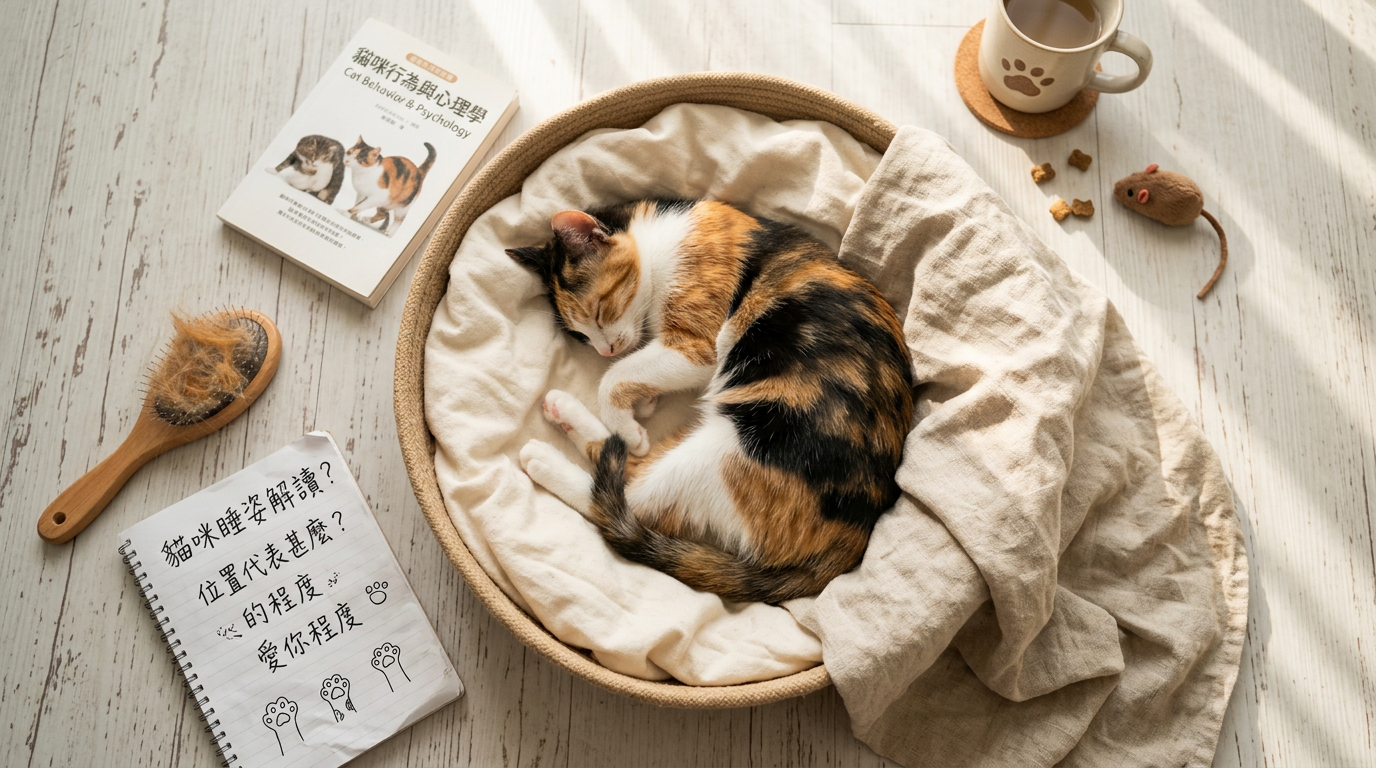
Curling the body into a circle, tucking the nose into the tail, is a posture for both warmth and protecting internal organs. It's most common in winter.

Lying on Their Side, Limbs Extended, Sprawled Out

This is a deep sleep posture indicating complete relaxation. When we see a new guest at our facility willing to lie on their side and sleep sprawled out, we know they are adapting well.

Summer Sleeping Positions: Not Affection, But Cooling Down

Many owners notice a complete change in their cat's sleeping locations during summer—they might seek out tiles, bathroom floors, or entryway stones, or sprawl out flat with their belly facing down. This is actually an active cooling behavior, not a sign they are ignoring you.

Cats have sweat glands concentrated in their paw pads, making their heat dissipation limited. Therefore, they resort to "increasing the surface area of contact with cool surfaces" to lower their body temperature. Key indicators:

  • Sprawling flat on cool surfaces, seeking shady spots → Normal cooling behavior, OK.
  • Panting with mouth open, rapid breathing, lethargic, tongue appearing purplish → Dangerous, potential heatstroke, requires immediate cooling and veterinary attention.

Cats do not normally pant with their tongues out like dogs. If this occurs, it's a warning sign. For a complete assessment, see Are Cats Sensitive to Heat? Signs of Heatstroke & Summer Cooling Guide. Long-haired and overweight cats are at higher risk during summer. This is why we often recommend grooming long-haired cats before hot weather to reduce their burden—refer to Long-Haired Cat Care and Grooming Schedule for related information.

Changes in Sleeping Posture: Your Cat's Subtle Health Report

Cats are adept at hiding pain and illness, and their sleeping posture is often the first clue. We pay close attention to these changes during boarding:

  • From Belly-Up to Consistently Curled Up, Protecting the Abdomen: Watch for signs of abdominal pain or urinary issues.
  • Hiding in Unusual, Secluded Corners, Avoiding Visibility: Sick cats tend to hide.
  • Significant Increase in Sleep Duration, Lethargy Even When Called, Noticeable Decline in Energy: If accompanied by decreased appetite, seek veterinary care.
  • Body Feels Hot to the Touch During Sleep, Rapid Breathing: Possible fever. A normal cat's body temperature is around 38–39.2°C (100.4–102.5°F). See What to Do If Your Cat Has a Fever for assessment methods.

It's normal for senior cats to sleep more, but this also requires heightened vigilance. For care priorities, refer to Home Care for Senior Cats. We must be honest: these are observational clues, not diagnoses. If abnormalities persist for more than 1-2 days, or are accompanied by vomiting, refusal to eat, or abnormal elimination, consult a veterinarian immediately.

What Owners Can Do to Help Their Cat Sleep Peacefully

A cat's ability to sleep soundly and willingly near you depends on a stable sense of security. In practice, we recommend:

  • Give Them Choices: Provide options like high perches, hidden nooks, and sunny window spots, allowing the cat to choose.
  • Keep Sleeping Spots Consistent: Fixed locations help cats feel secure enough to sleep soundly.
  • Provide Cooling Materials in Summer and Warming Beds in Winter: This prevents them from having to sleep uncomfortably on the floor.
  • Reduce Separation Anxiety: Some cats must sleep attached to you and become distressed when you leave. This could be separation anxiety; see Signs and Solutions for Separation Anxiety.

If you're going away and worried your cat will be anxious and sleep poorly without supervision, choosing a boarding facility that carefully observes their routine and sleeping habits is crucial. This is precisely what we do daily at CatBackyard Boarding—we use sleeping posture to gauge how well they are adapting. See First-Time Boarding Checklist for Your Cat for preparation essentials.

Frequently Asked Questions

What does it mean when my cat sleeps next to me?

It means they consider you a source of security and

Subscribe to CatGarden cat-care tips

One email a month: hand-picked cat care tips and new arrivals. No spam.

Keep reading