Decoding Cat Sitting Postures: From Loafing to Egyptian Sits, Understand Your Cat's Health Signals
Your cat's sitting and squatting postures reveal their emotions and physical condition: a relaxed cat might sleep sprawled out, while a wary or uncomfortable one may adopt a "loaf" position. This article decodes common cat postures and their associated health signals.
Simply put, a cat's sitting posture indicates that the more relaxed they are and the more they expose their belly, the more secure they feel. Conversely, postures where they tuck their body tightly and hide their limbs might signal alertness, feeling cold, or discomfort. To quickly assess your beloved cat's current state, focus on whether their "belly is exposed" and if their "muscles are tense or relaxed."
We interact with numerous boarding cats daily at our facility. Observing the changes in their sitting postures from the first to the third day of their stay allows us to gauge how well they are adapting. This article consolidates all common cat sitting, squatting, and sleeping postures, and highlights which ones may indicate a need for veterinary attention.
Key Takeaways
- A cat sleeping with its belly exposed is the ultimate sign of trust, indicating complete relaxation and lack of defensiveness towards its environment.
- The "loaf" or "bread cat" pose, with all four paws tucked underneath, is generally a comfortable resting position. However, if accompanied by squinting, a tucked neck, and disinterest in interaction, it could signal discomfort or feeling cold.
- The "Egyptian cat sit," characterized by an upright upper body and tail wrapped around the front legs, is a neutral, watchful posture often adopted by cats in unfamiliar surroundings.
- When a cat maintains a single squatting posture for an extended period, refusing to stretch or change position, it warrants attention for potential pain or joint issues.
- To interpret a cat's posture, consider "how long it's held" and "other accompanying symptoms." A single posture alone cannot definitively diagnose illness.
Why Understand Cat Sitting and Squatting Postures?
Cats cannot speak, but their body language is an honest indicator of their emotions and health. The same cat will sit very differently when relaxed versus tense. Understanding cat sitting posture meanings provides an additional tool for early problem detection—especially for pain, fever, or digestive upset, which cats are adept at hiding, often revealing themselves through their posture first.
When interpreting, adhere to these three principles:
- Observe muscle state: Relaxed and flat muscles indicate relaxation; tense and contracted muscles suggest alertness or discomfort.
- Note belly exposure: Belly exposure equals trust; guarding the belly equals defensiveness or feeling cold.
- Consider duration and changes: A healthy cat will adopt various postures throughout the day. Persistent stillness in one position should raise concern.
Decoding Common Cat Sitting and Squatting Postures
The Loaf (Bread Cat, Cat Squat)
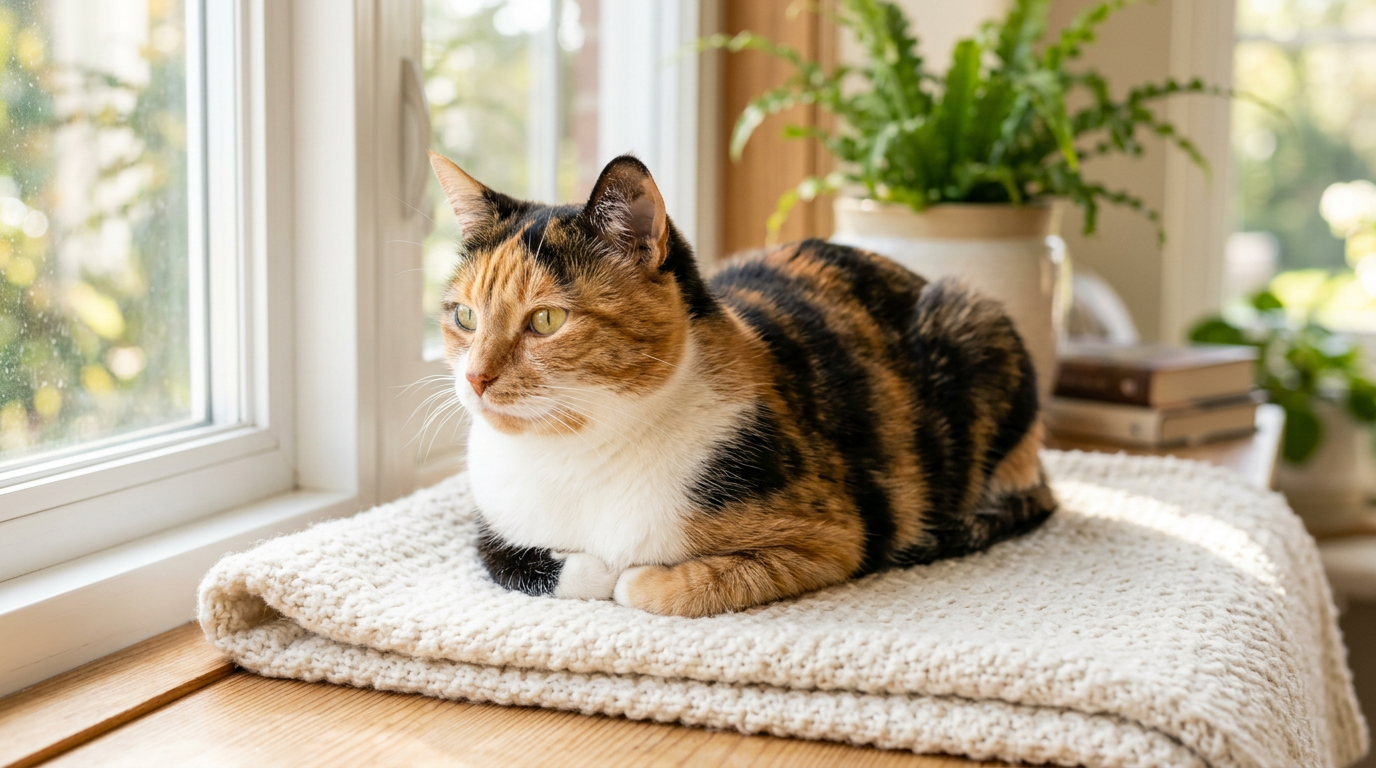
With all four paws tucked beneath its body, resembling a loaf of bread, this is the classic cat squatting posture—the loaf. This pose signifies that the cat can get up at any moment but also wishes to rest, often indicating a relaxed yet slightly alert state.
However, it's important to distinguish between two types of loafing:
- Comfortable Loaf: Relaxed body, steady breathing, half-closed eyes, and paws may be naturally visible.
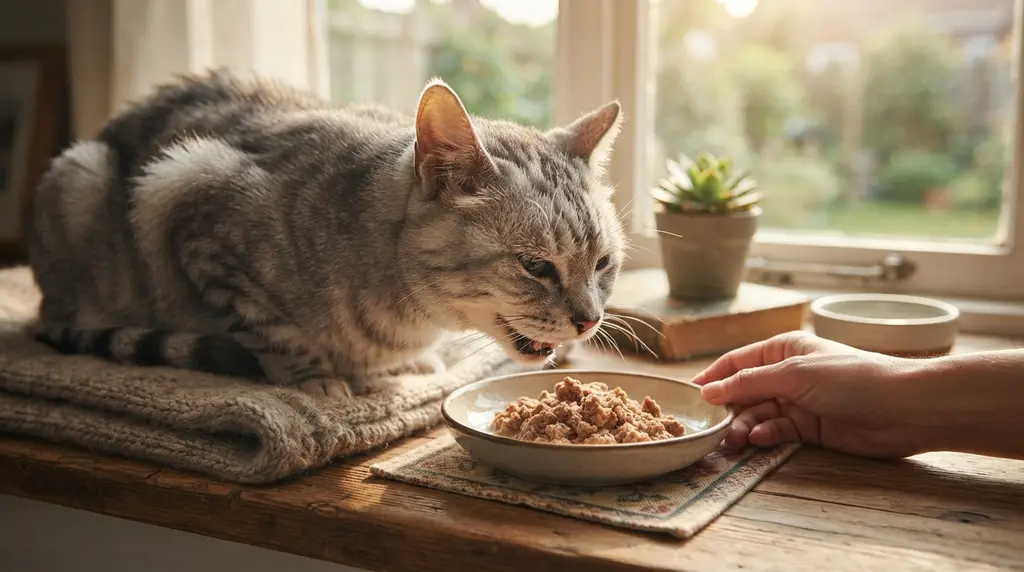
- Uncomfortable Loaf: Tucked neck, tense body, squinting with a strained expression, unresponsive to calls, and paws tucked very tightly. This often indicates feeling cold, fever, or a protective posture for internal organs due to discomfort.
For more details on this posture, we have two in-depth articles: What Does the Cat Loaf Position Mean? Does the Bread Cat Pose Indicate Comfort or Discomfort? and Is the Cat Loaf Comfortable or Sick? A Complete Interpretation of Cat Sitting and Sleeping Postures.
The Egyptian Cat Sit (Upright Sit)
With an upright upper body, front paws planted, and tail wrapped around the front legs, sitting upright like an ancient Egyptian cat deity statue. This is a neutral to watchful observation posture. Cats typically adopt this when surveying their surroundings before deciding whether to relax.
At our facility, new feline guests almost always begin by observing their environment from this posture within their enclosure. When they are willing to lie down or even loaf, it signifies good adaptation.
Side-Lying (Half-Sprawl)
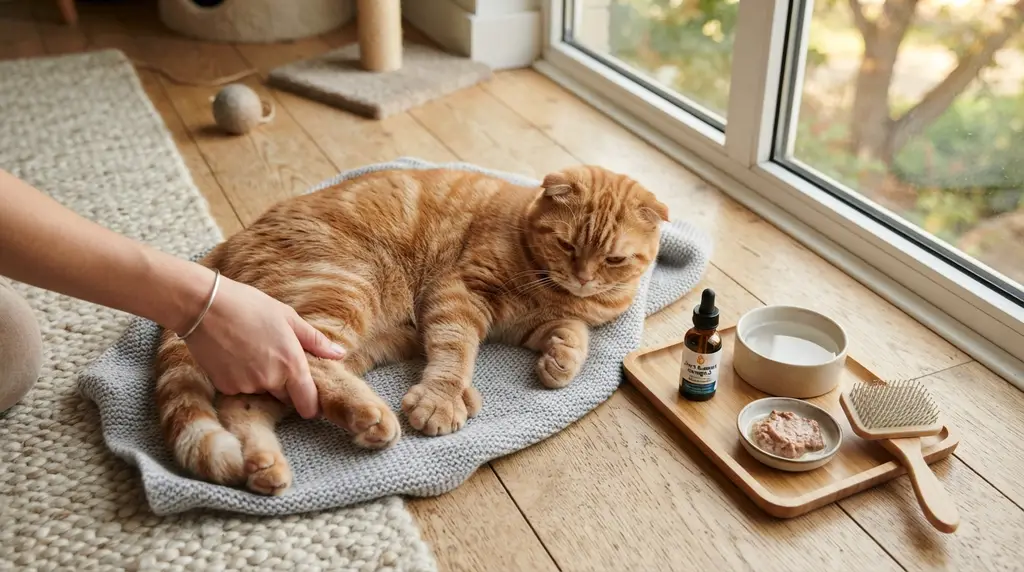
The body is tilted to the side, legs naturally extended, exposing part of the belly. This is a clear sign of relaxation, indicating the cat feels secure in its current location. Side-lying also improves heat dissipation, making it particularly common in warmer weather.
Sprawled Sleep, Belly-Up Reclining
Lying on their back with all four limbs in the air, belly completely exposed, is the ultimate sign of trust. The belly is a cat's most vulnerable area, and exposing it signifies complete lack of defensiveness towards the environment. It's important to note that belly exposure usually means "I am very relaxed," not necessarily an invitation to touch their belly—many cats will react defensively with a paw swipe or bite if touched.
Where a cat sleeps and in what posture is also related to their level of trust in you. For further insights, you can refer to our pillar content articles What Does Your Cat's Sleeping Position Mean? Decoding Sleeping Postures, Locations, and Their Love for You and What Secrets Lie in Your Cat's Sleeping Position? Decoding Trust Levels from Sleeping Beside You to at the Door.
Curled Up (Donut Sleep)
The body is curled into a ball, head tucked in, and tail wrapped around the body. This posture is primarily for warmth, minimizing heat loss. It's commonly seen in winter or when the air conditioning is too strong. If a cat remains tightly curled on a hot summer day, it might indicate discomfort.
Loaf with Tucked Neck, Squinting, and Piloerection
This combination warrants increased vigilance. While the loaf posture itself is normal, the simultaneous tucking of the neck, slight piloerection (fur standing on end), stiff body, and lack of response to stimuli often indicate the cat is enduring pain or has a fever.
Which Postures Are Actually Health Red Flags?
Postures must be assessed in conjunction with "duration" and "other symptoms." The following situations warrant increased vigilance and potential veterinary consultation:
- Maintaining the same posture for an extended period, refusing to stretch or shift: This could indicate joint pain, muscle pain, or internal discomfort, where the cat adopts a fixed position to minimize pain.
- Sitting with a noticeable tilt or leaning to one side: This might suggest pain on one side or a neurological issue.
- Significant neck tucking, squinting, and rapid breathing while in a loaf position: This could indicate fever or discomfort. You can initially check their ear and paw pad temperature; refer to What is a Normal Cat Body Temperature? Are Warm Ears, Nose, and Paws a Sign of Fever? for more details.
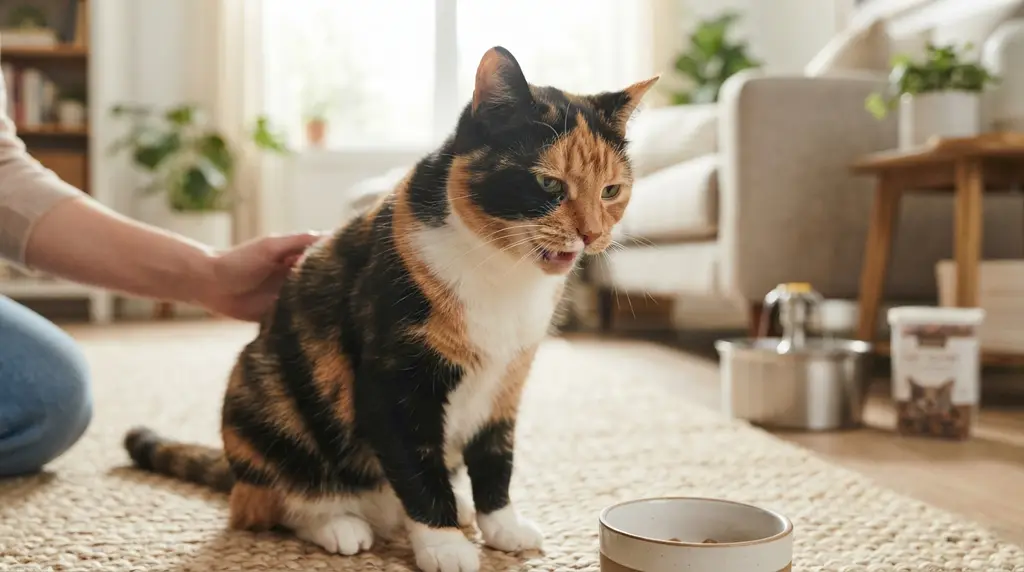
- Sitting and panting with an open mouth and extended neck: Cats do not typically pant like dogs. Open-mouth breathing often signifies overheating or respiratory issues. Immediately cool the cat down and monitor; refer to Is it Normal for Cats to Stick Their Tongue Out or Pant with an Open Mouth? Understanding Causes from Heat to Illness and Danger Signs.
- Sudden change from sprawling to exclusively loafing in a corner: A shift from a relaxed to a defensive posture typically signals environmental stress or a physical change.
These are not meant to cause panic at first sight, but rather, when a change in posture is accompanied by abnormalities in appetite, activity level, or elimination, veterinary attention should be sought. If symptoms persist or noticeably worsen, consult a trusted veterinarian.
How Environment Influences Cat Postures
A cat's willingness to sprawl out is largely dependent on whether they feel safe and comfortable regarding temperature.
Temperature is a key factor. We maintain our cat rooms at 25–27°C (77–81°F) during summer. At this temperature, most cats will comfortably lie on their sides or sprawl out. If it becomes too hot, they will seek out cool tile floors and stretch out to dissipate heat. For information on a cat's heat dissipation mechanisms, see Do Cats Feel Hot? Understanding Cat Heat Tolerance, Cooling Methods, and Essential Summer Heatstroke Warnings.
Security is equally important. With shelter, elevated spots, and hiding places, cats feel secure enough to relax and sleep sprawled out. This is why many cats love cardboard boxes; see Why Do Cats Love Cardboard Boxes and Hiding in Them? Understanding Security, Hunting Instincts, and Cooling Needs.
If you are going away and are concerned your cat might remain tense in an Egyptian cat sit or curled up in an unfamiliar environment, choosing a cattery that pays attention to temperature control and spatial planning is crucial. You are also welcome to explore our Boarding Services for reservations.
Frequently Asked Questions
Does the cat loaf position always mean my cat is uncomfortable?
Not necessarily. The loaf position is most often a relaxed resting posture while waiting. Only when accompanied by symptoms like a tucked neck, tense squinting, rapid breathing, or decreased appetite should you suspect discomfort and seek veterinary observation.
What does it mean when a cat sleeps sprawled out on its belly?
It signifies that the cat feels extremely trusting and completely relaxed, as the belly is the most vulnerable area. However, exposing the belly does not equate to an invitation for petting; most cats will reflexively swipe or bite if touched in this position.
Is a cat's sleeping position related to its sitting posture?
Yes. Sleeping location reflects trust and security, while posture reflects the degree of relaxation. Observing both provides a more accurate assessment. A cat choosing to sleep sprawled out near you usually indicates both trust in you and a feeling of security.
Should I see a vet if my cat consistently sits tilted to one side and doesn't move much?
If a cat maintains a tilted or fixed posture for an extended period, refusing to stretch or roll over, it could be a sign of pain, joint, or neurological issues. It is recommended to seek veterinary examination promptly rather than self-diagnosing.
Do cat sitting postures change in hot weather?
Yes. When it's too hot, cats will stretch out their bodies and lie flat on cool surfaces to dissipate heat, rather than curling up or loafing. If accompanied by open-mouth panting, immediate cooling measures and vigilance for heatstroke are necessary.
This article was written by the CatBackyard editorial team, compiled from frontline care experience in cat boarding and grooming. The content is for owner reference only. If your cat's posture changes and is accompanied by abnormalities in appetite, activity level, or elimination, please consult a professional veterinarian promptly.
CatGarden offers curated supplies, cat boarding, and grooming
Book services or shop online.