Blog
What to Do If Your Cat Isn't Drinking Water? Summer Hydration Tips, Wet Food Ratios, and Dehydration Signs Explained
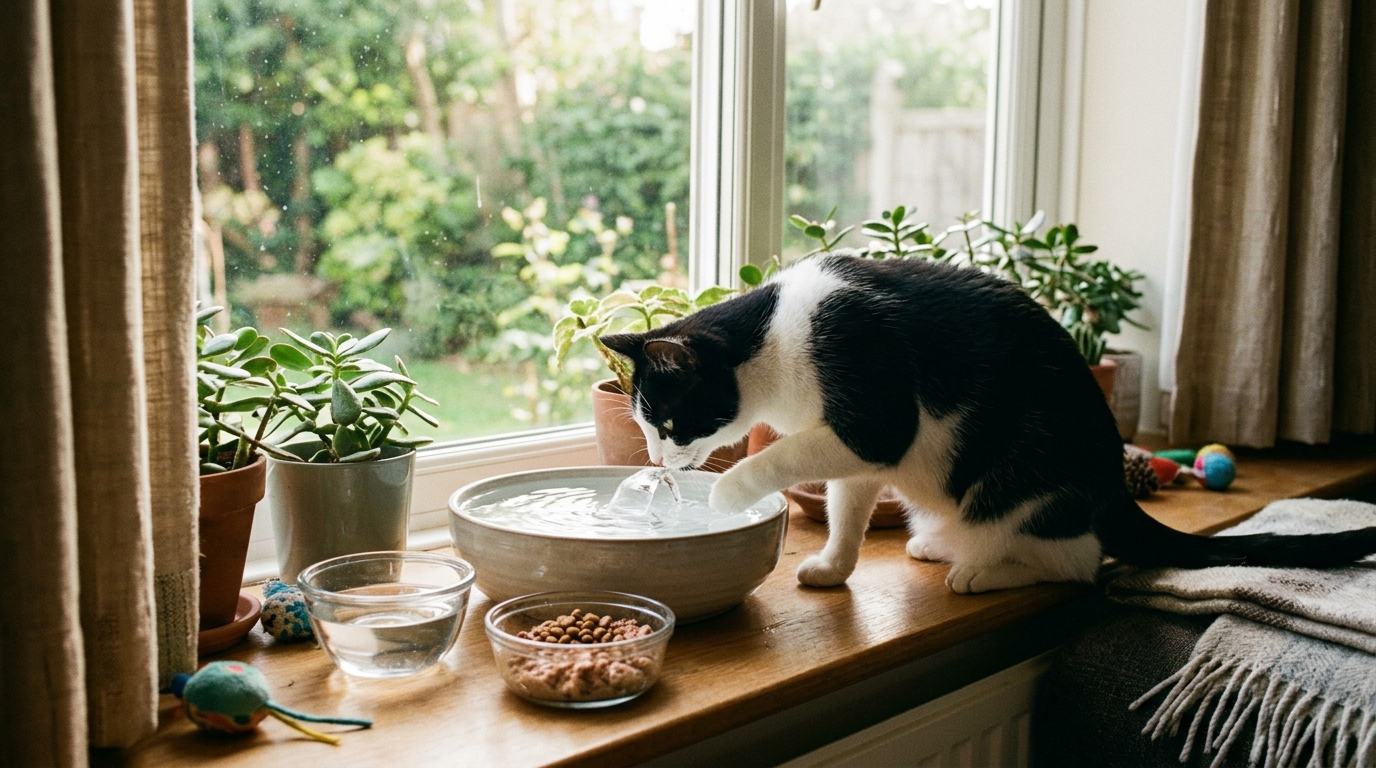
What to do if your cat isn't drinking water? The most effective approach usually isn't rushing to buy a water fountain, but rather "hiding water in their food" – increasing the proportion of wet food (canned food), adding more water bowls, and increasing the frequency of water changes daily. These three strategies are more immediately effective for the vast majority of cats who don't like to drink water than switching machines. High summer temperatures cause cats to lose more moisture through panting and grooming (saliva evaporation), making July a high-risk period for dehydration. Insufficient water intake can first lead to kidney and urinary tract problems.
Key Takeaways
- A cat's total daily water requirement is approximately 40–60 ml per kilogram of body weight. A 4 kg cat needs about 160–240 ml per day, a significant portion of which can be covered by wet food.
- Cats eating only dry kibble often consume less than half of their required water intake actively. Increasing wet food to over 50% is the most effective way to boost total water consumption.
- The quickest home method to check for dehydration: Gently pinch the skin on the back of the neck and release. It should snap back within 1–2 seconds. If it retracts noticeably slower, dehydration may be present.
- In summer, cat water should be offered "in small amounts, frequently, and changed often." In our facility, we change the water at least twice daily. Room temperature water is generally preferred by cats over ice-cold water.
- If your cat exhibits persistent refusal to drink, lethargy, poor appetite, significantly reduced urine output, or complete lack of urination, seek immediate veterinary attention. Do not observe at home for too long.
Why Are Cats Naturally Reluctant to Drink Water?
Cats' ancestors were desert animals, and their bodies were designed to obtain moisture directly from their prey (which contains about 70% water). Therefore, their thirst response is relatively slow. This was not an issue in the wild, but when we feed dry kibble, which has only about 8–10% moisture content, and cats don't "actively compensate" for the missing water, their water intake is often chronically insufficient.
This is also why cats fed dry kibble have a higher incidence of urinary tract and kidney problems. For a deeper understanding of the mechanism, you can read our article on Why Do Cats Get Kidney Disease? From Early Signs, Dietary Prevention, to the Importance of Drinking More Water.
Why Is Summer More Dangerous?
In summer, cats primarily dissipate heat through grooming (saliva evaporation) and panting, both of which consume water. The weather is hot, activity levels may decrease, and appetite might also decline, creating a vicious cycle of "drinking less, losing more." In July, the cats boarding at our hotel generally have lower water intake than in winter, which is why we pay extra attention to their water bowls during the summer. For overall high-temperature care, we recommend reading our related article Are Cats Afraid of Heat? Signs of Heatstroke, Panting with Tongue Out, and a Complete Guide to Cooling Down in Summer.
How Much Water Should Cats Actually Drink in Summer?
A simple guideline: approximately 40–60 ml of water per kilogram of body weight per day.
| Body Weight | Total Daily Water Requirement (including food) |
|---|---|
| 3 kg | Approx. 120–180 ml |
| 4 kg | Approx. 160–240 ml |
| 5 kg | Approx. 200–300 ml |
| 6 kg | Approx. 240–360 ml |
Note that this is "total water," including the water from food. If your cat primarily eats wet food, they will naturally drink very little from their bowl, which is normal and not something to force. The real concern is for cats who eat only dry kibble and don't drink much.
How Do I Know If My Cat Is Drinking Enough?
The most practical approach is quantification. We recommend owners use a measuring cup with markings to fill the water bowl. The next day, record how much is left when you discard it (remember to account for evaporation; you can place a separate cup of water as a control in summer). Tracking this for three consecutive days will give you a good estimate of their daily actual water intake. Combine this with observing the urine output in the litter box; if the urine clumps become noticeably smaller or less frequent, it's a signal they are not drinking enough.
Cat Dehydration Signs: How to Self-Check at Home
Dehydration doesn't happen all at once and early signs are easily overlooked. Here are a few cat dehydration signs you can observe at home:
- Skin Elasticity Test: Gently pinch the skin between the scruff and shoulders and lift it up. When released, it should snap back smoothly within 1–2 seconds. If it retracts slowly, or the skin stands up like a "tent," dehydration may be present.
- Gum Moisture: Normal gums are moist and slippery. During dehydration, they become sticky and dry.
- Eyes: In severe dehydration, the eyes may appear sunken and dull.
- Reduced Urine Output: Litter box clumps become smaller, urination becomes less frequent, or the cat doesn't urinate at all for a whole day.
- Decreased Energy and Appetite: Hiding, reduced activity, and less interest in food.
⚠️ Note: The skin elasticity test may be less accurate for senior cats or very thin cats (they have less subcutaneous fat, so the skin naturally retracts slower). It's important to consider other signs in conjunction. If your cat shows persistent refusal to drink, obvious lethargy, hasn't urinated for over 24 hours, or is vomiting and has diarrhea, seek immediate veterinary care. Dehydration combined with high temperatures can quickly escalate into a medical emergency. Observing body temperature can also be helpful; refer to What is a Normal Cat Body Temperature? A Complete Guide from Paw Pads and Ears to Taking Rectal Temperature.
How to Get Your Cat to Drink More Water? 6 Tested and Effective Tips from Our Facility
This is the core of the article. We've cared for numerous boarding cats and developed this "dehydration emergency kit" of strategies, ordered from most to least effective:
1. Increase Wet Food Proportion (Most Effective)
If you can only do one thing, do this. Increase the proportion of wet food (complete wet food cans) in their diet to over 50%. An 80–85 gram can of complete wet food contains about 60–70 ml of water, effectively "feeding" them water without them even realizing it. For cats primarily on dry kibble, you can start by transitioning "one meal a day to wet food." For selection guidance, refer to How to Choose the Best Kitten Canned Food? Differences Between Complete and Complementary Cans, and Summer Storage Tips; the logic for complete wet food applies equally to adult cats. If you want to use high-moisture complete wet food for hydration, our own Luxury Functional Cans are also a popular choice among owners for mixing with water to increase intake.
2. Add Water to Canned Food or Meals
Spread out the wet food in the bowl and add 1–2 tablespoons of warm water, mixing it into a "soupy meal." Many cats will lick up the gravy. In summer, you can make it even thinner. Dry kibble can also be softened by adding water (but soaked kibble should be consumed within 30 minutes, as it can easily breed bacteria at room temperature).
3. Increase the Number of Water Bowls, Placed Strategically
Don't just have one water bowl. We recommend the "number of cats + 1" principle, placing bowls in the living room, near their resting spots, and in hallways. Cats are opportunistic drinkers; if water is in their path, they might drink as they pass by. Keep water bowls away from the litter box; cats dislike drinking near their toilet area.
4. Switch to Wide, Shallow Bowls to Avoid Whisker Fatigue
Many cats dislike burying their faces in narrow, deep bowls because their whiskers touch the sides, causing discomfort (whisker fatigue). Switching to wide, shallow ceramic or stainless steel bowls ensures their whiskers don't get pressed, and many picky cats will suddenly become willing to drink.
5. Change Water Frequently, Use Room Temperature Water
In summer, water left out can develop odors and bacteria. In our facility, we change the water at least twice daily and clean the bowls thoroughly (residual slime can deter cats from drinking). Most cats prefer room temperature water; ice-cold water can actually make some cats hesitant to drink. If you want to cool your cat down, rely on air conditioning and shady spots, not on forcing them to drink ice water.
6. Water Fountains are an Aid, Not a Cure-All
Flowing water can indeed attract "playful" cats, but not every cat is drawn to water fountains. Furthermore, they require daily cleaning and regular filter changes; otherwise, the water quality can worsen. Consider a water fountain as "one option to increase drinking access," not a solution for everything. The true core strategies remain the ones mentioned earlier (wet food + adding water + multiple bowls + frequent changes).
Beyond Hydration, Don't Forget to Cool Them Down
Hydration and cooling should go hand-in-hand. If your cat starts panting with their mouth open in summer, it might not just be dehydration but a sign of overheating. It's crucial to differentiate. You can refer to Is Your Cat Panting with Their Tongue Out Because They're Too Hot? Differentiating Normal Cooling from Dangerous Panting and First Aid and What to Do If Your Cat Has Heatstroke? First Aid Steps and When to Seek Veterinary Care for Summer Heat Exhaustion.
When leaving your cat in the care of a boarding facility, be sure to proactively inform them about their usual diet and drinking habits. When you book a stay, we ask owners to fill out a dietary form specifically to monitor each cat's water intake and urine output closely during the high-risk summer heat.
Frequently Asked Questions
Is it normal for a cat to not drink water all day?
If your cat primarily eats wet food, drinking very little is normal because they are getting sufficient hydration from their food. However, if they eat mostly dry kibble, drink almost nothing, and simultaneously show significantly reduced urine output or lethargy, it is not normal. You should increase their wet food intake promptly and seek veterinary evaluation.
Can I add something to the water to encourage my cat to drink?
You can add a small amount of unsalted chicken broth or gravy from canned food to increase appeal, but always provide a separate bowl of clean, plain water. Flavored water should be changed daily to prevent spoilage. It is not recommended to add milk, as most adult cats are lactose intolerant.
Can I rehydrate a dehydrated cat at home?
Mild dehydration can be improved by increasing wet food intake and adding water to their meals. However, if your cat shows signs of significantly slowed skin elasticity, lethargy, or lack of urination (moderate to severe dehydration), do not attempt to force-feed water or administer subcutaneous fluids at home. Seek veterinary assessment for fluid therapy; delaying treatment in high temperatures can be dangerous.
Can ice water or adding ice cubes help cool down and hydrate my cat?
Most cats dislike ice water and may drink even less. Cooling should be achieved through air conditioning, shady spots, and ventilation, not by forcing them to drink ice water. You can add a small amount of ice to the water to keep it cool, but do not force them to drink it under the guise of "cooling down."
My cat still isn't drinking after I got a water fountain, what should I do?
This indicates the problem might not be with the "form of water" but with their overall dietary structure. Prioritize increasing wet food portions, switching to wide, shallow bowls, increasing the number of water bowls, and changing the water twice daily. These methods are usually more effective for cats reluctant to drink than a fountain.
---
*This article was written by the CatBackyard editorial team. Health assessments within this article are for preliminary home reference only. If your cat exhibits persistent refusal to drink, signs of dehydration, or significant abnormalities in energy or appetite, please seek veterinary care promptly.*
One email a month: hand-picked cat care tips and new arrivals. No spam.
Keep reading
Is Your Cat Panting with Its Tongue Out Because It's Too Hot? Distinguishing Between Normal Cooling, Open-Mouth Breathing, and Dangerous Panting, Plus Emergency First Aid
Brief panting with the tongue out in cats is usually a response to intense activity or overheating. However, if it lasts for more than a few minutes and doesn't stop even when resting, it should be treated as an emergency. This article will help you differentiate between normal and dangerous panting.
Is a Wet Cat Nose Normal? Understanding Health and Illness Signs from Temperature and Humidity
A wet cat nose is usually normal, but judging health solely on nose moisture isn't accurate. This article teaches you to combine nose and ear temperature with other signs to understand when to seek veterinary care.
Is It Normal for Cats to Stick Out Their Tongues or Pant? Understanding Causes from Heat to Illness and Recognizing Danger Signs
A cat occasionally sticking out a little of its tongue is usually fine, but persistent open-mouth panting requires caution. This article helps you distinguish between relaxed behavior and danger signs of heat stress, respiratory, or heart conditions.
