Blog
How to Control Your Cat's Diet? Portion Control, Calorie Calculation, and Strategies for Overeating in Summer
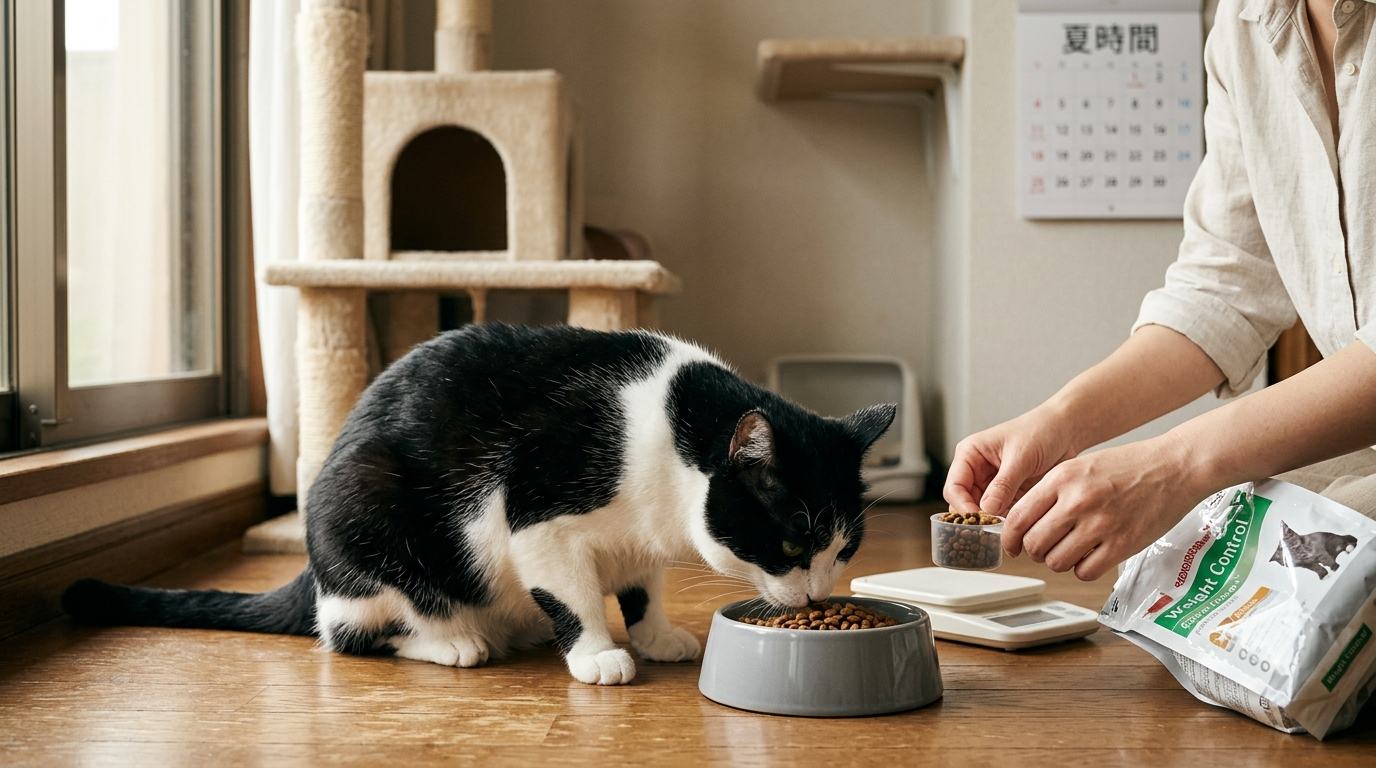
The core of controlling your cat's diet is to first calculate the daily calories corresponding to their "ideal weight," and then divide this calorie amount into 2-4 meals, subtracting treats before feeding. Weight loss isn't about starving; it's about precisely managing food intake to help your cat steadily lose 1%-2% of their current body weight each month. Losing weight too quickly is dangerous.
In this article, we'll use our frontline experience caring for hundreds of boarding cats at Cat Hou Yuan to guide you from determining ideal weight and daily calorie needs to portioning meals and managing treats, creating a weight loss diet plan that can actually be implemented.
Key Takeaways
- A neutered adult cat with average activity levels needs approximately "ideal weight (kg) × 30 + 70" calories per day, multiplied by a factor of 0.8-1.0. For weight loss, aim for 80% of the ideal weight's calorie intake.
- Safe weight loss for cats is no more than 1%-2% of their body weight per week. For a 6kg overweight cat, losing 0.3-0.6kg per month is a reasonable range. Losing weight too quickly can lead to fatty liver disease.
- To determine if a cat is overweight, don't just look at the number on the scale, but assess their "Body Condition Score (BCS)": from above, they should have a visible waist; from the side, you should be able to feel their ribs with a thin layer of fat, but not see them.
- Treats and extra meals should be limited to within 10% of the total daily calorie intake. This translates to about half to one tube of typical lickable treats.
- For weight loss, small, frequent meals (3-4 times a day) are recommended. This helps stabilize blood sugar and reduce begging behavior compared to one large meal. It's especially effective in summer.
First, Understand: Is Your Cat Really Overweight?
Many owners only realize their cat has gained weight when they feel "heavy" to pick up. However, the number on the scale can be deceiving – the normal weight range varies greatly depending on a cat's body type. Professionally, we use the Body Condition Score (BCS).
Three Home Self-Check Actions
1. Feel the Ribs: Gently run your hand along the sides of your cat's rib cage. You should feel the ribs as if they were covered by a thin layer of fabric. If you can't feel them, or only feel a layer of fat – they are likely overweight.
2. Observe the Waist: Look down at your cat from directly above. There should be a noticeable "tuck" or waistline behind the ribs. If they look like a cylinder or even bulge outwards – they are likely overweight.
3. Check the Belly: From the side, in a standing position, the lower abdomen should be slightly tucked upwards, not hanging down like a large, swinging pouch.
If two out of these three checks are not met, your cat is likely between "overweight" and "obese," and it's time to start controlling their diet.
How Many Calories Does a Cat Need Per Day? Step-by-Step Calculation
This is the question most people want to know: "How many calories does a cat need per day?" We'll use the method we actually use at our facility, broken down into two simple steps.
Step 1: Determine the "Ideal Weight"
The calorie calculation for weight loss is not based on the current overweight body weight, but on the target ideal weight. If you're unsure of the ideal weight, you can estimate it by considering what a cat with palpable ribs and a visible waist would weigh, or ask your veterinarian for an assessment. The ideal weight for most domestic cats falls between 3.5-5 kg, though larger breeds (like Maine Coons) will differ.
Step 2: Apply the Daily Calorie Formula
Resting Energy Requirement (RER) per day:
> RER = Ideal Weight (kg) × 30 + 70
Then, multiply by a factor to get the daily maintenance calories:
- Neutered adult cat with average activity: RER × 1.0
- Weight Loss Period: RER × 0.8 (i.e., 80% of the ideal weight's maintenance calories)
Example: An overweight orange cat currently weighing 6 kg with an ideal weight of 4.5 kg
- RER = 4.5 × 30 + 70 = 205 kcal
- Daily target for weight loss ≈ 205 × 0.8 ≈ 164 kcal/day
Next, check the "calories per 100g/per can" on your cat's food packaging to calculate how many grams of dry food or how many cans of wet food to give per day. This 164 kcal is your total budget for meals.
How to Portion Food During Weight Loss? Meal Separation is Key
After calculating the total calories, it's crucial to avoid dumping a large bowl of food for your cat to eat freely throughout the day. When we care for cats on weight loss plans at our boarding facility, we always practice small, frequent meals.
Recommended Meal Separation Method
- 3-4 meals per day, dividing the total calorie intake evenly.
- Use a timed feeder or feed at fixed times to establish a feeding rhythm.
- Remove the bowl after each meal; do not leave food out all day.
The benefits of meal separation include stable blood sugar levels and reduced begging behavior. Your cat will be less likely to meow incessantly for food simply because the bowl is empty. This is particularly helpful for owners who are easily swayed by their cat's pleas.
Consider Increasing Wet Food Proportion
During the weight loss period, we prefer to increase the proportion of wet food. Canned food has high water content (about 70%-80%) and lower calorie density per volume. A similar portion size provides a stronger sense of fullness for the cat and helps with hydration, which is also beneficial for cats prone to urinary and kidney issues. For more on why hydration is so important, you can read this article on Why Do Cats Get Kidney Disease? From Early Signs, Dietary Prevention to the Importance of Drinking More Water. Choosing a premium functional can with clear calorie labeling and meat as the primary ingredient is better for portion control than obscure brands.
Treats and Extra Meals: The Culprits Behind Hidden Weight Gain
Many owners meticulously control their cat's main meals, yet the cat doesn't lose weight. The problem often lies with treats.
The 10% Rule
The calories from treats (including lickable treats, freeze-dried snacks, and extra meals) should be limited to within 10% of the total daily calorie intake. For the 164 kcal cat in our example, the treat budget is only about 16 kcal – roughly half to one tube of lickable treat. Furthermore, this 16 kcal should be deducted from the main meal allowance, not given in addition.
Use "Non-Food" Rewards Instead
If you want to interact with your cat during their weight loss period without exceeding their calorie limit, switch to using a feather wand or premium catnip as an emotional reward. Playtime is zero calories and increases activity, making it a win-win.
Do Not Feed Human Food or Fruits
During the weight loss period, it's especially important to keep food off the table. Many people think feeding a little fruit is okay, but fruits are high in sugar, and cats don't need them. Before sharing refreshing fruits in summer, understand the risks. For instance, both What Happens If Cats Eat Watermelon? and Can Cats Eat Mangoes? A Summer Feeding Guide provide detailed portioning information. More importantly, some human foods are toxic to cats. Be sure to read What Foods Can't Cats Eat? Common Household Dangers and Poisoning Signs to completely eliminate dangerous foods.
Strategies for Summer Overeating and Begging
Summer is when many owners report that their cats "beg for food more," often because their activity levels decrease, and they become lethargic from air conditioning. Their actual energy expenditure drops, but their weight might creep up.
Our Approach at the Facility
- Divide Meals Even Finer: In summer, you can split meals from 3 to 4 times a day. Smaller portions reduce hunger-induced begging.
- Use Treat-Dispensing Toys: Put the dry food portion into an interactive puzzle toy. This makes your cat "work" for their food, extending eating time and increasing activity.
- Play in the Morning and Evening: Play with your cat for 10-15 minutes during the cooler early morning and late evening hours to compensate for the reduced activity in summer.
- Monitor Water Intake: Hot weather can affect appetite and metabolism. Observe your cat for abnormal panting. If they consistently breathe with their mouth open, be vigilant. Refer to Is Your Cat Panting with Their Tongue Out Because They're Too Hot or Is It Danger? and What to Do If Your Cat Has Heatstroke for guidance.
What to Do If Your Cat's Overeating and Begging Becomes Unmanageable
Some cats become anxious or even nip when hungry. In such cases, don't rush to give them extra food as a compromise, as this will reinforce the begging behavior. You can refer to the calming strategies in Why Do Cats Suddenly Attack Their Owners? and use fixed feeding times and distraction techniques instead of adding extra food.
Health Signals to Monitor During Weight Loss
Weight loss isn't a set-it-and-forget-it process; you need to continuously observe your cat's physical responses.
- Rapid Weight Loss is Dangerous: Significant and rapid food reduction can induce fatty liver disease, a life-threatening emergency. Be sure to stick to the "no more than 1%-2% of body weight per week" pace.
- Weigh Regularly Every 2 Weeks: Use the same scale at the same time and record the weight to create a graph. This is more accurate than relying on feel.
- Sudden Loss of Appetite Requires Veterinary Attention: If your cat stops eating for more than 24 hours, don't insist on sticking to the weight loss plan. This is a warning sign that requires veterinary care.
- Consider Supplements: For cats experiencing shedding during seasonal changes or having sensitive stomachs, consider incorporating specialized probiotics to aid digestion and stabilize their system.
This article provides general dietary management principles. If your cat has a chronic illness, is on medication, or is experiencing abnormal weight changes, please discuss any weight loss plan with your veterinarian first. If any symptoms persist or worsen, seek veterinary care immediately.
How to Continue a Weight Loss Plan During Travel or Boarding
If you need to travel during your cat's weight loss period, be sure to clearly write down the portion size per meal, the number of meals, and the treat restrictions for the caregiver. When we board cats for weight loss in Banqiao Cat Boarding, we meticulously portion meals according to the owner's provided schedule and do not add extra food. If needed, you can directly book boarding and ensure a clear handover of the diet plan to avoid undoing your progress.
Frequently Asked Questions
How much weight should a cat safely lose per month?
Calculate the upper limit as 1%-2% of their current body weight per week. For a 6kg cat, a safe monthly weight loss is around 0.3-0.6kg. Losing weight too quickly can lead to fatty liver disease, so it's better to go slower.
Can I free-feed my cat during their weight loss period?
It is not recommended. Free-feeding makes it difficult to control total calorie intake and is one of the most common reasons for feline obesity. Switching to measured, portioned meals and removing the bowl after feeding is essential for effective cat diet control.
Will switching to a weight-loss prescription diet guarantee weight loss?
Not necessarily. Prescription diets can increase satiety and reduce calorie density, but if you don't control the feeding amount and continue giving treats, your cat won't lose weight. Portion calculation and treat management are the keys.
What should I do if my cat is overweight? Is exercise alone effective?
Exercise alone has limited effectiveness because cats naturally have low activity levels. Weight loss should primarily focus on dietary control, with exercise as a supplement. Both combined are most effective.
What if my cat keeps begging and meowing incessantly during their weight loss period?
Divide the total daily amount into more small meals, use treat-dispensing toys to extend eating time, and replace treats with playtime as a reward. Never give in to begging by adding food, as this will reinforce the behavior.
---
*This article was written by the Cat Hou Yuan editorial team, combining frontline care experience from our cat hotel and grooming services. It is intended for general owner reference only and cannot replace veterinary diagnosis.*
One email a month: hand-picked cat care tips and new arrivals. No spam.
Keep reading

How to Choose Kitten Wet Food: Main Food vs. Complementary Food & Summer Storage Tips
Kittens need high-protein wet food labeled "complete and balanced" as their main meal. Complementary foods are only occasional treats. After opening, refrigerate wet food and consume within 24 hours. This guide helps you understand ingredient labels and feeding portions.

What Does a Cat's Drooping or Tucked Tail Mean? Understanding Tail Language from Emotions to Illness
A cat's drooping tail often signifies nervousness, anxiety, or physical discomfort. If the tail is completely limp, dragging on the ground, or shows obvious pain, it could indicate trauma or neurological issues and requires prompt veterinary attention.

What Happens If Cats Eat Watermelon? Risks and Safe Portions Explained
Cats can eat small amounts of seedless watermelon flesh, but too much can lead to soft stools and diarrhea. Cats with diabetes or kidney disease should strictly avoid it. This article clarifies the actual risks, from kidney and blood sugar issues to diarrhea, and safe portion sizes.
