Chinchilla vs. Persian Cats: A Complete Comparison of Appearance, Temperament, Tear Stains, and Care Difficulty
Chinchillas originated from Persian cats. While they share the same lineage, their facial structures, coat colors, and care needs differ. This article compares them point-by-point on appearance, temperament, tear stains, and grooming costs to help you decide which is right for you.
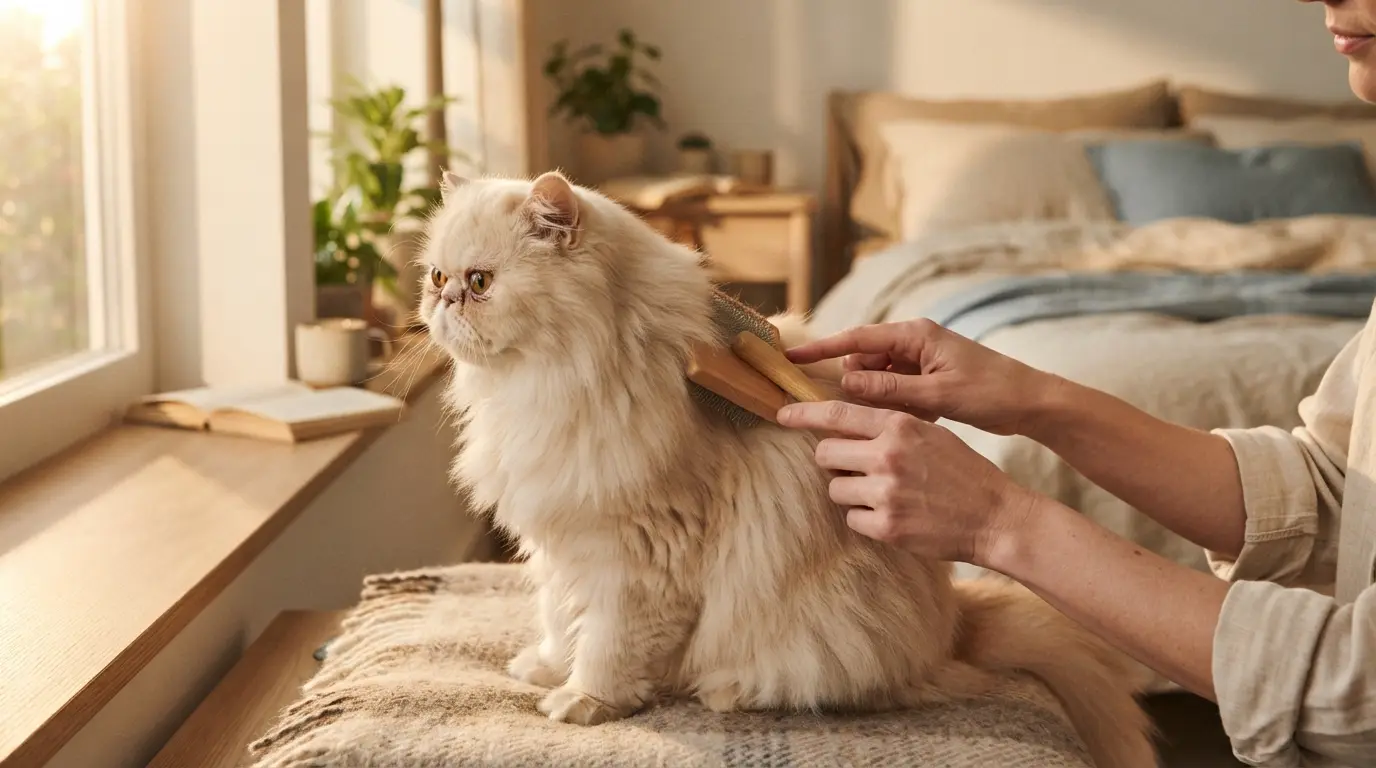
Chinchillas are not a separate breed parallel to Persian cats; they were actually developed as a branch from Persian cats, meaning they share the same lineage and coat structure. The real differences lie in three key areas: Chinchillas typically have a "doll face" with a more pronounced nose bridge, a silver-white coat with white undercoat and black or golden tips, and are usually slightly smaller than traditional Persians. Persian cats (especially the extremely flat-faced, short-nosed type) have more severe nasolacrimal duct angles, leading to more pronounced tear stains and breathing issues that are harder to manage.
In other words, the key difference between "Chinchilla and Persian cats" isn't about which is more attractive, but about how flat their faces are—the flatter the face, the more issues you'll encounter with tear stains, nasal congestion, chin acne, and food getting stuck in their fur, requiring more of your time each day. Here's a breakdown based on our hands-on experience with both breeds at our facility.
Key Takeaways
- Chinchillas are a breeding branch of Persian cats. Their coat structure and risk of genetic diseases (Polycystic Kidney Disease - PKD, Hypertrophic Cardiomyopathy - HCM) are essentially the same; they are not two unrelated breeds.
- The quickest way to visually distinguish them is by two features: Chinchillas have a silver-white coat with white undercoat and black (or golden) tips, a brick-red nose, and black eye rims, with eyes typically green or blue-green. Persians come in a wide variety of colors, with copper eyes being most common.
- Facial structures fall into two categories: "doll face" (nose still has height) and "peke face" (nose almost level with the eyes). Extreme peke-faced individuals require tear stain cleaning more than twice a day, while most doll faces can manage with once a day.
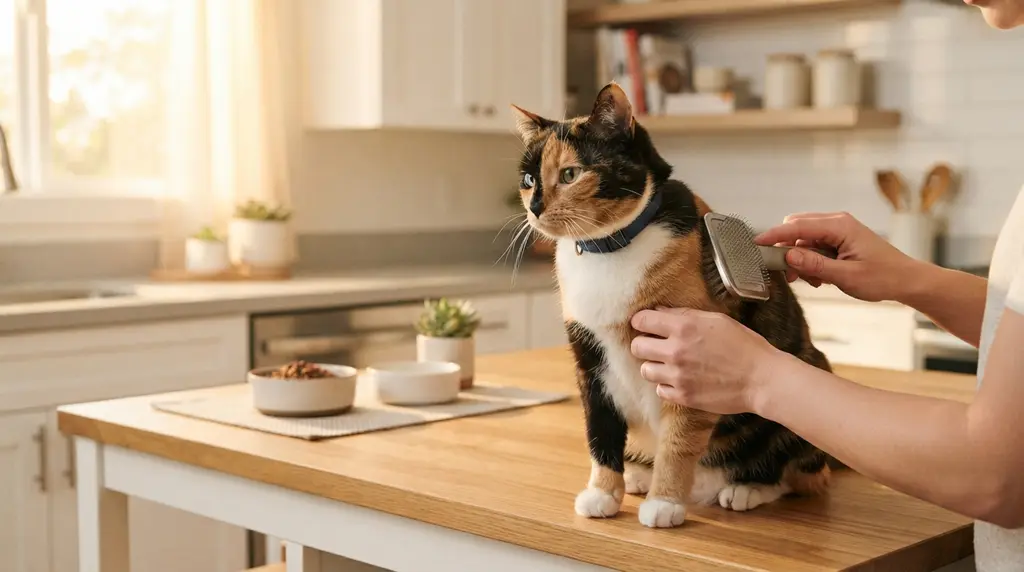
- Both breeds require daily brushing: for an adult cat, full body brushing takes about 10-15 minutes, focusing on the armpits, inner thighs, around the hindquarters, and the ruff, which are the areas most prone to matting.
- Taiwan price reference: Chinchillas with pedigree papers range from approximately NT$30,000-60,000, while show-quality or extremely short-nosed Persians can cost NT$50,000-80,000 or more. The long-term cost of grooming for long-haired cats (every 1-2 months) often exceeds the initial purchase price.
Understanding the Lineage: Chinchillas Were "Made" From Persians
The name "Chinchilla" comes from the South American rodent, due to its similar coat color pattern of a light base with darker tips. Breeders adopted the name because they found the resemblance. In the late 19th century, breeders in the UK selected individuals from Persian cats with silver bases and tipped coloring to stabilize the breed, leading to the Chinchilla we know today.
Therefore, in most cat association classifications, Chinchillas are categorized under the Persian breed within the "Silver & Golden division," not as an independent breed. In the Taiwanese pet market, it's common to refer to cats with "less flat faces, silver-white fur, and green eyes" as Chinchillas, and those with "very flat faces and other colors" as Persians. This is a market convention and may not align with official pedigree registrations.
The practical implication for owners is: You cannot assume a lower risk of genetic diseases just because "it's a Chinchilla, not a Persian." Both breeds are susceptible to Polycystic Kidney Disease, Hypertrophic Cardiomyopathy, narrow nasolacrimal ducts, and malocclusion. You should still inquire about health screenings when selecting a cat. If you want to understand the potential pitfalls upfront, you can read this article: What are the Disadvantages of Chinchilla Cats? Tear Stains, Shedding, Matting, Genetic Diseases, and Rearing Difficulties Explained.
What we use for this
CatGarden’s own products, shipped from Taiwan Quick-Dry Pet TowelFrom CA$49.35 per pieceFree shipping on multi-packs
Appearance Comparison: From Facial Structure to Coat Color and Body Type
| Feature | Chinchilla | Persian (including extreme flat-faced) |
|---|---|---|
| Facial Structure | Mostly doll face, with a discernible nose bridge | Both doll face and extreme flat face exist; short-nosed types have noses almost level with the eyes |
| Coat Color | White base with black (or golden) tips, appearing silver-white with gray from a distance | Extremely wide range including pure white, cream, blue, tortoiseshell, colorpoint, etc. |
| Nose and Eye Rim | Brick-red nose and natural black eye rims are characteristic | Varies with coat color, mostly pink or dark |
| Eye Color | Mostly green or blue-green | Copper is most common; white cats may have blue eyes |
| Body Type | Medium-sized, adults typically 3-5 kg | Medium to large, males can exceed 6 kg |
| Bone Structure | More delicate, relatively slender legs | Stocky and robust, with short, thick limbs |
Facial Structure is Key, Not Just Coat Color
When bathing and drying cats at the salon, the first difference you notice is their breathing. Doll-faced individuals can usually maintain closed-mouth, nasal breathing during drying; extremely flat-faced kittens often start panting with their mouths open and making wheezing sounds halfway through. We have to break up the drying time into several sessions, allowing them to rest in between. This isn't due to a bad temper but is determined by their anatomical structure—short nasal passages and narrow nostrils result in inherently poorer heat dissipation and ventilation efficiency.
The resulting care difference is: flat-faced cats are more susceptible to heat in Taiwan's summers. We recommend keeping indoor temperatures controlled at 26-27℃ and preventing them from napping in hot rooms. If you notice them panting with their mouths open, don't immediately assume it's just from playing; check Is Your Cat Panting with its Tongue Out Due to Heat or Illness? Check Gum Color, Breathing Rate, and 3 Warning Signs to See a Vet.
Tips for Identifying Coat Colors
A Chinchilla's fur isn't "gray"; only the tip of each hair (about 1/8 to 1/3) is colored, with the rest being pure white. So, if you part the fur and look against the direction of growth, you'll see a distinct white undercoat—this is the main difference from a silver tabby. Incidentally, many people confuse Chinchillas with tabbies. For help identifying tabby patterns, refer to How to Distinguish Tabby Cat Patterns? From Mackerel to Classic and Spotted, Learn to Identify Them All. If you want to understand common cat coat colors and breed origins in Taiwan, you can also read What is a Dragon Li Cat? Personality, Origins, and Differences from Tabby Cats Explained.
Temperament Comparison: Chinchillas Are Slightly More Active Than Persians
First, a disclaimer: Temperament is influenced far more by socialization and home environment than by breed. Even siblings from the same litter can vary significantly. However, based on the individuals we've encountered, there are some general tendencies.
Persian Cat Temperament: Quiet, slow-moving, affectionate but not demanding. Most Persians dislike jumping and prefer low surfaces like sofas or floor mats to lie on. When boarding, they often stay in the same spot in their enclosure for the entire day without much movement. Their reaction to unfamiliar environments is typically "stillness" rather than "flight." They offer little resistance when being held—but this also means they won't protest loudly when uncomfortable, making it easier for owners to miss signs of illness.
Chinchilla Temperament: Equally gentle, but with a bit more curiosity and desire for interaction. They are more likely to play with a feather wand, jump onto tables to see what you're doing, and use vocalizations to ask for things. Overall, they are like a "quieter version of a British Shorthair," not highly active, but not quite the "couch potato" that some Persians are.
A common trait is that both breeds respond better to gentle persuasion than force. If you handle them roughly once, they'll hide the next time you try to take them to the bathroom. At our salon, we always let long-haired cats exit their carriers on their own, explore the environment, and then begin grooming. The way they are held is also important—always support their hindquarters. If you don't hold them correctly, they can scratch you or themselves when struggling. You can learn more about proper handling here: How to Hold a Cat Without Them Struggling? Learn Proper Hindquarter Support, Lifting Angles, and 3 Ways They Dislike Being Held.
Tear Stains: This is the Biggest Care Difference
The nasolacrimal ducts of flat-faced cats are bent at a sharp angle, preventing tears from draining properly into the nasal cavity. Instead, they overflow along the corners of the eyes, and the long fur on their face traps the moisture, leading to reddish-brown tear stains.
Practical Differences:
- Doll-faced Chinchillas: Most can be kept clean with cleaning once a day.
- Extremely flat-faced Persians: Require cleaning 2-3 times a day, once after waking up and again after eating. If not cleaned, brown crusts will form by the end of the day.
Our Salon Procedure:
1. Dampen a cotton pad with warm water (do not use alcohol or human cosmetics). Gently press from the inner corner of the eye outwards and downwards to remove secretions; do not rub back and forth.
2. After cleaning, always pat dry with a clean tissue. Leaving moisture behind is the primary cause of skin inflammation.
3. If the fur under the eyes is too long and irritates the eyeball, have a groomer trim it by 2-3 mm. Cutting it yourself can easily injure the eyelid.
4. Observation indicators: Normal tear stains are clear or light reddish-brown and consistent in amount. If they turn yellowish-green and sticky, suddenly increase on one side, the whites of the eyes become red, or the cat constantly squints or rubs its face with its paws, it's not a tear stain maintenance issue; seek veterinary attention for corneal and conjunctival problems.
Additionally, flat-faced cats tend to get their chin wet when eating wet food, leading to blackhead-like chin acne over time. Using a shallow, wide bowl and wiping the chin with a wet wipe after each meal is more effective than treating it afterward.
Brushing and Bathing: The Long-Term Cost is the Real Difference
This is the part I most want to convey to prospective owners. Both Chinchillas and Persians have dense, double-layered long coats with a significant undercoat. Matting isn't a question of "if" but "how often."
Daily Routine (Same for Both)
- Time: 10-15 minutes for an adult cat's full body; extend to 20 minutes during shedding season.
- Tool Order: Start with a comb, working from the tips of the fur towards the roots in sections to detangle. Then, use a slicker brush to go over it, followed by a fine-toothed comb to check for any missed small knots.
- Four Essential Areas to Check: Armpits, inner thighs, around the hindquarters and base of the tail, and the ruff (where the collar rubs). We find that approximately 90% of mats at our salon occur in these four areas.
- If you feel a "plate-like" mat stuck close to the skin, do not attempt to cut it off yourself with scissors—long-haired cats have very thin skin, and this is the most common type of cutting injury we see.
Because they ingest a large amount of fur daily, long-haired cats are more prone to hairball issues. In addition to brushing, you can supplement with hairball remedies (like Pro Hairball Control Powder) and monitor their bowel movements.
Bathing and Drying
- Frequency: For indoor long-haired cats that are brushed daily, bathing is recommended approximately every 4-8 weeks. If the fur is just slightly oily, you can use spot cleaning to extend the time between baths. For more details, see How Often Should You Bathe Your Cat? Consider Age, Coat Length, and Skin Condition to Determine Frequency.
- The challenge lies in drying, not washing. Drying a long-haired cat until the skin is completely dry to the touch typically takes 40-60 minutes. Flat-faced individuals may need breaks during this process. Undried undercoats can easily lead to skin problems in Taiwan's humid climate.
- After bathing, use a highly absorbent towel (we use Quick-Dry Pet Towels) to remove most of the moisture. This can reduce drying time by one-third and significantly improve the cat's tolerance.
- If bathing at home is proving too difficult, using a professional groomer is a reasonable option. If you're unsure about the services needed, you can review What Are the Types of Cat Grooming Services? From Baths and Nail Trims to Shaving and Spot Trims, or book a grooming appointment with us to discuss your cat's specific coat condition.
Cost Consideration: Basic bathing and drying for long-haired cats in Taiwan typically costs NT$1,200-2,000 per session. If severe matting requires treatment, there will be an additional charge. Estimating every 6 weeks, this amounts to approximately NT$10,000-17,000 per year—this expense often determines "whether you can afford to keep the cat" more than the initial purchase price.
Chinchilla and Persian Cat Prices (Taiwan Market Reference)
The following are common price ranges in the market. Prices can vary significantly based on pedigree, facial structure, coat color, and breeder quality. Use these only for budget estimation:
- Without pedigree papers, sold in pet stores: Approximately NT$15,000-30,000.
- Chinchillas from reputable home catteries with pedigree papers: Approximately NT$30,000-60,000.
- Show-quality Persians, extremely short-nosed: NT$50,000-80,000 or more.
Price should not be the sole consideration. When choosing, be sure to ask about: whether the parents have undergone genetic testing or ultrasound screening for Polycystic Kidney Disease (PKD), heart check-ups, at what age the kittens are weaned, and if there is excessive narrowing of the nasolacrimal ducts or respiratory noises. A breeder willing to show you their facility and let you meet the mother cat is far more valuable than saving a few thousand dollars. Also, don't forget that shelters and rescues often have long-haired mixed-breed cats looking for homes.
Are Chinchillas Easy to Care For? Ask Yourself These Three Questions
1. Can you commit to 15 minutes of brushing every day? Not just when you have time. If you can't, you'll face a year of severe matting and the only option will be to shave the cat.
2. Can you accept cleaning their face 1-3 times a day? Tear stains on flat-faced cats don't "grow out of it"; it's a structural issue that will persist throughout their lives.
3. Are you willing to run the air conditioning for your cat in the summer? Flat faces and thick fur make summers in Taiwan genuinely difficult. 26-27℃ is our recommended baseline. By the way, don't consider shaving them to cool them down; the reasons are explained in Is Shaving Your Cat in Summer Effective for Cooling? Consider Fur Insulation Principles, Sunburn, and Skin Risks Before Deciding.
If you can answer "yes" to all three questions, Chinchillas and Persians can be very easy-to-live-with indoor companion cats: quiet, not prone to damaging furniture, and able to tolerate long periods with their owners around. If you hesitate on even one question, be honest with yourself now rather than regretting it later.
Frequently Asked Questions
Is a Chinchilla a Persian cat?
Yes. Chinchillas are a silver/golden-tipped color strain bred from Persian cats. In most cat association classifications, they are considered a branch under the Persian breed, sharing the same coat structure and genetic disease risks. The Taiwanese market commonly refers to cats with less flat faces as Chinchillas; this is a colloquial term.
Which is easier to care for, a Chinchilla or a Persian cat?
Generally, doll-faced Chinchillas have a slightly lower care burden because their noses have more height, leading to milder tear stain and breathing issues. Cleaning their faces once a day is often sufficient to keep them clean. However, the daily brushing requirement (10-15 minutes) is identical for both breeds; there are no shortcuts here.
Can Chinchilla tear stains disappear completely?
It's difficult for them to disappear completely, but they can be managed to a point where they are barely noticeable: clean daily with a warm water cotton pad from the inner corner outwards and pat dry, trim any irritating eye-area fur, and minimize dust exposure. If secretions turn yellowish-green, suddenly increase on one side, or the cat constantly rubs its face, seek veterinary attention promptly.
Do Chinchillas need professional grooming and bathing?
Not necessarily, but the challenge with long-haired cats is drying (usually requiring 40-60 minutes). If you don't have a high-powered dryer at home, or if the cat already has mats, it's safer to use a professional groomer. Absolutely do not attempt to cut out skin-adhering mats yourself with scissors, as it's easy to injure the skin.
Do Chinchillas shed? Will my house be covered in fur?
Yes, they shed a lot. Their undercoat is dense, and the shed fur is fine and tends to float around. Daily brushing can capture most of the shedding hair and is the most effective way to reduce floating fur in the house. It also reduces the amount of fur the cat ingests while grooming, decreasing the frequency of hairball vomiting.
This article was compiled by the CatGarden editorial team and shares general care experience. It cannot replace veterinary diagnosis. If your cat exhibits abnormal eye secretions, persistent open-mouth breathing, or decreased appetite, please seek veterinary attention as soon as possible.
CatGarden offers curated supplies, cat boarding, and grooming
Book services or shop online.