What to Do If Your Cat's Water Bowl Breaks Before You Leave? Backup Water, Fountains, and Choosing the Right Bowl
Discovered your cat's water bowl is broken before heading out? Perform these 3 emergency checks first. You're about to leave and find your cat's water bowl is cracked, leaking, or knocked over. Don't rush to just replace it with a new container and leave. Cats naturally tend to drink less water, especially in Taiwan's hot and humid summers or dry, air-conditioned indoors.
Key takeaways
- Before leaving home, if you find the cat's water bowl is broken, perform three emergency checks: can the container be temporarily replaced, is there enough water, and is the placement stable? If you'll be out for more than half a day, it's recommended to place at least two water sources separately.
- Ceramic or glass water bowls with cracks should not be used. Cracks can harbor bacteria and may break upon impact, causing cuts. Stainless steel bowls with significant scratches, rust spots, or deformed edges are also not suitable for long-term water storage.
- Water dispensers are not recommended as the sole water source because they require power, filters, and motors. If there's a power outage, the dispenser gets clogged with fur, runs dry and overheats, or the filter isn't changed for too long, your cat might not have access to clean water all day. A more reliable approach is to use a water dispenser in conjunction with at least one regular water bowl.
- Cat water bowls should be cleaned at least once a day. Increase the frequency during summer or in multi-cat households. Simply discarding old water and adding new water is insufficient; the bowl's interior must be thoroughly scrubbed. If you feel a slimy residue or see fur or food debris, clean it immediately.
- Water bowls should be placed away from direct sunlight on balconies or windowsills, near heat vents from appliances, direct air conditioning drafts, high-traffic doorways, and next to the litter box. Most cats dislike drinking near their elimination areas, and dust and odors can also affect water quality.
Found Your Cat's Water Bowl Broken Before Leaving? Perform These 3 Emergency Checks
You're about to leave and find your cat's water bowl is cracked, leaking, or knocked over. Don't rush to just replace it with a new container and leave. Cats naturally tend to drink less water, especially in Taiwan's hot and humid summers or dry, air-conditioned indoors. A prolonged interruption in drinking can cause owners a lot of anxiety. The priority now isn't perfection, but ensuring your cat has clean, safe, and spill-resistant water for the next few hours.
The first check is "Can a temporary substitute container be used?" You can use a clean glass food container, a wide-mouthed mug, a shallow dish, or a stainless steel bowl. However, avoid containers with chips, cracks, detergent smells, or those that previously held strong-smelling foods. The second check is "Is there enough water?" If you'll be out for more than half a day, it's recommended not to leave just one bowl of water, but at least two separate water sources. The third check is "Is the location stable?" The cat's water bowl should be placed where it won't be bumped by doors, robot vacuums, or the cat's running paths.
Avoid Using Cracked or Chipped Containers
If your original cat water bowl is ceramic or glass and you find a crack, it's not recommended to continue using it. Cracks can harbor dirt and grime, or the bowl could suddenly break when bumped, posing a risk of cuts. For stainless steel bowls, significant scratches, rust spots, or deformed edges also make them unsuitable for long-term water storage. For temporary replacements, opt for a stable, shallow, and easy-to-clean everyday container.
What we use for this
CatGarden’s own products, shipped from Taiwan Quick-Dry Pet TowelFrom CA$49.35 per pieceFree shipping on multi-packs
How to Safely Combine Water Bowls and Fountains
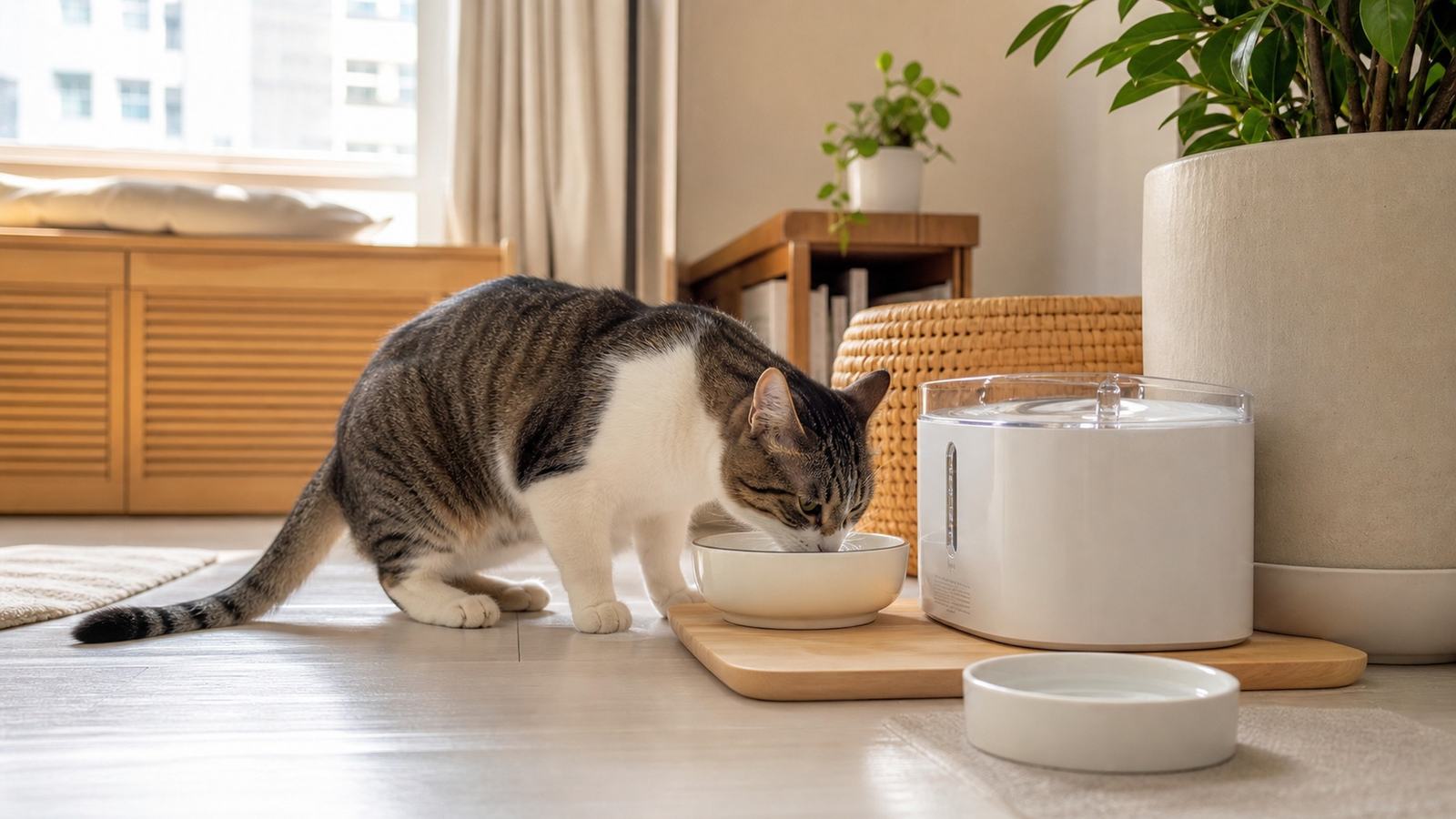
Many owners buy water fountains hoping the flowing water will encourage their cats to drink more, which is a good idea. However, it's not recommended to rely solely on the fountain as the only water source. Fountains require electricity, filters, and motors. If there's a power outage, the filter gets clogged with fur, the fountain runs dry and empty, or the filter isn't changed for too long, your cat might not have clean water to drink all day. A more reliable approach is to pair the fountain with at least one regular water bowl, providing a backup option for your cat.
Fountains are best placed in areas your cat frequently passes through but won't constantly bump into. Regular water bowls can be placed in another quiet corner. This way, even if one source is knocked over, clogged, or rejected by your cat, the other can still provide water. For multi-cat households, the number of water points is even more crucial to prevent dominant cats from monopolizing the drinking area, deterring shyer cats.
Fountains Also Require Daily Checks
A water fountain isn't something you can just plug in and forget about. Water levels, filters, flow rate, and internal cleaning need regular attention. Taiwan's humid environment can easily cause a slimy feeling on the edges of containers, and during summer, cleaning intervals should be shortened. If you notice a reduced water flow, a louder motor sound, or your cat suddenly stops drinking, it might be time for cleaning or replacing consumables. While simple, regular water bowls are a very reliable backup.
Choosing Cat Water Bowl Materials: Ceramic, Stainless Steel, and Glass Each Have Key Points
When choosing a cat water bowl, material is more important than design. Ceramic bowls have sufficient weight and good stability, making them less likely to be pushed around by cats. However, choose models with intact glaze and no cracks. Poor quality ceramic or fine cracks that develop over time can easily accumulate dirt. When cleaning, run your fingers along the bottom and edges of the bowl to check for roughness, peeling, or chips.
Stainless steel bowls are durable and easy to clean, suitable for busy households or those requiring frequent disinfection. However, it's recommended to choose food-grade materials and ensure there's a non-slip design at the bottom. Glass bowls are less likely to retain odors and make it easy to see if the water is cloudy. However, they should be placed in stable locations to prevent breakage. Plastic containers, while lightweight, are more prone to scratches that harbor dirt and can retain odors, generally not recommended as long-term drinking containers.
Bowl Shape Can Also Affect Drinking Habits
Some cats dislike their whiskers touching the sides of the bowl. Bowls that are too deep or too narrow might cause them to stop drinking after a few sips. Wide-mouthed, shallower bowls with stable bases are usually more suitable for most cats' habits. The water level shouldn't be too low, otherwise, the cat will have to lower its head significantly to drink. If you have an older cat, observe if a slightly elevated bowl would make drinking more comfortable.
Summer Water Bowl Placement: Avoid Direct Sunlight, Stuffy Areas, and Litter Boxes
Taiwan's summers are hot and humid. If water bowls are placed incorrectly, the water will quickly become warm, collect dust, and even discourage cats from drinking. Balconies, areas with direct sunlight by windows, or near heat-emitting appliances are not suitable for fixed drinking spots. Even with air conditioning indoors, avoid placing water where it's directly blown by the AC or in the path of doors, as cats might feel uneasy or uncomfortable.
It's also not recommended to place cat water bowls next to litter boxes. Most cats dislike drinking near their elimination areas, and dust and odors can easily affect water quality. If space is limited in a small home, try to create at least some distance, using low cabinets, corners, or different rooms as dividers. Water points are best placed in quiet, well-ventilated areas where cats normally like to rest.
Adding an Extra Water Point is Better Than Constantly Moving One
If your cat has been drinking less recently, you don't necessarily need to keep moving the same water bowl; this might actually make it harder for them to find a consistent water source. A better approach is to keep one at the original location and add a new, clean water point to observe. You can place it in a living room corner, by a bedroom door, or near a cat tree, but not too close to the food bowl. Some cats prefer their water and food to be separate, which is worth testing.
Backup Water Checklist for Extended Absences
If you'll be at work all day, going out for a short weekend, or need to come home late unexpectedly, use this checklist before you leave. First, confirm all water has been replaced with fresh, clean water, not just topped up. Then, ensure each container is on a stable surface, clear of electrical cords, cardboard boxes, or items that could get wet. For fountains, check the water level is sufficient and the water flow is normal.
For extended absences, it's recommended to prepare at least two different types of water sources, such as a fountain plus a regular water bowl, or two water bowls placed in separate locations. If the weather is particularly hot, place the water in a cool area and avoid using containers with very small capacities. For multi-cat households, increase the number of water points according to the number of cats, and don't let all cats share just one location. Taking a photo before you leave can also help you assess water level changes upon your return.
Quick Pre-Departure Checklist
- Water Amount: Sufficient for the duration of your absence, with extra allowance for spills or evaporation.
- Water Quality: All fresh water, avoid topping up without cleaning.
- Containers: Ensure no cracks, chips, rust spots, odors, or instability.
- Location: Avoid direct sunlight, stuffy areas, proximity to litter boxes, doorways, and robot vacuum paths.
- Backup: In addition to a fountain, provide a stable water bowl.
FAQ: Common Questions About Cat Hydration and Water Bowls
How many times a day should a cat's water bowl be washed?
It's generally recommended to wash it at least once a day. During summer or in multi-cat households, you can increase the frequency. If it feels slimy to the touch, or if you see fur or food debris, it should be washed immediately. Simply discarding old water and adding new water is not enough; the sides of the bowl must be thoroughly scrubbed.
Is it okay if my cat only drinks from the fountain and not the water bowl?
You can use the fountain as the primary water source, but it's still recommended to keep a water bowl as a backup. Fountains can encounter issues like power outages, motor malfunctions, or clogged filters. A regular water bowl reduces the risk of a single water source failing. If your cat completely avoids the water bowl, try changing the material, location, and bowl shape.
Can the cat's water bowl be placed next to the food bowl?
Some cats can accept this, but many cats prefer their water and food to be separate. Food crumbs can also easily fall into the water, making it dirty or imparting an odor. If you notice your cat drinking less, try moving the water bowl further away from the food and observe.
If the water bowl is broken, can I use human dishes as a temporary replacement?
For a short period, yes, but ensure the container is clean, stable, free of cracks, and has no residual detergent or food smells. Wide, shallow bowls are usually more suitable for cats than deep cups. Afterward, it's still recommended to have a dedicated cat water bowl to ensure the right size, material, and placement.
Conclusion CTA
A stable, easy-to-clean drinking setup with the correct placement can prevent many emergency situations in daily care. If you're reorganizing your cat's drinking area, consider checking the water bowls, fountains, filters, elevated stands, and cleaning supplies together. CatGarden offers a range of practical cat supplies suitable for Taiwanese homes and daily care needs, ensuring your cat drinks more safely every day.
Further Reading
- Can You Use a Shower Head to Bathe Your Cat? Check Water Pressure, Sound, and Ladle Rinsing First
- Does Your Cat Need Conditioner After a Bath? Check for Matting, Dry Skin, and Licking Risks
- Is Your Cat Still Scratching After a Bath? Check for Shampoo Residue, Drying, and Moisturizing Care
FAQ
Can I use human bowls or plates as a temporary replacement if my cat's water bowl is broken?
For a short period, yes, but ensure the container is clean, stable, free of cracks, and has no residual detergent or food odors. Wide, shallow bowls are usually more suitable for cats than deep cups. It's still recommended to prepare a dedicated cat water bowl afterward to ensure proper size, material, and placement.
Is it okay if my cat only drinks from a water dispenser and not a water bowl?
You can use a water dispenser as the primary water source, but it's still advisable to keep a water bowl as a backup, as dispensers can encounter power outages, motor malfunctions, or filter clogs. If your cat completely avoids the water bowl, try changing the material, location, and type of bowl.
How many times a day should I wash my cat's water bowl?
It's generally recommended to wash it at least once a day. You can increase the frequency during summer or in multi-cat households. If it feels slimy, or if you see fur or food debris, wash it immediately. Don't just discard the old water and add new; the sides of the bowl must be thoroughly scrubbed.
What material should I choose for my cat's water bowl: ceramic, stainless steel, or glass?
Ceramic bowls are heavy and stable, but choose ones with intact glaze and no cracks. Stainless steel bowls are durable and easy to clean; opt for food-grade ones and ensure they have non-slip bases. Glass bowls don't retain odors easily and make it clear if the water is cloudy, but they must be placed securely to prevent breakage. Plastic containers are more prone to scratches, harboring dirt, and retaining odors, so they are generally not recommended for long-term water storage.
Can I place the cat's water bowl next to its food bowl?
Some cats are fine with this, but many prefer their water and food to be separate. Food crumbs can also easily fall into the water, making it dirty or imparting an odor. If you notice your cat is drinking less, try moving the water bowl further away from the food and observe.
CatGarden offers curated supplies, cat boarding, and grooming
Book services or shop online.