Cat Itching After Bath? Check for Shampoo Residue, Drying, and Moisturizing Care
Cat itching after bathing: Distinguish between brief grooming and skin discomfort. If your cat licks, shakes, or hides to groom after a bath, it's often a natural reaction to stress or changes in fur texture. If it's just short-term licking and your cat is otherwise alert and active, observe for a few hours to a day.
Key takeaways
- After bathing, cats licking their fur, shaking their bodies, or hiding to groom themselves for a short period are usually natural reactions to the stress of bathing or changes in their fur texture. If their mood, appetite, and activity levels are normal, observe them for a few hours to a day.
- Shampoo residue is a common cause of itching after bathing. Areas like the armpits, abdomen, under the neck, and the base of the tail are prone to residue because cat fur is dense and their skin is thin, allowing foam to get trapped and irritate the skin when it dries.
- Incomplete drying can trap moisture against the skin, which is more noticeable in Taiwan's summer, rainy season, or in poorly ventilated small apartments. Prolonged dampness at the hair roots can lead to persistent licking and scratching, and in severe cases, may be accompanied by odor or increased dandruff.
- Bathing too frequently or using detergents that are too strong or heavily fragranced can disrupt the skin's natural oil balance, leading to dry, sensitive skin and recurrent itching.
- You can perform 5 checks at home: look for redness or small rashes on the skin, feel the hair roots for dampness or stickiness, smell for any musty or sour odors, check for dandruff, shedding, or scabs, and observe if the scratching is concentrated in specific areas. If you notice redness, swelling, wounds, stickiness, or a noticeable odor, do not attempt to wash the cat repeatedly yourself.
Cat Itching After Bath: Distinguish Between Brief Grooming and Skin Discomfort
When cats lick, shake their bodies, or hide to groom themselves after a bath, it's often a natural reaction to the stress of the bath or the change in their fur's texture. If the licking is brief and your cat's energy, appetite, and activity levels are normal, you can usually observe them for a few hours to a day.
However, if your cat's scratching becomes frequent, if they repeatedly scratch or bite the same spot, their skin becomes red, or they start losing fur, it's less likely to be simple grooming. At this point, "skin discomfort after bathing" should be considered a potential cause, and you should check the shampoo, drying process, and environmental humidity.
What we use for this
CatGarden’s own products, shipped from Taiwan Quick-Dry Pet TowelFrom CA$49.35 per pieceFree shipping on multi-packs
Common Causes: Shampoo Residue, Incomplete Drying, Over-Cleaning, and Humidity
Shampoo not being rinsed out thoroughly is one of the most common reasons for cats to itch after a bath. Cat fur is dense, and their skin is thin. Foam can easily get trapped in the fur, especially in areas like the armpits, abdomen, under the neck, and at the base of the tail. Once dry, this residue can irritate the skin.
Incomplete drying can also lead to a damp environment against the skin, which is more noticeable in Taiwan's summers, during the rainy season, or in poorly ventilated small apartments. If the hair roots remain damp for extended periods, your cat might constantly lick, scratch, or bite a particular area. In severe cases, this can be accompanied by odor or increased dandruff.
Another easily overlooked cause is over-cleaning. Some owners worry about their cats being dirty and bathe them too frequently, or use shampoos that are too strong or heavily fragranced. This can disrupt the skin's natural oil balance. When the skin becomes dry and sensitive, the cat's itching may recur.
5 Skin and Fur Checks You Can Do at Home
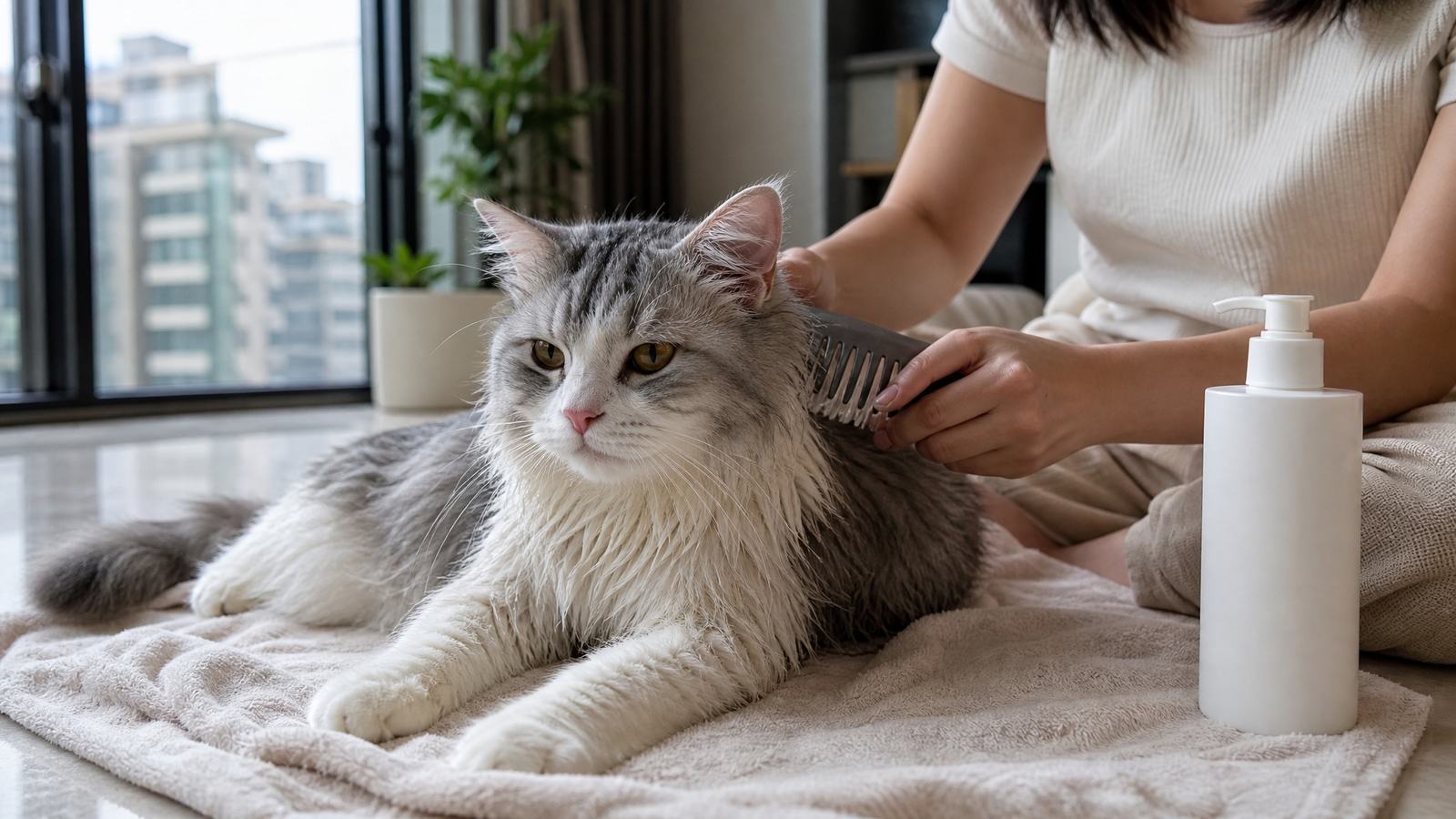
Find a time with good lighting when your cat is relaxed. Gently part their fur to inspect. Avoid forcibly holding them or immediately trying to check their belly, as this can associate grooming with stress for your cat.
When checking, start with areas where shampoo residue is most likely to remain and where drying is most difficult. If you notice redness, wounds, dampness, stickiness, or a distinct odor, do not attempt to repeatedly wash the area yourself. It's best to have a veterinarian or professional cat groomer assess the situation first.
1. Check for Redness or Small Rashes on the Skin
Part the fur on the neck, armpits, abdomen, and inner thighs to see if the skin is redder than usual. If there are many localized red spots, or if your cat flinches when touched, it may indicate irritation or inflammation.
2. Feel for Dampness or Stickiness at the Hair Roots
The outer layer of fur may look dry, but that doesn't mean the hair roots are dry. Gently run your fingers against the grain of the fur towards the skin. If you feel cold, dampness, stickiness, or a clumpy sensation, it might be due to incomplete drying or shampoo residue.
3. Smell for a Musty or Sour Odor
A freshly bathed cat should smell clean, not pungent. If a musty sour smell, oily odor, or localized bad smell appears the next day, it could mean the hair roots are too damp, or the skin's condition is unstable.
4. Look for Dandruff, Hair Loss, or Scabs
A small amount of dandruff isn't always serious, but if it suddenly increases after a bath and is accompanied by itching, pay attention to whether the shampoo was too irritating or if there was insufficient moisturizing. If you see scabs, broken skin, or circular hair loss, seek veterinary attention promptly.
5. Observe if the Scratching Location is Consistent
If a cat is simply grooming its entire body, it will typically lick different areas. However, if it consistently scratches the same spot, such as behind the ears, the neck, the base of the tail, or the abdomen, it's more indicative of localized skin discomfort that requires further attention.
When Not to Bathe Again: Consult a Veterinarian or Professional Groomer First
When you see your cat itching, many owners' first reaction is, "Wasn't it cleaned properly? Should I wash it again?" However, if the skin is already red, broken, weeping, or has large patches of hair loss, washing it again could worsen the irritation.
If your cat is scratching until it bleeds, constantly biting the same spot, has black discharge from its ears, a noticeable odor from its skin, or if other cats in the household also start itching, it's recommended to consult a veterinarian first. These situations may not just be related to bathing but could also be due to parasites, fungal infections, allergies, or other skin diseases.
If your cat is very afraid of water, struggles intensely during baths, or has had sensitive skin after previous baths, it's not recommended to force a bath at home. Professional cat groomers can help assess the cat's coat condition, select appropriate shampoos, and manage the drying process to reduce stress during bathing.
Communicating with Your Cat Groomer Before the Next Bath: Shampoo, Drying, and Moisturizing Care
Before booking a grooming appointment, inform the groomer if your cat experienced itching, redness, dandruff, or hair loss after the last bath. The more specific you are about the timing and location, the better the groomer can determine which shampoos, fragrances, or cleaning intensities to avoid.
Regarding shampoos, it's advisable to inquire about options specifically for cats, low-irritation formulas, or those suitable for sensitive skin. Don't just prioritize fragrance or a fluffy coat after washing, as fragrances and overly degreasing shampoos may not be suitable for cats with sensitive skin.
Drying also requires prior communication, especially for long-haired, thick-coated, or cats that are sensitive to blow-drying. Ask the groomer to ensure areas like the armpits, abdomen, chest, and tail base are completely dry. If necessary, they can use low-pressure, segmented drying techniques.
If your cat often experiences dry, itchy skin after baths, you can also ask about enhanced moisturizing treatments. Moisturizing doesn't mean making the fur wet; it involves using appropriate skin care methods for cats to help reduce discomfort caused by dryness.
FAQ
Is it normal for a cat to lick itself constantly after a bath?
Brief licking is usually normal, as cats groom to manage their scent and fur texture. If the licking continues for a long time and is accompanied by scratching, biting, redness, or hair loss, pay attention to whether the skin is being irritated.
If my cat is itching after a bath, can I rinse it again?
If you only suspect shampoo residue and the skin is not broken, red, or has an odor, you can quickly and thoroughly rinse with lukewarm water and dry it completely. However, if the skin is already injured, repeated washing at home is not recommended; consult your veterinarian first.
How often is it best to bathe a cat?
Most healthy cats do not require frequent bathing. The actual frequency depends on the coat condition, age, living environment, and whether there are any skin issues. Bathing too often can dry out the skin, potentially making the cat's itching more pronounced.
Can human shampoo be used as a substitute for cat shampoo?
It is not recommended. The formulation and pH of human shampoos may not be suitable for cat skin, and they may contain irritating fragrances or ingredients. You should use shampoos specifically designed for cats. For sensitive skin conditions, consult a veterinarian or professional groomer first.
When should I definitely see a veterinarian?
If your cat is scratching until the skin breaks and bleeds, if there is weeping from the skin, large patches of hair loss, abnormal ear discharge, a noticeable odor, or if the itching does not improve after one or two days, seek veterinary attention as soon as possible. The sooner a skin problem is diagnosed, the better it can be managed to prevent recurrence and worsening.
Cat Garden Cat Grooming / Cat Supplies
If your cat is prone to sensitivity after bathing, has difficulty drying, or experiences significant stress during every bath, Cat Garden can help assess your cat's coat condition and bathing care needs. From shampoo selection and thorough drying to basic moisturizing, we can help minimize the risk of your cat's itching. We also offer cat supplies suitable for Taiwan's humid climate to support daily cleaning and stable skin and coat care.
Further Reading
- What Skin Checks Are Needed Before a Cat Grooming Appointment in Summer? Redness, Dandruff, and Itching Aren't Just Due to Heat
- Is a Cat Grooming Pickup Service Suitable? Check Your Carrier, Travel Time, and Stress Risks Before Booking
- What is Cat Garlic Clove Fur? Assess Coat Volume, Brushing, and Nutrition Before Deciding How to Handle It
CatGarden offers curated supplies, cat boarding, and grooming
Book services or shop online.