What is "Garlic Clove Fur" in Cats? Assess Fur Volume, Grooming, and Nutrition Before Deciding to Intervene
What is "garlic clove fur"? How does it differ from matting and shedding? "Garlic clove fur" in cats typically refers to clumps of fur that separate, resembling garlic cloves or split feathers. It doesn't necessarily indicate illness; some long-haired or thick-coated cats may naturally exhibit this appearance during shedding seasons or in humid conditions.
Key takeaways
- Garlic clove fur refers to a state where a cat's fur separates into tufts, resembling garlic cloves or split feathers. It's not a specific disease but a result of fur condition, oiliness, undercoat, and grooming habits.
- Garlic clove fur is different from matting and shedding: Matting is when fur tangles together, forming hard clumps that pull on the skin, potentially causing heat, pain, or inflammation. Shedding is increased hair loss, common during seasonal changes, stress, poor nutrition, or skin issues.
- Long-haired cats and those with distinct double coats (like Persians, Ragdolls, Maine Coons, or fluffy mixed breeds) are more prone to garlic clove fur. Overweight, elderly, or arthritic cats who can't groom their back, sides, or tail base effectively may also accumulate oil and dead hair.
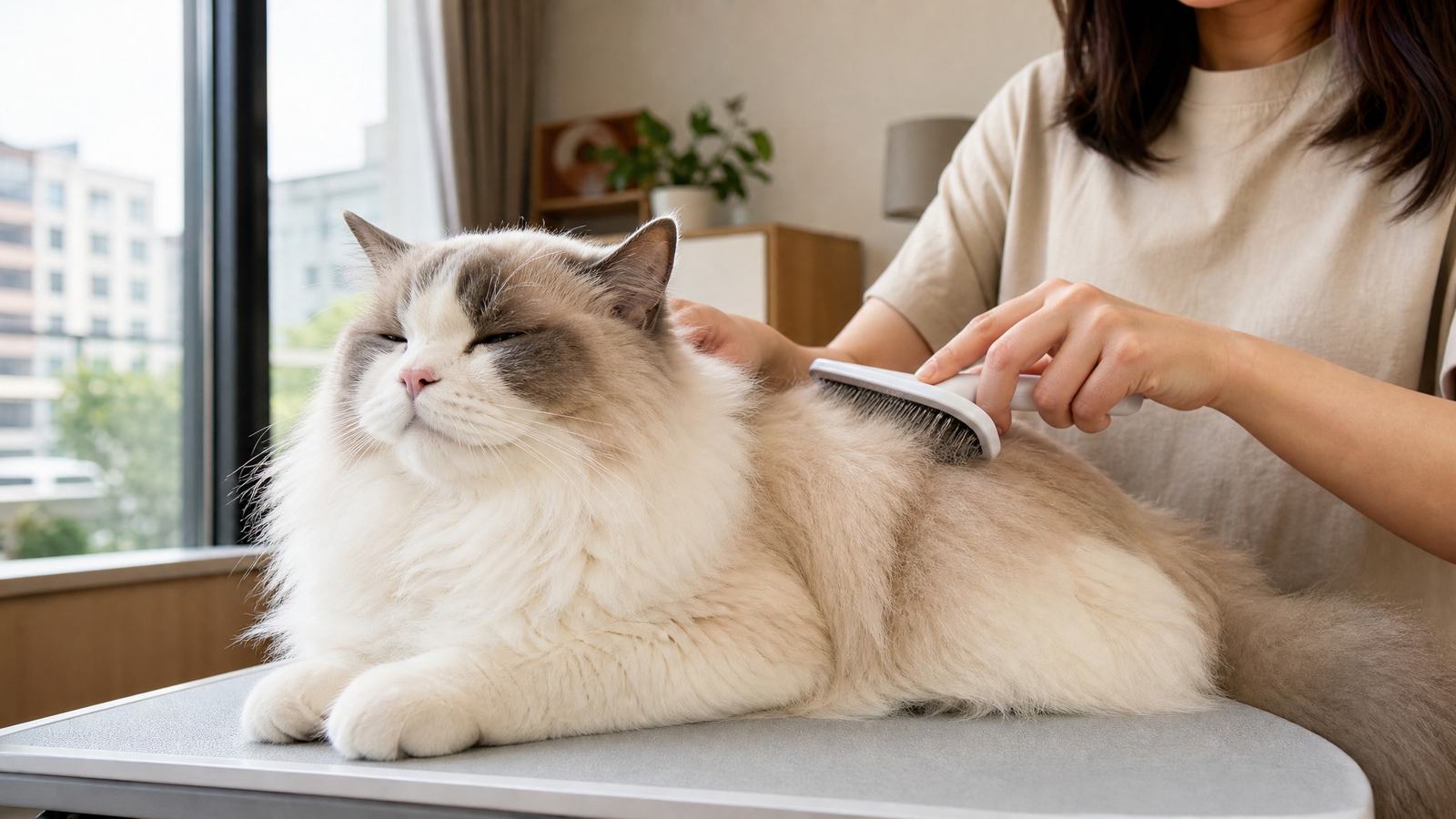
- The most practical way to reduce garlic clove fur is regular grooming: daily or at least several times a week for long-haired cats, and 1-3 times a week for short-haired cats. Pay extra attention during shedding seasons, gently separating the undercoat and checking behind the ears, armpits, belly, and tail base.
- Seeing garlic clove fur doesn't necessitate immediate shaving or bathing. First, part the tufts to check the skin for redness, dandruff, black spots, scabs, or odor. If accompanied by bald patches, wounds, intense itching, or changes in behavior or appetite, consult a veterinarian rather than relying solely on grooming.
What is "Garlic Clove Fur"? How Does it Differ from Matting and Shedding?
"Garlic clove fur" in cats typically refers to clumps of fur that separate, appearing like garlic cloves or split feathers. It doesn't necessarily indicate illness. Some long-haired or thick-coated cats may naturally exhibit this visual effect, especially during shedding seasons or in humid weather.
Garlic clove fur is different from matting. Matting occurs when fur becomes tangled together, feeling like hard lumps that pull on the skin. Severe matting can cause discomfort, pain, or skin inflammation due to trapped heat. Shedding, on the other hand, is an increase in hair loss, commonly seen during seasonal changes, stress, nutritional deficiencies, or due to skin issues. Garlic clove fur is more of a result of fur condition, oiliness, undercoat, and grooming habits.
What we use for this
CatGarden’s own products, shipped from Taiwan
Which Cats Are More Prone to "Garlic Clove Fur"? Considering Breed, Undercoat, and Body Type
Long-haired cats and those with distinct double coats are more likely to exhibit "garlic clove fur." Breeds like Persians, Ragdolls, Maine Coons, or even mixed breeds with very dense fur can develop this if the undercoat isn't regularly brushed out, causing the outer layers to separate into clumps. Short-haired cats can also experience it, though it's usually less noticeable than in long-haired breeds.
Body type can also influence fur condition. Overweight cats, older cats, or those with joint discomfort may struggle to groom their back, sides, or tail base effectively. These areas can accumulate oil and dead hair. Taiwan's humid summers and muggy rainy seasons, coupled with insufficient indoor dehumidification, can make fur clump and stick together more easily.
Does "Garlic Clove Fur" Need Intervention? First Check Skin, Oiliness, and Itchiness
When you notice "garlic clove fur," there's no need to immediately shave or bathe your cat. Owners can gently part the fur clumps with their fingers to check the skin for cleanliness, redness, dandruff, blackheads, scabs, or odor. If the skin is normal and the cat isn't excessively scratching, licking, or avoiding touch, it's often best to start with grooming and environmental management.
If the fur feels noticeably greasy, the roots are stuck together, or the same area repeatedly shows separated fur clumps, be more vigilant. Abnormal oil secretion, fleas, fungal infections, allergies, or pain leading to poor grooming can all worsen fur condition. If accompanied by bald patches, wounds, intense itching, or changes in energy or appetite, it's recommended to consult a veterinarian rather than solely relying on grooming solutions.
How to Maintain Healthy Fur at Home: The Importance of Brushing, Bathing, and Dehumidification
The most practical way to reduce "garlic clove fur" is through regular brushing. Long-haired cats should be brushed daily or at least several times a week. Short-haired cats can benefit from brushing 1 to 3 times a week, especially during shedding seasons. When brushing, don't just focus on the surface; gently separate the undercoat layer by layer. Pay attention to areas behind the ears, armpits, belly, and tail base.
Bathing isn't necessarily better when done more frequently. Most healthy cats don't need frequent baths. If bathing is necessary due to oiliness, dirt, or skin conditions, use a cat-specific shampoo and ensure thorough drying to prevent moisture from lingering at the skin's surface. In Taiwan's climate, it's recommended to control indoor humidity to a comfortable level. During the rainy season and summer, using a dehumidifier and ensuring good air circulation can be beneficial for both fur and skin health.
What Can Cats Eat to Improve Fur Quality? Focusing on Protein, Fatty Acids, and Supplements
Fur fundamentally requires sufficient protein for support, making the daily diet more crucial than individual supplements. Choosing a main food with clear labeling, primarily animal-based protein, and meeting your cat's nutritional needs is generally more effective than just adding treats. If your cat has a long-term poor appetite, is a picky eater, or experiences weight fluctuations, worsened fur condition might simply be a surface symptom.
Fatty acids are often used to support skin and fur health, such as Omega-3 found in fish oil. When selecting supplements, pay attention to their source, dosage, storage, and suitability for cats. It's not recommended to give human supplements directly to cats. If your cat has chronic illnesses, is on medication, or has a sensitive digestive system, it's best to consult your veterinarian before giving any supplements.
Key Takeaways: Assess First, Then Decide on Intervention
"Garlic clove fur" itself is not a specific disease name but rather a state where fur appears clumped and separated. It could be due to thick fur, shedding, high humidity, or insufficient grooming, or it might be related to oiliness, skin issues, nutrition, or pain. The key is not to rush to shave the fur but to first examine the skin, feel the fur roots, and observe the cat's behavior.
If your cat's skin is clean and their energy and appetite are normal, owners can start with regular brushing, improving humidity, and adjusting their diet. If the fur clumps become stickier, or if there's odor, dandruff, redness, or itching, don't delay. Clearly distinguishing between grooming care and veterinary assessment is the most reliable approach for your cat's well-being.
FAQ
Does "Garlic Clove Fur" Always Require Shaving for Cats?
Not necessarily. If it's just separated fur clumps without matting or skin issues, brushing, dehumidification, and adjusting care routines are usually sufficient. Shaving should only be considered by a professional groomer in cases of severe matting, skin pulling, or when the fur cannot be brushed out.
Does "Garlic Clove Fur" Indicate Malnutrition in Cats?
Not necessarily, but nutrition does affect fur quality. If a cat's diet is consistently unbalanced, lacks sufficient protein, or they have absorption issues, their fur may become coarse, dull, or prone to splitting. It's advisable to check the main diet first rather than just adding supplements.
Can Short-Haired Cats Also Get "Garlic Clove Fur"?
Yes, though it's usually less noticeable. Short-haired cats with excessive oiliness, those who are overweight and can't reach their back to groom, or homes with high humidity may also experience fur separation. Regular brushing remains beneficial.
When Should I See a Vet if My Cat's Fur Looks Clumped?
If accompanied by redness, dandruff, scabs, odor, bald patches, frequent scratching, or excessive licking, it's recommended to see a veterinarian. If your cat suddenly becomes sensitive to touch in a specific area, it might be related to pain and shouldn't be dismissed as just a fur condition.
Can Supplements Improve "Garlic Clove Fur"?
Supplements can support skin and fur health but cannot replace a balanced diet, regular brushing, and environmental management. If considering fish oil or fur/skin supplements, choose products specifically for cats and assess the dosage based on weight and health condition.
CatGarden's Gentle Reminder
If you're unsure whether your cat has simple "garlic clove fur," overly thick undercoat, or is nearing matting, it's best to have a professional assess the fur roots and skin. CatGarden offers grooming services tailored to the living conditions of cats in Taiwan, along with daily grooming tools and cat supplies to help owners maintain stable fur conditions at home. Starting with a gentle grooming session is more comfortable than waiting until large mats form.
Further Reading
CatGarden offers curated supplies, cat boarding, and grooming
Book services or shop online.