How to Choose a Cat Dryer After Bathing? Consider Temperature, Noise, and Drying Time First
Is a pet dryer absolutely necessary after bathing your cat? Consider these situations first. The most important thing after bathing your cat isn't how fluffy they look, but whether their skin and undercoat are thoroughly dry. Taiwan's summers are muggy and the rainy season brings high humidity, which can make cats uncomfortable and increase the risk of skin problems if their roots remain damp for extended periods.
Key takeaways
- The key after bathing a cat isn't fluffing the fur, but ensuring the skin and undercoat are thoroughly dry. Prolonged dampness at the roots can make cats uncomfortable and increase the risk of skin problems.
- When choosing a pet dryer, prioritize temperature, noise, and airflow. Adjustable, clearly displayed temperatures that maintain a stable low to medium-low range are best, rather than those boasting high temperatures or rapid drying.
- During drying, check on your cat every 5 to 10 minutes. Signs of excessive stress include open-mouth breathing, panting, drooling, dilated pupils, frantic door-banging, stiffening, or hiding. If these occur, reduce airflow and temperature, open the door for a break, or stop immediately.
- Feeling the surface after drying is unreliable. Part the fur with your fingers to check the roots. The chest, abdomen, armpits, base of the tail, and near the rear are often the slowest to dry. If still damp, use low airflow for touch-ups; don't rush with high heat.
- Drying boxes, high-velocity dryers, and handheld dryers each suit different needs. Drying boxes are for cats comfortable in confined spaces. High-velocity dryers offer strong airflow but their noise and pressure are best for heavily coated cats. Handheld dryers are suitable for short-haired cats bathed occasionally or for spot drying.
Is a Pet Dryer Absolutely Necessary After Bathing Your Cat? Consider These Situations First
The most important thing after bathing your cat isn't "how fluffy they look," but whether their skin and undercoat are thoroughly dry. Taiwan's summers are muggy and the rainy season brings high humidity. If the hair roots remain damp for extended periods, it can make your cat uncomfortable and increase the risk of skin problems. For short-haired cats who are bathed occasionally, if the environment is well-ventilated and the cat can tolerate slow drying at a low temperature, a dedicated drying device might not be essential.
However, if you have a long-haired cat, a double-coated cat, an elderly cat, a cat that gets easily stressed, or if you live in a small urban apartment with poor bathroom ventilation, a pet dryer can be very practical. It can reduce the pressure on the owner from having to chase the cat with a dryer for extended periods and make the drying process more stable. Nevertheless, equipment is just a tool; the real key lies in temperature, time, the cat's condition, and safety checks.
What we use for this
CatGarden’s own products, shipped from Taiwan Quick-Dry Pet TowelFrom CA$49.35 per pieceFree shipping on multi-packs
3 Things to Consider When Choosing a Cat Dryer: Temperature, Noise, and Airflow
Temperature: Stability is More Important Than High Heat
When choosing a pet dryer, it's not recommended to focus solely on "quick drying" claims or the maximum temperature. Cats' skin is more sensitive than humans', and excessively high temperatures can make them uncomfortable, even causing them to pant, become agitated, or try desperately to escape. Models that offer adjustable temperatures, clear displays, and can maintain a stable low to medium-low temperature are more suitable.
When using the dryer, test the temperature near the air outlet with the back of your hand or wrist to ensure hot air isn't directly hitting the skin. If using a drying box, monitor the temperature inside and avoid prolonged confinement in a sealed environment. Cats are not clothes; you can't simply dry them longer to ensure they're dry.
Noise: Whether the Cat Can Tolerate It Often Depends on the Sound
Many cats fear not the wind itself, but the motor noise, sharp whistling sounds, and vibrations from the machine. When shopping, pay attention to the decibel level, whether the airflow sounds sharp, and if the machine has noticeable resonance. If your cat is normally afraid of vacuum cleaners, hairdryers, or dehumidifiers, low noise will be more important than strong airflow.
When using a pet dryer for the first time, don't put your cat in immediately after bathing. Let your cat smell the machine, listen to it running at a low speed, and gradually increase the time. Cats that can adapt slowly will make subsequent grooming much easier.
Airflow: It Needs to Reach the Undercoat, But Not Overwhelm the Cat
If the airflow is too weak, the surface fur might look dry, but the roots will still be damp. If the airflow is too strong, the cat might become so stressed that they curl up, preventing the air from reaching the areas that need drying. For cats with thicker coats, such as long-haired breeds like Ragdolls, Maine Coons, or British Shorthairs, adjustable airflow is crucial.
The ideal method is to towel-dry the cat first to absorb excess water, then use a medium-low airflow to dry section by section. Areas like the abdomen, armpits, base of the tail, and inner thighs are often overlooked and require the most patience to ensure they are dry. When choosing a pet dryer, the ability to adjust airflow and whether the air is distributed evenly are more important than aesthetics.
Drying Box, Water Blower, and Handheld Hair Dryer: What's the Difference and Who Are They For?
Drying boxes are suitable for cats who dislike being chased with a dryer but can tolerate staying in a fixed space. The advantage is that the owner doesn't have to hold the machine constantly, and the air temperature can be kept more stable. The disadvantage is that drying time may be longer, and it's essential to ensure proper ventilation, temperature, and monitor the cat's expression. If the cat cries loudly, scratches the door, pants, or drools inside the box, it's not suitable to force them in.
Water blowers have strong airflow and are commonly used in grooming salons. They are suitable for situations with a lot of fur that needs to be quickly blown dry. Their disadvantage is that the noise and air pressure are usually more noticeable, which can be highly stressful for sensitive cats. For general households without prior experience, it's not recommended to blow the cat directly with the strongest setting from the start.
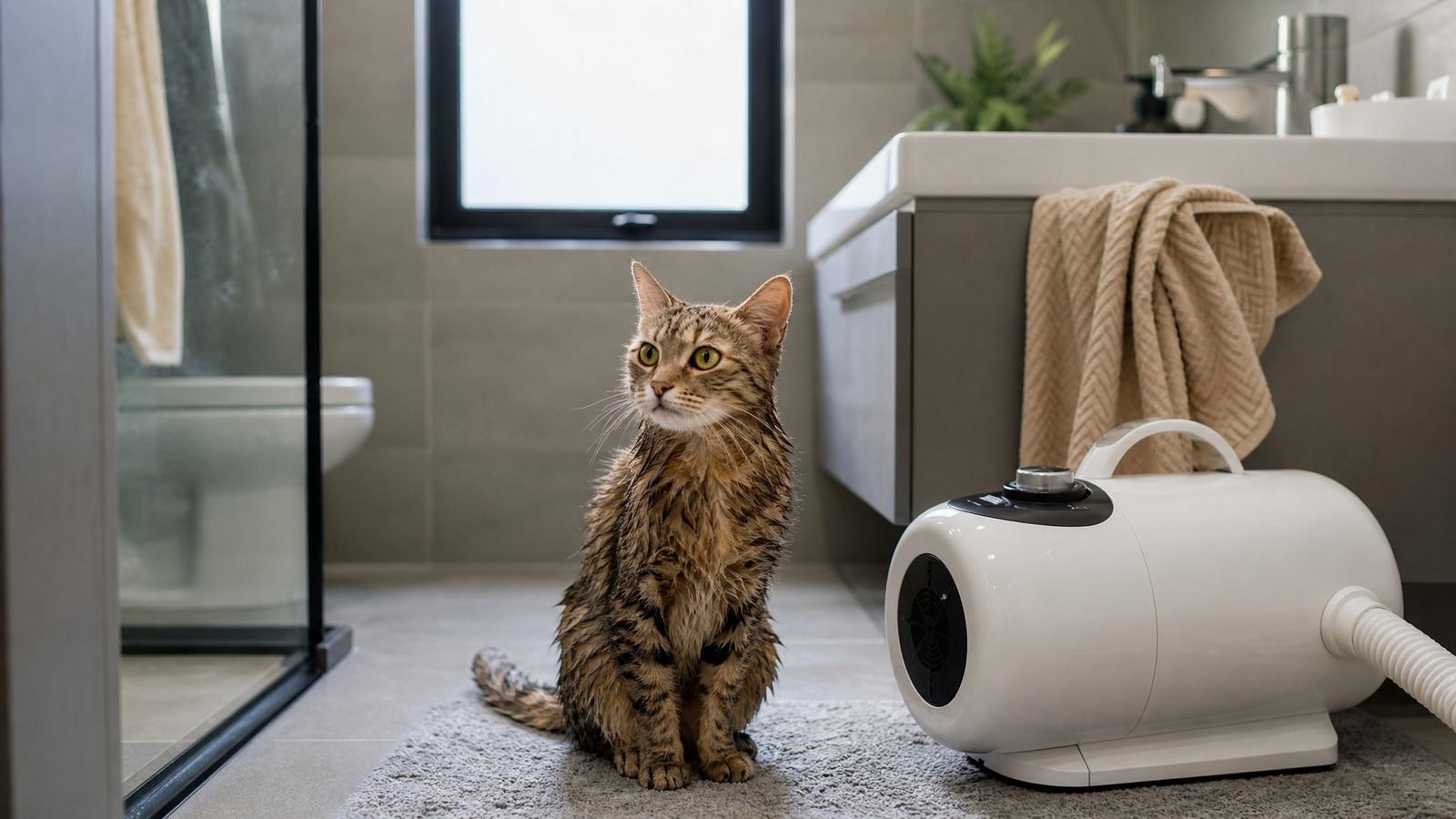
Handheld hair dryers are the most accessible and suitable for occasional baths, short-haired cats, or spot drying. However, human hairdryers often have issues with excessively high temperatures, concentrated airflow, and sharp noises. When using one, keep a distance and move it continuously. If you frequently bathe your cat at home, a pet dryer specifically designed for cats will generally be more stable.
Safety Checks Before and After Using a Pet Dryer: Avoid Overheating, Suffocation, and Extreme Stress
After bathing, gently press the fur with a large towel to absorb moisture. Avoid vigorous rubbing, which can cause matting or pull on the skin. Before putting your cat in the dryer, ensure they are breathing steadily, show no obvious signs of distress, and have no wounds, redness, or abnormal skin conditions. If your cat is already extremely resistant, pausing the process is safer than forcing them to complete it.
During use, check your cat's condition every 5 to 10 minutes. If they exhibit open-mouth breathing, panting, drooling, dilated pupils, constant door-banging, stiffening of the body, or attempts to hide, it indicates that the stress level may be too high. In such cases, reduce the airflow, lower the temperature, open the door for a break, and stop immediately if necessary.
After drying is complete, don't just feel the surface. Use your fingers to part the fur and check the roots. Areas like the chest, abdomen, armpits, base of the tail, and hindquarters are often the slowest to dry. If you still feel a dampness, you can use a low airflow to dry these spots further; don't rush the process with high heat.
Cats Unsuitable for Home Drying: When to Seek Professional Cat Grooming Services
If your cat is extremely afraid of water, sounds, tends to be aggressive, struggles violently, or has previously experienced panting, incontinence, or excessive drooling after bathing, they are not suitable for forceful home drying. These cats require a gentler process, staged treatment, and personnel who can recognize stress signals. Forcing the process once can make future baths more difficult.
Cats with skin wounds, suspected fungal infections, severe matting close to the skin, or elderly cats with chronic illnesses should first consult a veterinarian or be handled by a cat groomer experienced in cat behavior. Professional groomers can typically determine which areas need trimming, which areas should not be brushed forcefully, and use more appropriate equipment to complete the drying process. Owners can handle daily brushing and spot cleaning at home and don't need to attempt a full bath every time.
FAQ
Q1: Can cats air dry after a bath?
Complete air drying is not recommended, especially in Taiwan's humid seasons or for long-haired or thick-coated cats. The surface may appear dry, but the roots might still be damp. At a minimum, towel-dry the cat and then check the condition of the undercoat.
Q2: What temperature should a pet dryer be set to?
There is no fixed number suitable for all cats. The key is low temperature, stability, and observation. When in use, the principle is that it should not feel hot to the touch and should not cause the cat to pant or become agitated. If the device's temperature control is unstable, do not leave it unattended for extended periods.
Q3: My cat is very afraid of hairdryers. Can I still use a drying box?
You can try, but it must be a gradual process. Let your cat get used to the box and the low-speed running sound, then use it for short periods. If your cat panics as soon as they enter, it means this method is not suitable for them at this time.
Q4: How soon after bathing should a cat be dried?
It is recommended to towel-dry and begin drying immediately after bathing, without letting the cat stay wet for too long. This is especially important in air-conditioned rooms, during the rainy season, or when bathing at night, to prevent a drop in body temperature and dampness of the hair roots. Drying time depends on the amount of fur, the equipment used, and the cat's tolerance.
Q5: Is it more cost-effective to buy a pet dryer at home or book a cat grooming appointment?
If you have multiple cats, bathe them frequently, and they cooperate, buying equipment can be more convenient. If your cat is anxious, has thick fur, severe matting, or if you're unsure about judging air temperature and stress levels, booking a cat groomer is usually more hassle-free. You can also handle daily brushing at home and leave the bathing and drying to the professionals.
To ensure your cat is dried safely and comfortably after a bath, the key isn't to buy the biggest piece of equipment, but to choose the right tools, understand your cat's stress signals, and entrust the task to professionals who understand cats when necessary. If you are comparing cat supplies or looking for cat grooming services suitable for cats afraid of water or hairdryers, CatGarden can help you arrange more appropriate cleaning and care methods based on your cat's personality, coat type, and living environment.
Further Reading
CatGarden offers curated supplies, cat boarding, and grooming
Book services or shop online.