Can You Squeeze Cat Acne? First, Check the Location, Cleaning Methods, and When to See a Vet
Where does cat acne appear? Distinguish between the chin, tail base, and oily skin. Cat acne most commonly appears on the chin, looking like small black specks of dirt that may feel granular to the touch. Some owners mistake it for food powder or canned food grease stuck on their cat's chin.
Key takeaways
- Cat acne most commonly appears on the chin, looking like small black specks of dirt that may feel gritty to the touch. Besides the chin, the base of the tail can also become greasy, matted, or develop an odor due to excessive sebum secretion.
- It is not recommended to squeeze cat acne with your fingers. Squeezing can introduce bacteria into the hair follicles, potentially turning a simple blackhead into inflamed, pus-filled, or painful folliculitis. Furthermore, the chin area is close to the mouth and is repeatedly exposed to food and water, making it difficult for wounds to stay clean.
- Do not apply human acne medication, alcohol, tea tree oil, or harsh cleansers directly to your cat's skin. These can cause burning, dryness, cracking, and the risk of poisoning if ingested. They can also make your cat more resistant to having its chin touched.
- The first step in managing cat acne is usually not to buy medication, but to check everyday items the cat interacts with. Plastic bowls can easily get scratched, trap oil, and harbor dirt. It's recommended to switch to stainless steel, ceramic, or glass bowls and wash and dry them daily. After a wet meal, gently wipe the chin with a warm, damp gauze or soft cloth.
- If there are only a few black spots and your cat shows no signs of discomfort or pain, start by improving the cleanliness of food bowls and gentle wiping for one to two weeks. However, if there is noticeable redness, swelling, avoidance when touched, pus, discharge, odor, hair loss, scabbing, or persistent licking and scratching, seek veterinary attention.
Where Does Cat Acne Appear? Distinguish Between the Chin, Tail Base, and Oily Skin
Cat acne most commonly appears on the chin, looking like small black specks of dirt that may feel granular to the touch. Some owners mistake it for food powder or canned food grease stuck on their cat's chin. However, if it reappears quickly after cleaning, the skin condition should be observed. Taiwan's humid climate, especially during the plum rain season and summer, can trap oil, saliva, and food debris around the chin.
Besides the chin, the area near the tail base can also become greasy, clumpy, or develop an odor due to excessive sebum secretion. However, tail base oiliness, flea allergies, fungal infections, bacterial infections, and simple dirt can look similar externally, so it's not always just "acne." If your cat starts excessively licking, scratching, or develops redness or hair loss, it's more than just a cleaning issue and should be confirmed by a veterinarian.
What we use for this
CatGarden’s own products, shipped from Taiwan Quick-Dry Pet TowelFrom CA$49.35 per pieceFree shipping on multi-packs
Can You Squeeze Cat Acne? These Methods Can Worsen the Condition
It is not recommended to squeeze cat acne with your fingers, as a cat's skin is more easily injured than you might think. If bacteria are introduced into the hair follicle during squeezing, what was just a blackhead can turn into inflamed, pus-filled, or painful folliculitis. Especially since a cat's chin is close to its mouth, it repeatedly comes into contact with food and water, making it difficult for wounds to stay clean.
Do not use human acne medication, alcohol, tea tree oil, or harsh cleansers directly on your cat's skin. These substances can cause burning, dryness, cracking, and pose a risk of poisoning if ingested through licking. They can also make your cat more resistant to having its chin touched. If the acne has already scabbed over or the skin is broken, picking at it will only prolong healing. The correct approach is gentle cleaning and observation of changes.
How to Perform Home Cleaning? Check Food Bowls, Wipes, Shampoos, and Dry Shampoos
When caring for cat acne, the first step is usually not to buy medication but to check everyday items your cat comes into contact with. Plastic bowls can easily get scratched, trap oil, and harbor dirt. It is recommended to switch to stainless steel, ceramic, or glass bowls and wash and dry them daily. After your cat finishes wet food, you can gently wipe its chin with a gauze pad or soft cloth dampened with warm water. Avoid vigorous scrubbing.
If using pet wet wipes, ensure the ingredients are mild and free of strong fragrances. After wiping, allow the hair roots to dry completely. Shampoos and dry shampoos should also be chosen carefully. Products that are too heavy, too fragrant, or difficult to rinse off can leave oil and cleaning residue trapped on the skin. For long-haired cats or those with dense fur on their chin, consider seeking assistance from a groomer for localized grooming to make cleaning easier to maintain.
When Should You See a Veterinarian? Redness, Pus, Hair Loss, and Constant Licking Should Not Be Delayed
If there are only a few black spots and your cat shows no signs of discomfort or pain, you can start by cleaning food bowls and gentle wiping, observing for one to two weeks. However, if the chin is noticeably red and swollen, the cat flinches when touched, or if there is pus, discharge, or a foul odor, self-treatment is not recommended. This may indicate an infection or other skin condition that requires veterinary examination and potential medication.
Hair loss, scabbing, constant licking or scratching that breaks the skin are also warning signs that require veterinary attention. Some issues that appear to be cat acne may actually be related to fungal infections, parasites, allergies, endocrine problems, or immune status. In multi-cat households, if multiple cats have skin abnormalities simultaneously, avoid sharing cleaning supplies and have a veterinarian determine if isolation or further examination is necessary.
For Cats Prone to Acne, What Should Be Communicated Before Bathing or Grooming?
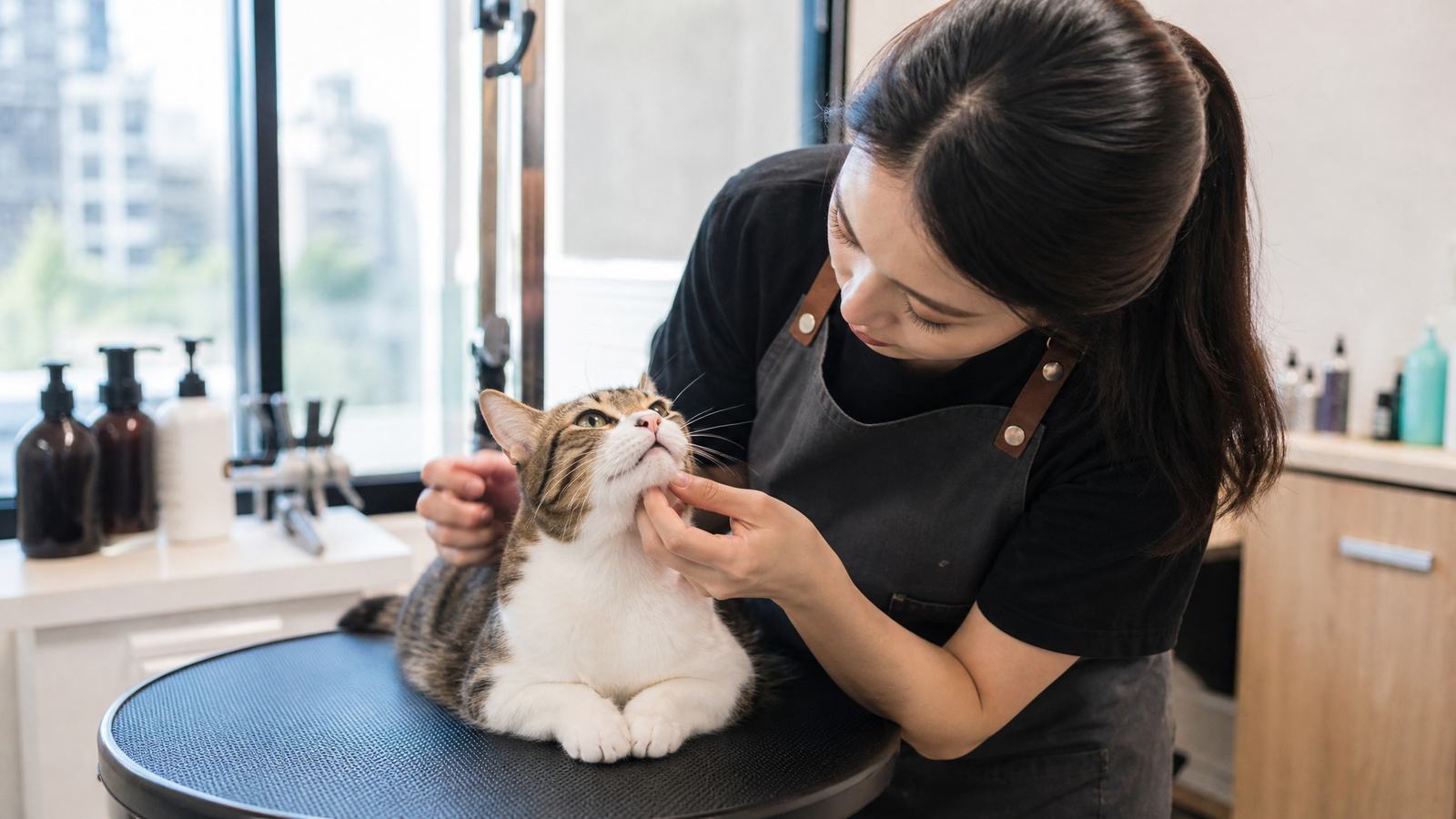
If your cat is prone to cat acne, it is recommended to inform the groomer about the location of the acne, whether it has been red or swollen recently, if any medication has been used, and your cat's reaction when its chin is touched before booking a bath or grooming appointment. This will help the groomer avoid excessive scrubbing and choose a more suitable cleaning method. If the skin is inflamed or oozing pus, consult a veterinarian first and do not rush to resolve it with a bath.
During grooming, ask the groomer to pay special attention to the skin condition of the chin, around the mouth, tail base, and abdomen. Ensure the fur is thoroughly dried after washing. Small apartments in Taiwan often lack adequate ventilation, and if the hair roots remain damp after washing, it can trap moisture against the skin. For cats prone to recurrence, consistent home cleaning, appropriate food bowls, and regular skin checks are more important than a single vigorous cleaning session.
FAQ
Will Cat Acne Go Away on Its Own?
In cases of minor black spots without redness or pain, some cats stabilize after improving food bowl materials and cleaning habits. However, if it repeatedly appears or worsens, you should not just wait for it to resolve on its own. Continuously observing the skin color, odor, hair loss, and whether the cat is scratching or biting is a more accurate indicator than just counting the number of black spots.
Is a Black Chin Always Cat Acne?
Not necessarily. Food debris, dirt, flea feces, fungal infections, folliculitis, or allergies can all make a cat's chin appear black. If it quickly reappears after cleaning, or is accompanied by redness, flaking, and hair loss, it is recommended to have a veterinarian diagnose it, and do not attempt to treat it using human acne methods.
Can I Use Human Facial Cleanser to Clean My Cat's Chin?
It is not recommended. The pH balance, fragrances, degreasing power, and ingredients in human facial cleansers may not be suitable for a cat's skin and can be ingested if licked. If cleaning is necessary, start with warm water and a soft cloth, or choose pet cleaning products recommended by a veterinarian or professional groomer.
Does Cat Acne Require Shaving?
Not necessarily. For short-haired cats or mild cases, daily cleaning is usually sufficient. However, for long-haired cats, greasy hair roots, or matted fur, localized trimming may make cleaning easier. If the skin is broken, oozing pus, or painful, consult a veterinarian first before considering grooming.
Cat Garden Reminder: Cat acne often requires gradual stabilization through daily cleaning, skin observation, and appropriate products. If you are unsure whether the black spots on your cat's chin can be cleaned or which areas to avoid during grooming, you are welcome to book a grooming appointment at Cat Garden, or choose cat cleaning products suitable for Taiwan's humid climate to ensure peace of mind in your pet care.
Further Reading
CatGarden offers curated supplies, cat boarding, and grooming
Book services or shop online.