Can Cats Wear Waterproof Hoods for Baths? Risks of Stress, Breathing, and Water in Ears
Why are cats afraid of baths? Consider the sounds, pressure, and loss of control. Many cats don't simply "hate water," but rather the uncertainty of the bathing process.
Key takeaways
- A cat shower cap is merely an auxiliary tool; it cannot guarantee reduced stress during baths, nor can it replace proper bathing techniques. It is not recommended to further restrict the head of cats with short noses, elderly cats, those with weaker cardiopulmonary function, those prone to stress, or those who have experienced severe stress, seizures, respiratory illnesses, or sensitive skin.
- Preventing water from entering the ears doesn't necessarily require a shower cap: during body washing, use low water pressure from the showerhead, start from the neck down, and avoid spraying towards the head and face. Clean the face and the outer part of the ears with a slightly damp towel. Cotton swabs should not be inserted deep into the ear canal.
- If a cat exhibits open-mouth breathing, drooling, weakness, violent struggling, or aggression during bathing, it indicates excessive stress. Immediately stop the bath, towel dry, keep the cat warm, and allow it to rest. Seek assistance from a veterinarian or professional cat groomer if necessary.
- Healthy short-haired cats groom themselves regularly and may not require frequent baths. Bathing frequency depends on coat condition, skin health, living environment, and veterinary advice. Regular brushing, environmental dehumidification, and spot cleaning are more important.
- Taiwan's high humidity means that if a cat is only partially dried after a bath, the undercoat can become stuffy, leading to matting or skin discomfort, especially for long-haired cats. It is recommended to first press dry with absorbent towels, then blow-dry in sections, and avoid confining the cat in a small box for prolonged high-temperature drying.
Why Are Cats Afraid of Baths? Consider Sounds, Pressure, and Loss of Control
Many cats don't simply "hate water," but rather the uncertainty of the bathing process. The sound of water, the hairdryer, bathroom echoes, and slippery floors can make cats feel out of control. Especially in Taiwan's humid and hot summers, owners often want to bathe their cats to cool them down, but for cats, being suddenly carried into the bathroom can be more stressful than the weather itself.
Cats naturally value a sense of control over their bodies. When their fur gets wet, the increased weight and changed scent can make them more anxious. If an owner holds them tightly while rinsing, cats might associate "bathing" with "being restrained." This is also why some cats start hiding at the sight of a showerhead, towel, or bathing hood.
Fear of Water Doesn't Mean They Can't Be Washed
Most healthy short-haired cats groom themselves regularly and don't necessarily need frequent baths. However, if a cat gets into oil, excrement, has skin conditions requiring care, or if a long-haired cat has severe matting, bathing may be necessary. The key isn't to force it, but to assess the cat's condition, environmental safety, and handling method.
If every bath causes your cat to scream, pant, drool, or attack, it means their stress levels are too high. In such cases, relying solely on tools like a bathing hood is not recommended. Tools can assist, but they cannot replace the judgment of stress responses.
What we use for this
CatGarden’s own products, shipped from Taiwan Quick-Dry Pet TowelFrom CA$49.35 per pieceFree shipping on multi-packs
Waterproof Hoods Seem Convenient, But What Are the Risks?
Most bathing hoods on the market are designed to prevent water from entering the ears and keep shampoo away from the face, making them seem ideal for water-averse cats. However, a cat's face, whiskers, and the area around their ears are very sensitive. Putting an unfamiliar object on them can cause them to freeze or struggle immediately. If the size is incorrect, it can increase pressure and make bathing even more difficult.
More importantly, consider breathing and heat dissipation. When cats are stressed, they may breathe with their mouths open and pant rapidly. If the hood is too tight or the material is not breathable, it will make them more uncomfortable. If the bathing hood shifts, covers the nose and mouth, or restricts the cat's head position, it should not be used.
Not All Cats Are Suitable for Hoods
Hoods are not recommended for brachycephalic (short-nosed), elderly, cats with weaker cardiopulmonary function, or those prone to stress. Cats with a history of severe stress, seizures, respiratory diseases, or sensitive skin should first consult a veterinarian or a groomer experienced with cat behavior. Waterproof does not equal safe; owners cannot rely solely on product photos for judgment.
If you really want to try a bathing hood, it's recommended to test it for short periods in a dry environment first, observing if the cat becomes stiff, shakes its head, scratches its face, or tries to escape. If there is clear resistance, it should not be forcibly used in a wet, slippery bathroom. For cats, being able to breathe steadily and maintain a safe posture is more important than keeping their ears completely dry.
Avoiding Water in Ears Doesn't Necessarily Require a Hood: Safe Cleaning Practices
A cat's ear canals are delicate, and it's important to avoid pouring large amounts of water directly into them during baths. However, this doesn't mean a bathing hood is the only solution. A safer approach is to avoid directly rinsing the head and use a slightly damp towel to clean the face and the outer part of the ears.
When washing the body, use low water pressure from the showerhead, starting from below the neck and avoiding spraying towards the head and face. For dirt on the outer ear, gently wipe with a cotton pad or gauze; do not insert cotton swabs deep into the ear canal. If the ears have black debris, odor, are being scratched, or are red and swollen, consult a veterinarian first; do not try to treat them during a bath.
Face and Ear Cleaning Should Be Considered Separately
Many owners worry about shampoo getting into their cat's eyes and ears, so they want to use a bathing hood to solve this in one go. However, cat facial cleaning usually doesn't require a lot of foam. Using a slightly damp towel with clean water to wipe different areas is actually easier to control. On bath days, focus on cleaning the body thoroughly; facial details can be handled separately and more slowly.
For long-haired, flat-faced breeds, or those prone to tear stains, daily cleaning is more important than infrequent long baths. Regularly maintaining the area around the eyes, chin, and outer ears with suitable pet cleaning products means you won't have to rinse the head extensively during baths. This reduces the risk of water entering the ears and also lessens the cat's fear of the bathroom.
Reducing Stress Before, During, and After Baths: Applicable at Home and Grooming Salons
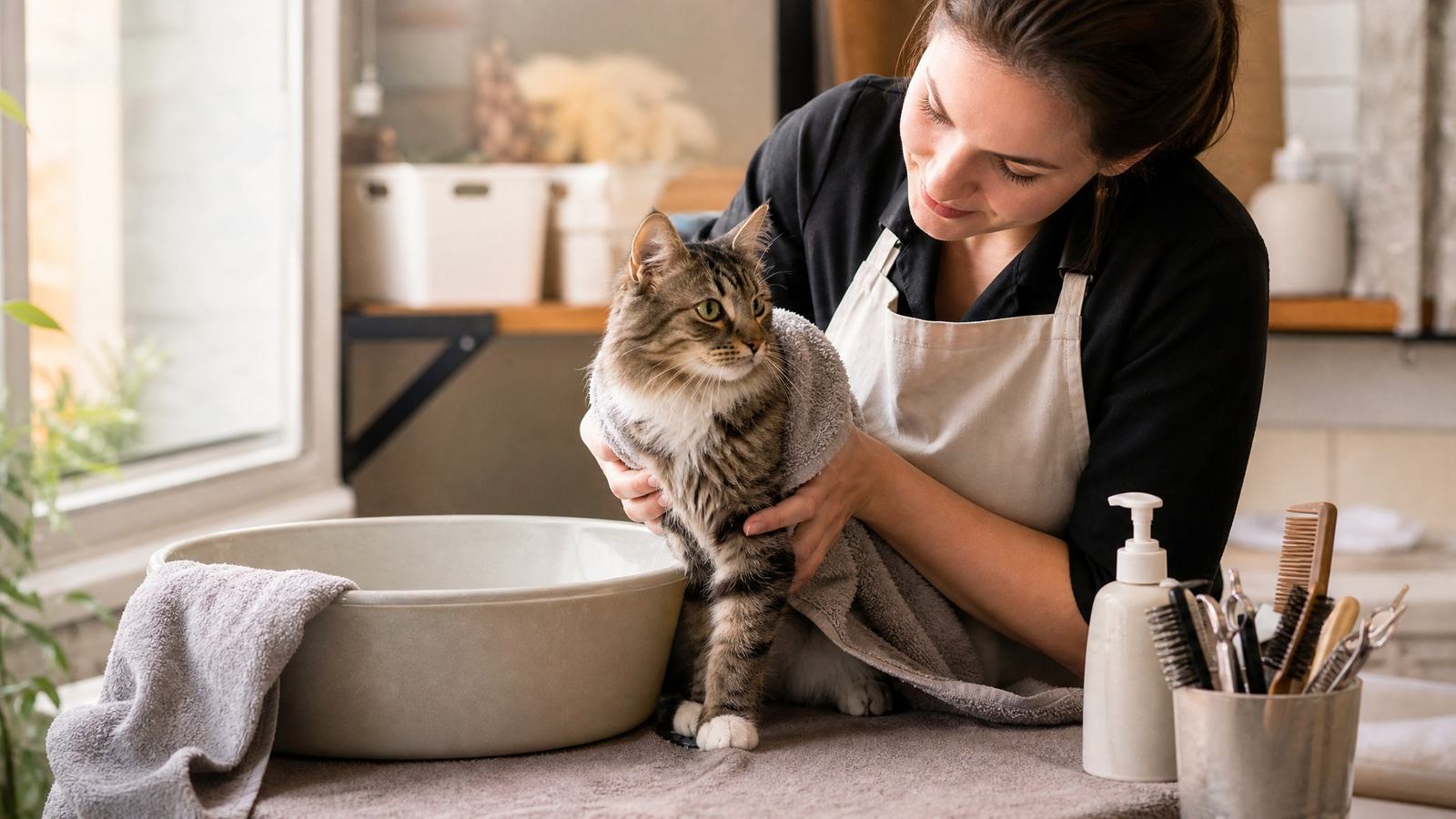
Before bathing, trim the nails, comb out mats, and prepare towels and drying equipment to avoid searching for items mid-bath. Place non-slip mats on the bathroom floor, and maintain water temperature close to body temperature, avoiding sudden changes. If the cat is already hiding or hissing, it's best to pause and not chase or grab them.
During the bath, be quick but gentle. Start from the least sensitive part of the body, avoiding the face and ears. Rinse shampoo thoroughly, as residue left on the skin can cause itching. If using a bathing hood, constantly check during the process that it hasn't shifted and that the cat is not panting, coughing, trembling, or struggling excessively.
Drying Can Be More Problematic Than Washing
Taiwan has high humidity. If a cat is only partially dried after a bath, the undercoat can become stuffy, leading to matting or skin discomfort, especially for long-haired cats. When blow-drying, keep the noise low and the dryer at a distance. First, pat the cat dry with absorbent towels, then dry in sections. Do not confine the cat in a small box for prolonged high-temperature drying, especially being cautious with elderly or anxious cats.
After the bath, allow the cat to rest quietly. Avoid immediate play or forced cuddles. Prepare their familiar blanket, bed, and a small treat to help them gradually associate the post-bath experience with a tolerable routine. Before the next bath, review which part of the process caused the most stress this time.
Which Cats Shouldn't Be Bathed at Home? When to Seek Professional Cat Grooming
If a cat is elderly, has unstable heart or respiratory conditions, or has experienced severe panting after a previous bath, the risk of bathing at home is higher. Cats that are extremely fearful of water, show significant aggression, or have mats close to the skin should not be handled with force. In these situations, a bathing hood is usually not the solution and may even cause more panic.
For long-haired cats, those experiencing heavy shedding, cats with oily skin, or those with previous grooming injuries, it's recommended to find a groomer with cat grooming experience. Professional groomers prioritize handling techniques, drying processes, and the cat's emotional state over simply bathing quickly. Before booking, owners can also inquire if they have a separate cat area, if they accept anxious cats, and if they will stop the service based on the cat's condition.
When Should You See a Veterinarian First?
If a cat has skin rashes, hair loss, ear odor, frequent scratching, or wounds, a veterinarian should first diagnose the cause. Bathing may temporarily remove surface dirt but may not resolve infections, allergies, or parasite issues. Using shampoos or attempting to clean ears without a proper diagnosis can complicate the problem.
In simple terms, before bathing, ask three questions: Can the cat's body tolerate it? Can the environment be controlled? Can they be thoroughly dried afterward? If you are unsure about any of these, it's not recommended to force it at home. Entrusting the bath to professionals familiar with cats is often more practical than buying an extra bathing hood.
FAQ
Q1: Do cats need to wear a bathing hood for baths?
Not necessarily. A bathing hood is just an auxiliary tool; it cannot guarantee reduced stress or replace proper bathing techniques. In most cases, avoiding rinsing the head and face and using a damp towel for the outer ears and face is gentler than forcing a hood.
Q2: What happens if water gets into a cat's ears?
A small amount of water on the outer ear usually doesn't cause problems. However, large amounts of water entering the ear canal can cause discomfort. If the cat subsequently shakes its head, scratches its ears, or shows odor or discharge, a veterinarian should examine it. Do not pour water directly into the ears during baths, and do not attempt to clean deep inside the ear canal yourself.
Q3: Is it normal for a cat to meow constantly during a bath?
Mild meowing might indicate nervousness, but if the cat exhibits open-mouth breathing, drooling, lethargy, intense struggling, or aggression, it means their stress level is too high. In such cases, stop the bath immediately, dry and warm the cat, and let them rest. Seek veterinary or professional cat grooming assistance if necessary.
Q4: How often should I bathe my cat?
Healthy cats generally do not need frequent baths. The frequency depends on their coat, skin condition, living environment, and veterinary advice. While Taiwan's humid season can be hot, it doesn't mean constant bathing is necessary. Daily grooming, dehumidifying the environment, and spot cleaning are more important.
Q5: Can fearful cats be sent for grooming?
Yes, but choose a grooming salon that truly understands cats. Inform them in advance about the cat's personality, medical history, and past bathing reactions. Professional cat groomers will adjust the process based on the cat's condition and will suggest pausing if necessary, rather than forcing a full service.
Making Baths a Safer Care Choice
Bathing hoods may seem convenient, but the most important aspects of bathing a cat are not completely keeping water out, but reducing stress, avoiding respiratory distress, and properly protecting the ears and skin. If you are unsure whether your cat is suitable for bathing at home, if mats can be handled yourself, or if you worry about incomplete drying leading to dampness, it is recommended to consult an experienced cat grooming team for an assessment. CatGarden offers cat grooming services that prioritize the cat's well-being, minimizing stress during bathing, brushing, and drying to ensure safer care.
Further Reading
CatGarden offers curated supplies, cat boarding, and grooming
Book services or shop online.