Do Cats Need Conditioner After Bathing? Check for Matting, Dry Skin, and Licking Risks First

Does your cat's fur feel dry after a bath, really needing conditioner? While dry, rough, or fluffy fur post-bath might make owners instinctively consider cat conditioner, it's not always necessary. The key lies in the coat and skin condition.
CatGarden Editorial TeamPublished 2026/06/15
Daily Grooming Care
Do Cats Need Conditioner After Bathing? Check for Matting, Dry Skin, and Licking Risks First

Key takeaways

  • Cats don't need conditioner every bath. The key depends on coat and skin condition, and whether they lick or scratch excessively after bathing. If their fur is just fluffy after drying and becomes soft again the next day, extra conditioning is usually unnecessary.
  • Long-haired cats, double-coated cats, and cats with heavy shedding (like Ragdolls, Maine Coons, Persians) tend to have dry or tangled undercoats after bathing. When using conditioning products, stick to small amounts that are easy to rinse and leave minimal residue.
  • When choosing cat conditioner, ensure it's labeled for cat use. Avoid products with strong fragrances, essential oils, noticeable alcohol content, heavy oils or silicones, and unclear labeling on decanted items.
  • If your cat licks excessively after using a conditioning product, common reasons include disliking the scent, product residue, skin irritation, or pre-existing skin issues being exacerbated by bathing. In such cases, don't reapply more moisturizer or switch products immediately. First, rinse the affected areas with warm water and dry them thoroughly.
  • The post-bath care sequence is: first, pat dry with an absorbent towel, then blow-dry in layers with cool or warm air. After drying, use a pin brush and a comb to check the armpits, chest, inner thighs, and base of the tail, as these areas are most prone to matting.

Does Your Cat's Fur Really Need Conditioner After Bathing?

When a cat's fur feels dry, rough, or fluffy after a bath, owners might instinctively wonder if they should use a cat conditioner. However, cats don't need conditioning every time they're bathed. The crucial factors are the condition of their coat and skin, and whether they exhibit licking or scratching behavior after the bath. If the fur is just a bit fluffy right after drying and returns to its normal softness by the next day, extra conditioning is usually not necessary.

Taiwan's humid summers and rainy seasons can be stifling, making cats' skin more susceptible to residue and irritation than human skin. If conditioner isn't rinsed out thoroughly, it can lead to the cat constantly licking, trap moisture against the skin, and even increase matting or dandruff. A better approach is to first check if the shampoo is gentle, rinsing is sufficient, and drying is complete, before deciding if post-bath conditioning care is needed.

Focus on Three Key Areas First: Matting, Dryness, and Licking

If the fur is noticeably matted after bathing, making it difficult for a comb to pass through, or if the ends of the fur feel rough and prone to static after drying, then considering a cat conditioner or moisturizing product might be beneficial. If the cat frequently licks a specific spot after bathing, scratches behind its ears or on its neck, or shows skin redness, stop using new products immediately and don't rush to add more care. The purpose of conditioning should be to reduce friction and aid in grooming, not to mask skin issues with fragrance or heavy oils.

Which Cats Might Benefit More from Post-Bath Moisturizing or Conditioning Care?

Long-haired cats, cats with double coats, and cats experiencing heavy shedding periods are more likely to encounter dry, rough fur or tangled undercoats after bathing. Breeds like Ragdolls, Maine Coons, and Persians, which have abundant fur, can experience more pronounced matting after bathing if their regular grooming is insufficient. These cats can use cat-specific conditioning products under professional guidance, but the principles of using small amounts, ensuring easy rinsing, and minimizing residue should still apply.

Cats with naturally dry skin, older cats, or those whose fur grew unevenly after being shaved might also require more delicate post-bath care. However, if there's dandruff, redness, scabs, or patches of hair loss, it's essential to consult a veterinarian first to rule out skin diseases, fungal infections, parasites, or allergies. Cat conditioner can supplement coat care but cannot replace medical diagnosis.

Short-Haired Cats Aren't Entirely Exempt

Short-haired cats generally maintain their coat condition more easily than long-haired cats, but this doesn't mean their fur will never become dry. If your home is frequently air-conditioned or dehumidified, or if your cat has low water intake, their fur might feel rough. In such cases, start by reducing bathing frequency, improving brushing routines, and adjusting environmental humidity, before evaluating the need for moisturizing sprays or leave-in conditioners.

How to Choose Cat Conditioner and Moisturizing Sprays: Avoid These Ingredients

When selecting a cat conditioner, the first step is to ensure the product is specifically labeled for cats, not just "for pets" or "for dogs and cats." Cats lick their fur and are more sensitive to smells and residue, so simpler ingredients are generally better. It's recommended to prioritize products with low fragrance, easy rinsing, and clear labeling, and to avoid human conditioners or unknown essential oil formulas.

For moisturizing sprays, consider the usage scenario; more isn't always more moisturizing. Small living spaces with limited ventilation are common in Taiwan. If a spray is too concentrated or has a strong scent, the cat might avoid it or lick it excessively. When using for the first time, it's best to spray it onto a brush and then lightly brush the cat's fur, rather than spraying large amounts directly on the face, belly, or areas the cat can easily lick.

Ingredients and Characteristics to Avoid

  • Strong Fragrances: Overpowering scents can stress cats and may increase licking behavior.
  • Essential Oil Ingredients: Cats have a limited ability to metabolize certain essential oils, so use with extreme caution.
  • Products with Obvious Alcohol: These can further dry out the skin and cause discomfort for sensitive cats.
  • Heavy Oils or Silky Residue: These can attract dust and may clog hair follicles.
  • Unclearly Labeled Repackaged Products: It's difficult to verify expiration dates, concentrations, and suitability.

If your cat has a history of sensitive skin, it's recommended to perform a small patch test before using any new cat conditioner. Apply a small amount to their back and observe for itching, redness, dandruff, or excessive licking for one to two days. If any abnormalities occur, discontinue use and consult a veterinarian or professional groomer.

What to Do If Your Cat Constantly Licks, Itches, or Develops More Dandruff After Use?

The most common reasons for a cat constantly licking after using a conditioning product are dislike of the scent, product residue, skin irritation, or pre-existing skin issues being exacerbated by bathing. In such cases, do not apply more moisturizer or rush to try another product. First, rinse the affected areas thoroughly with warm water and then dry the cat completely. Observe if the cat gradually returns to normal.

If itching persists for more than a day, or if redness, hair loss, or a sudden increase in dandruff occurs, do not treat it as simple dryness. Cat skin issues can sometimes appear as simple dryness but may also be related to fungal infections, fleas, allergies, or detergent irritation. In such situations, consult a veterinarian first. Once the skin condition stabilizes, discuss whether cat conditioner is suitable.

Basic Post-Bath Care Routine

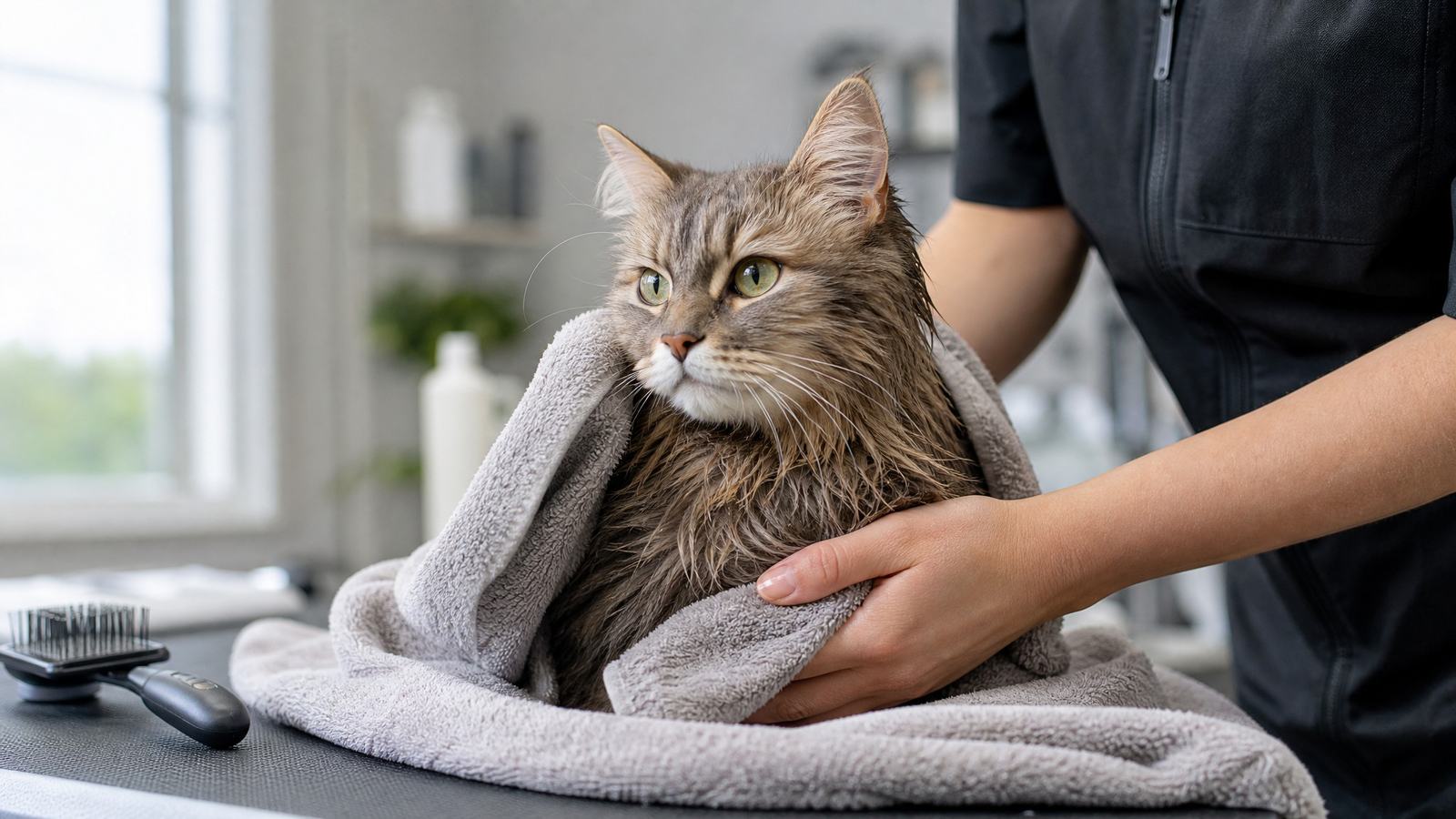
After bathing, pat the cat dry with an absorbent towel, then use low-heat or warm air to dry the fur in layers, ensuring the undercoat is also dried. A damp undercoat can trap moisture against the skin, causing the cat discomfort and leading to repeated licking. After drying, use a pin brush and a comb to check the armpits, chest, inner thighs, and base of the tail, as these areas are prone to matting.

When Home Care Isn't Enough: When is it Suitable to Go to a Cat Groomer?

If your cat strongly resists bathing, becomes agitated during blow-drying, or if it's difficult for the owner to assess the extent of matting near the skin, it's more suitable to entrust the task to a cat groomer experienced with feline behavior. Professional cat groomers will assess the cat's stress level, mat location, skin condition, and tolerance, rather than just completing the process. Especially when mats are close to the skin, aggressive brushing can injure the skin and make the cat even more fearful of grooming.

Long-haired cats can also benefit from regular grooming and partial trims during shedding seasons, humid periods, or hot summers. This is not just for aesthetics but also to reduce the risk of hairballs, skin issues from trapped heat, and worsening matting. If conditioning products are needed, a groomer can also recommend suitable types and frequencies based on the coat quality.

Situations Suitable for Booking a Cat Groomer

  • Matting is close to the skin, and a comb cannot pass through smoothly.
  • The undercoat is often not completely dried after bathing.
  • The cat reacts strongly to blow-drying, nail trimming, or ear cleaning.
  • Dandruff, oily odor, or shedding issues recur, requiring professional observation.
  • The owner is unsure if a product is suitable and wants a professional assessment first.

FAQ

Does my cat need conditioner every time after bathing?

Not necessarily. Most healthy short-haired cats don't need it every time if the shampoo is gentle, rinsed thoroughly, and the fur is dried properly. Long-haired cats, those with significant matting, or cats with dry fur may benefit from conditioning care as needed.

Can I use human conditioner on my cat?

It's not recommended. Human products' fragrances, pH levels, and residue formulations may not be suitable for cats. Since cats lick themselves, the risks are higher than for humans. Always choose products specifically labeled for feline use.

My cat has more dandruff after bathing, is it too dry?

It could be dryness, but it could also be shampoo irritation, incomplete rinsing, insufficient drying, or a skin condition. If dandruff increases or is accompanied by itching, redness, or hair loss, consult a veterinarian rather than relying solely on conditioning products.

Can I spray moisturizing spray daily?

It's not recommended to use it daily from the start. Begin with small amounts and infrequent application, observing if the cat licks, avoids it, or scratches. If used for daily grooming assistance, spray it onto the brush rather than directly onto the cat in large quantities.

Will a cat groomer help determine if conditioning products are needed?

Yes. Professional cat groomers typically assess matting, coat quality, skin condition, and the cat's stress level before deciding if conditioning or moisturizing is necessary. If there are obvious skin abnormalities, a veterinarian should be consulted first.

The key to making your cat more comfortable after a bath isn't to overload on products, but to choose the right approach. If you're unsure whether your cat is suitable for cat conditioner, or if matting, dandruff, or drying issues are recurring, you can seek assistance from Cat Garden for an evaluation. Cat Garden offers professional cat grooming services in Taiwan and carries cat care products suitable for daily grooming and cleaning, allowing owners to choose safer bathing and grooming methods based on coat type, season, and your cat's personality.

Further Reading

CatGarden offers curated supplies, cat boarding, and grooming

Book services or shop online.

Back

Blog

Do Cats Need Conditioner After Bathing? Check for Matting, Dry Skin, and Licking Risks First

CatGarden Editorial TeamPublished 2026/06/15
Daily Grooming Care
Do Cats Need Conditioner After Bathing? Check for Matting, Dry Skin, and Licking Risks First

Key takeaways

  • Cats don't need conditioner every bath. The key depends on coat and skin condition, and whether they lick or scratch excessively after bathing. If their fur is just fluffy after drying and becomes soft again the next day, extra conditioning is usually unnecessary.
  • Long-haired cats, double-coated cats, and cats with heavy shedding (like Ragdolls, Maine Coons, Persians) tend to have dry or tangled undercoats after bathing. When using conditioning products, stick to small amounts that are easy to rinse and leave minimal residue.
  • When choosing cat conditioner, ensure it's labeled for cat use. Avoid products with strong fragrances, essential oils, noticeable alcohol content, heavy oils or silicones, and unclear labeling on decanted items.
  • If your cat licks excessively after using a conditioning product, common reasons include disliking the scent, product residue, skin irritation, or pre-existing skin issues being exacerbated by bathing. In such cases, don't reapply more moisturizer or switch products immediately. First, rinse the affected areas with warm water and dry them thoroughly.
  • The post-bath care sequence is: first, pat dry with an absorbent towel, then blow-dry in layers with cool or warm air. After drying, use a pin brush and a comb to check the armpits, chest, inner thighs, and base of the tail, as these areas are most prone to matting.

Does Your Cat's Fur Really Need Conditioner After Bathing?

When a cat's fur feels dry, rough, or fluffy after a bath, owners might instinctively wonder if they should use a cat conditioner. However, cats don't need conditioning every time they're bathed. The crucial factors are the condition of their coat and skin, and whether they exhibit licking or scratching behavior after the bath. If the fur is just a bit fluffy right after drying and returns to its normal softness by the next day, extra conditioning is usually not necessary.

Taiwan's humid summers and rainy seasons can be stifling, making cats' skin more susceptible to residue and irritation than human skin. If conditioner isn't rinsed out thoroughly, it can lead to the cat constantly licking, trap moisture against the skin, and even increase matting or dandruff. A better approach is to first check if the shampoo is gentle, rinsing is sufficient, and drying is complete, before deciding if post-bath conditioning care is needed.

Focus on Three Key Areas First: Matting, Dryness, and Licking

If the fur is noticeably matted after bathing, making it difficult for a comb to pass through, or if the ends of the fur feel rough and prone to static after drying, then considering a cat conditioner or moisturizing product might be beneficial. If the cat frequently licks a specific spot after bathing, scratches behind its ears or on its neck, or shows skin redness, stop using new products immediately and don't rush to add more care. The purpose of conditioning should be to reduce friction and aid in grooming, not to mask skin issues with fragrance or heavy oils.

What we use for this

CatGarden’s own products, shipped from Taiwan


See all products

Which Cats Might Benefit More from Post-Bath Moisturizing or Conditioning Care?

Long-haired cats, cats with double coats, and cats experiencing heavy shedding periods are more likely to encounter dry, rough fur or tangled undercoats after bathing. Breeds like Ragdolls, Maine Coons, and Persians, which have abundant fur, can experience more pronounced matting after bathing if their regular grooming is insufficient. These cats can use cat-specific conditioning products under professional guidance, but the principles of using small amounts, ensuring easy rinsing, and minimizing residue should still apply.

Cats with naturally dry skin, older cats, or those whose fur grew unevenly after being shaved might also require more delicate post-bath care. However, if there's dandruff, redness, scabs, or patches of hair loss, it's essential to consult a veterinarian first to rule out skin diseases, fungal infections, parasites, or allergies. Cat conditioner can supplement coat care but cannot replace medical diagnosis.

Short-Haired Cats Aren't Entirely Exempt

Short-haired cats generally maintain their coat condition more easily than long-haired cats, but this doesn't mean their fur will never become dry. If your home is frequently air-conditioned or dehumidified, or if your cat has low water intake, their fur might feel rough. In such cases, start by reducing bathing frequency, improving brushing routines, and adjusting environmental humidity, before evaluating the need for moisturizing sprays or leave-in conditioners.

How to Choose Cat Conditioner and Moisturizing Sprays: Avoid These Ingredients

When selecting a cat conditioner, the first step is to ensure the product is specifically labeled for cats, not just "for pets" or "for dogs and cats." Cats lick their fur and are more sensitive to smells and residue, so simpler ingredients are generally better. It's recommended to prioritize products with low fragrance, easy rinsing, and clear labeling, and to avoid human conditioners or unknown essential oil formulas.

For moisturizing sprays, consider the usage scenario; more isn't always more moisturizing. Small living spaces with limited ventilation are common in Taiwan. If a spray is too concentrated or has a strong scent, the cat might avoid it or lick it excessively. When using for the first time, it's best to spray it onto a brush and then lightly brush the cat's fur, rather than spraying large amounts directly on the face, belly, or areas the cat can easily lick.

Ingredients and Characteristics to Avoid

  • Strong Fragrances: Overpowering scents can stress cats and may increase licking behavior.
  • Essential Oil Ingredients: Cats have a limited ability to metabolize certain essential oils, so use with extreme caution.
  • Products with Obvious Alcohol: These can further dry out the skin and cause discomfort for sensitive cats.
  • Heavy Oils or Silky Residue: These can attract dust and may clog hair follicles.
  • Unclearly Labeled Repackaged Products: It's difficult to verify expiration dates, concentrations, and suitability.

If your cat has a history of sensitive skin, it's recommended to perform a small patch test before using any new cat conditioner. Apply a small amount to their back and observe for itching, redness, dandruff, or excessive licking for one to two days. If any abnormalities occur, discontinue use and consult a veterinarian or professional groomer.

What to Do If Your Cat Constantly Licks, Itches, or Develops More Dandruff After Use?

The most common reasons for a cat constantly licking after using a conditioning product are dislike of the scent, product residue, skin irritation, or pre-existing skin issues being exacerbated by bathing. In such cases, do not apply more moisturizer or rush to try another product. First, rinse the affected areas thoroughly with warm water and then dry the cat completely. Observe if the cat gradually returns to normal.

If itching persists for more than a day, or if redness, hair loss, or a sudden increase in dandruff occurs, do not treat it as simple dryness. Cat skin issues can sometimes appear as simple dryness but may also be related to fungal infections, fleas, allergies, or detergent irritation. In such situations, consult a veterinarian first. Once the skin condition stabilizes, discuss whether cat conditioner is suitable.

Basic Post-Bath Care Routine

After bathing, pat the cat dry with an absorbent towel, then use low-heat or warm air to dry the fur in layers, ensuring the undercoat is also dried. A damp undercoat can trap moisture against the skin, causing the cat discomfort and leading to repeated licking. After drying, use a pin brush and a comb to check the armpits, chest, inner thighs, and base of the tail, as these areas are prone to matting.

When Home Care Isn't Enough: When is it Suitable to Go to a Cat Groomer?

If your cat strongly resists bathing, becomes agitated during blow-drying, or if it's difficult for the owner to assess the extent of matting near the skin, it's more suitable to entrust the task to a cat groomer experienced with feline behavior. Professional cat groomers will assess the cat's stress level, mat location, skin condition, and tolerance, rather than just completing the process. Especially when mats are close to the skin, aggressive brushing can injure the skin and make the cat even more fearful of grooming.

Long-haired cats can also benefit from regular grooming and partial trims during shedding seasons, humid periods, or hot summers. This is not just for aesthetics but also to reduce the risk of hairballs, skin issues from trapped heat, and worsening matting. If conditioning products are needed, a groomer can also recommend suitable types and frequencies based on the coat quality.

Situations Suitable for Booking a Cat Groomer

  • Matting is close to the skin, and a comb cannot pass through smoothly.
  • The undercoat is often not completely dried after bathing.
  • The cat reacts strongly to blow-drying, nail trimming, or ear cleaning.
  • Dandruff, oily odor, or shedding issues recur, requiring professional observation.
  • The owner is unsure if a product is suitable and wants a professional assessment first.

FAQ

Does my cat need conditioner every time after bathing?

Not necessarily. Most healthy short-haired cats don't need it every time if the shampoo is gentle, rinsed thoroughly, and the fur is dried properly. Long-haired cats, those with significant matting, or cats with dry fur may benefit from conditioning care as needed.

Can I use human conditioner on my cat?

It's not recommended. Human products' fragrances, pH levels, and residue formulations may not be suitable for cats. Since cats lick themselves, the risks are higher than for humans. Always choose products specifically labeled for feline use.

My cat has more dandruff after bathing, is it too dry?

It could be dryness, but it could also be shampoo irritation, incomplete rinsing, insufficient drying, or a skin condition. If dandruff increases or is accompanied by itching, redness, or hair loss, consult a veterinarian rather than relying solely on conditioning products.

Can I spray moisturizing spray daily?

It's not recommended to use it daily from the start. Begin with small amounts and infrequent application, observing if the cat licks, avoids it, or scratches. If used for daily grooming assistance, spray it onto the brush rather than directly onto the cat in large quantities.

Will a cat groomer help determine if conditioning products are needed?

Yes. Professional cat groomers typically assess matting, coat quality, skin condition, and the cat's stress level before deciding if conditioning or moisturizing is necessary. If there are obvious skin abnormalities, a veterinarian should be consulted first.

The key to making your cat more comfortable after a bath isn't to overload on products, but to choose the right approach. If you're unsure whether your cat is suitable for cat conditioner, or if matting, dandruff, or drying issues are recurring, you can seek assistance from Cat Garden for an evaluation. Cat Garden offers professional cat grooming services in Taiwan and carries cat care products suitable for daily grooming and cleaning, allowing owners to choose safer bathing and grooming methods based on coat type, season, and your cat's personality.

Further Reading

One email a month of cat-care tips

Hand-picked care, behavior and grooming tips once a month. Subscribe and we will send you our three most-read articles right away.

Keep reading