Is Your Cat's Swollen Paw an Injury? Understanding Plasma Cell Pododermatitis and Kidney Warning Signs
Is your cat's swollen paw an injury? First, understand plasma cell pododermatitis and kidney warning signs. When a cat's paw swells, many owners first suspect an injury from jumping or stepping on something sharp.
Key takeaways
- Trauma-induced swelling in a cat's paw pad typically affects a single digital pad, toe, or one side of the paw. It may be accompanied by limping, retracting the paw, reluctance to bear weight, or excessive licking of one specific foot.
- Feline plasma cell pododermatitis is an immune-related paw condition characterized by swollen, soft, spongy digital pads. These may appear purplish-red, develop cracks, and in severe cases, ulcerate, bleed, or become infected.
- Plasma cell pododermatitis doesn't always affect just one paw; it can involve multiple pads simultaneously. Recovery typically takes longer than a day or two of rest. Veterinarians diagnose it based on appearance, medical history, cytology, or biopsy.
- If paw swelling is accompanied by increased thirst, changes in urination (increased or decreased volume), a stronger urine odor, decreased energy, or fluctuating appetite, inform your veterinarian immediately and consider blood and urine tests.
- Seek veterinary attention promptly if the paw is so swollen the cat won't bear weight, shows obvious pain, has ruptured, bleeding pads, discharge, a foul odor, or is rapidly enlarging. Also, seek immediate care if these symptoms are combined with fever, weight loss, oral ulcers, or skin lesions. Do not attempt home treatment.
Is Your Cat's Swollen Paw an Injury? Understanding Plasma Cell Pododermatitis and Kidney Warning Signs
Cat Paw Swelling: First Check for Trauma or Foreign Objects
When a cat's paw swells, many owners immediately suspect a sprain from jumping, stepping on something sharp, or a scrape from furniture corners. You can start by observing if your cat is limping, retracting their paw, or refusing to put weight on it, or if they are constantly licking one paw. Common surfaces in Taiwanese homes include tiles, wooden floors, and dusty balconies. Small debris, grit, or plant thorns stuck between the paw pads can also cause localized redness and swelling.
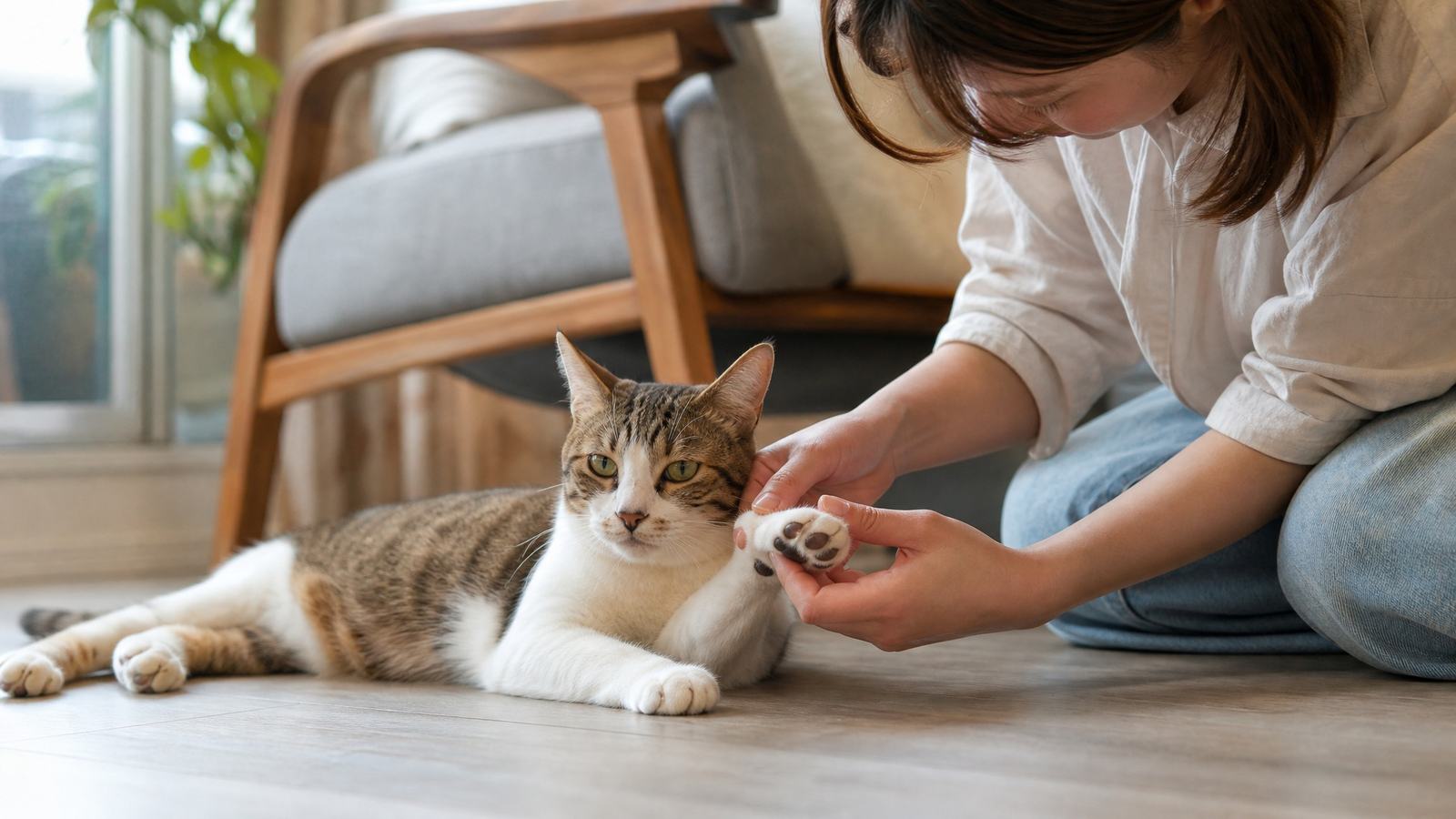
When checking, it's best to do so when your cat is relaxed. Gently examine the paw pads, between the toes, and the base of the nails. If you see any broken skin, bleeding, pus, broken nails, or if the paw feels noticeably hot and painful to the touch, it's more than just simple swelling. Avoid forceful squeezing or trying to pull out foreign objects you can't clearly see, as this could deepen the wound.
Common Clues for Trauma
Paw swelling caused by trauma usually concentrates on a specific paw pad, toe, or one side of the paw. Your cat might suddenly become reluctant to jump onto the bed, walk more slowly, or even hide and avoid being touched. If you've recently broken glass, moved furniture, changed the cat litter, or cleaned the balcony, these are worth considering as clues.
What is Feline Plasma Cell Pododermatitis? Changes in Paw Pads
Feline plasma cell pododermatitis is a paw condition related to immune responses. Common changes include swollen, soft paw pads that feel spongy and enlarged. Some cats' paw pads may appear purplish-red, with cracked surfaces. In severe cases, they can ulcerate, bleed, or become infected. It's not always painful initially, so owners might only discover the abnormality when handling their cat's paws or trimming their nails.
This type of paw swelling doesn't always affect just one paw; it can sometimes impact multiple pads simultaneously. Pay extra attention if the paw pads appear thickened, loose, or have swollen edges. Unlike simply stepping on something, this condition usually doesn't resolve completely after a day or two of rest. Your veterinarian may diagnose it based on appearance, medical history, cytology, or biopsy, and may also assess for other systemic issues if necessary.
Don't Just Look for "Limping"
Some cats are very stoic and can tolerate pain well. Even with swollen paws, they might continue to eat, use the litter box, and jump on chairs as usual. Owners should pay attention to the color and texture of the paw pads, whether the swelling is symmetrical, and how often the cat licks its paws. If paw swelling recurs or the paw pads look stretched, soft, or thickened, it's not advisable to dismiss it simply because "they seem okay."
Why Paw Issues Also Warrant Attention to Kidneys and Urine Changes
Paw swelling might seem like a localized problem, but a cat's overall health is often interconnected. Certain immune-related diseases, infections, chronic inflammation, or metabolic stress may require clarification through blood and urine tests. This is especially true for adult or senior cats, or those whose water intake has already changed; focusing solely on the paw pads is insufficient.
Kidney problems don't always directly cause every instance of paw swelling in cats. However, if your cat also shows increased thirst, changes in urine volume (more or less), a stronger urine odor, decreased energy, or unstable appetite, you should inform your veterinarian proactively. In Taiwan's hot and humid summers, many owners might assume their cat is just lethargic due to the heat. But if activity levels, weight, and urination habits change together, further investigation is warranted. Establishing baseline blood and urine test data early can also aid in future monitoring.
Observing the Litter Box is Crucial
The litter box is a daily window into your cat's health. Especially in smaller urban homes where space is limited, owners can usually easily notice the size and frequency of urine clumps. If urine clumps suddenly become larger, smaller, bloody, or if the cat frequently enters and exits the litter box without producing much urine, these are signals that require attention. When paw abnormalities and urination issues occur simultaneously, don't just change the litter or delay observation.
When Not to Wait: Seek Veterinary Care Promptly
If your cat's paw is so swollen that they refuse to bear weight, shows obvious pain, has cracked or bleeding pads, pus, a foul odor, or is rapidly increasing in size, seek veterinary attention immediately. Puncture wounds from sharp objects, suspected burns, or bites are also not suitable for home treatment. Cat paws come into contact with litter, floors, and damp environments; if wounds aren't properly managed, they can easily worsen and become infected.
Additionally, if paw swelling is accompanied by lethargy, fever, decreased appetite, weight loss, or if there are concurrent oral ulcers or skin lesions, a veterinary examination is recommended. Plasma cell pododermatitis, allergies, infections, tumors, or immune diseases can sometimes be difficult for owners to distinguish based on appearance alone. The sooner the cause is identified, the better the chance of avoiding delays in treatment.
Kittens, Seniors, and Cats with Chronic Illnesses Need Extra Caution
Kittens are highly active and prone to injuries during play; senior cats may have concurrent joint, kidney, or immune issues. If your cat has chronic kidney disease, diabetes, immune disorders, or is currently on medication, paw swelling should not be delayed. When visiting the vet, bring records of recent medications, supplements, and diet to help the veterinarian make a more comprehensive assessment.
What to Record Before a Vet Visit? What Not to Do During Home Care
Before taking your cat to the veterinarian, take photos of the paws, including front, side, and comparisons between left and right paws, as well as daily changes. Record the date you first noticed the swelling, whether they are limping, how often they lick their paws, their appetite, water intake, and energy levels. If you've recently changed cat litter, cleaning products, flea treatments, food, or moved house, mention these as well.
The focus of home care is to reduce irritation, not to self-treat. Do not apply human ointments, essential oils, alcohol, or hydrogen peroxide to your cat's paws. Do not administer pain relievers or antibiotics without veterinary guidance. You can start by limiting strenuous jumping, keeping the floor clean and dry, and using veterinarian-recommended anti-licking measures if necessary to prevent your cat from worsening the wound by licking.
- What to do: Take photos, record symptoms, clean the environment, temporarily reduce jumping activities.
- What not to do: Squeeze lumps, forcibly remove foreign objects, apply random medications, let the cat lick broken skin.
- Provide at the vet: Symptom timeline, litter box changes, recent diet and medication records.
FAQ
Can I observe my cat's swollen paw for a few days?
If the swelling is mild, there's no limping, no open wounds, and your cat's energy and appetite are normal, you can closely observe for a short period. However, if the swelling increases, pain appears, there's broken skin, bleeding, or increased paw licking, don't wait. If you're unsure about the severity, sending photos to your regular vet for advice can provide peace of mind.
Will plasma cell pododermatitis resolve on its own?
Some mild cases may progress slowly, but self-diagnosis of resolution is not recommended. When paw pads are swollen, ulcerated, or infected, cats may require examination and treatment. If you suspect plasma cell pododermatitis, it should be confirmed by a veterinarian, not just by comparing online photos.
Does constant paw licking indicate pain in cats?
Constant paw licking can be due to pain, itching, foreign object irritation, wound infection, or stress. If licking leads to hair loss, redness, or broken skin, it indicates the problem has affected the skin's condition. At this point, you should examine the paw pads and between the toes and arrange for a veterinary assessment.
Is paw swelling related to cat litter?
It's possible, especially if redness between the toes, paw licking, cracked paw pads, or allergic reactions appear after switching to a new cat litter. Cat litters with high dust content, strong fragrances, or sharp granules can irritate sensitive cats. If there are also wounds or swelling, it's still recommended to seek veterinary care first to confirm the cause.
Conclusion: Starting from the Paws, Caring for Your Cat's Daily Comfort
Swollen cat paws aren't always a sign of serious illness, but they shouldn't be ignored. From the paw pads to the litter box, water intake, and urination, the more detailed your daily observations, the earlier you can detect your cat's discomfort. To ensure your cat can walk, jump, and use the litter box more comfortably, start by preparing low-dust cat litter, easy-to-clean mats, appropriate nail clippers, and daily cleaning supplies. CatGarden offers a selection of cat products suitable for daily care in Taiwanese households, making it easier for owners to maintain a clean, safe, and comfortable living environment.
Further Reading
- Sudden Urination, Aggression, or Excessive Licking in Cats? Rule Out Illness Before Addressing Behavior Problems
- Can Cats Take Human Medicine? Avoid Giving Pain Relievers, Cold Medicine, and Topical Treatments Randomly
- Is Cat Health Monitoring Necessary? Smart Collars, Respiratory Tracking, and What to Check Before Seeing a Vet
CatGarden offers curated supplies, cat boarding, and grooming
Book services or shop online.