Hairball Powder vs. Hairball Paste: Which is the Right Solution for Your Cat's Hairball Woes?
At 3 AM, you're jolted awake by a "hork-hork" sound, only to find another wet hairball on the living room floor. If you're a cat parent, this scene is probably more familiar than your alarm clock. Hairball issues are almost inevitable for every cat.

At 3 AM, you're jolted awake by a "hork-hork" sound, only to find another wet hairball on the living room floor. If you're a cat parent, this scene is probably more familiar than your alarm clock. Hairball issues are almost inevitable for every cat—according to veterinary clinical statistics, over 60% of long-haired cats and about 35% of short-haired cats experience recurrent hairball problems. The two most common solutions on the market are "hairball powder" and "hairball paste," but their mechanisms are entirely different. Choosing the wrong one not only wastes money but can also worsen your cat's digestive health. Today, let's break down which one is truly the right solution.
Key takeaways
- According to veterinary clinical statistics, over 60% of long-haired cats and about 35% of short-haired cats suffer from recurrent hairball issues.
- Cats spend 30-50% of their waking hours grooming themselves daily. If their intestinal motility is insufficient or they ingest too much fur, hair can form into balls in their stomach, which in severe cases can lead to decreased appetite, constipation, or even intestinal obstruction.
- Hairball pastes primarily work by coating hairballs with mineral oil or petroleum jelly for expulsion. These are indigestible substances, and long-term use may interfere with the absorption of fat-soluble vitamins and carry a high sugar load. They are suitable for short-term emergency use when a cat is actively vomiting hairballs.
- Hairball powders combine dietary fiber, probiotics, and digestive enzymes to improve intestinal function. After consistent use for 2-4 weeks, most cats experience a significant reduction in vomiting frequency by over 50%. They are suitable for long-term, stable management.
What we use for this
CatGarden’s own products, shipped from Taiwan Pro Hairball Control PowderFrom CA$26.60 per boxFree shipping on multi-packs
How Do Hairballs Form? Understand the Problem to Choose the Right Solution
Cats spend 30-50% of their waking hours grooming themselves. The barbs on their tongues act like tiny hooks, pulling loose fur into their stomachs. Normally, this fur passes through the digestive tract. However, when too much fur is ingested, or intestinal motility is insufficient, the fur can clump together in the stomach, forming a hairball.
Mild hairball symptoms include occasional dry heaving or vomiting hairballs. In severe cases, it can lead to decreased appetite, constipation, or even intestinal obstruction requiring surgery. Therefore, hairball management isn't just about "waiting for them to vomit it up"; it's a crucial aspect of daily health maintenance.
The Principle of Hairball Paste: "Lubricating" with Oil, But What's the Cost?
The core ingredients of hairball paste are typically mineral oil (liquid paraffin) or petroleum jelly. The principle is to coat the hairball with oil, allowing it to slide through the intestines for easier passage. However, there are several concerns:
- Mineral oil is an indigestible substance. Long-term use can interfere with the absorption of fat-soluble vitamins (A, D, E, K).
- To improve palatability, many hairball pastes add high-sugar ingredients like malt syrup and corn syrup. Over time, this becomes a significant metabolic burden.
- Hairball paste essentially treats the symptom, not the cause. It doesn't improve intestinal motility, so the problem often reappears once use is discontinued.
Of course, hairball paste isn't entirely useless. It can provide quick relief in situations of acute hairball vomiting or for short-term emergencies, serving as a helpful aid.
The Principle of Hairball Powder: Improving Gut Health from Within for Natural Hair Passage
Hairball powder follows a completely different formulation logic. Effective hairball powders typically combine natural dietary fiber, probiotics, and digestive enzymes to address gut function:
- Dietary fiber (such as psyllium husk or pumpkin fiber) increases stool volume, acting like a broom to "sweep" loose hair out of the intestines.
- Probiotics maintain a balanced gut flora, ensuring smoother digestive system operation.
- Digestive enzymes help break down food residue, reducing the likelihood of fur clumping with food particles.
After consistent use for 2-4 weeks, most cats experience a significant reduction in vomiting frequency by over 50%, along with improved stool quality.
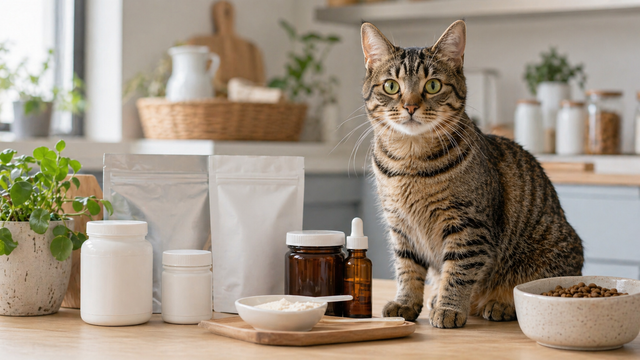
CatGarden's Smooth Passage Hairball Control Powder has a simple formula, free from artificial flavors, colors, mineral oil, and artificial syrups. It can be mixed directly into kibble or wet food, making it much more acceptable to picky eaters.
Palatability Test: Whether Your Cat Will Eat It is Key
Hairball paste has a sticky texture. The common method is to apply it to the cat's nose or paws, forcing them to lick it off—honestly, this often feels more like a "human-cat battle" than a health supplement. Hairball powder is in powder form and can be sprinkled directly onto the cat's food. Cats eating wet food often won't even notice it. In fact, many cat parents report much higher success rates with long-term feeding of powders because there's no need to "persuade" the cat to open its mouth.
Long-Term Health Benefits: A Clear Calculation
The mineral oil and sugar in hairball paste can accumulate over time, potentially leading to intestinal dependency, increased risk of obesity, and vitamin deficiencies. Hairball powder works by "nurturing good gut health, allowing the body to handle it naturally." In the long run, this can actually reduce veterinary expenses.
If your cat experiences issues beyond hairballs, such as soft stools, picky eating, or a weakened immune system, consider the All-Around Health Bundle with Free Shipping. It addresses hairballs, gut health, and immunity all at once, saving you the hassle of buying multiple products.
Conclusion: No Absolute "Good" or "Bad," But a Smarter Choice
Hairball paste is suitable for short-term emergencies, while hairball powder is ideal for long-term, stable management. The smartest way to use both: use hairball paste for immediate relief during severe hairball episodes, and incorporate hairball powder daily to fundamentally improve intestinal motility.
Ultimately, every hairball vomited is a small cry for help from your cat's body. Choosing the right method to reduce their discomfort is the most practical and gentle way we, as cat parents, can show our love. 🐾
Frequently Asked Questions
Is it normal for cats to vomit hairballs?
Occasional hairballs might be related to grooming and swallowing fur. However, if the frequency increases, or if your cat experiences dry heaving, constipation, decreased appetite, or lethargy, it's important to investigate potential gastrointestinal or other health issues.
Hairball Powder vs. Hairball Paste: How to Choose?
Consider ingredients, palatability, your cat's digestive health, and their daily diet. The key isn't just the product itself but also regular grooming, adequate water intake, and dietary adjustments.
How can I reduce hairball problems in my cat?
Regular grooming, increasing water intake, appropriate use of hairball supplements, and maintaining stable gut health all help reduce fur ingestion and the frequency of hairball vomiting.
References
CatGarden | An exclusive cat-only hotel in Banqiao, offering boarding and grooming services.
Related Articles
- What to Do About Matted Cat Fur? 5 Tips to Solve Your Cat's Hairball Crisis
- Hairball Powder Isn't a Miracle Cure: Causes of Hairballs and Correct Strategies
- Cat Losing Patches of Fur? Veterinarians Identify 4 Major Culprits
- Cat Shedding Season | 5 Ultimate Strategies for Spring and Autumn Molting Periods
\n
CatGarden offers curated supplies, cat boarding, and grooming
Book services or shop online.