How to Choose Basic Cat Supplements? From Probiotics to Lysine, Understand Ingredient Differences in 3 Minutes
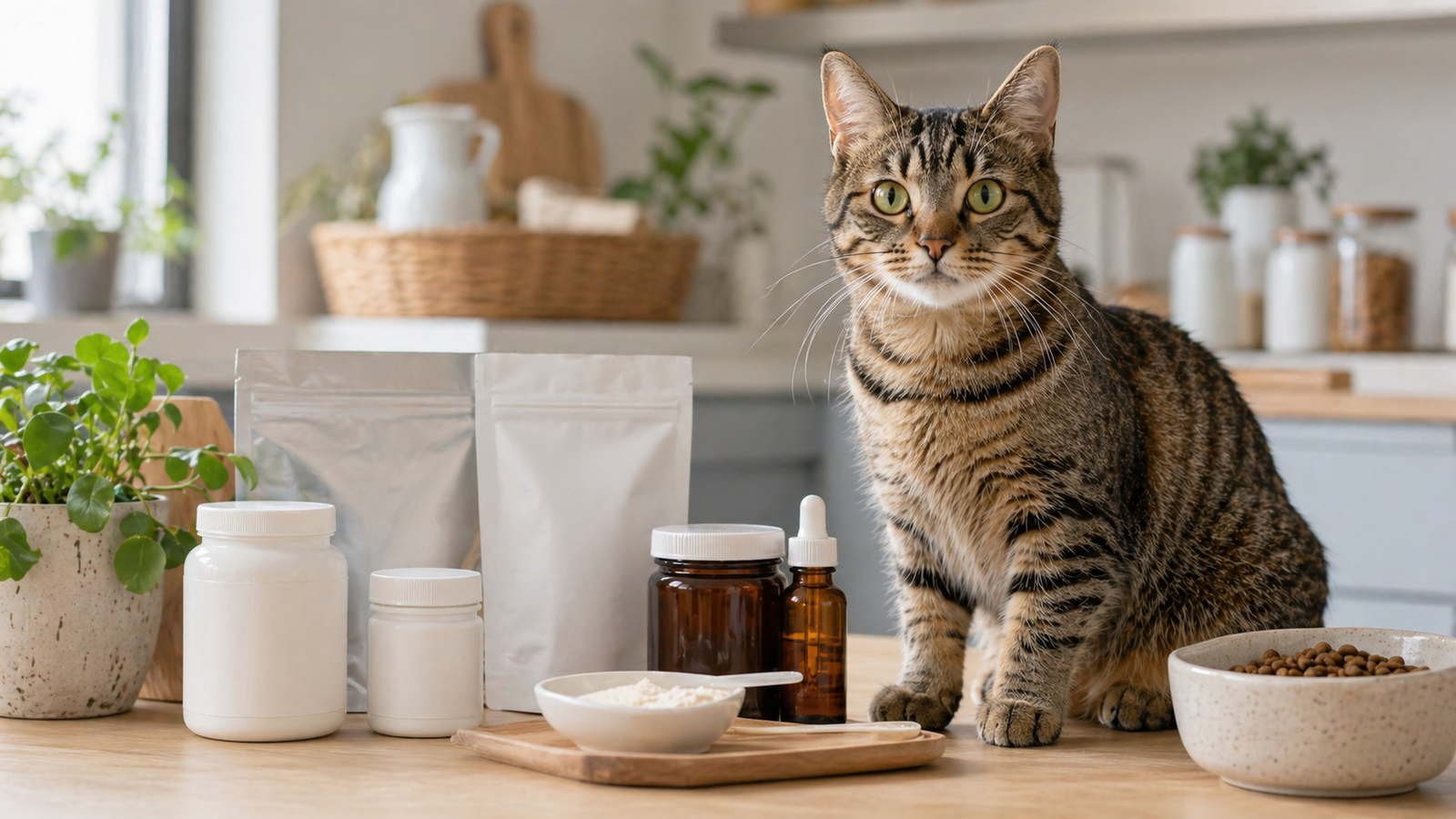
Cat supplement key takeaways: Before choosing cat supplements, clarify your cat's actual needs, such as for digestion, respiratory health, hairball control, or nutritional support, and then decide if long-term use is necessary.
Key takeaways
- For cat probiotics, choose those with at least billions of CFUs. Strains like Lactobacillus acidophilus, Lactobacillus rhamnosus, or Enterococcus faecium, combined with prebiotics like fructooligosaccharides (FOS), can help maintain gut flora balance.
- Lysine is an essential amino acid that cats cannot synthesize themselves. It can help slow down Feline Herpesvirus (FHV-1) activity by competitively inhibiting arginine utilization. The generally recommended daily supplement for adult cats is about 250 to 500mg.
- Compared to traditional hairball remedies based on mineral oil or petroleum jelly, which may affect the absorption of fat-soluble vitamins with long-term use, hairball powders containing natural plant fibers and psyllium husks offer a gentler mechanism and are more suitable for long-term daily maintenance.
- Probiotics, lysine, and hairball powders have different mechanisms of action and can be supplemented simultaneously. Probiotics are recommended to be given with or after meals. Hairball powders are best mixed with wet food to utilize moisture, helping the fibers expand and work effectively.
Cat Supplement Key Takeaways
Cat Supplement Key Takeaways: Before choosing cat supplements, clarify your cat's actual needs, such as for digestion, respiratory health, hairball control, or nutritional support, and then decide if long-term use is necessary.
Walking into a pet store or browsing online, you'll find a dazzling array of cat supplements: probiotics, lysine, hairball powder, taurine, fish oil... the names alone can be dizzying. Which ones are "truly necessary," and which are just "icing on the cake"? What's the difference in their effects?
In reality, for most indoor cats, the most basic and commonly recommended supplements by veterinarians fall into three main categories: probiotics, lysine, and hairball powder. These three address common concerns related to digestion, immunity, and hairballs, respectively. Understanding their differences is key to grasping the core concepts of daily cat care.
Next, we'll explain the principles behind each supplement, suitable scenarios, selection tips, and common misconceptions in the simplest terms. Whether you're a new cat owner or a seasoned one who's never delved into supplements, you'll gain a clear framework for decision-making in just a few minutes.
Probiotics: The Gut's Gatekeeper, Not All Probiotics Are Equal
Probiotics are perhaps the "most well-known" among cat supplements. Many cat owners' first thought is: "If my cat has diarrhea, I'll give them probiotics, right?" While this direction is correct, it's only half the story. The core function of probiotics is to maintain the balance of gut flora. When the number of beneficial bacteria is sufficient, harmful bacteria are less likely to overgrow, naturally stabilizing the digestive system. Therefore, they aren't just for "when there's diarrhea," but are also suitable for daily maintenance.
When choosing cat probiotics, the most important factors are the strain types and the number of live bacteria. Common effective strains include Lactobacillus acidophilus, Lactobacillus rhamnosus, and Enterococcus faecium, which is particularly friendly to the feline gut. The live bacteria count should ideally be in the billions of CFUs; anything lower is more for peace of mind. Additionally, whether it's paired with prebiotics (like fructooligosaccharides, FOS) is a bonus. Prebiotics are food for beneficial bacteria, helping them survive longer in the gut.
When is supplementation particularly recommended? During transitions to new food, after vaccinations, after antibiotic treatment, or if your cat naturally has a sensitive stomach and tends to have soft stools, these are good times. For instance, CatGarden's probiotics are formulated specifically for the feline gut, highly palatable, and easy to mix into daily meals, making them a great choice for long-term maintenance. However, a reminder: probiotics are not medicine. If your cat experiences persistent severe diarrhea or bloody stools, please seek veterinary care first and don't rely solely on supplements.
What we use for this
CatGarden’s own products, shipped from Taiwan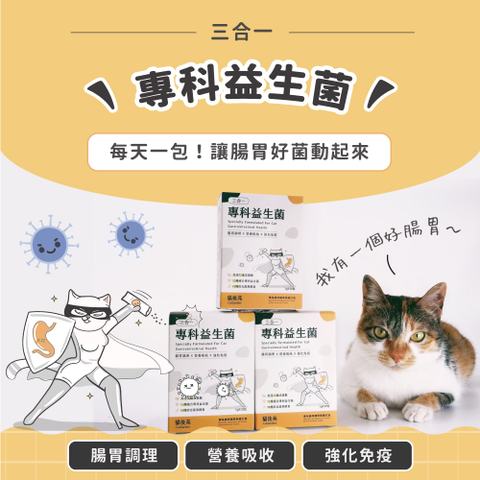

Lysine: An Amino Acid Supporting Immunity That Cats Can't Synthesize
Lysine (L-Lysine) is an essential amino acid, meaning a cat's body cannot produce it on its own and must obtain it from food or external supplements. Its most widely known function is to aid in combating Feline Herpesvirus (FHV-1). Feline herpesvirus is highly prevalent, with statistics indicating that over 80% of cats carry the virus, which remains latent until triggered by stress or a weakened immune system, leading to symptoms like sneezing, watery eyes, and eye redness.
The mechanism of lysine's action, simply put, is competitive inhibition of arginine utilization. Feline herpesvirus requires a large amount of arginine for replication. Lysine's chemical structure is similar to arginine, allowing it to "occupy" binding sites, thus preventing the virus from obtaining enough arginine to reproduce and thereby slowing down viral activity. Although the effectiveness of lysine is still debated in academic circles, in clinical practice, many veterinarians still recommend it for cats with feline herpesvirus symptoms or for preventative supplementation in multi-cat households.
When choosing, pay attention to a few key points: high purity, preferably a single-ingredient lysine supplement rather than a complex formula with many additives; convenient dosage form, powder mixed with food is usually best accepted; the recommended daily dose is generally around 250-500mg for adult cats, adjusted based on weight and symptoms. It's especially suitable for increased supplementation before or after stressful events like seasonal changes, moving, or the introduction of a new pet.
Hairball Powder: Helping Hairballs Pass Smoothly, It's More Than Just "Dissolving"
Cats naturally groom themselves by licking their fur. Especially for long-haired cats or during shedding seasons, the amount of dead hair they ingest daily can be considerable. These hairs can clump together in the stomach, leading to occasional vomiting of hairballs at best, and potentially hairball obstruction at worst. Symptoms can include decreased appetite, constipation, dry heaving without vomiting, and in severe cases, surgical removal may be necessary.
Commercial hairball products generally fall into two categories: traditional hairball pastes (mainly containing mineral oil or petroleum jelly, which lubricate the hairball for easier passage) and newer hairball powders (typically containing natural plant fibers, psyllium husk, etc., which wrap around hair and promote intestinal motility for natural expulsion). The difference is that the oily components in hairball pastes can potentially affect the absorption of fat-soluble vitamins with long-term use, whereas hairball powders, using a fiber mechanism, are generally gentler and more suitable for long-term daily maintenance.
When choosing hairball powder, it's recommended to check the ingredient list for natural plant fiber sources and avoid those with excessive artificial additives. For example, CatGarden's hairball powder is designed to aid digestion and hairball expulsion with simple ingredients, suitable for daily small-dose mixing with wet or dry food. It's particularly beneficial for long-haired breeds (Persians, Ragdolls, Maine Coons) or cats that groom excessively, as regular supplementation can significantly reduce hairball issues.
Comparison of the Three Supplements and Combination Recommendations
Looking at the three supplements together, they each target a different "battlefield":
- Probiotics → Gut flora balance → Addresses soft stools, indigestion, sensitive digestion
- Lysine → Immune system support → Aids in combating feline herpesvirus, reduces respiratory and eye symptoms
- Hairball Powder → Hairball metabolism and expulsion → Prevents hairball obstruction, reduces vomiting frequency
Because their mechanisms of action are different, these three can actually be supplemented simultaneously without conflict. However, it's recommended not to introduce all at once. Start with the most apparent need for your cat, observe their reaction for one to two weeks, and then gradually introduce other items. For example, if your cat has been having frequent soft stools, start with probiotics. If they often have eye discharge, prioritize lysine. If hairballs are frequent during shedding season, start with hairball powder.
Regarding feeding times, probiotics are generally recommended with or after meals to allow the bacteria to be protected by food as they pass through stomach acid. Lysine can be given on an empty stomach or with meals; the key is consistent daily intake. Hairball powder is best mixed with wet food as moisture helps the fibers expand and function effectively.
Common Pitfalls for New Owners
The first common mistake is "giving human supplements directly to cats." Human probiotic strains and dosages are designed for human digestion. Some also contain xylitol, a sweetener toxic to cats. Never try to save money this way. Similarly, the excipients in human lysine tablets may not be suitable for cats. Please choose pet-specific formulas.
The second pitfall is "thinking supplements can replace veterinary visits." Supplements are intended for "daily maintenance" and "supportive care," not treatment. If your cat is exhibiting severe symptoms—diarrhea lasting more than two days, eyes so swollen they can't open, complete loss of appetite—take them to the vet immediately. Don't try to self-treat at home by increasing supplement dosages.
The third misconception is "more expensive is better, and more ingredients are better." Some products claim to contain a dozen or two dozen ingredients, which sounds impressive, but the amount of each might be too low to have any significant effect. The principle for choosing supplements is simple ingredients, adequate dosage, and good palatability. If your cat won't eat it, even the best ingredients are useless.
Frequently Asked Questions
Can probiotics and hairball powder be given at the same time?
Yes. Probiotics work on gut flora, and hairball powder works on hairball expulsion; their mechanisms are different and do not interfere with each other. It's recommended to give them at different feeding times to easily observe your cat's acceptance of each product.
Does lysine need to be taken daily, or only when symptoms appear?
If your cat has a history of feline herpesvirus or frequently sneezes or has watery eyes, daily consistent supplementation is recommended to maintain lysine levels. For healthy cats as preventative care, you can increase supplementation before or after stressful events (moving, new cat, seasonal changes).
Can kittens take supplements? At what age is it better to start?
It's generally recommended to consider supplementation after kittens are weaned and start eating solid food (around 2 months old), with dosages halved based on weight. Probiotics are very helpful for kittens' digestive systems adapting to new foods, and lysine is particularly useful when kittens are in a new environment and prone to stress-related issues. If unsure, consulting a veterinarian is always the safest approach.
How should supplements be stored after opening?
Because probiotics contain live bacteria, they should be sealed and stored in a cool, dry place after opening. Some products require refrigeration; please follow the package instructions. Lysine and hairball powder can usually be stored at room temperature, but avoid direct sunlight and humidity. Try to use them within the expiration date after opening.
What if my cat absolutely refuses to take supplements?
For powdered products, try mixing a small amount into wet food or canned food, starting with a very small quantity to let the cat gradually get used to the taste before increasing the amount. For tablet supplements, you can crush them into powder and mix them with food, or use pill pockets to assist with administration. When purchasing, it's also advisable to prioritize brands with good palatability and high acceptance rates among cats, which can save a lot of effort. Finally, remember not to force-feed your cat, as this will only cause stress and resistance, leading to the opposite of the desired effect!
Conclusion: Probiotics support digestion, lysine protects the respiratory system, and hairball powder aids in hairball removal. These three basic supplements each have their own role. It's recommended to first observe which area your cat needs the most support in and start with one supplement. Using the right supplements can truly benefit your cat's daily health. Want to choose suitable supplements for your furry friend? Feel free to browse CatGarden, and find the perfect choice for your feline companion!
References
CatGarden | A luxury cat-only hotel in Banqiao, offering boarding and grooming services.
Further Reading
- 5 Key Times to Supplement Your Cat with Probiotics (Veterinarian Recommended)
- When to Give Probiotics: A Complete Analysis of 3 Golden Timing Opportunities
- Don't Give Lysine Randomly! When Supplementation is Necessary
→ Learn about CatGarden's full line of house brand products
CatGarden offers curated supplies, cat boarding, and grooming
Book services or shop online.