Can Owners Wait Nearby During Cat Grooming? Consider Waiting Areas, Traffic Flow, and Cat Stress
Does having the owner nearby during cat grooming truly provide more peace of mind? Many owners ask, "Can I wait nearby?" when booking appointments for baths, trims, or basic grooming. This is a natural thought, as cats don't adapt to new environments as easily as dogs.
Key takeaways
- Owner presence during cat grooming isn't always reassuring: While some cats are more cooperative with their owners present, others may become more vocal, scratch, bite, or pant excessively when they see their owner but cannot leave the grooming table.
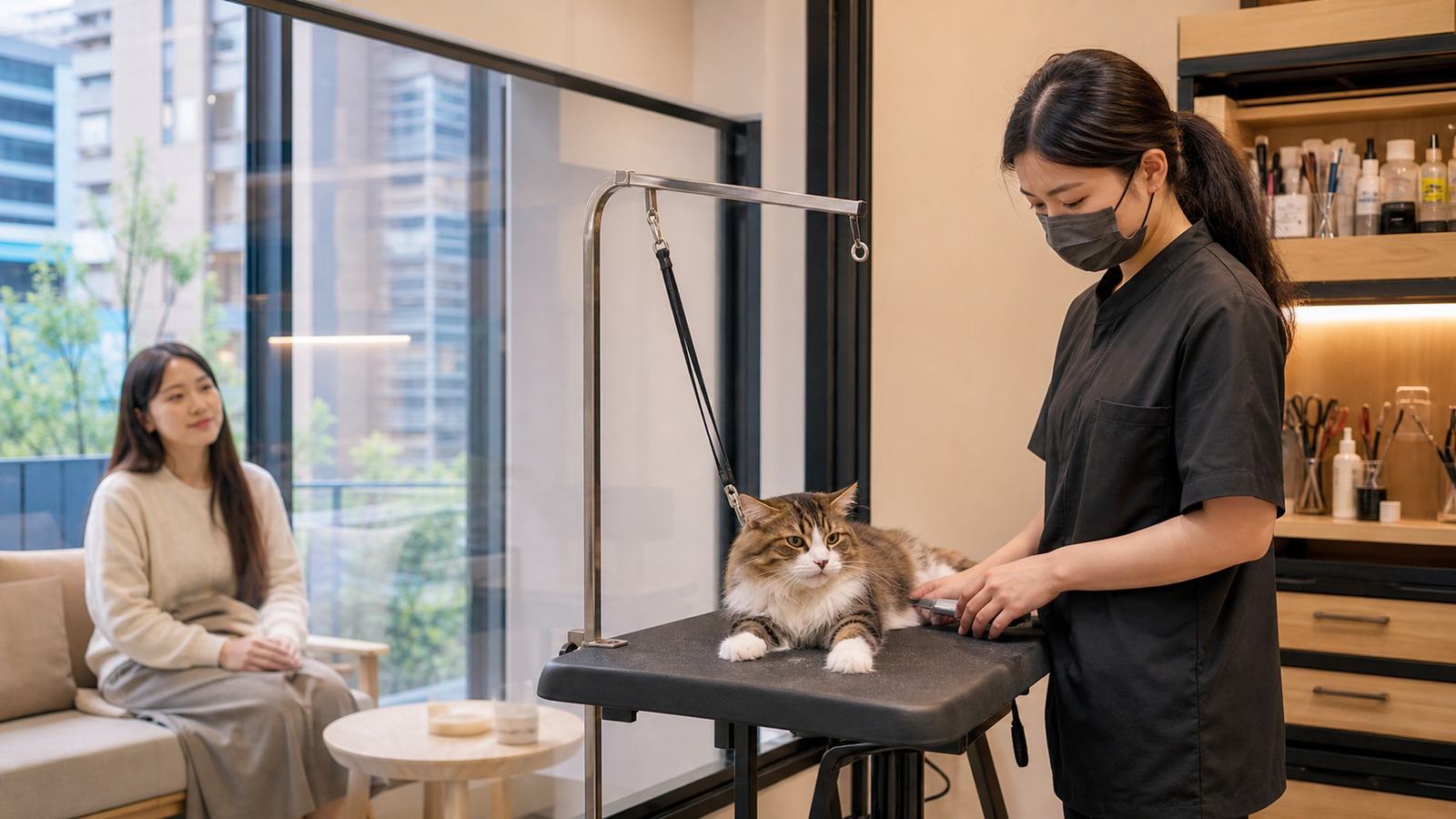
- A "visible" waiting area doesn't mean closer is better. The ideal spot allows observation of the general situation from a distance behind glass, without frequent tapping or calling the cat, which can disrupt drying, nail trimming, or detangling.
- For most cats, a quiet, stable environment with minimal changes in routine is more important than constant close-up viewing. If the waiting area is next to the high-velocity dryer or a busy thoroughfare, it may not be suitable for a long stay, even if owner presence is allowed.
- Cats suitable for owner accompaniment are typically those who are usually affectionate, have more experience with outings, and don't react drastically to carriers or new environments. Conversely, cats that fear going out, panic at the vet, or hide all day at the sound of a hairdryer might see their owner as an escape route, making safe restraint more difficult.
- After grooming, let the cat rest in a quiet, familiar room and observe their appetite, energy levels, elimination, and skin for the next 24 hours. If they show persistent lack of appetite, continuous hiding, excessive licking of one spot, red, swollen, or oozing skin, or abnormal gait, contact the grooming salon promptly and consult a veterinarian if necessary.
Can Owners Wait Nearby During Cat Grooming? Is It Always Better?
Many owners ask, "Can I wait nearby?" when booking appointments for cat baths, trims, or basic grooming. This is a natural thought, as cats don't adapt to new environments as easily as dogs, and owners worry about their pets being scared, struggling, or handled by strangers. However, cat grooming accompaniment doesn't always equate to greater peace of mind. The key depends on the cat's personality, the grooming salon's space design, and whether the on-site traffic flow is truly suitable.
For some cats, seeing their owner nearby can make them more cooperative and help them settle down after brief reassurance. However, many other cats become more anxious and desperate to escape when they can see their owner but cannot leave the grooming table. This can lead to louder vocalizations, biting, scratching, or excessive panting. For a cat, "you are nearby" isn't always a source of security; it can also signal their desire to go home.
How to Assess the Waiting Area: Visibility Doesn't Mean Proximity is Best
Some grooming salons feature transparent glass or semi-open waiting areas, allowing owners to observe the grooming process. This setup can indeed build trust and help owners confirm the cleanliness of the environment and the gentleness of the handling. However, visibility doesn't mean closer is always better. Too much visual and auditory stimulation, especially when the cat is being blow-dried, having its nails trimmed, or dealing with mats, can increase stress.
A more ideal waiting area allows for a general view of the situation without directly interfering with the groomer's work. For example, waiting behind glass, maintaining a distance, and refraining from frequent window tapping or calling the cat is usually more stabilizing than standing right next to the grooming table. If the establishment clearly designates owner waiting areas and traffic flow, it indicates they have a better understanding of cats' sensitivity to sounds, smells, and movement.
Quiet Traffic Flow is More Important Than "Being Able to See"
Shop spaces in Taiwanese urban areas are often limited, especially in smaller establishments in New Taipei City or Taipei. The waiting area, counter, entrance/exit, and grooming area might be very close together. Owners should pay attention to whether the waiting location is subject to constant foot traffic from other customers, dogs, delivery personnel, or the opening and closing of doors passing through the cat's line of sight. For most cats, a quiet, stable, and predictable traffic flow is more important than being able to watch the entire process up close.
If the grooming salon's waiting area is next to the high-velocity dryer, or if it's a busy area with a lot of noise, even if cat grooming accompaniment is allowed, it might not be suitable for a long stay. Observe whether the salon implements separate times for cats and dogs, has dedicated cat grooming slots, or takes measures to reduce sudden noises. These details often have a greater impact on the grooming experience than simply asking, "Can I wait nearby?"
What we use for this
CatGarden’s own products, shipped from Taiwan

Which Cats Benefit from Owner Presence? Which Get More Anxious?
Cats that are generally more people-oriented, have more experience with outings, and don't react drastically to carriers or unfamiliar environments are usually better candidates for cat grooming accompaniment. These cats may settle down more easily when they see their familiar owner and are more accepting of the groomer's gradual process. Especially for first-time grooming, allowing the owner to observe from an appropriate distance can provide a sense of security for both parties.
However, if your cat is normally very fearful of going out, panics at the vet's office, or hides all day at the sound of a hairdryer, accompaniment might not be a plus. Some cats view their owner as an escape route; seeing you might make them want to leave even more, making it harder for the groomer to safely handle them. In such cases, letting the groomer work undisturbed in a quiet environment might be better than the owner constantly trying to soothe them.
High-Stress Cats Require Prioritizing Safety and Shorter Procedures
Elderly cats, cats with previous negative grooming experiences, cats with sensitive skin, or those who have previously experienced panting, drooling, or incontinence due to stress require more careful planning. For these cats, it's not just about discussing accompaniment but also confirming if the grooming process can be broken down into stages, if basic grooming can be done first, and if consulting a veterinarian is recommended when necessary. Grooming isn't just about getting it done; the focus should be on reducing stress and preventing injury.
If a cat has severe matting, red or swollen skin, or appears to be in pain, owners should not solely focus on getting them clean or perfectly clipped. The groomer needs to assess which areas can be treated and which situations require immediate veterinary attention. In such cases, the role of cat grooming accompaniment should be to provide information about the cat's habits and physical condition, rather than rushing the process from the sidelines.
Ask the Grooming Salon These 5 Questions Before Booking
Instead of asking if you can accompany upon arrival, it's better to confirm the rules beforehand when booking. Different salons have varying spaces, staffing, equipment, and experience with handling cats. Some can arrange transparent waiting areas, while others, for safety reasons, do not allow entry into the grooming area. Clarifying in advance can prevent disappointment upon arrival and allow the salon to assess whether your cat is a suitable candidate.
If cat grooming accompaniment is important to you, it's recommended not to just ask "Can I watch from the side?" but to inquire about the waiting area, client separation, grooming process, and how they handle cat stress. Reputable salons are usually willing to explain their policies and will advise you on situations where owners should not be too close. This isn't about being secretive; it's about ensuring the groomer can complete the task safely and effectively.
- Where is the waiting area located? Can you see the grooming area? Is it too close? Will it interfere with the operation?
- Are cats and dogs separated? Are there dedicated cat-only times or spaces?
- How long does the grooming process take? Approximately how long does bathing, blow-drying, trimming, and nail clipping take?
- How are nervous cats handled? Will they pause, break down the process, or suggest alternative methods?
- How is feedback provided after grooming? Will they explain the condition of the skin, matted areas, and observations about the ears or nails?
Post-Grooming Observation: Licking, Hiding, Appetite, and Skin Reactions
It's not uncommon for cats to hide, lick themselves, or sniff their bodies for a short period after returning home from grooming. Bathing, blow-drying, and changes in environmental scents require cats to re-establish their sense of security. Owners can place their cat in a quiet, familiar room with fresh water, a litter box, and their usual sleeping spot, avoiding the urge to hold them or constantly check on them.
Over the next 24 hours, observe their appetite, energy levels, elimination, and skin condition. If they are just a bit quieter than usual but still eating, drinking, not panting excessively, or showing signs of obvious pain, it's generally best to give them time to recover. If they refuse to eat, remain hidden, excessively lick or bite a specific spot, have red or weeping skin, or exhibit abnormal gait, it's advisable to contact the grooming salon immediately to understand the process and consult a veterinarian if necessary.
Adjust Future Appointments Based on Reactions
Each cat's reaction after grooming serves as an important reference for future arrangements. If the cat recovers quickly at home, it suggests the environment and process were likely suitable; if they remain anxious for several days, consider shortening the services, extending the appointment intervals, or opting for only essential grooming. Cat grooming accompaniment can also be adjusted based on these reactions; it doesn't have to be the same approach every time.
Taiwan's humid summers and rainy seasons can lead to severe matting in long-haired cats and increase discomfort from heat and moisture on the skin. Rather than waiting until mats become hard and tangled, it's better to establish a regular brushing routine and supplement with professional cat grooming for periodic maintenance. This not only shortens grooming time but also significantly reduces the pulling and stress experienced by the cat.
FAQ
Q1: Is owner accompaniment always better for cat grooming?
Not necessarily. If the cat becomes more stable seeing their owner, moderate accompaniment might be helpful. However, if they become more agitated, vocal, or try to escape upon seeing you, it could increase operational risks. It's best to decide based on the cat's personality and the salon's traffic flow arrangements.
Q2: If the grooming salon doesn't allow owners in the grooming area, is it untrustworthy?
Not necessarily. Some salons have small grooming areas with a lot of equipment, or they worry that the owner's presence might distract the cat and cause them to struggle. You can ask about having a glass waiting area, process updates, and post-grooming explanations to gauge the salon's trustworthiness.
Q3: For a first-time cat grooming appointment, should I choose a bath or just basic grooming?
If your cat rarely goes out, it's best to start with shorter services like nail trimming, brushing, and localized tidying for the first time. Gradually familiarizing the cat with the environment is usually more stable than scheduling a full bath and trim all at once.
Q4: Is it normal for a cat to lick itself excessively after grooming?
Short-term licking might be due to changes in body scent and can usually be observed. However, if the cat continuously licks or bites a specific spot, has red or swollen skin, hair loss, or shows obvious discomfort, don't delay. Contact the salon and consult a veterinarian if necessary.
Q5: When is it not recommended to schedule cat grooming?
If the cat is ill, has recently undergone surgery, has skin wounds, shows a significant decrease in appetite or energy, or has a history of serious respiratory or heart conditions, consult a veterinarian first. Grooming can improve appearance and coat condition but should not replace medical judgment.
To make your cat's bath, trim, or basic grooming more stable, it's crucial to confirm the waiting area, traffic flow, and stress management methods before booking. Cat Garden offers cat grooming services centered around feline behavior, assisting owners in selecting appropriate services based on coat condition, personality, and seasonal needs. If you are considering whether cat grooming accompaniment is suitable for your cat, you can discuss your cat's usual reactions with us first to choose a more reassuring grooming method.
Further Reading
CatGarden offers curated supplies, cat boarding, and grooming
Book services or shop online.