How to Identify the Location of Your Cat's Hair Loss? Differentiating Between Skin Disease, Over-grooming, and Stress Signals
Common locations for cat hair loss include the belly, hind legs, behind the ears, and the base of the tail. When you notice hair loss, the first step isn't to rush to apply medication, but rather to examine the location, extent, and skin condition. Different areas often correspond to different causes, such as the belly and inner hind legs.
Key Takeaways
- Different locations of hair loss in cats often correspond to different causes: the belly and inner hind legs are common for over-grooming; behind the ears may be related to scratching, fungal infections, or external parasites; and the base of the tail warrants attention for fleas, seborrhea, or allergic reactions.
- Normal shedding results in a general decrease in fur volume without large bald patches on the skin. Broken fur appears uneven in length and feels stubbly to the touch. True concerns are localized thinning, exposed skin, expanding bald spots, or accompanying skin abnormalities.
- If hair loss is accompanied by redness, scabs, discharge, pus, odor, or obvious signs of pain, prioritize scheduling a veterinary appointment. Self-treating with human ointments or unverified skin sprays is not recommended.
- Stress-induced grooming often occurs during quiet periods like midnight, early morning, or when the owner is away. It's recommended to keep a detailed log for seven to fourteen days, noting the time, location, and preceding events of grooming to identify triggers.
- In the absence of redness, discharge, or significant pain, home care can begin with cleaning, grooming, and environmental management. Opt for low-irritant cleaning products with simple ingredients and no strong fragrances.
How to Identify the Location of Your Cat's Hair Loss: Belly, Hind Legs, Behind Ears, and Tail Base
When you discover hair loss in your cat, the first step isn't to rush to apply medication, but rather to examine the location, extent, and skin condition. Different areas often correspond to different causes. For instance, the belly and inner hind legs are common sites for over-grooming. Hair loss behind the ears might be related to scratching, fungal infections, or external parasites, while the base of the tail warrants attention for fleas, seborrhea, or allergic reactions. Taiwan's humid climate, particularly during the plum rain season and summer, can exacerbate skin issues by trapping moisture. Cats with long fur or those living in poorly ventilated small homes are especially prone to these problems.
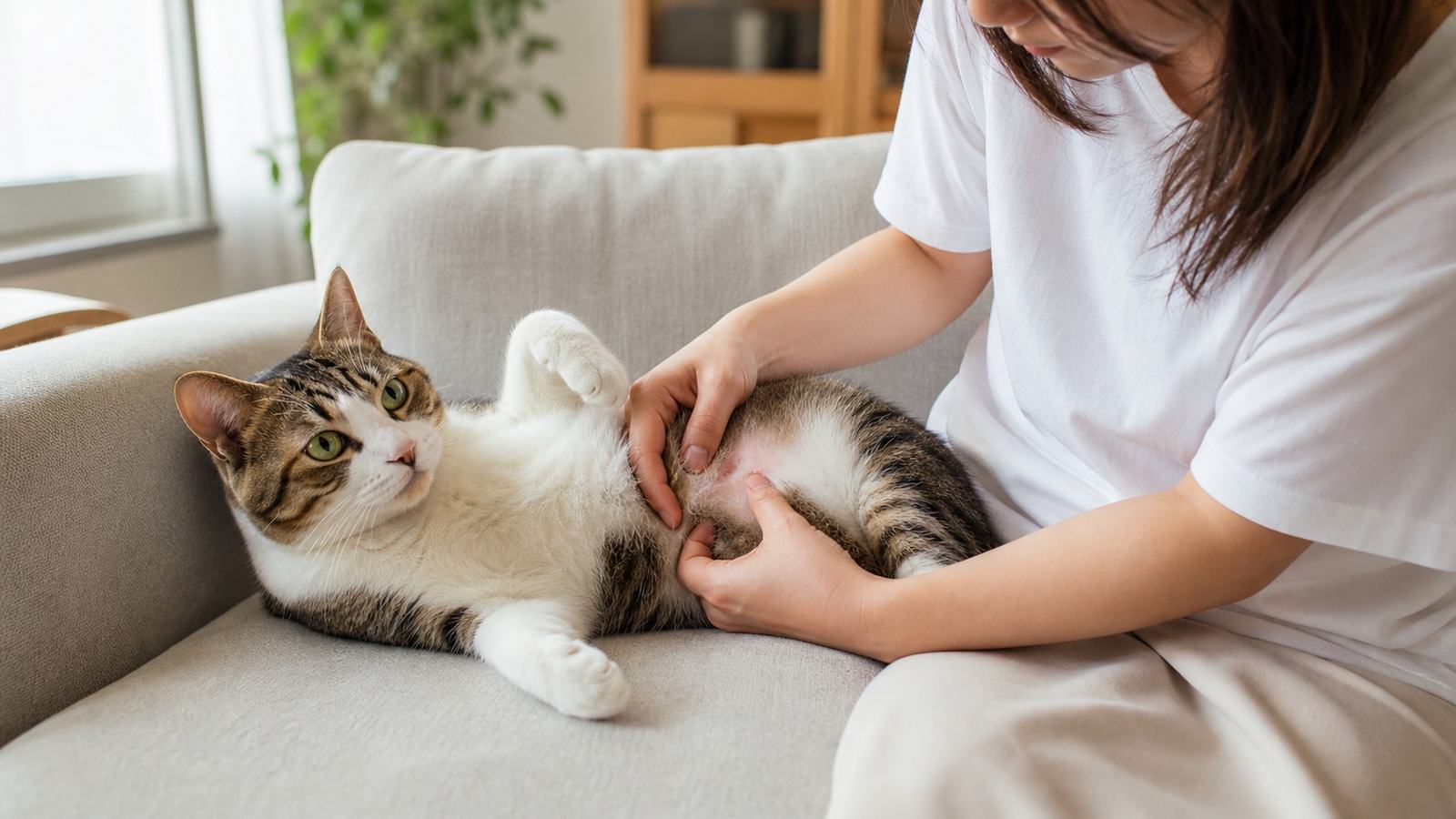
Hair loss on the belly is often mistaken by owners for natural shedding. However, if the fur becomes very short, as if it's been shaved, it often indicates that the cat is repeatedly licking the same area. The inner hind legs and groin are also common areas for stress-induced grooming or itchy skin. If circular bald patches, dandruff, red spots, or scratches appear behind the ears, it cannot be dismissed as ordinary shedding. If there are small black specks, greasiness, or if the cat constantly flicks or bites its tail, it's also advisable to get it checked promptly.
Observe the Skin Along with the Location
Simply observing less fur doesn't always reveal the cause. You also need to check if the skin is red, swollen, flaky, discharging, or has an odor. If the skin color is normal, there are no wounds, and the cat's appetite and energy levels are stable, you can initially document the extent and observe for a few days. However, if the bald patches are clearly expanding or the cat grooms more frequently, it's not advisable to delay. Photographic documentation can be very helpful, allowing the veterinarian to compare the rate of change.
What we use for this
CatGarden’s own products, shipped from Taiwan

Differentiate Between Shedding, Broken Fur, Over-Grooming, and Actual Skin Disease
Taiwanese owners often notice changes in fur volume during seasonal shifts, when air conditioning is turned on, or after bathing. However, shedding is not the same as cat hair loss. Normal shedding typically results in a general decrease in fur volume, with more hairballs collected during grooming, but the skin won't reveal large bald patches. Broken fur often appears uneven in length and feels stubbly to the touch, possibly related to excessive friction, matting, licking, or itchy skin. What truly requires attention are localized thinning, exposed skin, expanding bald spots, or accompanying skin abnormalities.
Hair loss caused by over-grooming often results in very short fur with irregular borders, typically in areas the cat can easily reach, such as the belly, hind legs, and flanks. Hair loss due to skin disease may be accompanied by redness, dandruff, circular bald patches, scabs, or significant scratching. These two can coexist; for example, itchy skin might cause the cat to groom excessively, leading to larger bald patches over time. When diagnosing, don't just look at the fur; consider behavior, skin condition, and environment together.
Simple Checks You Can Do First
- Take photos of the bald patches with your phone, noting the date, size, and location.
- Gently part the fur to examine the skin for redness, swelling, flakes, wounds, or a sticky/moist feeling.
- Observe if the cat repeatedly grooms the same area at specific times and locations.
- Check if there have been recent changes in cat litter, cleaning products, shampoos, food, or flea treatments.
If it's just temporary shedding, it usually won't be concentrated in a single area and won't leave the skin visibly exposed. For broken fur or grooming-induced hair loss, the tips of the fur are often uneven and feel shorter than the surrounding hair. If you suspect a fungal infection, parasites, or allergies, home observation can only supplement, not replace, veterinary examination. This is especially important in multi-cat households to prevent the spread of contagious skin conditions; ensure grooming tools are cleaned after each use.
When to Prioritize a Veterinary Visit: Redness, Scabs, Discharge, and Pain Reactions
If cat hair loss is accompanied by redness, scabs, discharge, pus, odor, or obvious signs of pain, it is recommended to prioritize scheduling a veterinary appointment. Cats are adept at hiding pain; some may not cry out but will hide, become avoidant of touch, or suddenly become irritable. If the bald area feels warm or moist to the touch, or if the cat flinches or hisses when touched, it indicates a potential problem beyond simple shedding. In such cases, self-treating with human ointments or unverified skin sprays is not recommended.
Skin issues around the ears, face, between the toes, and at the base of the tail also require greater caution. These areas are prone to broken skin from scratching or biting, and wounds may heal more slowly in humid environments. During the plum rain season, summer, or after bathing without thorough drying, trapped heat can worsen these problems. If you have kittens, elderly cats, or immunocompromised cats at home, don't wait until the affected area becomes widespread before seeking treatment.
Information to Prepare Before Your Vet Visit
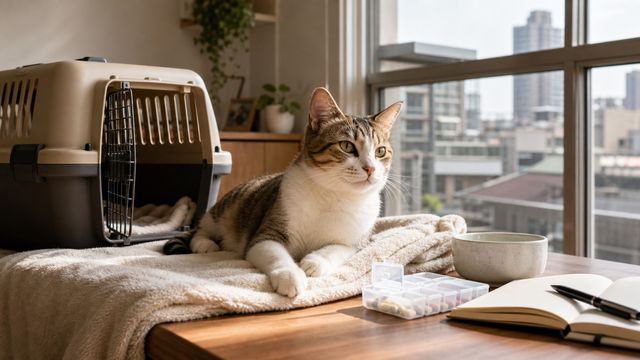
Before seeing the veterinarian, gather information about changes over the past one to two weeks, including when the hair loss started, whether it has spread, the frequency of your cat's grooming, appetite, energy levels, and bowel movements. You can also note any recent changes in food, cat litter, moving house, renovations, boarding, bathing, or the use of new cleaning products. This information will help the veterinarian determine if the cause is a skin infection, allergy, parasite, pain, or stress-related behavior. If you have multiple cats, it's also important to mention if other cats are scratching or losing fur.
Observing Stress-Induced Grooming: Environmental Changes, Multi-Cat Conflicts, and Routine Records
Some cat hair loss isn't due to an initial skin problem but rather stress that leads cats to groom themselves for comfort. Common stressors include moving house, the addition of a new family member, changes in furniture placement, construction noise, significant alterations in the owner's routine, or insufficient resources among multiple cats. In limited urban living spaces, if litter boxes, food bowls, water bowls, sleeping areas, and high perches are too concentrated, it can create a sense of pressure for the cat. The absence of overt fighting doesn't necessarily mean there's no stress.
Stress-induced grooming often occurs during quiet periods, such as late at night, early morning, or when the owner is away. The cat might appear relaxed while grooming, but if the same area is licked to the point of becoming short or thin, it warrants attention. In multi-cat households, observe for blocking pathways, staring, resource guarding, monopolizing the litter box, or one cat consistently hiding. These are all signs of stress and may not manifest as loud conflicts.
Identify Triggers Through Routine Records
It is recommended to keep a continuous record for seven to fourteen days, noting the time, location, preceding events, and the cat's emotional state during grooming. If grooming occurs consistently after vacuuming, visitors arrive, another cat approaches, or after lights are turned off at night, the stress association becomes clearer. You can also use a camera to observe daytime interactions, especially after the owner leaves the house. These records are not for self-diagnosis but to provide direction for subsequent environmental adjustments or veterinary consultations.
Home Care and Management: Selecting Skin Cleansers, Grooming Tools, and Low-Irritant Products
In the absence of redness, discharge, or significant pain, home care can begin with cleaning, grooming, and environmental management. Cat products don't need to be heavily fragranced; especially for cats with sensitive skin or those being monitored for hair loss, low-irritant products with simple ingredients and no strong fragrances are more suitable. Grooming tools should also be chosen based on fur length. For short-haired cats, a soft brush can remove loose fur, while long-haired cats require regular brushing to detangle undercoats and mats. If your cat resists grooming, don't force it, as this can turn care into a source of stress.
If moisture is causing skin irritation, the focus should be on maintaining ventilation, dryness, and clean bedding. Bathing is not a necessary treatment for all cat hair loss cases; frequent bathing or incomplete drying can actually irritate the skin. Start by replacing dirty bedding, regularly washing blankets, and keeping the litter box dry. If skin cleansing products are needed, it's best to confirm they are suitable for cats, avoiding products intended for dogs or humans.
Principles for Selecting Low-Irritant Products
- Choose cleaning and care products that are clearly labeled and suitable for cats.
- Avoid products with strong fragrances, excessive degreasing agents, or unknown ingredients.
- Prioritize grooming tools that do not scratch the skin, are easy to clean, and are appropriate for the fur length.
- For multi-cat households, regularly clean grooming tools and bedding. Avoid sharing tools when skin issues are present.
The goal of care is to reduce irritation, minimize moisture, and help owners detect changes earlier, not to replace medical treatment with products. If hair loss continues to spread, recurs frequently, or grooming behavior becomes more ingrained, it is still essential to consult a veterinarian and adjust the environment. For owners, the most practical approach is to establish a routine of regular grooming, skin checks, and cleaning bedding. This is more reliable than waiting until large areas of hair loss occur.
FAQ
Is cat hair loss always a skin disease?
Not necessarily. Cat hair loss can stem from over-grooming, broken fur, parasites, allergies, fungal infections, stress, or pain reactions. If the skin is not red or broken, you can initially document and observe short-term changes. However, if the area expands or is accompanied by skin abnormalities, a veterinary visit is recommended.
My cat has hair loss on its belly but the skin looks normal. Is this serious?
Hair loss on the belly is often associated with over-grooming. Even if the skin appears normal, it shouldn't be entirely ignored. Observe if the cat grooms its belly at specific times and if there have been recent environmental changes. If it persists for several weeks, the area expands, or is accompanied by anxiety or hiding, further evaluation is needed.
Can I apply medication to my cat myself?
It is not recommended to use human medications, home remedies, or ointments of unknown composition. Cats groom themselves, and ingesting unsuitable ingredients can pose risks. If there is redness, scabs, discharge, or pain, have a veterinarian diagnose the cause first and follow their instructions for care.
Can changing cat litter or shampoo cause hair loss?
It's possible. Some cats are sensitive to fragrances, dust, cleaning ingredients, or environmental changes, which can lead to increased scratching, grooming, or skin discomfort. If hair loss begins after changing products, discontinue the new product and record the changes. If the situation doesn't improve, it's still advisable to seek veterinary care.
How can I improve my cat's stress-induced grooming?
First, identify the source of stress, such as multi-cat conflicts, resource scarcity, noise, moving, or changes in routine. Providing more vertical spaces, scattering food and water bowls, ensuring enough litter boxes, and maintaining consistent interaction times can help reduce stress. If significant hair loss has already occurred due to grooming, it's best to consult a veterinarian concurrently to rule out underlying skin irritation or pain.
CTA: When you notice your cat's skin becoming sensitive, experiencing localized hair loss, or grooming more frequently, start by reducing irritation from daily products. CatGarden has curated cat products suitable for home care in Taiwan, including grooming tools, low-irritant cleaning supplies, bedding, and daily care selections, to help owners easily maintain a dry, clean, and safe living environment. When choosing products, always prioritize your cat's actual skin condition and usage habits. If redness, discharge, or pain is present, seek veterinary care first.
Further Reading
- How to Choose a Cat Neutering Vet Clinic? Pre-Surgery Check-ups, Anesthesia Equipment, and Post-Op Care to Ask About
- Is Cat Rehabilitation Effective? Acupuncture, Laser Therapy, and What to Ask Before Seeing a Vet for Neurological Issues
- How to Do Cat Preventive Care? A Daily Care Checklist from Kittenhood to Old Age
Frequently Asked Questions
Is cat hair loss always a skin disease?
Not necessarily, it can stem from over-grooming, broken fur, parasites, allergies, fungal infections, stress, or pain reactions. If the skin is not red or broken, you can initially document and observe short-term changes, but if the area expands or is accompanied by skin abnormalities, a veterinary visit is recommended.
My cat has hair loss on its belly but the skin looks normal. Is this serious?
Hair loss on the belly is often associated with over-grooming. Even if the skin appears normal, it shouldn't be entirely ignored. Observe if the cat grooms its belly at specific times and if there have been recent environmental changes. If it persists for several weeks, the area expands, or is accompanied by anxiety or hiding, further evaluation is needed.
Can I apply medication to my cat myself?
It is not recommended to use human medications, home remedies, or ointments of unknown composition, as cats groom themselves and ingesting unsuitable ingredients can pose risks. If there is redness, scabs, discharge, or pain, have a veterinarian diagnose the cause first and follow their instructions for care.
Can changing cat litter or shampoo cause hair loss?
It's possible. Some cats are sensitive to fragrances, dust, cleaning ingredients, or environmental changes, which can lead to increased scratching, grooming, or skin discomfort. If hair loss begins after changing products, discontinue the new product and record the changes. If the situation doesn't improve, it's still advisable to seek veterinary care.
How can I improve my cat's stress-induced grooming?
First, identify the source of stress, such as multi-cat conflicts, resource scarcity, noise, moving, or changes in routine, and provide more vertical spaces, scatter food and water bowls, ensure enough litter boxes, and maintain consistent interaction times. If significant hair loss has already occurred due to grooming, it's best to consult a veterinarian concurrently to rule out underlying skin irritation or pain.
CatGarden offers curated supplies, cat boarding, and grooming
Book services or shop online.