Is Cat Rehabilitation Effective? Ask These Questions Before Seeing a Vet for Acupuncture, Laser Therapy, or Neurological Issues
Is cat rehabilitation effective? Ask these questions before seeing a vet for acupuncture, laser therapy, or neurological issues. What situations might require rehabilitation for cats? Cat rehabilitation isn't just for cats who "can't walk." Common scenarios include post-fracture or joint surgery, intervertebral disc or spinal cord issues,
Key Takeaways
- Common situations where cat rehabilitation is applicable include post-fracture or joint surgery, intervertebral disc or spinal cord issues, nerve damage, hind limb weakness, decreased jumping ability, and age-related chronic pain and reduced activity.
- The goal of cat rehabilitation is not to force the cat back to its original state, but to reduce pain, maintain muscle mass, and improve quality of life.
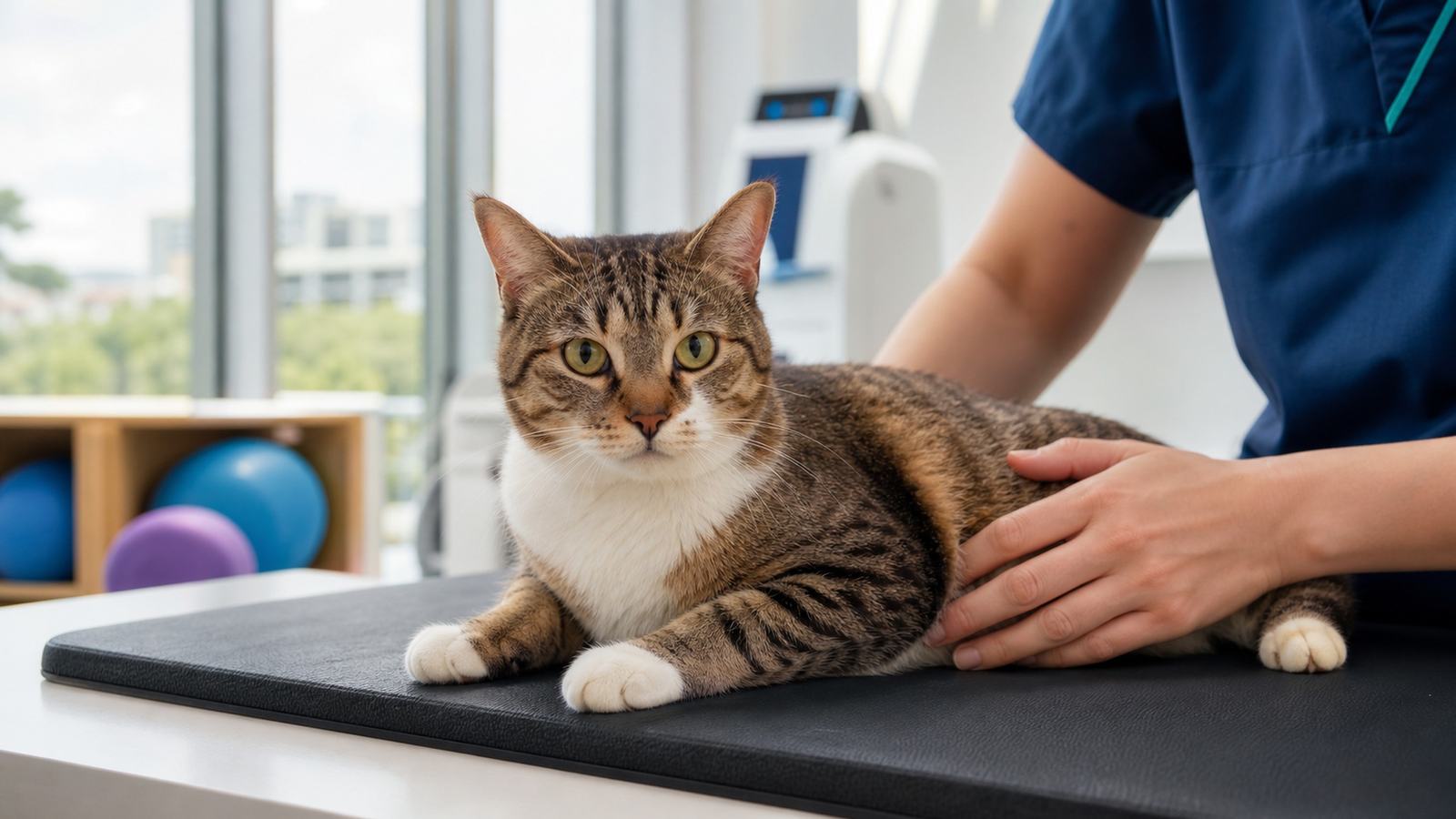
- Acupuncture is used for pain control, nerve stimulation, and muscle relaxation; laser therapy is often used to reduce inflammation, alleviate pain, and aid tissue repair; physical therapy may include joint mobilization, muscle strengthening, standing training, gait training, and assistive device adjustment.
- Proceeding with rehabilitation without first identifying the underlying cause could delay treatment for conditions requiring emergency care or surgery, such as spinal cord compression, severe fractures, blood clots, infections, or tumors.
- If a cat suddenly experiences hind limb paralysis, severe pain with vocalization, inability to stand, dragging its body, cold paws, or a suspected fall from a height, or if it cannot urinate, experiences urinary or fecal incontinence, has rapid breathing, or has completely lost its appetite, seek immediate veterinary attention rather than observing.
Is Cat Rehabilitation Effective? Ask These Questions Before Seeing a Vet for Acupuncture, Laser Therapy, or Neurological Issues
What Situations Might Require Rehabilitation for Cats?
Cat rehabilitation isn't just for cats who "can't walk." Common scenarios include post-fracture or joint surgery, intervertebral disc or spinal cord issues, nerve damage, hind limb weakness, decreased jumping ability, or age-related chronic pain and reduced activity. If your cat suddenly becomes unwilling to jump onto the sofa, walks unsteadily, drags its paws, or falls easily, it's worth having a veterinarian assess the situation.
Some cats are very good at hiding pain, and what owners might perceive as "laziness," "lack of playfulness," or a "worsening temper" could actually be signs of discomfort. In these cases, the focus of cat rehabilitation is not to force the cat back to its previous state, but to reduce pain, maintain muscle mass, and improve quality of life. Especially in small urban homes common in Taiwan, tiled floors can increase the risk of slipping for cats with weak joints or hind limbs.
What Do Acupuncture, Laser Therapy, and Physical Therapy Entail?
Acupuncture is typically used for pain control, nerve stimulation, and muscle relaxation. Its suitability depends on the cat's diagnosis, personality, and physical condition. For certain neurological issues, chronic pain, or during the post-operative recovery period, a veterinarian might incorporate acupuncture as supportive care. However, acupuncture is not a cure-all and should not replace necessary imaging, medication, or surgical evaluation.
Laser therapy is often used to reduce inflammation, alleviate pain, and aid tissue repair, commonly for joint or muscle strains, or post-operative care. Physical therapy may include joint mobilization, muscle strengthening, standing training, gait training, and assistive device adjustment. A truly comprehensive cat rehabilitation plan is usually tailored to the underlying cause, pain level, neurological reflexes, and home environment, rather than a one-size-fits-all approach.
What Examinations Are Needed to Determine Suitability for Rehabilitation?
Before your visit, you can record when the cat's abnormality started, which leg is weaker, whether there was a fall or trauma, and if there have been any changes in urination or defecation. A veterinarian will typically perform a physical examination, pain assessment, and neurological examination. If necessary, X-rays, ultrasounds, blood tests, or referrals for further imaging may be arranged. This information helps determine if the problem lies with the bones, joints, muscles, spine, or nerves.
Proceeding with cat rehabilitation without first identifying the underlying cause could delay treatment for conditions requiring emergency care or surgery. For example, spinal cord compression, severe fractures, blood clots, infections, or tumors cannot be managed by rehabilitation alone. A good rehabilitation plan should first answer three questions: What is the current diagnosis? What are the rehabilitation goals? What changes indicate the need to stop immediately and return for a follow-up?
How to Cooperate with Home Care: Anti-Slip Measures, Repositioning, Cleaning, and Stress Management
Home care is a crucial factor in the success of cat rehabilitation. You can place non-slip mats in frequently used areas to reduce the risk of slipping on tile or wood floors. The entrance to the litter box should also be lowered to prevent cats from holding their urine or urinating inappropriately due to difficulty entering. Cat trees, beds, and sofas can be modified with steps or gentle ramps to reduce the need for high jumps and the risk of falls.
If your cat has very limited mobility, you may need to assist with repositioning, cleaning the skin, and observing pressure points as directed by your veterinarian. Cats that lie down for extended periods require special attention to prevent urine-soaked fur, damp skin, pressure sores, and body odor, which can worsen in Taiwan's humid rainy season and summer. It's also important to reduce stress by avoiding frequent moving, forced exercises, or disturbances from other pets, as tension can heighten pain and defensive responses.
What Situations Cannot Wait for Rehabilitation and Require Immediate Veterinary Attention?
If your cat suddenly experiences hind limb paralysis, severe pain with vocalization, inability to stand, dragging its body, or cold paws, or if a fall from a height is suspected, seek immediate veterinary attention. If the cat cannot urinate, experiences urinary or fecal incontinence, has rapid breathing, or has completely lost its appetite, it is not suitable to wait a few days. These situations may involve neurological, urinary, circulatory, or major trauma, and delaying rehabilitation could mean missing the window for treatment.
If symptoms suddenly worsen during rehabilitation, you should also return for a follow-up to adjust the plan. For example, increased pain after treatment, more unstable walking, or decreased energy are not normal "recovery responses." Cat rehabilitation should be a gradual process aimed at making the cat more comfortable and safer, not enduring painful training.
FAQ
How long does it take for cat rehabilitation to be effective?
The timeline varies greatly depending on the cause, age, degree of nerve damage, and home care. Mild muscle or joint issues may show improvement within weeks, while neurological problems often require longer observation periods. It's recommended to set short-term goals with your veterinarian, such as reduced pain, longer standing ability, or more stable toileting, rather than expecting immediate recovery.
Will cats resist acupuncture or laser therapy?
Some cats cooperate quietly, while others become very anxious. This depends on their personality, pain level, and the clinic environment. Before treatment, you can ask about calming methods, the possibility of shortening the session, or using a towel wrap or pheromones as aids. If the cat is too stressed, the veterinarian may arrange cat rehabilitation using alternative methods.
Can I massage or stretch my cat at home myself?
It is not recommended to perform stretching exercises without guidance, especially for cats with fractures, spinal issues, nerve damage, or those who have had surgery. Incorrect angles or force can worsen pain or even cause secondary injury. If you wish to complement treatment at home, ask your veterinarian or rehabilitation therapist to demonstrate the appropriate movements, frequency, duration, and conditions under which to stop.
If an older cat's activity level decreases, is rehabilitation necessary?
Not necessarily, but it's worth getting checked. Reduced activity in older cats, such as not jumping or playing, or slower walking, could be related to degenerative joint disease, chronic pain, muscle loss, or other internal medical conditions. If deemed suitable after assessment, cat rehabilitation can be part of their quality-of-life care, complemented by environmental adjustments, weight management, and pain control for a more comprehensive approach.
Conclusion
The effectiveness of cat rehabilitation hinges not on the name of the therapy, but on first identifying the underlying cause, setting realistic goals, and ensuring cooperation with the home environment. Organizing symptoms, videos, medications, and lifestyle changes before your vet visit can help the veterinarian quickly determine the right direction. If your cat is in the recovery phase, you can also prepare by getting supplies such as non-slip mats, low-entry litter boxes, easy-to-clean bedding, and stress-relief products to provide your cat with less pain and more security upon returning home.
Further Reading
- How to Implement Preventive Care for Cats? A Daily Care Checklist for Kittens, Adults, and Seniors
- Can a Cat's Heart and Kidneys Have Problems Simultaneously? Understand the Signs of Cardiorenal Syndrome Before a Check-up
- How to Assess Quality of Life for Senior Cats? Palliative Care, Pain Signals, and Questions to Ask Your Veterinarian
Frequently Asked Questions
How long does it take for cat rehabilitation to be effective?
The timeline varies greatly depending on the cause, age, degree of nerve damage, and home care. Mild muscle or joint issues may show improvement within weeks, while neurological problems often require longer observation periods.
Will cats resist acupuncture or laser therapy?
It depends on their personality, pain level, and the clinic environment. Some cats cooperate quietly, while others become very anxious. Before treatment, you can ask about calming methods, shortening the session, or using a towel wrap or pheromones as aids.
Can I massage or stretch my cat at home myself?
It is not recommended to perform stretching exercises without guidance, especially for cats with fractures, spinal issues, nerve damage, or those who have had surgery. Incorrect angles or force can worsen pain or even cause secondary injury. Ask your veterinarian or rehabilitation therapist to demonstrate the appropriate movements and conditions under which to stop.
If an older cat's activity level decreases, is rehabilitation necessary?
Not necessarily, but it's worth getting checked, as it could be related to degenerative joint disease, chronic pain, muscle loss, or other internal medical conditions. If deemed suitable after assessment, it can be part of their quality-of-life care, complemented by environmental adjustments, weight management, and pain control.
How to cooperate with cat rehabilitation through home care?
Place non-slip mats in frequently used areas, lower the litter box entrance, and modify cat trees into steps or gentle ramps. For cats with limited mobility, assist with repositioning, skin cleaning, and observing pressure points as directed by your veterinarian, while also reducing stress by avoiding frequent moving.
CatGarden offers curated supplies, cat boarding, and grooming
Book services or shop online.