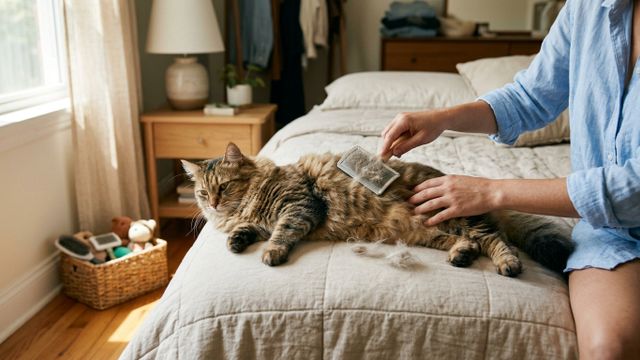
How to Care for Your Cat During Fall Shedding Season? A Complete Guide to Brushing Frequency, Hairball Prevention, and Skin Allergy Management
In Taiwan, the fall shedding season typically begins in mid-September and concludes around mid-November. The key isn't just "more shedding," but that cats are simultaneously growing their winter undercoat. This article covers brushing frequency, tool selection, hairball care, and preventative measures for seasonal skin sensitivity.
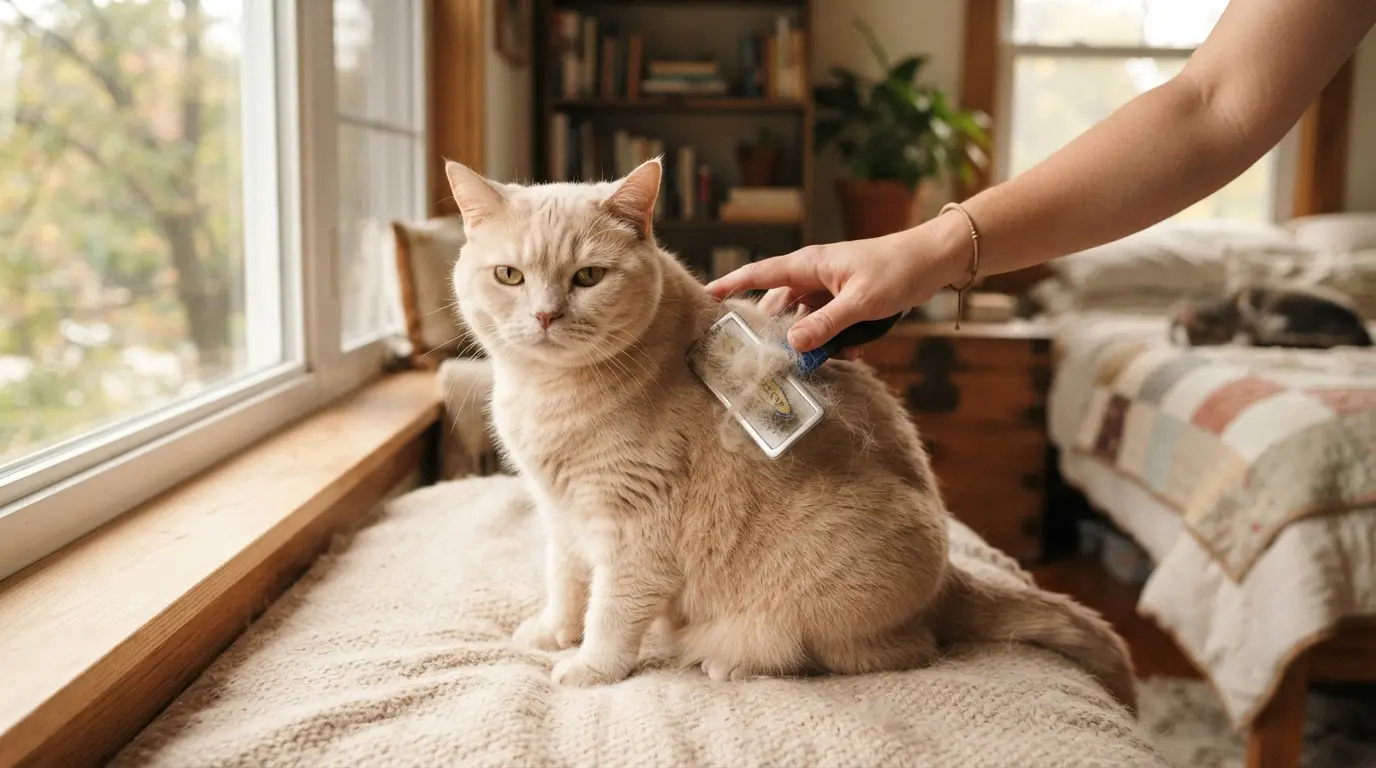
The key to caring for your cat during fall shedding season boils down to three things: increasing brushing frequency to 3-4 times a week for short-haired cats and daily for long-haired cats (5-10 minutes each session), simultaneously aiding intestinal hairball expulsion to prevent accumulation, and ensuring adequate skin hydration and allergen control as temperature fluctuations increase. In Taiwan, fall shedding typically starts in mid-September and wraps up around mid-November. During this time, cats aren't just shedding their summer coat; they're also growing a denser undercoat for winter. This leads to increased shedding, grooming frequency, and potential skin sensitivity.
At our salon, starting in September, the drains in the grooming area are clogged with fur after almost every bath. For boarding cats, a few strokes with a slicker brush are enough to fill it. This isn't a sign of illness, but a normal physiological phenomenon of the season. However, incorrect care during this period can turn shedding season into hairball season and lead to dermatitis.
Key Takeaways
- The peak of fall shedding for cats in Taiwan is typically from mid-September to mid-November. The primary trigger is "shortening daylight hours," not a drop in temperature. Therefore, indoor cats exposed to artificial lighting will also shed, though the cycle may be less pronounced.
- Fall shedding is the opposite of spring shedding: Spring is about shedding the undercoat, while fall is about growing it. Thus, fall brushing should reach the undercoat, not just remove surface fluff.
- Recommended brushing frequency during shedding season: 3-4 times a week for short-haired cats, 4-5 times a week for semi-long-haired cats, and daily for long-haired cats, for 5-10 minutes each session. Focus areas include the armpits, inner thighs, behind the ears, and the base of the tail.
- A healthy cat should vomit hairballs no more than once every 1-2 months. If your cat vomits more than once a week, experiences dry heaving without producing anything, has a decreased appetite, or has thin, hard stools, it should not be considered "normal shedding" and requires veterinary attention.
- In fall, temperature differences exceeding 8-10°C between morning and evening, coupled with dehumidifier or heater use, can dry out the skin, increasing dander and static electricity. Bathing frequency should not increase; instead, focus on brushing, thorough drying, and maintaining environmental humidity (50-60%).
Why Does Cat Shedding Increase So Much in the Fall?
The Shedding Switch is "Light," Not "Cold"
A cat's hair growth cycle is regulated by photoperiods (daylight length). After September in Taiwan, daylight noticeably shortens. Changes in melatonin secretion from the pineal gland trigger the hair follicles to initiate seasonal changes: shedding the sparse summer coat and growing a denser undercoat to prepare for winter.
This explains two common owner confusions:
- Indoor cats and cats kept in air-conditioned environments also shed, because they still receive changes in natural light from windows.
- Some cats shed "365 days a year". This is usually due to prolonged artificial lighting disrupting their cycle, leading to a flattened shedding pattern of small amounts year-round. This is normal and doesn't require correction.
Fall Shedding is "Top Coat," Growing is "Undercoat"
This is the most crucial point. Spring shedding involves shedding the thick undercoat in large clumps. In contrast, during fall shedding, the undercoat is growing outwards. If you only use a brush to remove surface fluff, the dead hair and new undercoat fibers can tangle on the skin's surface, forming a "felted mat," especially in friction areas like the armpits, inner thighs, and base of the tail.
A common complaint we hear in the salon during fall and winter is, "I brush every day, why is it still matted?" In reality, the brush is only reaching the tips of the fur, leaving the undercoat untouched. During fall brushing, you need to brush towards the skin, feeling the tips of the bristles lightly against the skin.
Shedding Intensity Varies Greatly Between Cats
- Double-Coated Cats (American Shorthair, British Shorthair, Scottish Fold, Maine Coon, Ragdoll, Norwegian Forest Cat): Have thick undercoats and experience the most intense shedding in fall.
- Single-Coated or Fine Short-Haired Cats (Siamese, Oriental Shorthair, dense short-haired breeds like the Russian Blue): Shed less overall, but their fine hairs tend to get into upholstery and clothing more easily.
- Long-Haired Cats: May not shed the most in terms of volume, but are at the highest risk of matting. Skipping brushing for a week can lead to hard knots.
What we use for this
CatGarden’s own products, shipped from Taiwan Pro Hairball Control PowderFrom CA$26.60 per boxFree shipping on multi-packs
Fall Shedding Season Brushing Frequency Chart (Directly Applicable)
| Coat Type | Shedding Season Frequency | Duration Per Session | Primary Tools |
|---|---|---|---|
| Short Hair (American Shorthair, Domestic Shorthair) | 3-4 times/week | 5 minutes | Rubber massage brush + fine-toothed comb |
| Dense Short Hair (British Shorthair, Russian Blue) | 3-5 times/week | 5-8 minutes | Slicker brush (soft) + comb |
| Semi-Long Hair (Scottish Fold, Golden Chinchilla) | 4-5 times/week | 8 minutes | Slicker brush + comb + steel comb |
| Long Hair (Ragdoll, Persian, Maine Coon) | Daily | 8-10 minutes | Primarily comb + slicker brush for loose fur |
| Senior/Overweight Cats | Daily (short sessions) | 3-5 minutes | Rubber brush, grooming glove |
The last column is often overlooked: Cats over 7 years old or overweight often cannot reach the middle of their back or the base of their tail. These are the areas most prone to dander, grease, and matting in the fall. Almost every senior boarding cat we care for requires manual intervention at the base of their tail.
Correct Brushing Technique and Pressure
1. Feel Before Brushing: Gently run your hand against the fur all over the body to identify knots and sensitive spots, preventing the brush from pulling directly on tangles.
2. Start Where Your Cat Likes It Most: Chin, cheeks, behind the ears. This helps them relax.
3. Brush with the Grain 2-3 Times, Then Against the Grain Briefly (only on the back and hindquarters) to lift out undercoat dead hair.
4. Address Sensitive Areas Last: Belly, armpits, inner thighs. Support the skin with your hand and brush small areas gently.
5. Stop If Ears Flatten Back, Tail Swishes Forcefully, or Skin Twitches. The goal during shedding season is "frequency," not "duration." 5 minutes daily is far better than one 40-minute session a week that makes your cat hate brushing.
Choosing Tools: Three Common Mistakes
- Only Using a Deshedding Tool (Blade Type): These tools are efficient but can cut the hair. Overuse during the growth of new undercoat in fall can lead to uneven fur and even "brush marks." It's recommended to use these tools a maximum of 1-2 times a week, 3-5 strokes per area, and use a comb as your primary tool.
- Slicker Brushes Are Too Stiff, Applied with Too Much Force: Short-haired cats have thin skin. Pressing down with a stiff slicker brush can create red scratches (brush burns), which is one of the most common sources of skin problems we see in salons. When choosing a slicker brush, opt for one with rounded tips and a flexible backing.
- No Comb: A comb is the only tool that can truly confirm if the fur is "completely brushed." If it can pass smoothly from the base of the tail to the shoulders without resistance, it's considered done.
If budget is a concern, the priority order is: Fine-toothed comb → Rubber massage brush → Slicker brush → Deshedding tool.
Hairball Care: Ensuring Shed Fur Passes Smoothly Through the Intestine
During shedding season, cats ingest 2-3 times more fur than usual through grooming. Most of this hair is expelled with feces, but when the volume is too large, hydration is insufficient, or intestinal motility is slow, it can accumulate into hairballs.
Three Practical Methods
1. Increase Water Intake. This is the most effective and underestimated method. During shedding season, increase the proportion of wet food to 30-50% of their diet, or add 1-2 tablespoons of warm water to their wet food. For cats on a dry food diet, refer to How Much Should a Cat Eat Daily? Feeding Amount Calculation Formula to confirm total calories, then adjust the dry-wet food ratio. Avoid overfeeding when making the switch.
2. Supplement with Hairball Fiber/Supplements. Traditional malt paste hairball remedies can be unpalatable for some cats and add extra calories. At our salon, we often recommend powdered products that can be sprinkled directly onto wet food, such as Pro Hairball Control Powder. These formulas contain dietary fiber. Giving 1 scoop daily mixed with food during shedding season is much more acceptable than forcing it down weekly.
3. Observe Stool. The best indicator of smooth hairball passage is stool consistency. If you notice visible hair strands on the surface of the stool, or if it becomes thinner and harder, or if your cat hasn't defecated in over two days, it means hair is getting stuck in the intestines. Immediately increase water intake and reduce brushing intervals.
When Should Vomiting Hairballs Warrant a Vet Visit?
A reasonable frequency is once every 1-2 months, with the cat immediately returning to normal energy and appetite afterward. Do not delay seeking veterinary care in the following situations:
- Vomiting more than once a week, or experiencing dry heaving for several consecutive days without producing anything.
- Vomit consists only of yellow liquid, with no hair or food (refer to Why Do Cats Vomit Yellow Liquid? Empty Stomach Bile, Hairball Irritation, and Acute Pancreatitis Diagnosis).
- Accompanied by decreased appetite, weight loss, or constipation lasting over 48 hours.
- Difficulty breathing or labored breathing (hairballs typically don't cause respiratory symptoms, but some owners may mistake coughing for hairball expulsion. Refer to Is Cat Hiccups Normal? Distinguishing Between Eating Too Fast, Hairball Irritation, or Warning Signs of Respiratory Disease for differentiation).
Preventing Seasonal Skin Sensitivity Caused by Temperature Fluctuations
Fall skin issues aren't caused by "heat," but by dryness and stuffiness. In Taiwan, morning and evening temperature differences often reach 8-10°C after October. Combined with the use of dehumidifiers, heaters, and electric blankets, the skin's barrier function can significantly weaken.
Five Specific Preventive Actions
1. Maintain Environmental Humidity at 50-60%. Set dehumidifiers to 55% and avoid letting humidity drop below 40%. Dander, static electricity, and excessive "crackling" sounds during brushing are often due to low humidity.
2. Avoid Continuous Overnight Use of Heaters/Electric Blankets Close to the Body. We've seen many cats lying near heater vents all night, leading to dry abdominal fur and red skin. Use a blanket to create a barrier on heated pads and ensure there's space for the cat to move away.
3. Do Not Increase Bathing Frequency Due to Shedding. Many owners feel compelled to bathe more when they see shedding, but excessive bathing strips natural oils, worsening dryness and shedding. For most indoor cats, once every 4-8 weeks is sufficient in fall and winter. For detailed criteria, refer to How Often Should Cats Be Bathed? Nail Trimming, Ear Cleaning, and When to Go for Professional Grooming.
4. Thorough Drying is Essential. As temperatures drop in fall, semi-damp undercoats trapped against the skin for over 1-2 hours create an ideal environment for fungal infections. After bathing, use a highly absorbent Quick-Dry Pet Towel to remove most of the moisture, then blow-dry until you can insert your fingers into the fur and feel dry skin.
5. Continue Flea Prevention in Fall. Flea activity remains high in Taiwan during October and November, and indoor dust mite populations peak in the fall. The typical location for flea allergy dermatitis is small papules at the base of the tail and the rear half of the back, easily mistaken for "shedding-related itching."
These Situations Are Not Shedding, But Skin Problems
- Symmetrical bald patches (inner hind legs, abdomen) → May be due to excessive licking, related to stress or itching.
- Circular patches of hair loss with flaky edges → Requires ruling out fungal infections.
- Red, swollen, crusty skin with a noticeable odor.
- Frequent scratching that disrupts sleep or causes skin abrasions.
- Hair loss accompanied by weight loss or abnormal appetite.
If itching is year-round and only worsens seasonally, and is accompanied by chronic soft stools, it may be a food allergy. Refer to What is Hydrolyzed Protein Cat Food? A Guide for Skin Allergies and Chronic Soft Stool for troubleshooting logic, then discuss dietary trials with your veterinarian.
When Should You Entrust Your Cat to a Groomer?
In the following four situations, attempting to handle it yourself at home often results in injury to the cat or damage to their coat:
- Hard knots or matting have already formed (feels like a piece of felt when pinched between fingers, and the brush cannot pass through at all).
- Fecal matter is matted around the hindquarters of a long-haired cat, requiring localized trimming.
- The cat is extremely resistant to brushing, biting or hissing at the slightest touch.
- Excessive dander and greasy fur that requires professional shampoos and thorough drying.
Bathing and full-body brushing during shedding season typically takes an additional 20-40 minutes compared to regular grooming. You can check Cat Grooming Cost Comparison by Region for regional price ranges. If your cat has mats and you want to ensure their undercoat is clean before winter, you can directly book a grooming appointment for us to assess whether localized treatment is needed.
Sample Weekly Fall Shedding Care Routine (Double-Coated Short-Haired Cat)
- Monday, Wednesday, Friday, Sunday: Rubber brush for 2 minutes (with the grain) → Comb for 3 minutes (all over) → Check armpits and base of tail.
- Daily: Add water to one wet food meal; mix hairball powder into one meal.
- Every Night Before Bed: Pet your cat for 30 seconds, checking for new knots, rashes, or dander.
- Once a Week: Use a deshedding tool on the back and hindquarters, 5 strokes each (no more).
- Every Two Weeks: Trim nails, clean outer ear edges (increased scratching during shedding season means shorter nails can reduce skin abrasions).
- Once a Month: Weigh your cat, record hairball vomiting frequency.
We highly recommend owners keep a record of "hairball vomiting frequency" in their phone's memo app. By the time you feel like "they've been vomiting more lately," they may have already vomited several times. Having a record helps veterinarians make better diagnoses during consultations.
What to Consider When Boarding Your Cat During Shedding Season
Boarding your cat during shedding season is fine, but inform the facility of three things in advance: their coat type and matting tendencies, whether they regularly take hairball supplements, and their recent hairball vomiting frequency. Upon arrival, we conduct a full-body brushing check and document it with photos. This is because cats admitted during shedding season, if their undercoat is already semi-matted, can experience a rapid worsening within days due to increased grooming stress during their stay.
Additionally, the significant temperature difference between day and night in fall requires more attention to temperature control and ventilation in the room than in summer. This is why we emphasize these details in What to Look for When Visiting a Cat Hotel? 6 Key Details for On-Site Inspections. If you need to travel during fall or winter, you can book a cat hotel in Banqiao and start increasing brushing a week before check-in to ensure your cat arrives with the cleanest coat possible.
Frequently Asked Questions
How Long Does Fall Shedding Last for Cats?
Fall shedding in Taiwan typically begins in mid-September and lasts for about 6-10 weeks, gradually subsiding around mid-November. If shedding continues for over 3 months without decreasing, or if localized bald spots or increased dander appear, it should not be considered normal shedding. Veterinary examination for skin or endocrine issues is recommended.
Can I Bathe My Cat More Frequently During Shedding Season to Help with Shedding?
Bathing can indeed remove a large amount of loose fur at once, but it is not recommended to shorten bathing intervals for this reason. Excessive bathing in fall can disrupt the skin's protective barrier, leading to drier skin and increased shedding. The correct approach is to maintain your regular bathing schedule and focus on increasing brushing frequency.
Do Short-Haired Cats Need Daily Brushing?
Generally, 3-4 times a week is sufficient for short-haired cats during shedding season. However, for double-coated breeds (American Shorthair, British Shorthair), senior cats, or overweight cats, daily brushing for 3-5 minutes is recommended, as they often cannot reach the middle of their back or the base of their tail.
Will Taking Hairball Paste or Powder Cause My Cat to Have Diarrhea?
Not at normal dosages. However, giving too much fiber at once or suddenly changing products may cause loose stools. It's recommended to start with half the suggested dose for 3-5 consecutive days, observe the stool, and then gradually increase to the standard amount. Cats already experiencing diarrhea or loss of appetite should see a veterinarian first before considering supplements.
Is it Normal for My Cat to Lick Constantly During Shedding Season, Even to the Point of Baldness?
No, it is not normal. Increased licking frequency during shedding season is reasonable, but licking to the point of symmetrical bald patches, red skin, or hair that doesn't regrow usually indicates itching (fleas, allergies, fungal infections) or stress-induced excessive licking. It requires veterinary diagnosis and should not be treated solely with supplements.
Fall shedding is an annual task that isn't difficult if done correctly: increase brushing frequency, ensure adequate hydration, and keep the skin from getting dry. These three actions will resolve about 80% of issues. For the remaining 20% – mats, skin rashes, frequent hairball vomiting – consult a groomer or veterinarian early, rather than waiting until the undercoat is fully grown and matted.
This article was written by the CatGarden editorial team. The care advice provided herein is general information and cannot replace veterinary diagnosis. If your cat experiences persistent vomiting, skin lesions, or loss of appetite, please seek veterinary care promptly.
CatGarden offers curated supplies, cat boarding, and grooming
Book services or shop online.