What is a Calico Cat? Origin, Personality, and the Genetic Secret Behind Why They're Almost Always Female
Calico cats (often called "flower cats" in Taiwan) aren't a breed but a coat pattern. The genes for orange and black are on the X chromosome, meaning almost all calicos are female. This article explains their genetics, personality, and market value.
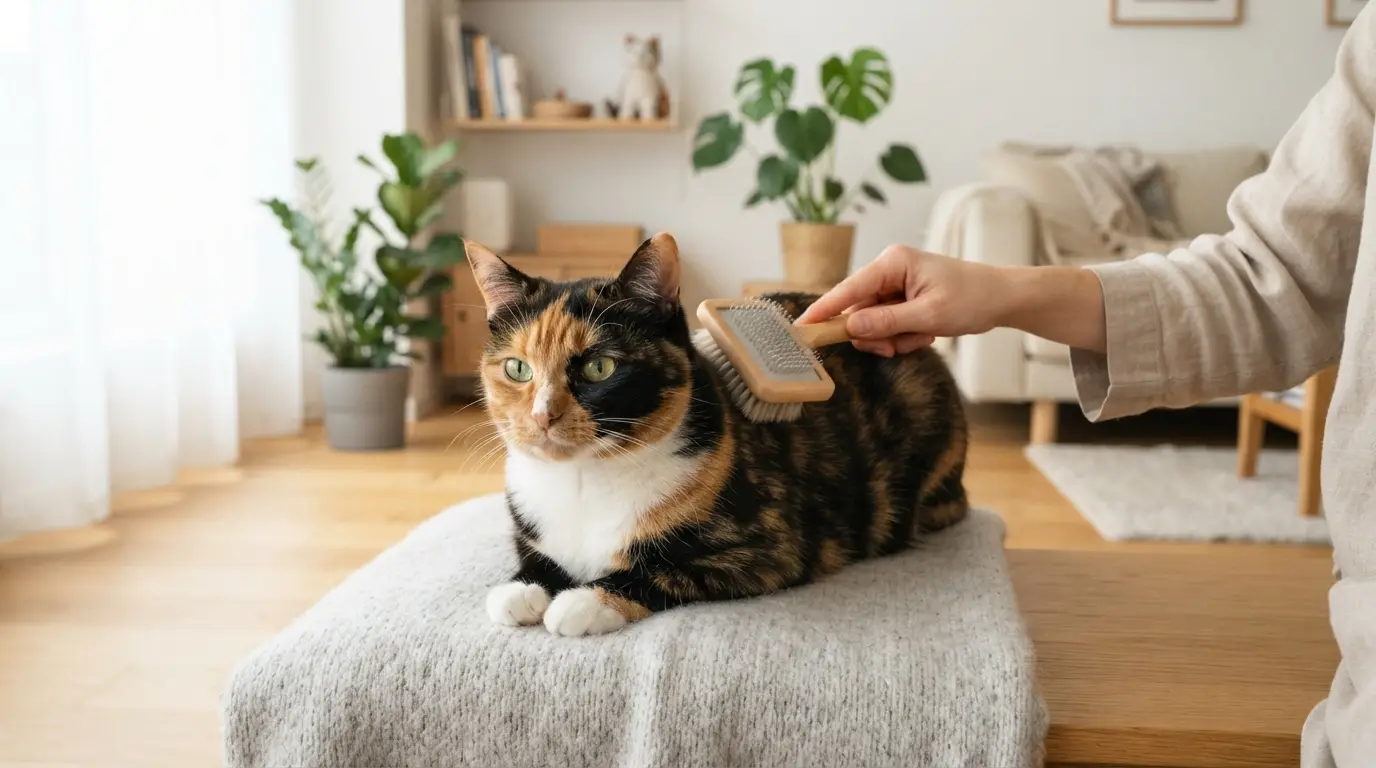
Calico cats (often simply called "flower cats" by many Taiwanese owners) are not a breed but a coat pattern – cats with black (or gray, chocolate), orange, and white fur can all be called calico cats. Even more interestingly, about 99.9% of calico cats are female. This isn't a coincidence; it's because the gene determining "orange" is located on the X chromosome.
Among the cats we've boarded at our facility, calicos are one of the most common coat patterns. In over a decade, we've only seen two true "male calicos." This article will explain the origin, genetics, and personality of calico cats, as well as the question everyone asks: "Are calico cats valuable?"
Key Takeaways
- Calico cats are not a breed but a general term for a "black + orange + white" tri-color coat. They can appear in mixed breeds, Japanese Bobtails, Persians, and Exotic Shorthairs.
- The genes determining orange and black are on the X chromosome. A cat needs two X chromosomes (female) to express both pigments simultaneously, hence about 99.9% of calicos are female.
- The birth rate of male calicos is approximately 1 in 3000. Most are individuals with XXY sex chromosome abnormalities and are almost always infertile, with a higher predisposition to congenital issues.
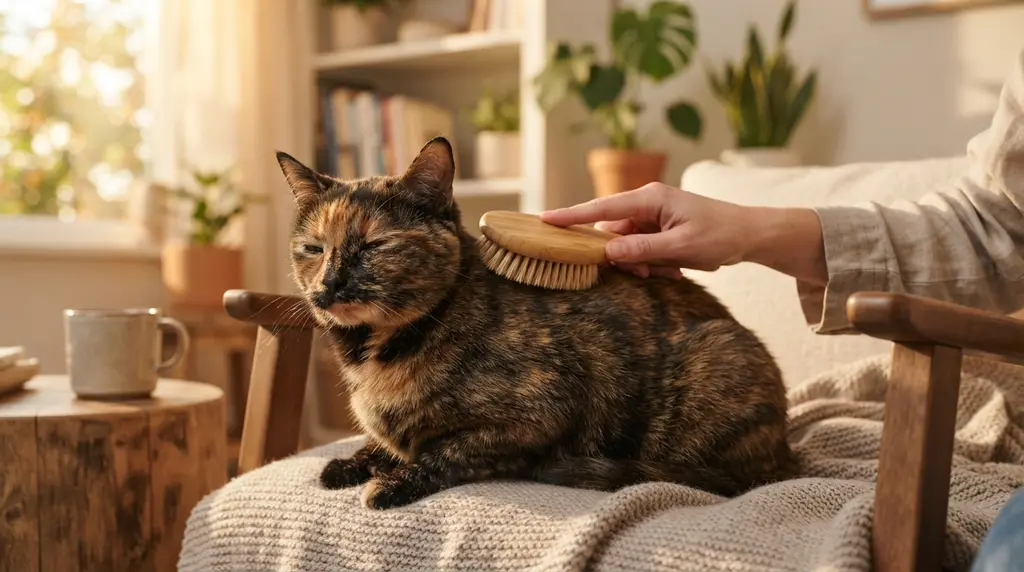
- Calico (tri-color) differs from tortoiseshell (often called "tortie" in Taiwan) in the amount of white fur: calicos have distinct large patches of white, while torties have a mix of black and orange with very little white.
- Calico is a common coat pattern among stray cats in Taiwan and doesn't carry a breed premium. Claims of "rare male calicos for sale at high prices" are generally not worth pursuing.
I. What is a Calico Cat? How to Distinguish Them from Tortoiseshell and Tabby Cats
The term "flower cat" in Taiwan is used quite broadly, sometimes referring specifically to calicos and sometimes to any cat with a mottled or mixed coat. To be more precise, here's how they can be distinguished:
Calico Cat
These cats have black, orange, and white colors, with white usually forming large base areas. The patches of black and orange have distinct borders, appearing as if pieces of colored paper were pasted on. This is the most common type seen on Taiwanese streets.
Tortoiseshell Cat (Tortie)
These cats have only black and orange intermingled, resembling a marbled pattern with almost no white fur, or perhaps just a small tuft of white on the chest. The genetic principle is the same as for calicos; the only difference is the presence or absence of the "white spotting gene."
Dilute Calico
In dilute calicos, black is diluted to blue-gray, and orange is faded to cream, giving them a soft, watercolor-like appearance. They are often called "blue calicos."
Caliby (Calico Tabby)
These cats have tabby stripes within the black or orange patches. They are often mistaken for other coat patterns. For a deeper understanding of stripe variations, you can refer to this article: How to Differentiate Tabby Cat Stripe Patterns? From Fishbone, Swirl, to Spotted Patterns, Learn to Identify Them All (with Dragon Li Comparison).
What About Dragon Li Cats?
Dragon Li cats have tabby stripes on a single base color. They do not have distinct patches of three colors. They are entirely different. While Taiwanese people often refer to them generically as "local cats" or "flower cats," the key identification points are very different. You can refer to What is a Dragon Li Cat? Personality, Origin, and Differences from Tabby Cats Explained and Why is the Dragon Li Cat Called Dragon Li? Origin of the Name, Taiwanese Nicknames, and Common Coat Patterns Explained.
> Quick Note: Calico refers to a coat pattern, not a breed. Therefore, you won't find "Calico Cat" as a breed on pedigree certificates. You'll see "Breed Name + Calico."
II. Why Are Calico Cats Almost Always Female? Understand the Genetics in Three Minutes
This is the most famous trivia about calico cats, and the principle isn't difficult.
1. The Orange Gene Resides on the X Chromosome
The "orange vs. non-orange" trait in cats is determined by a locus on the X chromosome. The presence of this variant produces orange/yellow pigment (pheomelanin), while its absence produces black/brown pigment (eumelanin). Research published in late 2024 by Japanese and American teams points to a deletion in the ARHGAP36 gene region on the X chromosome as the cause, a significant finding in feline genetics in recent years.
2. Female Cats Have Two X Chromosomes, Allowing Them to Produce "Both" Colors Simultaneously
- Female Cats: XX. One X carries the orange gene, and the other carries the black gene. This allows the same cat to produce both pigments.
- Male Cats: XY. They have only one X chromosome. If it carries the orange gene, they are fully orange (orange tabby); if it carries the black gene, they are fully black. There's no third possibility.
3. Why Are the Patches Distinct? Due to X-Inactivation
Early in embryonic development in female cats, one of the two X chromosomes is randomly "inactivated" in each cell. If the X chromosome carrying the black gene is inactivated, the descendants of that cell will produce orange pigment; conversely, if the X carrying the orange gene is inactivated, they will produce black pigment. These cells grow in distinct regions of the skin, forming clearly defined color patches. This phenomenon is called mosaicism.
4. Where Does the White Come From?
White isn't a "third color" but is caused by another gene (the white spotting gene, S locus/KIT gene). This gene prevents pigment cells from migrating completely to certain areas during embryonic development, resulting in white fur. The larger the area of white fur, the more the black and orange patches are separated and appear like pasted paper – this is why calico patches are more distinct than those on tortoiseshell cats.
5. A Cool Fact to Add
Calico cats cannot replicate the exact same coat pattern. The genetic donor for the world's first commercially cloned cat, CC, was a calico cat. However, CC's coat pattern was completely different after birth because X-inactivation is a random process. Cloning technology can replicate DNA but not that specific random event.
III. How Rare Are Male Calico Cats? Are They Valuable?
Birth Rate is Approximately 1 in 3000
For a male cat to express both black and orange, he typically needs two X chromosomes and one Y chromosome (XXY), similar to Klinefelter syndrome in humans. A few cases result from chimerism (fusion of two fertilized eggs) or somatic mutations. This situation is inherently rare, so the proportion of male calicos is generally estimated at only one in every three thousand calico cats.
But "Rare" Doesn't Equal "Valuable"
This is a point we most frequently need to clarify for owners:
1. Male Calicos Are Almost Always Infertile: XXY individuals usually have abnormal sperm production and lack breeding value. Breeders will not pay a high price for them.
2. Slightly Higher Health Risks: Cats with sex chromosome abnormalities have a relatively higher chance of developing issues with their skeletal system, cardiovascular system, metabolism, or behavior. They are also often larger in size and develop more slowly.
3. Calicos Are Extremely Common: In Taiwan, calico is one of the most prevalent coat patterns among stray cats and mixed breeds. They are easily found in shelters and rescue organizations; there is no "calico premium" in the market.
4. Be Skeptical of High-Priced Male Calico Ads: In practice, the color is often misidentified (e.g., a male cat with white, orange tabby, and gray patches) or it's simply a marketing tactic. To confirm sex and chromosomes accurately, a veterinary examination of the external genitalia and, if necessary, chromosomal/genetic testing is required.
So, the answer is straightforward: The value of a calico cat depends on whether it is a purebred cat with a pedigree; it has nothing to do with the "calico" coat pattern itself. The value of a mixed-breed calico lies in the decade or more of companionship it provides.
IV. Are Calico Cats Really More Aggressive?
There's a term in the international cat owner community called "tortitude" (tortoiseshell attitude), which describes these cats as being more opinionated and having more direct emotional expression. There is some research basis for this: a large-scale survey by the University of California, Davis, found that calico and tortoiseshell cats were slightly more likely to be rated by their owners as exhibiting "swatting, biting, and vocal protests towards people." However, the effect is very small and insufficient to conclude that "coat color determines personality."
Our Actual Observations at the Boarding Facility
From the front-line perspective of a cat hotel, I would say this:
- Calico Cat Personalities Vary Greatly: Some are so affectionate they'll climb into staff members' laps, while others might hide in their carrier for the first day. What truly influences their behavior during boarding is their socialization experience and past environment, not their coat color.
- Most Calicos Are Clear About Boundaries: They usually don't tolerate things until the last moment before reacting. Instead, they give early signals – tail flicking, airplane ears, low growls. This might be the source of the "temperamental" impression: they express themselves more, making them easier to read than cats who stiffen up silently.
- Proper Handling is Key: Because they clearly express discomfort, they are more likely to struggle if held incorrectly. You can refer to How to Hold a Cat Without Them Struggling? Learn Proper Hindquarter Support, Lifting Angles, and 3 Holding Methods They Dislike.
- Cooperation During Grooming Relies on Desensitization, Not Coat Color: We've encountered calicos who are very cooperative with nail trims, and others who require two sessions. The key is whether they have practiced having their paws and ears touched regularly at home.
Conclusion: Do not predict personality based on coat color. To determine if a cat is easy to get along with, look at their growth history, reaction to strangers, and body language when being petted – this is a hundred times more accurate than looking at their fur color.
V. The Origin and Culture of Calico Cats: The Maneki-neko is Actually a Calico
Calico cats do not have a "place of origin" because wherever populations with the orange gene and white spotting gene exist, calicos will naturally appear. They spread worldwide via trade ships, leaving their mark in many cultures:
- Japanese Mi-ke Neko (三毛猫): The Japanese consider calicos symbols of good fortune. The classic Maneki-neko (beckoning cat) figurine is inherently a calico cat with white, black, and orange patches.
- Guardian Cats of the Sea: In the past, sailors believed calico cats brought good luck and protected ships from storms, so they would intentionally bring them aboard (they also served the purpose of catching mice).
- State Cat of Maryland, USA: Due to the black, orange, and white coloring matching the state flag and the Baltimore oriole bird, the calico cat was designated the state cat.
- Taiwan's "Flower Cat": In early rural Taiwan, cats with patterned fur were generally called "flower cats," and tabby cats were called "dragon cats." Because calicos are easily recognizable and common, they were often resident cats at temples and markets.
VI. Practical Care Tips for Calico Cats (Almost All Are Female, Which is Crucial)
Since calicos are overwhelmingly female, their care needs largely overlap with general female cat care:
1. Plan for Heat Cycles and Spaying Early
Female cats can enter their first heat cycle as early as 4–6 months of age, exhibiting persistent howling, rolling, tail-tucking, and decreased appetite. This is not just noisy; repeated heat cycles without reproduction increase the risk of uterine and mammary gland diseases. It's recommended to first read What to Do When a Female Cat is in Heat? Symptoms, Cycle Length, Age of Onset, and Soothing Methods – Spaying Timing Explained and then refer to How to Care for a Female Cat After Spaying? A Complete Timeline for Wound Care, E-collars, Diet, and Activity Restrictions from Day 0 to 14 after deciding on the timing of the surgery.
2. Generally Robust Health, But Don't Neglect Basic Check-ups
Most calicos are mixed breeds, generally having a lower risk of genetic diseases compared to highly selectively bred purebreds (refer to What Are the Downsides of Chinchilla Cats? Tear Stains, Matting, Genetic Diseases, and Rearing Difficulty Explained). However, mixed breeds are not immune to illness. Continue with annual check-ups, vaccinations, and deworming.
3. Watch for Matting in Long-Haired Calicos
If your calico is long-haired (e.g., Persian, Maine Coon, or a long-haired mixed breed with calico coloring), the white areas are particularly prone to showing dirt and tear stains. The armpits, inner thighs, and rear end are common areas for matting. Brushing 2–3 times a week is essential. If mats have already formed into hard clumps, do not pull them forcefully; it's safer to have them handled by a professional. If needed, you can book a grooming appointment for us to assess whether partial trimming or a full groom is necessary.
4. Protect White Areas from Sunburn
The skin under the white fur of calico cats has less pigment. Prolonged sun exposure (e.g., lying on a sun-drenched windowsill all day) can cause sunburn on the ear tips and nose. During summer, ensure there is a shaded resting spot available, so they don't only have sunlit areas to choose from.
5. When Observing Abnormalities, Look for Objective Indicators First
Regardless of coat color, cats are good at hiding illness. Symptoms like open-mouth breathing, a sudden drop in appetite, or drinking very little water while urinating frequently require prompt investigation. For home assessment, you can first refer to How to Check for Cat Dehydration? 3 Home Checks: Skin Elasticity, Oral Mucosa, and Water Intake. If symptoms persist for over 24 hours or worsen significantly, seek veterinary care immediately; do not just observe at home.
Frequently Asked Questions
Are Calico Cats Always Female?
Not "always," but approximately 99.9% are female. Male calicos appear about once every 3000 calico cats, usually due to XXY sex chromosome abnormalities, and are almost always infertile.
Are Calico Cats Valuable? Can Male Calicos Sell for a High Price?
Calico is a coat pattern, not a breed, and is common in Taiwan, carrying no inherent market premium. Although male calicos are rare, they are not valuable for breeding due to infertility and slightly higher health risks. Be wary of advertisements for "high-priced rare male calicos" and first confirm if the sex has been misidentified.
What's the Difference Between Calico and Tortoiseshell Cats?
The difference is the white fur. Calicos have large areas of white, with distinct borders between black and orange patches. Tortoiseshell cats have almost no white fur, with black and orange intermingled like marble. The genetic principles for both are the same.
Do Calico Cats Have a More Aggressive or Temperamental Personality?
Research shows only a very slight tendency, and in practice, coat color cannot predict personality. Calico cats tend to be more direct in their expressions and clear about boundaries, but their socialization experience and living environment are the primary factors influencing their temperament.
Will Two Calico Cats Have the Same Coat Pattern?
No. The location of each patch depends on the random X chromosome inactivation and pigment cell migration during embryonic development. Even cloned cats cannot replicate the exact same coat pattern, so every calico cat is unique.
If you are preparing to welcome a calico cat into your home, you can start by stocking up on essential litter boxes, cat litter, and supplies from our online shop. Once your new family member has settled in, remember to establish their hiding spots and observation points before focusing on cuddles and grooming.
By CatGarden Editorial Team
CatGarden offers curated supplies, cat boarding, and grooming
Book services or shop online.