What to Do If Your Cat Has Blood in Their Stool? Understand the Meaning of Stool Color, Causes, and When to Seek Veterinary Care
When your cat has blood in their stool, first check the color of the blood: bright red usually indicates issues in the lower intestines or anus, while black, tarry stools can signify upper gastrointestinal bleeding and are more dangerous. This article guides you in diagnosing the cause based on color and determining when to seek veterinary attention.
When your cat has blood in their stool, the first step isn't to panic, but to observe the color and consistency of the blood: bright red blood usually comes from the large intestine, rectum, or near the anus, often indicating relatively minor issues; whereas black, tarry stools (melena) signify upper gastrointestinal bleeding and are a warning sign that requires prompt veterinary attention. Simultaneously, observe your cat's energy levels, appetite, and whether they are vomiting or weak, then decide whether to monitor at home or seek immediate veterinary care.
In this article, we'll use real-life situations encountered at our cat hotel to help you understand the problems indicated by different blood stool colors in cats, common causes, and the criteria for deciding when to seek veterinary care.
Key Takeaways
- Bright red blood in stool often originates from the large intestine, rectum, or anus, commonly seen with constipation, irritation from soft stools, or anal gland issues. If the amount is small and the cat's energy and appetite are normal, you can monitor at home for 24 hours.
- Black tarry stools (melena) indicate digested blood, usually from bleeding in the stomach or small intestine, and are a more serious sign requiring prompt veterinary attention without delay.
- If bloody stool is accompanied by vomiting, complete loss of appetite, lethargy, abdominal bloating or pain, or abnormal body temperature, seek veterinary care immediately, regardless of the blood color.
- For kittens, senior cats, and cats with chronic illnesses, bloody stools have a lower tolerance threshold due to the rapid risk of dehydration and deterioration. It is recommended to seek veterinary consultation the same day.
- During home observation, record the frequency and color of bloody stools, stool consistency, and the cat's food and water intake. This information is crucial for veterinary diagnosis.
First, Differentiate: Is the Blood "On the Surface" or "Mixed In"?
When cleaning litter boxes at the hotel, we assess bloody stools on two levels:
- Blood on the surface of the stool, or dripping onto the litter: The blood is fresher, originating from near the anus or rectum, such as mucosal abrasions caused by constipation or anal gland issues.
- Blood mixed throughout the entire stool, or the entire mass is dark red/black: The bleeding point is further upstream (large intestine, small intestine, stomach), and the problem is usually deeper.
This distinction alone can help you provide clearer information to your veterinarian, saving time and back-and-forth.
What we use for this
CatGarden’s own products, shipped from Taiwan

What Cat Stool Blood Colors Indicate
The color of bloody stool is the most intuitive indicator because the longer blood stays in the digestive tract, the darker it becomes.
Bright Red Blood in Stool (Lower Intestine/Anus)
Bright red indicates the bleeding point is close to the exit, and the blood has not been digested. Common causes include:
- Constipation, where hard stool scratches the rectal lining.
- Repeated irritation of the intestines from soft stools or diarrhea.
- Anal gland inflammation or rupture.
- Colitis, parasites.
If there's only a little bright red blood on the end of the stool, the amount is small, and the cat is still eating and playing normally, you can monitor at home for one day, paying attention to whether the stool is too hard or too soft. If constipation is the cause, increasing water intake and intestinal support can help.
Dark Red / Mucus-Tinged Blood in Stool (Mid-Intestine)
Dark red blood, or blood mixed with jelly-like mucus, is commonly seen with colitis, intestinal infections, parasites, or food intolerances. This condition is often accompanied by soft stools, increased frequency, and sometimes cats frequently entering and exiting the litter box only to produce a small amount.
In such cases, it is recommended to seek veterinary care within 1-2 days, especially if it occurs repeatedly. Stool tests may be needed to check for parasites or for further examination.
Black Tarry Stools (Upper Digestive Tract, Most Urgent Concern)
Black, shiny, tar-like stools with a particularly foul odor are the most alarming color of bloody stool. This indicates that the blood originates from the stomach or small intestine and has turned black after digestion. Possible causes include stomach ulcers, severe intestinal bleeding, ingestion of foreign objects or toxins, or coagulation disorders.
When encountering black stools, our advice is always: Do not observe, seek veterinary care immediately. This type of bleeding has often been occurring internally for some time and may not be apparent externally, leading to underestimation.
Common Causes of Blood in Cat Stools
Beyond color, understanding the underlying cause can help you assess the severity.
Dietary and Digestive Issues
Sudden changes in diet, eating unsuitable foods, or ingesting human food can irritate the gastrointestinal tract, leading to soft stools with blood. Some things owners consider harmless can actually be risky. It's recommended to first review What Foods Are Toxic to Cats? Common Household Dangers and Poisoning Signs to avoid pitfalls. Even foods like eggs have proper feeding methods; refer to Can Cats Eat Eggs?.
Constipation and Intestinal Irritation
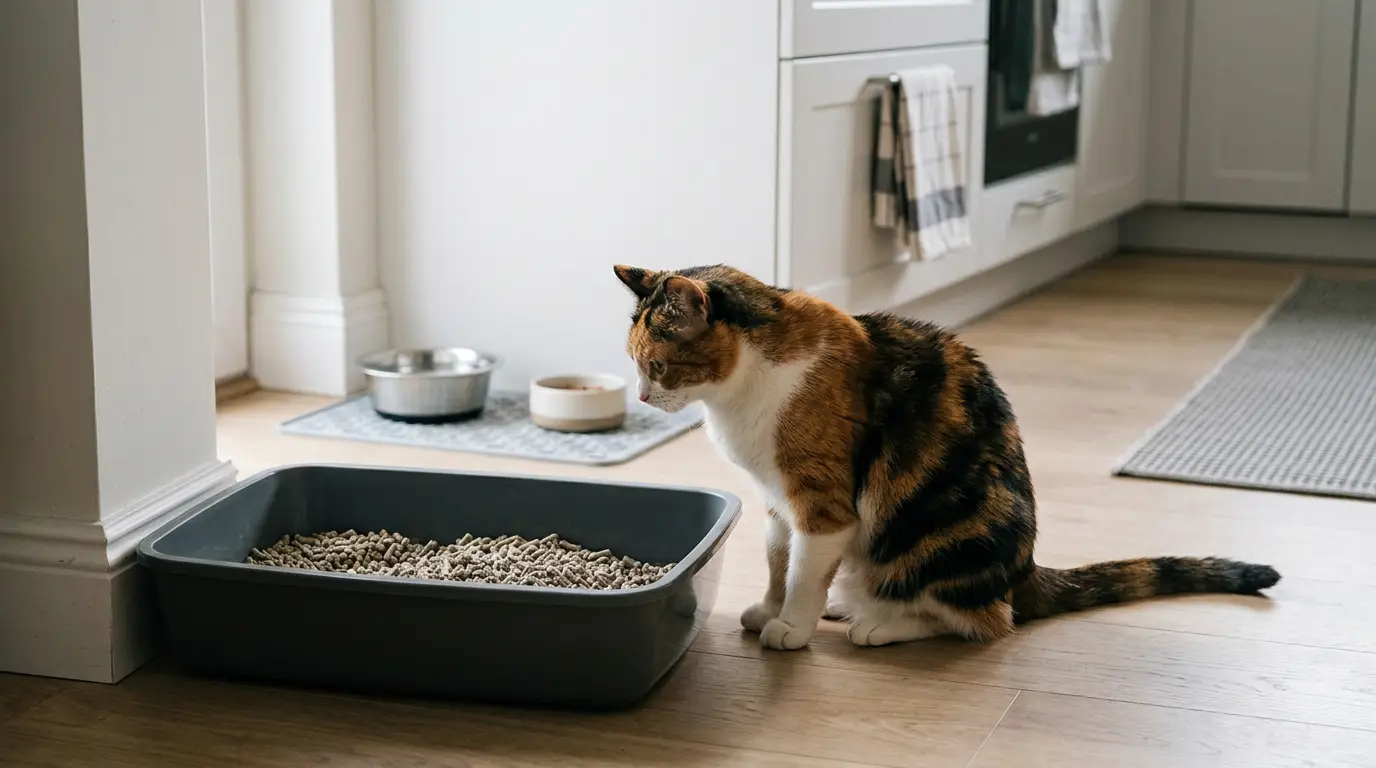
Insufficient water intake or an unfavorable litter box environment leading to stool withholding can cause feces to harden and scratch the intestines. If your cat frequently experiences constipation, besides increasing water intake, examine whether the litter box is user-friendly. Refer to How to Choose a Cat Litter Box?. For cats with sensitive intestines, we often recommend using Specialized Probiotics to help stabilize their gut flora, but this is supplementary and cannot replace veterinary consultation.
Parasites and Infections
For kittens, newly adopted cats, or those with outdoor access, parasites (like coccidia, roundworms) are common culprits for bloody stools, usually accompanied by soft stools and weight loss. New cats brought home require special attention; How to Care for Your New Cat in the First Week outlines key health observation points.
Stress and Environmental Changes
Moving, changing environments, boarding, or changes in household members can cause stress-induced gastroenteritis and bloody soft stools in sensitive cats. This is why in What to Prepare for Your Cat's First Boarding Stay, we emphasize bringing familiar items and maintaining their original diet.
Heatstroke and High-Temperature Induced GI Discomfort
In hot summer weather, cats' gastrointestinal systems can easily become upset, and severe heatstroke may even be accompanied by bloody stools. It is crucial to ensure adequate cooling during hot weather. For details, see Are Cats Sensitive to Heat? Heatstroke Signs, Panting, and Summer Cooling Guide.
To Seek Veterinary Care or Not? Home Observation vs. Immediate Veterinary Visit
This is what owners most want to know. We've simplified the decision-making process into two lists.
Situations Where Home Observation for 24 Hours is Acceptable
- A small amount of bright red blood on the end of the stool.
- The cat's energy, appetite, and activity level are normal.
- No vomiting, no abdominal bloating.
- Occurred only once, not repeatedly.
During the observation period, please record the color, consistency, and frequency of each bowel movement, and ensure the cat is drinking water and eating. If there is no improvement or it worsens by the next day, seek veterinary care.
Situations Recommending Immediate / Same-Day Veterinary Care
- Black tarry stools (regardless of how normal the cat appears).
- Large amounts of blood in the stool, continuous or repeated.
- Accompanied by vomiting, diarrhea, or complete loss of appetite.
- Lethargy, hiding, unresponsiveness.
- Straining to defecate with no result, suspected painful constipation.
- Kittens, senior cats, or cats with chronic illnesses experiencing bloody stools.
When observing their energy levels, consider these articles: If your cat consistently maintains a "Cat Loaf Position" and remains inactive, or shows signs of fever, these are clues to discomfort. What to Do If Your Cat Has a Fever? provides comprehensive information on taking temperature and recognizing danger signs.
Mature cats have a lower tolerance threshold. How Old Is a Senior Cat? Key Care Points for Senior Cats also recommends proactive veterinary care for any bloody stools.
Information to Prepare Before Your Veterinary Visit
When we take over the care of a cat with health issues, the most crucial information we need from the owner is "specific details." Before your veterinary visit, please try to prepare:
- Take photos of the bloody stool (color and consistency are most important).
- Record the start time and frequency of the bloody stools.
- Recent dietary changes, any accidental ingestion of foreign objects.
- Any vomiting, changes in energy or appetite.
- If possible, collect a fresh stool sample in a ziplock bag for parasite testing.
This preparation can significantly shorten the diagnostic time and help the veterinarian quickly pinpoint the issue.
How to Reduce the Likelihood of Bloody Stools Daily
Bloody stools are often related to gut stability, hydration, and environment. Daily practices can help:
- Maintain a stable diet, gradually transitioning food over 7 days or more.
- Increase water intake, provide multiple water bowls, consider wet food. Refer to How Much Should a Cat Eat Per Day?.
- Keep the litter box clean and accessible to reduce stool withholding.
- Regular deworming, especially for cats with outdoor access or in multi-cat households.
- Minimize stressors, provide extra security during environmental changes.
For cats with sensitive stomachs, we often use supplements as support. However, remember: Supplements are for prevention and conditioning, not medication for bloody stools. If there is actual bleeding, seek veterinary care.
> Reminder: This article provides general care information and cannot replace veterinary diagnosis. If bloody stools are persistent, heavy, or accompanied by black stools, vomiting, or lethargy, seek veterinary care promptly.
Frequently Asked Questions
My cat has blood in their stool but looks normal. Do I need to see a vet?
If it's just a small amount of bright red blood, occurred only once, and the cat's energy and appetite are normal, you can observe at home for 24 hours and keep records. However, if it's repeated, heavy, or if there's black stool, it's recommended to see a vet even if the cat appears normal.
Is black stool always bloody stool?
Not necessarily. Certain foods, iron supplements, or foods can also make stool appear dark. However, black, shiny, tar-like stools with a particularly foul odor are highly suspicious of upper gastrointestinal bleeding and are a warning sign requiring prompt veterinary attention for confirmation.
Can I just give my cat probiotics for bloody stool?
Probiotics are suitable as a supplement for gut stability and may help with mild soft stools, but they cannot address parasites, ulcers, foreign objects, or severe bleeding. There are many causes for bloody stools; if it persists or is accompanied by other symptoms, seek veterinary care first to determine the cause.
Is blood in a kitten's stool very serious?
Kittens dehydrate and deteriorate faster than adult cats, and parasitic infections are common. If a kitten has blood in their stool, it is recommended to seek veterinary care the same day and not observe at home for too long.
My cat had bloody stool after returning from boarding or a trip. What should I do?
Stress-induced gastrointestinal upset due to environmental changes is not uncommon, usually accompanied by soft stools. First, observe their energy and appetite, and record the bloody stool situation. If the amount is large, persistent, or if there's black stool, seek veterinary care. Choosing a boarding facility that can maintain their usual routine and diet beforehand can reduce the likelihood of this occurring.
This article is compiled by the CatBackyard editorial team. The content is for general care reference only and cannot replace professional veterinary diagnosis. Please seek veterinary care promptly for any feline discomfort.
CatGarden offers curated supplies, cat boarding, and grooming
Book services or shop online.