Can Cats Eat Shrimp? The Correct Way to Feed Raw, Cooked, and Shells, Plus Precautions
Cats can eat unseasoned cooked shrimp in moderation as a treat, but raw shrimp, shells, and seasoned shrimp should be avoided. This article explains the appropriate portion sizes, risks, and correct feeding methods.
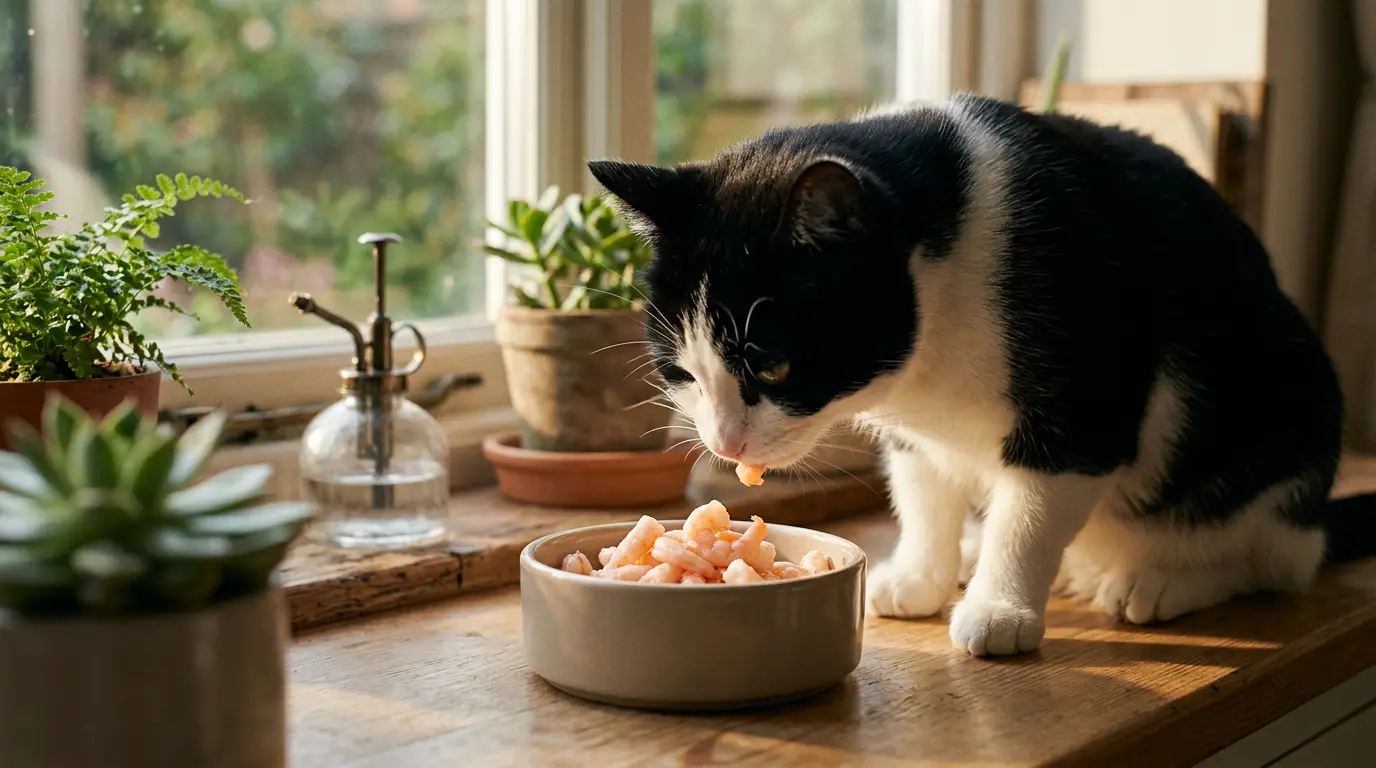
Cats can eat shrimp, but only if it's "cooked, de-shelled, and unseasoned," and it should only be given as an occasional treat, not a meal replacement. Raw shrimp, shrimp shells, and seasoned shrimp like salt-baked or garlic-fried are not recommended due to risks outweighing benefits.
Shrimp is a high-protein, low-fat food for cats, and most cats enjoy its savory taste. As long as it's prepared correctly and given in moderation, it's safe. Below, we clarify the details of "cats eating shrimp" that owners frequently ask about, covering nutrition, risks, and practical feeding steps.
Key Takeaways
- Cats can eat shrimp, but only "boiled or steamed cooked shrimp, de-shelled, and unseasoned." Raw and seasoned shrimp are not recommended.
- Shrimp is a treat; feeding amounts should be controlled within 10% of a cat's daily caloric intake. Generally, half to one medium-sized shrimp (de-shelled) is sufficient for an adult cat.
- Raw shrimp contains thiaminase, which destroys vitamin B1. Long-term consumption can lead to thiamine deficiency, affecting neurological function.
- Shrimp shells and sharp parts of the head can injure the mouth or cause intestinal blockage. Ensure they are completely removed before feeding.
- Shrimp is a common allergen. For the first feeding, give only a small bite and observe for 24 hours for vomiting, diarrhea, or itchy skin.
Benefits of Cats Eating Shrimp
Cats are obligate carnivores, and animal protein is their core nutrient. Shrimp's nutritional characteristics include:
- High Protein, Low Fat: Suitable for cats needing weight management who you want to treat.
- Contains Taurine: Taurine is crucial for heart and retinal health in cats, and shrimp contains a certain amount.
- Contains Trace Elements like Vitamin B12, Zinc, and Selenium: Beneficial for metabolism and immunity.
However, it's important to emphasize that these nutrients are already present in a balanced cat food. Shrimp's role is as a "natural treat to make cats happy," not as a primary source of nutrition. If you want a systematic understanding of how much your cat should eat daily and how to balance their diet, you can refer to our article on How Much Should a Cat Eat Per Day? Dry Food, Wet Food, and Water Intake Guide.
Raw vs. Cooked Shrimp: Why Not Raw?
This is the most critical question regarding "cats eating shrimp." The answer is clear: Cooked shrimp is okay; raw shrimp is not recommended.
Three Major Risks of Raw Shrimp
1. Thiaminase Destroys Vitamin B1: Raw crustaceans and some raw fish contain thiaminase, an enzyme that breaks down thiamine (vitamin B1) in the cat's body. Long-term consumption can lead to deficiency, causing symptoms like loss of appetite, unsteady gait, and seizures. Heating inactivates this enzyme, which is why "cooking is essential."
2. Parasites and Bacteria: Raw shrimp may harbor parasites, Vibrio, Salmonella, and other bacteria, which can cause gastrointestinal issues in cats. If your cat experiences persistent vomiting, diarrhea, or even bloody stools, don't delay; refer to What to Do If Your Cat Has Blood in Their Stool? Understanding Stool Color, Causes, and When to Seek Veterinary Care to assess severity and seek medical attention.
3. Difficult to Digest: The protein structure in raw shrimp can be harder for a cat's digestive system to process.
How to Cook Shrimp Safely
- Boil or steam shrimp in plain water until the flesh is completely opaque and white.
- Do not add salt, oil, garlic, onion, soy sauce, or MSG. Garlic and onions are toxic to cats, and excessive salt can strain their kidneys.
- Allow the shrimp to cool to room temperature before feeding to avoid burns.
Can Cats Eat Shrimp Shells, Heads, or Tails?
No. This is a crucial point we often remind owners of at our center.
- Shrimp shells, tails, and legs are hard and have sharp edges. If a cat bites them, they can injure the mouth or esophagus, or get stuck in the intestines, causing a blockage.
- The sharp points on the shrimp head (rostrum) are particularly dangerous and must be completely removed before feeding.
- Some people believe shrimp shells are good for calcium, but the risks far outweigh the calcium benefit, making them not worth the risk.
The correct way is to only feed de-shelled, pure shrimp meat, and remember to remove the digestive tract (the dark line on the back) for better taste and hygiene.
Safe Portion Sizes for Cats Eating Shrimp
Portion size is a critical factor many overlook. No matter how good shrimp is, it's a treat, and overfeeding can cause problems.
- Total Treat Limit Principle: All treats (including shrimp) should not exceed 10% of the cat's daily caloric intake.
- Actual Portion Reference: For an adult cat, half to one medium-sized shrimp (about one finger joint length after de-shelling) is sufficient per feeding, given 1-2 times a week.
- Kittens, Senior Cats, and Cats with Sensitive Stomachs: Reduce the portion by half, and be even more cautious with the first feeding. For dietary adjustments for senior cats, refer to How Old is a Senior Cat? Diet, Veterinary Care, and Home Care for Senior Cats.
The most common issues from eating too much shrimp are soft stools, diarrhea, and vomiting, or gastrointestinal upset due to a sudden intake of high protein. If your cat has a sensitive stomach, you can support their gut health with specialized probiotics, but these are not a "cure for an upset stomach." Issues still require attention to portion size and freshness.
Precautions for Cats Eating Shrimp: Allergies and Other Considerations
Allergies Are Real
Shrimp (crustaceans) are one of the common food allergens for cats. Always give only a tiny bite the first time, and then observe for 24 hours for:
- Itchy skin, face scratching, red ears
- Vomiting, diarrhea
- Swelling of the face or lips
If any of these symptoms appear, stop feeding immediately. Mild symptoms usually resolve on their own; if they persist, worsen, or if there is difficulty breathing, seek veterinary attention immediately. For breathing-related abnormalities, refer to Is It Normal for Your Cat to Stick Out Their Tongue or Pant with Their Mouth Open? Causes from Heat to Illness and Warning Signs to determine if it's dangerous.
Don't Rely on Shrimp for Nutrition
Once again: Shrimp cannot replace a balanced diet. If you wish to supplement your cat's diet with high-quality wet food, choosing options like Luxury Functional Cans with complete formulas is safer and more stable than casually feeding shrimp.
These "Processed Shrimp" Products Are All a No-Go
- Shrimp-flavored snacks, shrimp crackers, dried shrimp (often high in sodium and additives)
- Salt-baked shrimp, crispy fried shrimp, garlic-fried shrimp, grilled shrimp
- Frozen prepared shrimp (may contain marinades)
For more information on common dangerous household foods, we recommend bookmarking What Foods Can Cats NOT Eat? Common Household Dangers and Poisoning Signs, to avoid accidentally feeding dangerous ingredients.
Additional Reminders for Feeding Shrimp in Summer
Shrimp can spoil quickly in the summer. It deteriorates even faster when left at room temperature, so always ensure freshness and a lack of off-putting odor before feeding. Cats' appetites and thermoregulation are already affected by the heat, so be even more moderate with treats. For comprehensive care tips during high-temperature seasons, check out our main guide Are Cats Afraid of Heat? Signs of Heatstroke, Panting, and Summer Cooling Strategies. For another common summer feeding question, you can also refer to Can Cats Eat Watermelon? Summer Feeding Precautions, Portions, and Correct Ways to Eat.
If you plan to board your cat soon, be sure to communicate their usual diet and any allergens to the boarding facility beforehand to prevent digestive issues from unfamiliar treats. For preparations for a first-time boarding experience, see What to Prepare for Your Cat's First Boarding Stay? Key Considerations for Choosing a Cattery and Checklist. You are also welcome to book boarding directly if needed; we will care for your cat according to your provided dietary habits.
Frequently Asked Questions
Can cats eat shrimp? How much can they eat at once?
Yes, they can eat unseasoned cooked shrimp. An adult cat can have half to one medium-sized shrimp at a time, 1-2 times a week. Do not serve it as a main meal.
What if a cat eats raw shrimp?
If a small amount is accidentally ingested, observe for vomiting, diarrhea, or lethargy. A single instance is usually harmless, but avoid intentionally feeding raw shrimp again. If persistent vomiting, unsteady gait, or seizures occur, seek veterinary attention immediately.
Can shrimp shells be given to cats for chewing or calcium?
Not recommended. Shrimp shells are hard and sharp and can injure the mouth or cause intestinal blockage. Their calcium benefit is minimal, and they must be completely removed before feeding.
Can kittens eat shrimp?
Kittens can try small amounts of cooked shrimp meat, but their digestive systems are sensitive. The portion should be even smaller than for adult cats; give only a fingernail-sized piece the first time and observe their reaction.
Is it normal for a cat to have diarrhea after eating shrimp?
It could be due to eating too much, the shrimp not being fresh, or an allergic reaction. Stop feeding and observe. Most mild soft stools will resolve on their own. If diarrhea persists for more than a day or contains blood, consult a veterinarian.
This article was written by the Cat's Garden editorial team. The content is for general care information and cannot replace veterinary diagnosis. If your cat exhibits persistent or severe symptoms, please seek veterinary care promptly.
CatGarden offers curated supplies, cat boarding, and grooming
Book services or shop online.