What Are the Blue Cat Breeds? A Complete Comparison of British Shorthair, Russian Blue, and Chartreux Cats - Appearance, Personality, and Shedding Levels
The common blue cat breeds in Taiwan are mainly the British Shorthair, Russian Blue, and Chartreux. The easiest way to distinguish them is by their face shape (round/wedge/smiling face) and coat texture, with British Shorthairs shedding the most and Russian Blues the least. This article provides a clear comparison of their appearance, personality, and daily grooming frequency.
The "blue cats" you'll see in Taiwan are primarily the British Shorthair (blue variant), Russian Blue, and Chartreux, with British Shorthairs being the most numerous and Chartreux the rarest. The quickest way to tell them apart is by their face shape and coat: British Shorthairs have round faces and thick jaws with fluffy, dense fur; Russian Blues have wedge-shaped faces, large ears, green eyes, and short, sleek fur with a silvery sheen; Chartreux cats have broad heads and narrow muzzles, giving them a "smiling face," and their fur feels like wool. Shedding levels, from most to least, are generally: British Shorthair > Chartreux > Russian Blue.
Key Takeaways
- Over 80% of "blue cats" in the Taiwanese pet market refer to blue individuals of the British Shorthair breed, not Russian Blues.
- Eye color is the fastest distinguishing factor: Blue British Shorthairs have copper/golden-orange eyes, adult Russian Blues should have distinct green eyes, and Chartreux cats have golden to copper eyes.
- Significant differences in shedding: In our facility, bathing and drying a British Shorthair takes an average of 40-60 minutes, while a Russian Blue only takes 25-35 minutes, a difference of about 2-3 times in terms of hair loss.
- Recommended grooming frequency: British Shorthairs need 5-10 minutes daily during shedding season, Russian Blues need 2-3 times per week, and Chartreux cats need once daily during their spring shedding period.
- Personality-wise, British Shorthairs are the most calm and tolerant of handling but have low activity levels and are prone to obesity; Russian Blues are very attached to their owners but extremely sensitive to strangers; Chartreux cats are quiet, rarely vocal, and known as "dog-like cats that follow their owners."
First, Understand: "Blue Cat" Refers to Coat Color, Not Breed
A cat's "blue" color is actually the result of the dilute gene (d gene) lightening black pigment, appearing as a cool-toned grayish-blue. So, strictly speaking, blue is a coat color, not a breed. Many breeds can have blue individuals: American Shorthairs, Scottish Folds, Munchkins, Persians, Maine Coons, Oriental Shorthairs, and Korats all come in blue.
This is why many owners ask, "What are the gray cat breeds?" – because in Taiwanese adoption groups and pet stores, gray-blue cats are often collectively referred to as "blue cats." However, only three breeds have "blue" as their standard color and even exclusively recognize blue:
1. British Shorthair: Blue is their most classic color; they were even called "British Blue" in the early days.
2. Russian Blue: The breed standard only recognizes blue with silver tipping.
3. Chartreux: A native French breed, they only come in blue-gray.
If your gray-blue cat's face shape doesn't match the descriptions below, it's likely a mixed breed or a blue individual of another breed. This doesn't diminish how adorable they are. For a deeper understanding of common cat coat patterns in Taiwan, you can read this main article first: What is a Dragon Li Cat? Personality, Origin, and Differences from Tabby Cats Explained.
What we use for this
CatGarden’s own products, shipped from Taiwan Pro Hairball Control PowderFrom US$18.50 per boxFree shipping on multi-packs
A Comparison Table of the 3 Major Blue Cat Breeds
| Comparison Item | British Shorthair | Russian Blue | Chartreux |
|---|---|---|---|
| Face Shape | Large round face, rounded cheeks, thick chin | Wedge-shaped/short triangular face, large erect ears | Broad head, narrow muzzle, forming a "smiling face" |
| Body Type | Short, stocky, and robust (cobby) with a thick bone structure | Slender and graceful with long, lean muscles | Sturdy body but relatively slender limbs |
| Eye Color | Copper/golden-orange | Vivid green (kittens' eyes change from blue to green) | Golden to copper |
| Adult Weight | Females 4-6kg, Males 5-8kg | Females 3-4.5kg, Males 4-5.5kg | Females 4-5kg, Males 6-7kg |
| Coat Texture | Double coat, dense, fluffy, and resilient | Double coat but extremely fine, short, and sleek with a silvery sheen | Double coat, feels like wool, slightly water-repellent |
| Shedding Level | ★★★★★ Sheds year-round, heavy during seasonal changes | ★★☆ Relatively the least | ★★★★ Concentrated heavy shedding in spring |
| Vocalization | Infrequent, low-pitched voice | Infrequent but will respond with purrs/chuckles | Very rare, some are almost silent |
| Affection Level | Prefers to be in the same room, not keen on prolonged cuddling | Only attached to their chosen family, shy with strangers | Quietly follows owner, may follow to the bathroom door |
| Commonality in Taiwan | Very common | Common | Extremely rare |
British Shorthair: The One Most Often Called a "Blue Cat"
Physical Characteristics
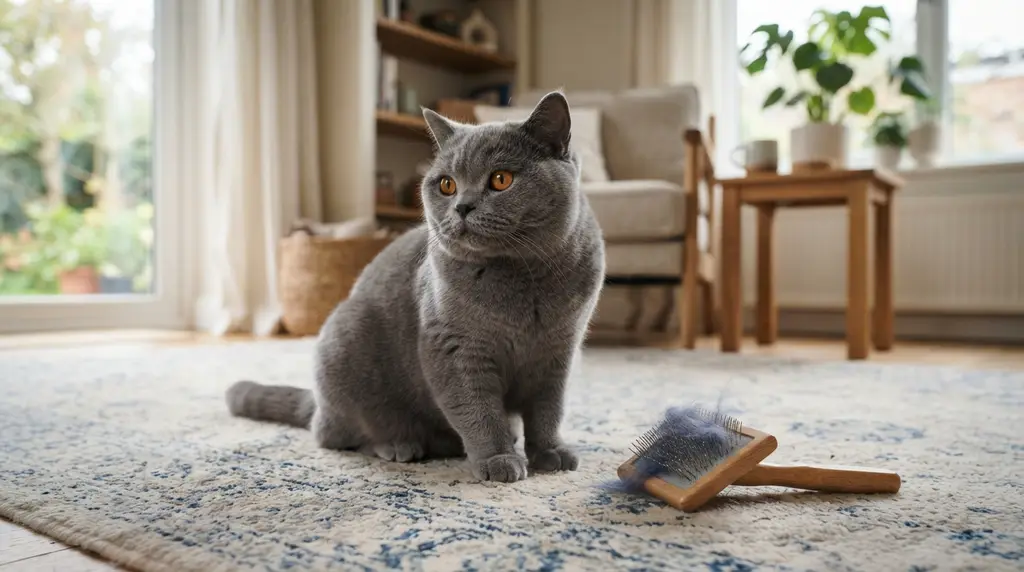
The British Shorthair's distinctiveness comes from "all lines being round": round head, round eyes, rounded ear tips, and round cheeks, combined with a thick chin and short, sturdy legs, giving them the appearance of a firm cushion. Adult males develop prominent "jowls," a characteristic feature. Their eyes are copper to golden-orange. If you see a round-faced gray cat with emerald green eyes, you should reconfirm its lineage. For a timeline on how kitten eyes change from blue to their final color, refer to How to Tell Cat Eye Colors? A Full Analysis of Blue, Green, and Heterochromia (Odd Eyes).
Personality
They are one of the easiest breeds to manage in our facility: emotionally stable, highly tolerant of environmental changes, and generally not aggressive towards other cats. However, British Shorthairs are not "koala-like" clingy cats; they prefer to be in the same room with you rather than being held and petted for ten minutes. Many owners mistakenly believe their British Shorthair isn't affectionate, but it's simply that their way of showing affection is more subtle.
Shedding and Care Focus
British Shorthairs have very dense undercoats, which is the primary reason for their high shedding levels. In practice:
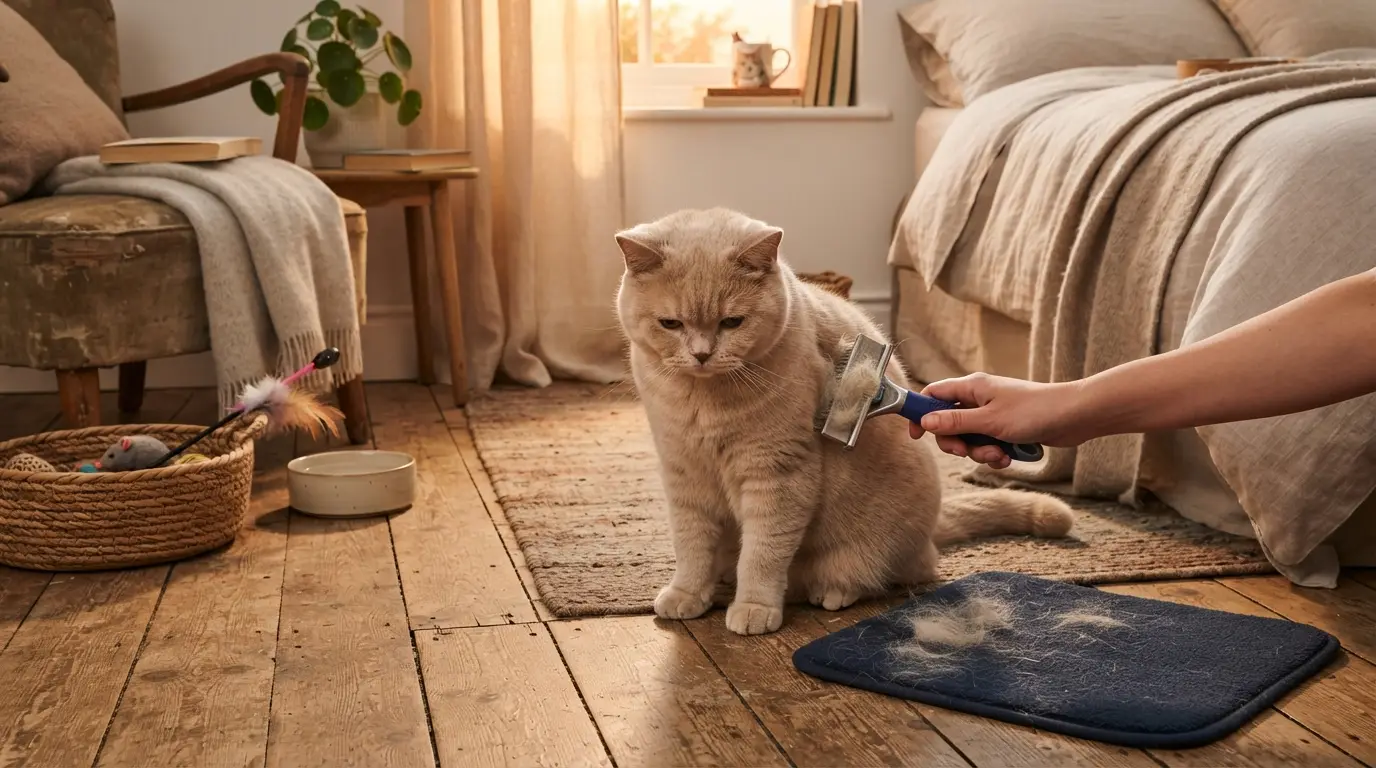
- Groom every 2 days with a comb and slicker brush for 5 minutes; daily during spring and autumn shedding seasons.
- After brushing, you'll still find hair on your black clothes; this is normal. The key is to remove the hair that has already shed but is trapped in the undercoat, reducing ingestion during grooming.
- British Shorthairs groom themselves frequently, leading to more hairball issues than Russian Blues. Daily supplements like Pro Hairball Control Powder can help, along with ensuring adequate water intake.
- For a complete guide on seasonal shedding and skin care, refer to How to Care for Your Cat During Autumn Shedding? A Complete Guide to Brushing Frequency, Hairball Prevention, and Skin Allergy Care.
Health-wise, pay special attention to two issues: Hypertrophic Cardiomyopathy (HCM) and obesity. British Shorthairs have naturally low activity levels and good appetites, making them one of the breeds with the highest rates of being overweight among our boarding guests. It's recommended to calculate calorie intake based on weight and activity level, rather than feeding by the "two pouches a day" intuition.
Russian Blue: Short Fur, Less Shedding, But Very Sensitive Hearts
Physical Characteristics
Russian Blues are almost the opposite of British Shorthairs in design: short wedge-shaped faces, large, thin ears with wide bases, slender bodies, and a graceful, light gait. Their most striking feature is their coat: each hair has a silver tip (tipping), making the entire cat appear dusted with silver powder in the light. The fur is short, elastic, and lies close to the body without being fluffy.
Personality
The most frequent question about "Russian Blue vs. British Shorthair" is about personality. Simply put: British Shorthairs are generally good with everyone, while Russian Blues are exceptionally good with you. Russian Blues are very attached to their chosen family, following them around, sitting nearby, and responding with short, purring sounds; however, the moment the doorbell rings or a stranger enters, they might disappear for ten minutes.
When we board Russian Blues, they typically hide in the deepest part of their carrier on the first day. We need to place food bowls closer, minimize cage openings, and reduce disturbances in the environment. It usually takes two to three days before they venture out to explore. This highly sensitive nature also makes them more prone to decreased appetite or urinary issues under stress, making decompression arrangements before and after travel crucial. For a detailed look at keeping this breed in Taiwanese apartments, see Are Russian Blues Suitable for Apartment Living in Taiwan? A Complete Introduction to Their Personality, Shedding, and Care Difficulty.
Shedding and Allergy Myths
Russian Blues have short, dense fur, so their hair loss does appear much less than British Shorthairs—but the myths that "Russian Blues don't shed" or "Russian Blues are hypoallergenic" are misconceptions. They do shed, but the shed hair is fine and short, making it less noticeable. As for being hypoallergenic, there's only a theory that their Fel d 1 secretion might be lower, with no reliable evidence to guarantee they won't cause allergies. Individuals with severe allergies should always interact with the breed first before deciding.
Grooming requires only 2-3 sessions per week; a rubber brush or fine-toothed comb works well. Avoid excessive bathing; for short-haired cats, once every 1-2 months is sufficient.
Chartreux: The "Smiling Cat" from French Monasteries, Rarely Seen in Taiwan
The Chartreux is the easiest of the three to mistake for a British Shorthair, but a side profile reveals the difference: they have a broad skull and a narrow muzzle, combined with upturned mouth corners, giving them a perpetual smile. Their body type is "sturdy body with slender legs," making them heavier than they appear.
Chartreux are known for their quiet nature—many individuals rarely meow or only make very soft sounds. They are affectionate, will silently follow their owners, are quick to react, and have strong learning abilities. They are also the most interested in hunting games among the three (early French Chartreux were used to catch barn mice).
Coat texture is key: the Chartreux's double coat is slightly water-repellent and feels like wool. Brushing with a flat comb gives a distinct "parting" sensation. Shedding is surprisingly heavy during spring molting, requiring daily grooming. Also, due to their thick coat, if not thoroughly dried to the skin after bathing, skin issues can easily develop from trapped moisture.
Finally, a reminder: There are virtually no legitimate Chartreux breeders in Taiwan. Most individuals advertised as Chartreux are actually blue British Shorthairs or mixed breeds. If you are truly looking for one, ensure the breed registration code and cattery registration information are verified.
Which One to Choose? The Best Choice is Based on Your Lifestyle
- Have young children, frequent guests, and want an easy-to-handle cat → British Shorthair. They have stable temperaments and high tolerance for noise, but the trade-offs are shedding and weight management.
- Concerned about household hair, are working professionals, and prefer a quiet home → Russian Blue. They shed less and are quiet, but you must accept their shyness and need for a stable routine.
- Enjoy quiet interaction and can accept a long search for a source → Chartreux. Their personality is ideal, but the challenges lie in sourcing and the grooming demands during shedding season.
Also, a common myth: many people seek blue Scottish Folds because they like the "gray-blue coat and round face." The folded ears in Scottish Folds are due to a cartilage mutation directly linked to joint diseases. Before purchasing, be sure to understand How Long Do Scottish Folds Live? Onset Age of Osteochondrodysplasia, Signs of Joint Pain, and Elderly Care Guide. Don't make decisions based solely on appearance.
Daily Grooming for Blue Cats: Darker Coats Highlight Problems
The advantage and disadvantage of blue-gray fur is that dandruff, greasiness, and localized hair loss are particularly noticeable against the dark gray background. In our grooming sessions, we often observe health signals from the following:
- Knots forming in the fur at the rear of the backline (near the tail base), feeling greasy: Common in overweight British Shorthairs that can't reach to groom themselves.
- Fine white flakes on the neck and back, dry fur tips: May indicate a dry environment or insufficient drying after bathing.
- Thinning fur on the inner thighs and abdomen: Watch for excessive licking, which could be due to stress or skin discomfort.
Short-haired blue cats don't need frequent baths; the key is thorough drying. If your home hairdryer lacks power, or your cat resists it, it's safer to entrust it to an experienced groomer. If needed, you can book a grooming appointment directly, and we will assess the coat condition before deciding on a degreasing shampoo. For persistent dandruff, hair loss, redness, or itching, please consult a veterinarian first to rule out skin diseases and parasites; do not use medicated shampoos yourself.
Frequently Asked Questions
What's the quickest way to distinguish between a Russian Blue and a blue British Shorthair?
Look at their eyes and face shape: Adult Russian Blues have distinct green eyes, wedge-shaped faces, and slender bodies; blue British Shorthairs have copper-gold eyes, large round faces, and stocky builds. Touching their fur is also a good indicator: Russian Blues have short, sleek fur, while British Shorthairs have fluffy, resilient fur.
Are blue cats really gentler in personality?
Personality is influenced by breed tendencies, socialization experiences, and individual differences. British Shorthairs are generally calm, Russian Blues are attached to their owners but shy, and Chartreux are quiet and affectionate. However, the "blue coat color" itself doesn't determine temperament; early kitten socialization often has a greater impact.
Which blue cat breed sheds the least?
Among the three, Russian Blues shed the least, British Shorthairs the most, and Chartreux cats also shed considerably during their spring molting period. However, no cat sheds completely, and regular grooming is key.
Do gray cat breeds tend to get fat easily?
Not all of them, but British Shorthairs and Chartreux cats do have lower activity levels and good appetites, making them prone to being overweight. It's recommended to calculate feeding amounts based on caloric needs and monitor their weight monthly, adjusting if there's a change of more than 5%.
Are mixed-breed gray cats also considered blue cats?
As long as their coat color is a diluted grayish-blue, they can be colloquially called "blue cats," but they do not belong to the three purebred breeds mentioned above. Mixed-breed gray cats generally exhibit good health and personality, so there's no need to specifically seek out purebreds.
This article was written by the CatGarden editorial team. The health advice provided is for general care reference only. If your cat experiences persistent hair loss, skin redness, decreased appetite, or abnormal weight changes, please consult a veterinarian for evaluation as soon as possible.
CatGarden offers curated supplies, cat boarding, and grooming
Book services or shop online.