When is Cat Shedding Season? Is Heavy Shedding in Summer Normal? Understand Shedding Frequency and Dietary Solutions

Cat shedding season primarily occurs in spring (March-May) and autumn (September-November). Heavy shedding in summer is usually normal. This article helps you distinguish between normal and abnormal shedding, and provides solutions for brushing frequency, diet, and environment.
CatGarden Editorial TeamPublished 2026/07/25Updated 2026/10/05
Cat shedding seasonCat sheddingCat brushingSummer cat careCat grooming
When is Cat Shedding Season? Is Heavy Shedding in Summer Normal? Understand Shedding Frequency and Dietary Solutions

Cat shedding season primarily occurs in spring (approximately March-May) and autumn (approximately September-November). Around these seasonal transitions, temperature and daylight changes are most significant, leading to the most noticeable shedding. As for the common question many owners ask in July, "Why is my cat still shedding so much in the summer?" – it's mostly normal. This is because indoor cats in Taiwan, with air conditioning, stable daylight, and humidity, tend to have a prolonged shedding cycle with blurred seasonal boundaries.

Based on our firsthand experience bathing and grooming hundreds of cats at our salon, we'll help you understand shedding timelines, how to distinguish between "normal shedding" and "abnormal shedding," and provide advice on brushing frequency and dietary solutions.

Key Takeaways

  • Cat shedding season is concentrated in spring (March-May) and autumn (September-November), corresponding to periods of increasing/decreasing daylight.
  • Indoor cats, due to constant air conditioning and stable lighting, may shed year-round with less distinct seasonal boundaries compared to outdoor cats. Summer shedding is typically normal.
  • During peak shedding periods, it's recommended to brush daily for 5-10 minutes. Long-haired cats may benefit from brushing twice daily to prevent matting.
  • If shedding is accompanied by bald patches, red, swollen, or crusty skin, excessive licking, or weight loss, it's likely not just shedding and warrants a veterinary check-up.
  • During shedding season, increasing water intake, Omega-3 fatty acids, and hairball remedies can help reduce hairball accumulation and improve coat quality.

When Exactly is Cat Shedding Season?

Cat shedding is primarily influenced by daylight length, followed by temperature. When days get longer (spring) or shorter (autumn), the body initiates a shedding mechanism to replace old fur with new fur of appropriate thickness for the upcoming season.

Two Distinct Shedding Peaks

  • Spring Shedding (approx. March-May): Cats shed their heavy winter coats for lighter summer coats. This is the period of heaviest shedding, as they lose the dense undercoat.
  • Autumn Shedding (approx. September-November): Cats shed their lighter summer coats and grow back their warmer winter coats. Shedding volume is usually less than in spring, but new fur grows back quickly.

The question "แมวผลัดขนช่วงไหน" (When do cats shed?) often searched by Thai owners yields the same answer: primarily during the spring and autumn transition periods.

Why Do Indoor Cats "Shed All Year Round"?

This is our most frequently asked question. The reasons are:

  • Artificial lighting keeps indoor light exposure stable year-round, preventing the body from receiving clear "seasonal change signals."
  • Air conditioning minimizes indoor temperature fluctuations throughout the year.
  • Consequently, shedding doesn't occur in concentrated bursts but rather as a "continuous low-volume shedding year-round," although it might be relatively more noticeable in spring and autumn.

So, if you have an exclusively indoor cat, and the floor is covered in fur in July, don't panic. This is very common in Taiwan's living environment.

Is Heavy Shedding in Summer Normal? How to Tell?

The key isn't "how much" they shed, but rather "whether there are any abnormalities with the skin or the cat itself."

Signs of Normal Shedding

  • Shedding consists of whole hairs, and the skin appears clean, without redness or swelling.
  • Hair loss is evenly distributed, without distinct bald spots.
  • The cat's energy, appetite, and overall demeanor are normal.
  • Fur comes off smoothly when brushed, not in clumps.

Even if the amount of shedding is alarming, it's considered a normal phenomenon during the cat's shedding season.

Abnormal Shedding to Watch For

The following situations indicate more than just normal shedding, and further observation or veterinary consultation is recommended:

  • Localized bald spots, symmetrical hair loss: Common with skin diseases, fungal infections, or endocrine issues.
  • Red, swollen, crusty skin, dandruff, or black spots: May indicate fungal infections, fleas, or allergies.
  • Constant licking of one specific area to the point of baldness: Could be stress-induced over-grooming or skin discomfort. For more on this, you can refer to our article Is it Normal for Cats to Lick Their Front Paws Constantly?.
  • Accompanied by weight loss, decreased appetite, or lethargy: May indicate systemic illness.

> If shedding is accompanied by skin abnormalities or behavioral changes, and the symptoms persist or worsen, take your cat to the veterinarian as soon as possible. Do not self-medicate or use folk remedies.

Don't Confuse "Heat" with "Shedding"

If your cat is panting with its mouth open, seeking cool surfaces like tiles, or appears lethargic in the summer, these are signs of overheating and discomfort from the heat, not directly caused by shedding. For information on cat heat tolerance and signs of heatstroke, you can read Do Cats Feel Hot? Heat Tolerance and Heatstroke Warning Signs. It's also advisable to first check What is a Normal Body Temperature for a Cat?.

Brushing Frequency and Proper Techniques During Shedding Season

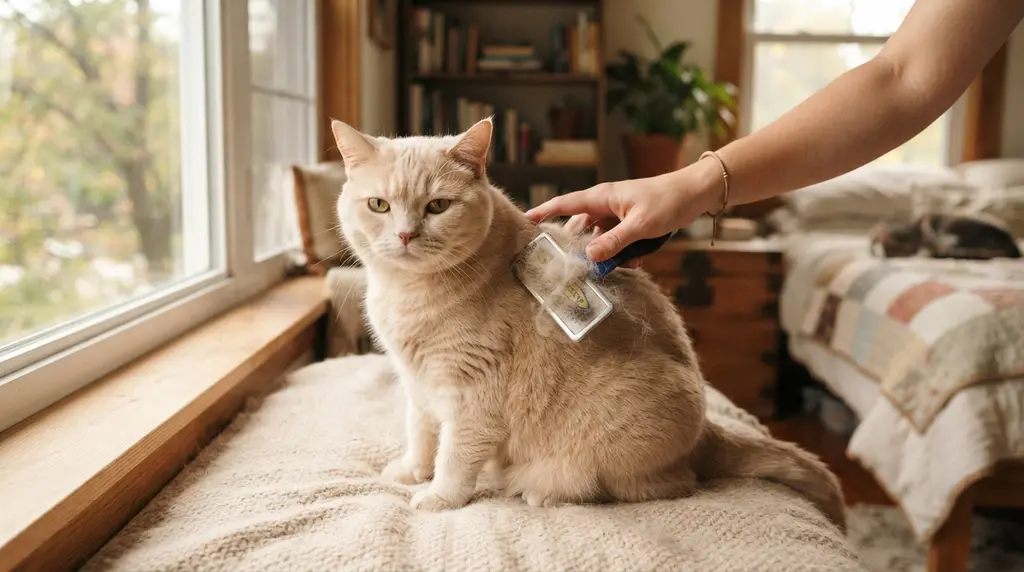
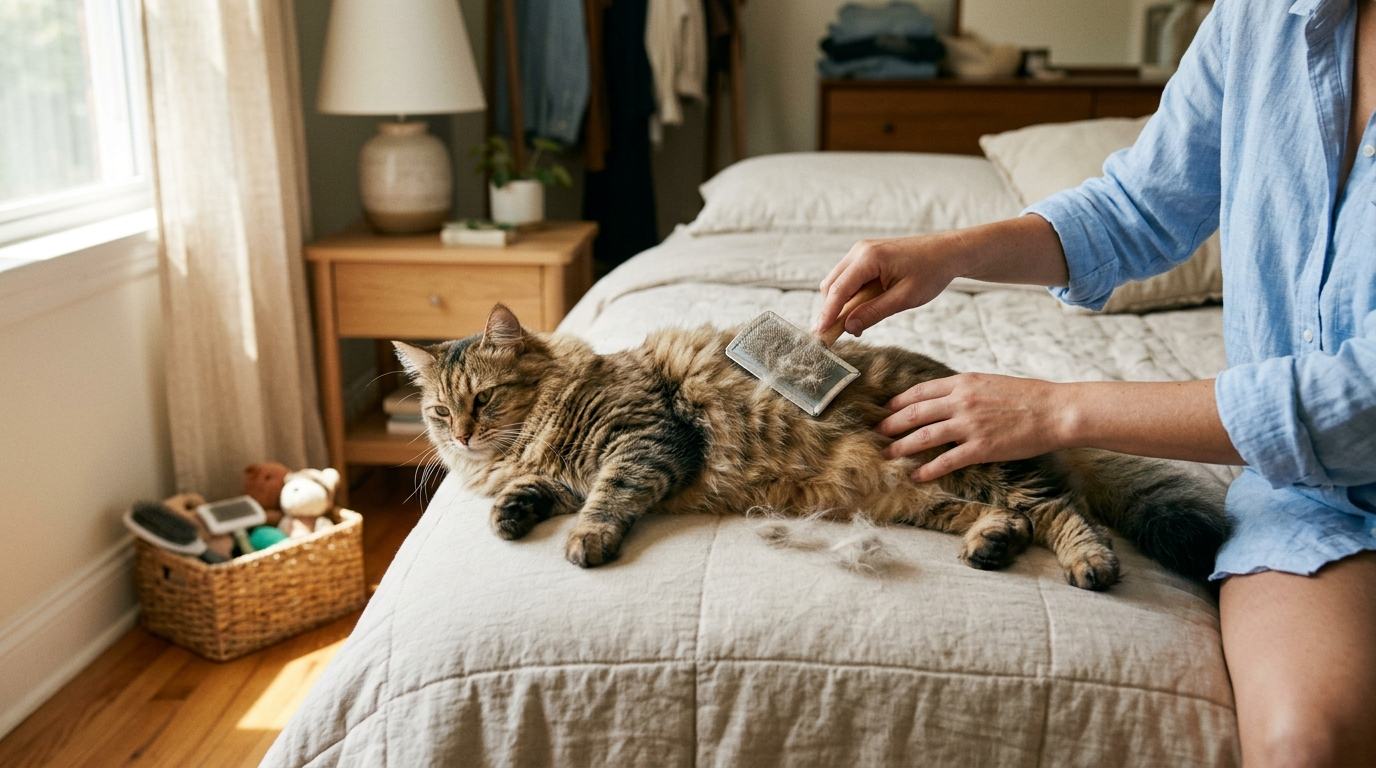
Brushing is the most effective, yet often underestimated, action during shedding season. When we groom cats during this period, we can remove a whole handful of loose fur from a medium-long haired cat. If this fur isn't removed, the cat will ingest it while grooming, leading to hairballs.

Recommended Brushing Frequency

  • Short-haired cats: Daily during peak shedding, 5-10 minutes each session. Every 2-3 days is sufficient otherwise.
  • Long-haired cats (e.g., Persians, Maine Coons): Ideally, brush twice daily during shedding season to prevent matting of the undercoat.
  • For general maintenance, brushing 2-3 times a week for short-haired cats and daily for long-haired cats is a safe range.

Brushing Tips

1. Brush in the direction of hair growth, from the back towards the tail, using gentle pressure.

2. Slow down on sensitive areas (belly, armpits, inner thighs) as many cats dislike being touched there.

3. Start with a comb or slicker brush to detangle, then use a deshedding tool to remove loose undercoat.

4. Stop brushing when the cat becomes impatient. It's better to have shorter, more frequent sessions.

If your cat is comfortable rolling over and relaxing while being brushed, it signifies trust. For insights into interpreting such body language, refer to Cat Crouching and Sitting Positions: Emotional Signals.

What to Do About Severe Matting or Bathing Difficulties?

If fur has matted into clumps, brushing can be painful for the skin. In such cases, it's best to seek professional help. For a comprehensive guide on when to brush, bathe, or shave matted fur, refer to our main article How Often Should Cats Be Bathed? Nail Trimming, Ear Cleaning, and Grooming Schedule. During heavy summer shedding that's difficult to manage at home, you can also directly book a grooming appointment for a deep de-shedding and bath. For information on pricing and procedures, see How to Choose a Cat Groomer in Banqiao.

Dietary and Environmental Solutions for Shedding Season

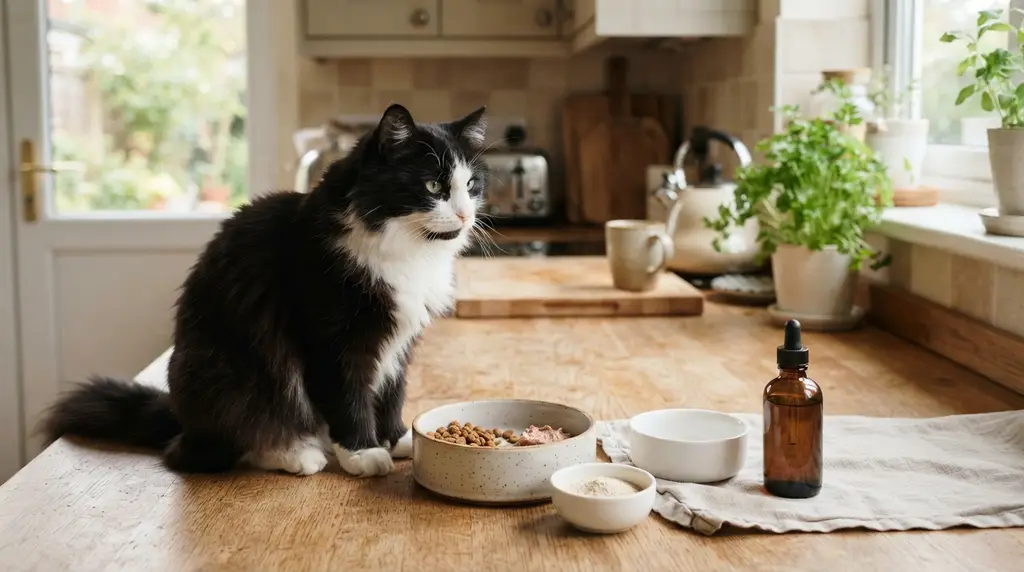
Diet: Improve Coat Quality Internally and Reduce Hairballs

  • Increase water intake: Adequate hydration during shedding season supports metabolism and skin health. Cats may drink less in summer, so consider adding more water bowls or using a cat water fountain to encourage drinking.
  • Supplement with Omega-3 / Fish Oil: Helps improve coat quality and reduce skin dryness and flakiness. Choose wet foods or canned options with good fats, such as Luxury Functional Canned Food, which provide both hydration and essential fatty acids.
  • Enhance hairball control: Increased fur ingestion during shedding can lead to hairball accumulation. Use Pro Hairball Control Powder to help hairballs pass smoothly, reducing the risk of vomiting and constipation.

If your cat experiences frequent hairball vomiting, soft stools, or changes in appetite during shedding season, pay attention to their digestive health. Refer to What to Do If Your Cat Has Diarrhea to determine if veterinary care is needed.

Environment: Prevent Shedding from Becoming a Household Disaster

  • Regularly use lint rollers and grooming gloves to clean sofas and cat beds.
  • Air purifiers can reduce airborne fur and allergens.
  • During shedding season, cat litter boxes can also accumulate fur and odors. Remember to increase cleaning frequency. For guidance, see How Often Should Cat Litter Be Changed?.

What to Do During Peak Shedding Season When Traveling?

Summer holidays often coincide with peak shedding season. If you plan to board your cat, remember to bring their brush and inform the boarding facility about your brushing needs. At our facility, we provide daily grooming and skin checks for boarding cats and report on their shedding and overall condition. For information on choosing a boarding environment and preparation, see How to Choose Cat Boarding in Banqiao, or directly book a cat hotel in Banqiao.

Frequently Asked Questions

When is Cat Shedding Season?

The main peaks are in spring (approx. March-May) and autumn (approx. September-November). Indoor cats, influenced by air conditioning and artificial lighting, may shed small amounts year-round, making seasonal boundaries less distinct.

Is Heavy Shedding in Summer Normal for Cats?

In most cases, yes, especially for indoor cats. As long as the shed fur is whole, the skin is free of redness or bald spots, and the cat's energy and appetite are normal, there's usually no need for excessive worry. However, if bald patches or skin abnormalities appear, seek veterinary attention.

How Often Should I Brush My Cat During Shedding Season?

For short-haired cats, daily brushing for 5-10 minutes is recommended during peak shedding. Long-haired cats should ideally be brushed twice daily to prevent undercoat matting. For regular maintenance, the intervals can be extended.

How Can I Differentiate Between Normal Shedding and Illness-Related Hair Loss?

Normal shedding results in a uniform reduction in fur with healthy skin. Illness-related hair loss often involves symmetrical bald spots, red or crusty skin, excessive licking, or changes in weight and appetite. In the latter cases, early veterinary consultation is advised.

What Can I Feed My Cat to Improve Shedding Season Hair Loss?

Focus on adequate hydration, supplementing with Omega-3 fatty acids (e.g., from wet food or fish oil with good fats), and using hairball remedies to aid passage. Dietary adjustments can improve coat quality but won't stop shedding, as it's a normal physiological process.


This article was written by the CatGarden editorial team, combining insights from our cat hotel and grooming services. If your cat's shedding is accompanied by skin abnormalities or changes in energy or appetite, please consult a professional veterinarian.

CatGarden offers curated supplies, cat boarding, and grooming

Book services or shop online.

Back

Blog

When is Cat Shedding Season? Is Heavy Shedding in Summer Normal? Understand Shedding Frequency and Dietary Solutions

CatGarden Editorial TeamPublished 2026/07/25Updated 2026/10/05
Cat shedding seasonCat sheddingCat brushingSummer cat careCat grooming
When is Cat Shedding Season? Is Heavy Shedding in Summer Normal? Understand Shedding Frequency and Dietary Solutions

Cat shedding season primarily occurs in spring (approximately March-May) and autumn (approximately September-November). Around these seasonal transitions, temperature and daylight changes are most significant, leading to the most noticeable shedding. As for the common question many owners ask in July, "Why is my cat still shedding so much in the summer?" – it's mostly normal. This is because indoor cats in Taiwan, with air conditioning, stable daylight, and humidity, tend to have a prolonged shedding cycle with blurred seasonal boundaries.

Based on our firsthand experience bathing and grooming hundreds of cats at our salon, we'll help you understand shedding timelines, how to distinguish between "normal shedding" and "abnormal shedding," and provide advice on brushing frequency and dietary solutions.

Key Takeaways

  • Cat shedding season is concentrated in spring (March-May) and autumn (September-November), corresponding to periods of increasing/decreasing daylight.
  • Indoor cats, due to constant air conditioning and stable lighting, may shed year-round with less distinct seasonal boundaries compared to outdoor cats. Summer shedding is typically normal.
  • During peak shedding periods, it's recommended to brush daily for 5-10 minutes. Long-haired cats may benefit from brushing twice daily to prevent matting.
  • If shedding is accompanied by bald patches, red, swollen, or crusty skin, excessive licking, or weight loss, it's likely not just shedding and warrants a veterinary check-up.
  • During shedding season, increasing water intake, Omega-3 fatty acids, and hairball remedies can help reduce hairball accumulation and improve coat quality.

When Exactly is Cat Shedding Season?

Cat shedding is primarily influenced by daylight length, followed by temperature. When days get longer (spring) or shorter (autumn), the body initiates a shedding mechanism to replace old fur with new fur of appropriate thickness for the upcoming season.

Two Distinct Shedding Peaks

  • Spring Shedding (approx. March-May): Cats shed their heavy winter coats for lighter summer coats. This is the period of heaviest shedding, as they lose the dense undercoat.
  • Autumn Shedding (approx. September-November): Cats shed their lighter summer coats and grow back their warmer winter coats. Shedding volume is usually less than in spring, but new fur grows back quickly.

The question "แมวผลัดขนช่วงไหน" (When do cats shed?) often searched by Thai owners yields the same answer: primarily during the spring and autumn transition periods.

Why Do Indoor Cats "Shed All Year Round"?

This is our most frequently asked question. The reasons are:

  • Artificial lighting keeps indoor light exposure stable year-round, preventing the body from receiving clear "seasonal change signals."
  • Air conditioning minimizes indoor temperature fluctuations throughout the year.
  • Consequently, shedding doesn't occur in concentrated bursts but rather as a "continuous low-volume shedding year-round," although it might be relatively more noticeable in spring and autumn.

So, if you have an exclusively indoor cat, and the floor is covered in fur in July, don't panic. This is very common in Taiwan's living environment.

What we use for this

CatGarden’s own products, shipped from Taiwan


See all products

Is Heavy Shedding in Summer Normal? How to Tell?

The key isn't "how much" they shed, but rather "whether there are any abnormalities with the skin or the cat itself."

Signs of Normal Shedding

  • Shedding consists of whole hairs, and the skin appears clean, without redness or swelling.
  • Hair loss is evenly distributed, without distinct bald spots.
  • The cat's energy, appetite, and overall demeanor are normal.
  • Fur comes off smoothly when brushed, not in clumps.

Even if the amount of shedding is alarming, it's considered a normal phenomenon during the cat's shedding season.

Abnormal Shedding to Watch For

The following situations indicate more than just normal shedding, and further observation or veterinary consultation is recommended:

  • Localized bald spots, symmetrical hair loss: Common with skin diseases, fungal infections, or endocrine issues.
  • Red, swollen, crusty skin, dandruff, or black spots: May indicate fungal infections, fleas, or allergies.
  • Constant licking of one specific area to the point of baldness: Could be stress-induced over-grooming or skin discomfort. For more on this, you can refer to our article Is it Normal for Cats to Lick Their Front Paws Constantly?.
  • Accompanied by weight loss, decreased appetite, or lethargy: May indicate systemic illness.

> If shedding is accompanied by skin abnormalities or behavioral changes, and the symptoms persist or worsen, take your cat to the veterinarian as soon as possible. Do not self-medicate or use folk remedies.

Don't Confuse "Heat" with "Shedding"

If your cat is panting with its mouth open, seeking cool surfaces like tiles, or appears lethargic in the summer, these are signs of overheating and discomfort from the heat, not directly caused by shedding. For information on cat heat tolerance and signs of heatstroke, you can read Do Cats Feel Hot? Heat Tolerance and Heatstroke Warning Signs. It's also advisable to first check What is a Normal Body Temperature for a Cat?.

Brushing Frequency and Proper Techniques During Shedding Season

Brushing is the most effective, yet often underestimated, action during shedding season. When we groom cats during this period, we can remove a whole handful of loose fur from a medium-long haired cat. If this fur isn't removed, the cat will ingest it while grooming, leading to hairballs.

Recommended Brushing Frequency

  • Short-haired cats: Daily during peak shedding, 5-10 minutes each session. Every 2-3 days is sufficient otherwise.
  • Long-haired cats (e.g., Persians, Maine Coons): Ideally, brush twice daily during shedding season to prevent matting of the undercoat.
  • For general maintenance, brushing 2-3 times a week for short-haired cats and daily for long-haired cats is a safe range.

Brushing Tips

1. Brush in the direction of hair growth, from the back towards the tail, using gentle pressure.

2. Slow down on sensitive areas (belly, armpits, inner thighs) as many cats dislike being touched there.

3. Start with a comb or slicker brush to detangle, then use a deshedding tool to remove loose undercoat.

4. Stop brushing when the cat becomes impatient. It's better to have shorter, more frequent sessions.

If your cat is comfortable rolling over and relaxing while being brushed, it signifies trust. For insights into interpreting such body language, refer to Cat Crouching and Sitting Positions: Emotional Signals.

What to Do About Severe Matting or Bathing Difficulties?

If fur has matted into clumps, brushing can be painful for the skin. In such cases, it's best to seek professional help. For a comprehensive guide on when to brush, bathe, or shave matted fur, refer to our main article How Often Should Cats Be Bathed? Nail Trimming, Ear Cleaning, and Grooming Schedule. During heavy summer shedding that's difficult to manage at home, you can also directly book a grooming appointment for a deep de-shedding and bath. For information on pricing and procedures, see How to Choose a Cat Groomer in Banqiao.

Dietary and Environmental Solutions for Shedding Season

Diet: Improve Coat Quality Internally and Reduce Hairballs

  • Increase water intake: Adequate hydration during shedding season supports metabolism and skin health. Cats may drink less in summer, so consider adding more water bowls or using a cat water fountain to encourage drinking.
  • Supplement with Omega-3 / Fish Oil: Helps improve coat quality and reduce skin dryness and flakiness. Choose wet foods or canned options with good fats, such as Luxury Functional Canned Food, which provide both hydration and essential fatty acids.
  • Enhance hairball control: Increased fur ingestion during shedding can lead to hairball accumulation. Use Pro Hairball Control Powder to help hairballs pass smoothly, reducing the risk of vomiting and constipation.

If your cat experiences frequent hairball vomiting, soft stools, or changes in appetite during shedding season, pay attention to their digestive health. Refer to What to Do If Your Cat Has Diarrhea to determine if veterinary care is needed.

Environment: Prevent Shedding from Becoming a Household Disaster

  • Regularly use lint rollers and grooming gloves to clean sofas and cat beds.
  • Air purifiers can reduce airborne fur and allergens.
  • During shedding season, cat litter boxes can also accumulate fur and odors. Remember to increase cleaning frequency. For guidance, see How Often Should Cat Litter Be Changed?.

What to Do During Peak Shedding Season When Traveling?

Summer holidays often coincide with peak shedding season. If you plan to board your cat, remember to bring their brush and inform the boarding facility about your brushing needs. At our facility, we provide daily grooming and skin checks for boarding cats and report on their shedding and overall condition. For information on choosing a boarding environment and preparation, see How to Choose Cat Boarding in Banqiao, or directly book a cat hotel in Banqiao.

Frequently Asked Questions

When is Cat Shedding Season?

The main peaks are in spring (approx. March-May) and autumn (approx. September-November). Indoor cats, influenced by air conditioning and artificial lighting, may shed small amounts year-round, making seasonal boundaries less distinct.

Is Heavy Shedding in Summer Normal for Cats?

In most cases, yes, especially for indoor cats. As long as the shed fur is whole, the skin is free of redness or bald spots, and the cat's energy and appetite are normal, there's usually no need for excessive worry. However, if bald patches or skin abnormalities appear, seek veterinary attention.

How Often Should I Brush My Cat During Shedding Season?

For short-haired cats, daily brushing for 5-10 minutes is recommended during peak shedding. Long-haired cats should ideally be brushed twice daily to prevent undercoat matting. For regular maintenance, the intervals can be extended.

How Can I Differentiate Between Normal Shedding and Illness-Related Hair Loss?

Normal shedding results in a uniform reduction in fur with healthy skin. Illness-related hair loss often involves symmetrical bald spots, red or crusty skin, excessive licking, or changes in weight and appetite. In the latter cases, early veterinary consultation is advised.

What Can I Feed My Cat to Improve Shedding Season Hair Loss?

Focus on adequate hydration, supplementing with Omega-3 fatty acids (e.g., from wet food or fish oil with good fats), and using hairball remedies to aid passage. Dietary adjustments can improve coat quality but won't stop shedding, as it's a normal physiological process.


This article was written by the CatGarden editorial team, combining insights from our cat hotel and grooming services. If your cat's shedding is accompanied by skin abnormalities or changes in energy or appetite, please consult a professional veterinarian.

One email a month of cat-care tips

Hand-picked care, behavior and grooming tips once a month. Subscribe and we will send you our three most-read articles right away.

Keep reading