Blog
How Much Water Does a Cat Need Per Day? Understanding Hydration and Kidney Health Through Urine Output and Color
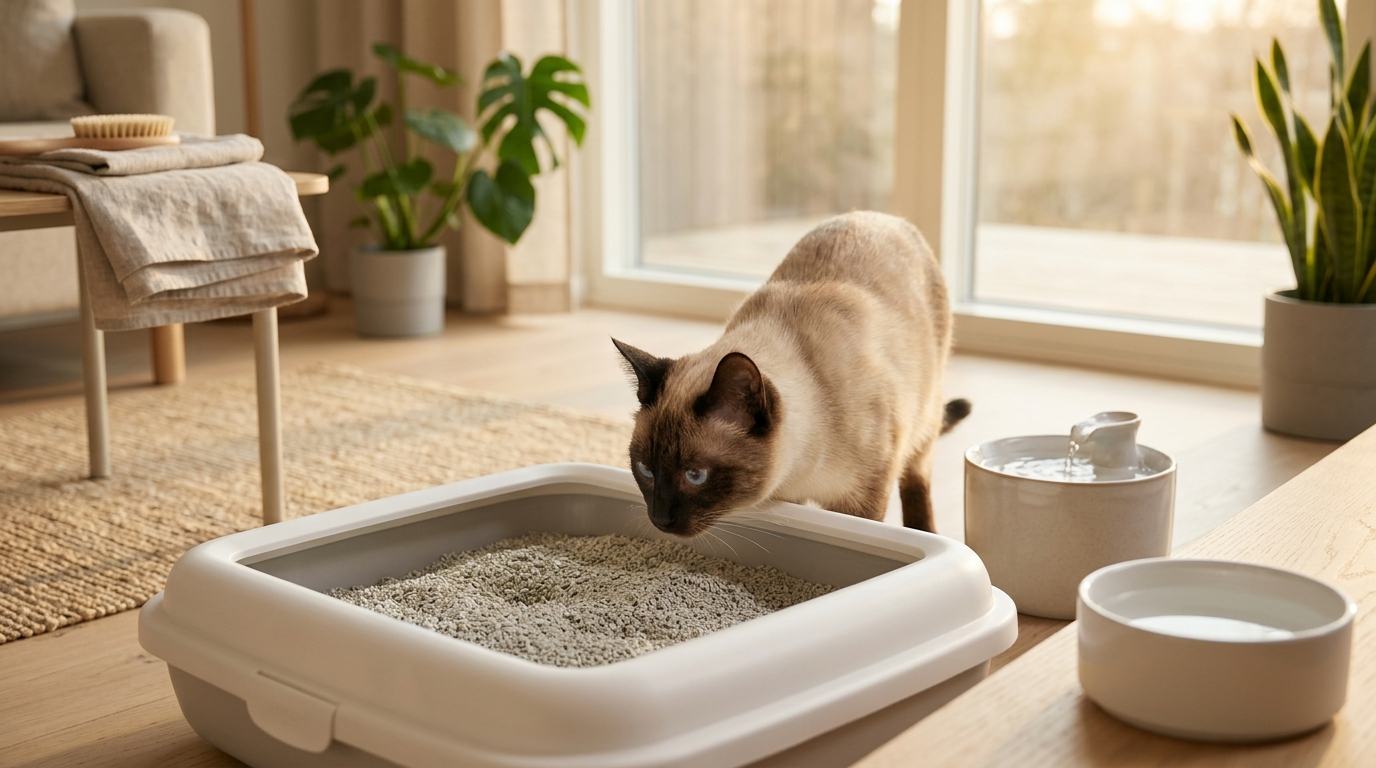
How much water does a cat need per day? Based on body weight, a cat needs approximately 40–60ml of water per kilogram of body weight daily (including water from food). For a 4kg cat, this is about 160–240ml. However, instead of obsessing over how many levels the water bowl has dropped, a more accurate method is to infer hydration from urine output and color—because the water they drink will ultimately be reflected honestly in the litter box.
In this article, we'll share our frontline experience from a cat hotel, where we scoop litter and observe each cat's water intake daily, to teach you how to read the "urine report card" to determine if your cat is drinking enough, and discuss the connection between summer dehydration and kidney health.
Key Takeaways
- A cat's total daily water requirement is about 40–60ml per kilogram of body weight (including water from wet food); a 4kg cat needs around 160–240ml.
- A normal adult cat urinates about 2–4 times a day, with a total daily urine volume of about 20–30ml per kilogram of body weight. Urinating less than once a day or producing unusually small urine clumps may indicate insufficient water intake.
- Healthy cat urine ranges from pale yellow to amber; a darker orange color or a particularly strong odor usually signals concentrated urine and insufficient water intake.
- Cats that only eat dry food naturally drink less, as dry kibble contains only about 10% moisture, while wet food can be 70–80%.
- Complete inability to urinate, frequent trips to the litter box with only a few drops, blood in urine, or vocalizing in pain are signs of a urinary emergency requiring immediate veterinary attention.
Why is Urine Output More Accurate Than Water Bowl Monitoring?
Many owners ask, "My cat doesn't seem to drink much water, is that normal?" However, simply looking at the water bowl is difficult to assess for three reasons:
- Cats often drink water when you're not paying attention (at night, while you're at work).
- In multi-cat households, it's impossible to tell who drank what.
- A significant portion of their water intake comes from their food and won't appear in the water bowl.
Therefore, when we assess a cat's hydration status at our facility, we rely on the size, quantity, and color of the urine clumps scooped daily. This is the most direct "output" data, far more accurate than staring at the "input" water bowl.
What is Normal Urine Output for Cats?
A healthy adult cat typically urinates 2–4 times a day, with a total daily urine volume of about 20–30ml per kilogram of body weight. In terms of litter clumps, a 4kg cat should produce about 2–3 clumps the size of a ping-pong ball to a golf ball per day.
Key indicators:
- Smaller, fewer urine clumps: May indicate insufficient water intake, leading to concentrated urine.
- Less than 1 urination per day, or no urination for over 24 hours: This is abnormal and warrants concern.
- Sudden increase in urine volume, or unusually large urine clumps: This is also not ideal and could indicate declining kidney concentrating ability or conditions like diabetes, requiring veterinary attention.
For more precise tracking, use a consistent brand of cat litter and record the urine clumps; changes will become more apparent. For information on litter and cleaning frequency, you can refer to our article How Often to Change Cat Litter? Clumping Litter, Full Changes, and Summer Deodorizing Frequency Guide.
How to Read Urine Color: A Chart to Gauge Water Intake
Urine color is the most intuitive indicator of a cat's hydration level. If you use white or light-colored mineral litter, the colors will be easier to see.
| Urine Color | Meaning | Recommendation |
|---|---|---|
| Pale Yellow, Straw-Colored | Well-hydrated, ideal state | Maintain current hydration |
| Medium Yellow | Within normal range | Monitor closely, especially in summer |
| Dark Yellow, Amber | Urine is concentrated, water intake may be insufficient | Actively increase water intake |
| Dark Orange, Tea-Colored | Significant dehydration or underlying issue | Increase water intake and observe; seek veterinary care if persistent |
| Pink, Red | Blood in urine, urinary tract issue | Seek immediate veterinary attention |
Besides color, odor is also a clue. Concentrated urine will have a stronger, more pungent ammonia smell. At our facility, if we notice a litter box smelling noticeably stronger than usual, it usually means that cat is drinking less water, and we'll immediately increase wet food and change the water. For managing general litter box odor in the summer, you can refer to Causes of Litter Box Odor, Deodorizing Methods, and Summer Cleaning Frequency Guide.
The Connection Between Water Intake, Urine, and Kidney Health
Cats are descendants of desert animals and are naturally "water-efficient"—their kidneys are adept at concentrating urine, allowing them to survive on minimal water. While this is an advantage in the wild, it can be a hidden concern for domestic cats:
- Cats' thirst drive is naturally less sensitive; they often "don't feel thirsty" and therefore don't drink enough.
- Long-term reliance on dry food (which contains only about 10% moisture) combined with low water intake can lead to chronic mild dehydration.
- This state puts a long-term strain on the kidneys, making it a significant risk factor for Chronic Kidney Disease (CKD), which is one of the most common diseases in senior cats.
This is why "drinking more water" is not a trivial matter for cats but a long-term commitment to protecting their kidneys. When you notice a senior cat starting to drink a lot and urinate a lot (polyuria and polydipsia), you should be alert. This could be a sign that kidney function is declining and the kidneys can no longer concentrate urine effectively, and a veterinary check-up for kidney values and urinalysis is recommended.
> Reminder: This article provides guidance for home observation and cannot replace a veterinary diagnosis. If your cat exhibits significantly abnormal urine output, dark orange or bloody urine, or a decrease in appetite or energy, please seek veterinary care promptly.
Why Are Cats Particularly Prone to Dehydration in the Summer?
Taiwan's hot and humid summers cause cats to lose moisture faster than you might think. During the summer, we pay special attention to these factors at the hotel:
- Panting for heat dissipation consumes water: Cats primarily dissipate heat through their paw pads and panting. In hot weather, water loss increases. If you notice your cat panting frequently with its mouth open, besides cooling down, be aware that it could be a danger sign. For more details, see Is Your Cat Panting with Its Tongue Out Because It's Too Hot? Distinguishing Normal Cooling from Dangerous Panting and First Aid.
- Decreased appetite: Cats tend to eat less in the summer, which also reduces the amount of water they get from their food.
- Increased risk of dehydration: In severe cases, this can lead to heat exhaustion or heatstroke.
Quick Home Dehydration Test
- Skin Tenting Test: Gently pull up the skin over your cat's shoulder blades and release it. It should snap back immediately. If it retracts slowly, your cat may be dehydrated.
- Check Gums: Healthy gums are moist and pink, feeling smooth to the touch. Dry, sticky, or pale gums are cause for concern.
- Energy and Appetite: Lethargy, hiding, and loss of appetite or thirst are all warning signs.
Heatstroke in cats is a medical emergency. For first aid and when to seek veterinary care, be sure to read What to Do If Your Cat Has Heatstroke? Summer Heat Exhaustion First Aid Steps and When to Seek Emergency Care.
How to Increase Your Cat's Water Intake?
The most effective way to increase water intake isn't by forcing them to drink from a bowl, but by adjusting their diet.
1. Increase Wet Food Proportion (Most Effective)
Wet food (pate, raw food) contains about 70–80% moisture. Switching a cat from dry food to partially wet food means they "eat and drink" water simultaneously. This is the method we most highly recommend. For guidance on choosing canned food, refer to How to Choose Kitten Canned Food? Differences Between Main and Supplementary Canned Foods and Summer Storage Tips. For cats needing extra moisture and protein, broth-based Luxury Functional Cans are also a good option for hydration.
2. Add Water or Ice Cubes to Canned Food
When feeding wet food, mix in an extra teaspoon of warm water, or add a small ice cube in the summer. Many cats enjoy this.
3. Provide More Water Bowls, Placed Separately
Place water bowls away from food and litter boxes, and set up multiple stations. Some cats dislike having their water near their food.
4. Maintain Water Freshness
Change the water at least 1–2 times daily, more frequently in the summer. This relates to the type of water dispenser used, but that's a topic for another day.
If your cat is particularly stubborn and refuses to drink much, don't force it. Refer to this specialized article: What to Do If Your Cat Won't Drink Water? Summer Hydration Tips and Signs of Dehydration.
Be Wary of These "Hydration Remedies"
Some owners consider giving cats watermelon or other fruits for hydration in the summer. It's important to note that cats do not need fruits for hydration, and some foods pose risks. Watermelon and mango should only be given in small amounts as treats due to their high sugar content, which can cause diarrhea. For more details, see What Happens If a Cat Eats Watermelon?. For a more comprehensive list of dangerous foods, be sure to bookmark What Can't Cats Eat? Common Household Dangers and Signs of Poisoning.
When to Seek Immediate Veterinary Care
The following situations require immediate veterinary attention, especially for male cats:
- Frequent trips to the litter box with only a few drops of urine, or complete inability to urinate—This could be a urinary blockage, which can be fatal for male cats within 1–2 days.
- Blood in urine, pink urine, or vocalizing in pain.
- No urination for over 24 hours.
- Obvious signs of dehydration (slow skin tenting), loss of appetite, lethargy.
These are urinary emergencies. Seek immediate emergency veterinary care without delay. If there are also signs of abnormal defecation, you can refer to Is It Normal for a Cat to Have Blood in Stool But Act Fine? for guidance.
Frequently Asked Questions
How much water is normal for a cat per day?
Approximately 40–60ml per kilogram of body weight, including water from food. A 4kg cat needs a total of about 160–240ml daily. Cats on wet food will drink significantly less from their water bowls than those on dry food, which is normal.
How many times a day is normal for a cat to urinate?
A healthy adult cat urinates about 2–4 times a day. Urinating less than once a day or not urinating for over 24 hours warrants concern. A sudden decrease or increase in urine clump size should also prompt a veterinary check-up.
What does dark yellow urine color indicate?
It usually signifies concentrated urine and insufficient water intake. You can try increasing wet food and fresh water for 1–2 days. If the urine remains dark orange, tea-colored, or bloody, seek veterinary care promptly for urinalysis and kidney function tests.
Is it normal for a cat on dry food to drink very little water?
Dry food contains only about 10% moisture. These cats do need to be encouraged to drink more water or supplemented with wet food. Long-term insufficient hydration can increase the burden on the kidneys and urinary tract, so increasing wet food intake is recommended.
Do cats need extra hydration in the summer?
Yes. Cats lose more water in the summer due to heat dissipation and decreased appetite, leading to reduced water intake. You can increase wet food, add water to canned food, provide multiple fresh water sources, and monitor for signs of dehydration and heatstroke.
---
Going away and need someone to ensure your cat stays hydrated and has fresh water? Consider our Boarding Services. Our hotel staff meticulously record each cat's water intake and urination status daily. You can find more products in our Shop.
*This article was compiled by the Cat Garden editorial team. The content provides general care advice and cannot replace veterinary diagnosis. Please seek prompt veterinary care for any cat health concerns.*
每月一封,精選養貓照護、住宿美容小知識與新品,不塞爆你的信箱。
Keep reading
What to Do If Your Cat Isn't Drinking Water? Summer Hydration Tips, Wet Food Ratios, and Dehydration Signs Explained
What should you do if your cat isn't drinking water? The most effective approach isn't necessarily buying a water fountain, but rather "hiding water in their food" – increasing wet food portions, adding more water bowls, and changing the water more frequently. This article guides you on assessing summer water intake, recognizing dehydration signs, and offers 6 practical tips that have been tested and proven effective.
Is Your Cat Panting with Its Tongue Out Because It's Too Hot? Distinguishing Between Normal Cooling, Open-Mouth Breathing, and Dangerous Panting, Plus Emergency First Aid
Brief panting with the tongue out in cats is usually a response to intense activity or overheating. However, if it lasts for more than a few minutes and doesn't stop even when resting, it should be treated as an emergency. This article will help you differentiate between normal and dangerous panting.
What is a Normal Cat Body Temperature? A Complete Guide from Paw Pads to Rectal Temperature (Including Senior Cats and Summer Variations)
A cat's normal body temperature is around 38.1–39.2°C (100.6–102.6°F), about 1–1.5 degrees higher than humans. This article compares the reliability of three home measurement methods with a numerical table, teaching you how to accurately interpret your cat's temperature.
