Blog
Is Your Cat Panting with Its Tongue Out Because It's Too Hot? Distinguishing Between Normal Cooling, Open-Mouth Breathing, and Dangerous Panting, Plus Emergency First Aid
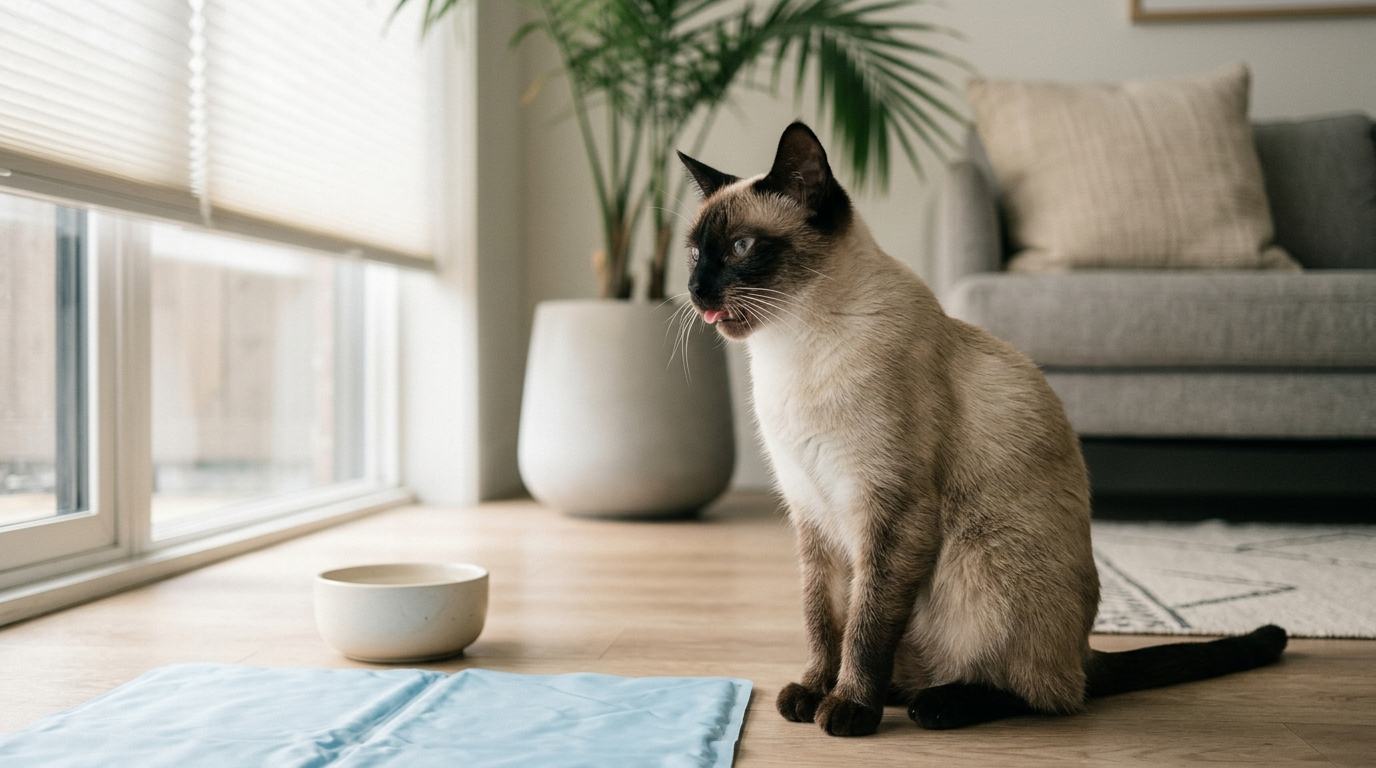
Panting with the tongue out in cats is usually a brief cooling response after intense play, stress, or when the weather is very hot. It typically stops on its own within a few minutes of rest. However, if your cat breathes with its mouth open even when calm, pants for more than 5-10 minutes without stopping, or its tongue turns purplish or becomes limp, it's not just about being "too hot" – it's an emergency requiring immediate cooling and veterinary attention.
Many owners panic when they see their cat panting with its tongue out, assuming it's just too hot. In reality, panting itself is a "signal." The key is to consider the context, duration, and any accompanying symptoms. In this article, we've compiled the methods we use in our facility, caring for hundreds of boarding cats, to quickly distinguish between "it's okay" and "something's wrong."
Key Takeaways
- A cat's normal resting respiratory rate is 20-30 breaths per minute. A rate exceeding 40 breaths per minute that persists warrants close observation.
- Brief panting with the tongue out after play or exertion usually resolves within 2-5 minutes. Spontaneous panting while at rest is abnormal.
- Cats' ability to dissipate heat is far less efficient than dogs'. Their primary cooling methods are sweating through paw pads and grooming, with open-mouth panting being a late-stage response indicating they are "struggling to cope."
- A purplish, white, or gray tongue or gums indicate severe oxygen deprivation and require immediate veterinary attention. Do not wait at home.
- Environmental cooling should be done gradually. Use room-temperature water to dampen paw pads and the abdomen. Never use ice or ice-cold water directly, as this can constrict blood vessels and be more dangerous.
Why Do Cats Pant? Understanding Their Cooling Mechanism
Unlike humans who sweat all over, cats don't typically pant for cooling like dogs do. Their methods for dissipating heat are actually quite limited:
- Sweating through paw pads: Cats have sweat glands concentrated in their paw pads, but they produce very little sweat.
- Cooling through grooming: They use saliva to wet their fur, relying on evaporation to carry away heat.
- Finding cool spots to lie down: Such as tile floors, bathroom tiles, or shady areas.
- Open-mouth panting: This is a last resort, indicating that other methods are insufficient.
In other words, while panting is common for dogs, it's relatively rare for cats. When a cat starts panting with its tongue out and mouth open, it often signifies that its thermoregulation is nearing its limit. For a more comprehensive understanding of a cat's heat tolerance, you can read this article: Do Cats Feel Hot? Understanding Cat Heat Tolerance, Cooling Methods, and Signs of Heatstroke in Summer.
Normal Panting: When Not to Worry Too Much
Not all panting with the tongue out is dangerous. The following situations are relatively common and usually resolve on their own, considered "physiological panting":
1. After Intense Play or Zoomies
It's normal for a cat to pant with its mouth open briefly after chasing a laser pointer or having a bout of zoomies, much like a human would after running. The key is that they should return to closed-mouth breathing within 2-5 minutes of rest. If your cat gets overly excited during play, you might also find this article helpful: Why Do Cats Suddenly Attack Their Owners? Reasons for Zoomies, Biting, and Over-Excitement, Plus Calming Methods.
2. High Stress or Anxiety
During car rides, vet visits, or significant environmental changes, some cats may pant due to extreme stress. We occasionally see this in new cats arriving at our facility; they usually calm down once placed in a quiet, dimly lit space.
3. When the Weather is Genuinely Hot
When outdoor temperatures soar above 30°C (86°F) in the summer and air conditioning isn't used, cats may pant to cool down. In such cases, prioritize lowering the environmental temperature and observe if the panting subsides.
> Principle for Judgment: Clear trigger (play, fear, heat) + Recovery within minutes after removing the trigger = Relatively Safe.
Dangerous Panting: Don't Wait for These Signs
Panting in the following situations is entirely different and indicates a medical problem requiring immediate action or even veterinary hospitalization:
- Continuous panting even during quiet rest: Spontaneous open-mouth breathing without any strenuous activity or in a non-hot environment.
- Panting that lasts for more than 5-10 minutes without stopping.
- Abnormal tongue or gum color: Purplish, white, or gray indicates oxygen deprivation.
- Rapid, shallow breathing with noticeable abdominal effort.
- Accompanied by coughing, drooling, lethargy, wobbly gait, or disorientation.
- Open-mouth breathing with the head and neck extended forward and elbows splayed outwards (a posture of labored breathing).
These symptoms could be related to heart disease, pulmonary edema, asthma, anemia, or heat exhaustion. Cats have poor respiratory compensation abilities, and their condition can deteriorate very rapidly once they start exhibiting labored breathing.
How to Count Respiratory Rate
When your cat is calm or asleep, observe the rise and fall of its chest and abdomen. Count one full cycle (rise and fall) as one breath. Count for 15 seconds and multiply by 4.
- Normal resting respiratory rate: 20-30 breaths per minute
- A rate exceeding 40 breaths per minute that persists warrants heightened vigilance.
- If your cat's resting respiratory rate exceeds 30 breaths per minute even while sleeping, it's advisable to seek veterinary evaluation of its heart and lungs as soon as possible.
This is a very practical home indicator and much more objective than simply "feeling like they're panting."
What to Do If Your Cat is Panting from Heat: On-Site Cooling Steps
If you determine the panting is due to heat, don't panic. Follow these steps:
1. Move to a cool, well-ventilated area: Turn on the air conditioning or a fan. Aim for an ideal room temperature of 25-27°C (77-81°F).
2. Dampen paw pads, abdomen, armpits, and inner thighs with room-temperature (not ice-cold) water: These areas are rich in blood vessels and dissipate heat most effectively.
3. Offer fresh drinking water: You can add a little tuna juice or broth to encourage drinking, but don't force it.
4. Maintain a calm environment, minimize stimulation, and allow your cat to recover.
5. Continuously monitor respiratory rate and tongue color.
⚠️ Absolutely do not use ice cubes, pour ice-cold water directly, or submerge the cat in ice water. Rapid cooling can cause peripheral blood vessels to constrict, preventing the core body heat from escaping and potentially leading to shock.
If the panting does not improve within 10 minutes of cooling, or if your cat exhibits symptoms like a purplish tongue or lethargy, take it to the veterinarian immediately. Keep the car cool during transport. For a complete first-aid guide, refer to What to Do If Your Cat Has Heatstroke: Emergency Steps, Cooling Methods, and When to Seek Veterinary Care, and for a comprehensive overview, see Do Cats Fear Heat? Signs of Heatstroke, Panting, and Summer Cooling Guide.
How to Prevent Your Cat from Panting Excessively in Summer
Prevention is always easier than emergency treatment. When caring for boarding cats during the summer, we primarily focus on these measures:
- Maintain room temperature: Even when no one is home during the day, it's recommended to use air conditioning or a timer to prevent room temperatures from exceeding 30°C (86°F).
- Provide multiple water sources and encourage drinking: Adequate hydration is crucial for both cooling and kidney health. Cats may not drink enough in the summer; a circulating cat water fountain can often significantly increase water intake.
- Groom to reduce heat buildup: During shedding season, frequent grooming helps remove dense undercoats. You can also learn more about When is Cat Shedding Season.
- Provide cool hiding places: Tile floors, well-ventilated cardboard boxes, or cooling mats are all good options.
- Pay special attention to long-haired cats, flat-faced breeds, overweight cats, and cats with heart conditions, as these categories are already at a disadvantage for heat dissipation and respiration.
If your cat has long or thick undercoats, moderate trimming during the summer can help alleviate heat discomfort. You are welcome to book a grooming appointment for this service; we will assess your cat's coat and skin condition to determine the appropriate level of trimming, rather than shaving them completely.
Observing Panting During Travel or Boarding
If you're entrusting your cat to a boarding facility during the summer, remember to inform them about your cat's normal breathing habits, any history of heart disease, or asthma. At Banqiao Cat Boarding, we conduct regular room checks, control temperatures, and record each cat's mental state and respiratory status to identify any abnormalities early on. If needed, you can also book a boarding stay to inquire about air conditioning and care details.
Furthermore, panting isn't always related to heat. Some instances of rapid breathing can reflect underlying health issues, such as anemia or cardiac strain. It's also helpful to observe changes in your cat's posture, as mentioned in Is a Cat's Loaf Position Comfortable or Sick?, where signs like "curling up tightly and breathing with difficulty" require cross-referenced assessment.
Frequently Asked Questions
Is it normal for a cat to pant with its mouth open?
Brief panting with a clear trigger (intense play, stress, hot weather) that resolves within minutes is usually normal. However, spontaneous panting while at rest, panting for more than 5-10 minutes, or accompanied by a purplish tongue is abnormal and requires immediate cooling and veterinary attention.
Does a cat panting with its tongue out always mean it's too hot?
Not necessarily. Being too hot is just one cause; heart disease, pulmonary edema, asthma, anemia, or severe pain can also lead to panting. The key is the context and duration. If the panting doesn't improve after removing the heat source, seek veterinary examination for potential underlying diseases.
How can I tell if my cat's panting is dangerous?
Observe three things: First, is the resting respiratory rate exceeding 40 breaths per minute? Second, is the tongue or gum color purplish or white? Third, is the cat exhibiting signs of labored breathing (head and neck extended, abdominal effort)? If any of these are present, it's an emergency.
What should I do if my cat is panting from heat? Can I use ice water?
No. Move your cat to a cool area at 25-27°C (77-81°F) and gradually cool it by dampening its paw pads and abdomen with room-temperature water, while also offering water. Ice water or ice cubes can constrict blood vessels, hindering core heat dissipation and posing a danger. If cooling doesn't help, seek immediate veterinary care.
Should I be concerned if my cat breathes fast while sleeping?
When deeply asleep and fully relaxed, a normal respiratory rate should be under 30 breaths per minute. If your cat's resting breathing rate exceeds 30 breaths per minute even while sleeping, or if there's noticeable abdominal movement, it's recommended to have its heart and lungs checked as soon as possible. This could be an early sign of heart or lung problems.
---
*This article was written by the CatBackyard editorial team. The information provided is based on general care experience. If your cat's breathing is abnormal and persists or worsens, seek veterinary attention immediately and do not delay treatment.*
每月一封,精選養貓照護、住宿美容小知識與新品,不塞爆你的信箱。
Keep reading
Is It Normal for Cats to Stick Out Their Tongues or Pant? Understanding Causes from Heat to Illness and Recognizing Danger Signs
A cat occasionally sticking out a little of its tongue is usually fine, but persistent open-mouth panting requires caution. This article helps you distinguish between relaxed behavior and danger signs of heat stress, respiratory, or heart conditions.
Do Cats Get Hot? Understanding Cat Heat Tolerance, Cooling Methods, and Summer Heatstroke Signs
Cats do get hot, but their strong tolerance and lack of obvious distress often lead owners to overlook the danger. This article explains feline thermoregulation, heatstroke symptoms, and cooling strategies.
Is It Normal for a Cat to Stick Its Tongue Out and Forget to Retract It? Understanding the Causes from Relaxation to Illness
A cat sticking its tongue out slightly and forgetting to retract it is usually a sign of relaxation, focus, or a brief moment of absentmindedness after grooming, and there's no need to worry. However, if accompanied by open-mouth panting, a purplish tongue, or drooling, it's a warning sign that requires veterinary attention.
