Blog
Why Is My Cat Crying All Night? Understanding the Causes and Soothing Methods, From Heat Cycles to Senior Cognitive Dysfunction
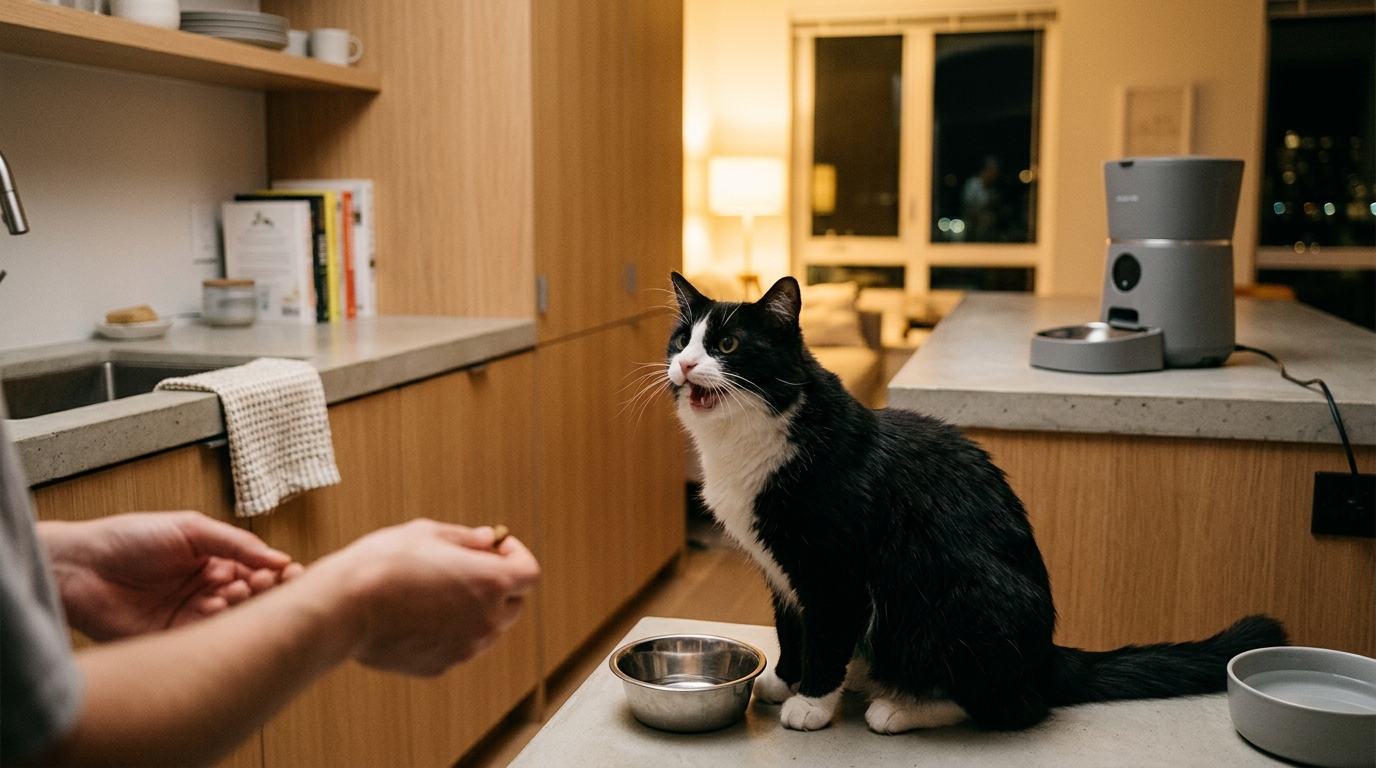
The most common reasons for a cat crying all night are heat cycles, demanding food (biological clock), anxiety, and cognitive dysfunction in senior cats. First, ensure your cat is not experiencing pain or acute illness, then address the specific cause, and most nighttime howling can be significantly improved.
At CatBackyard, we interact with numerous boarding and grooming cats daily, and the most frequent question from owners is, "My cat cries loudly all night, is it sick?" This article will use our frontline experience to help you distinguish between the causes.
Key Takeaways
- The four most common reasons for nighttime howling are: heat cycles, food demands, anxiety, and cognitive dysfunction syndrome (CDS). Cats over 7 years old should be primarily suspected of the latter.
- Unspayed cats in heat will exhibit continuous, high-pitched "yowling." Spaying is the fundamental solution. Female cats go into heat approximately every 2-3 weeks.
- If a senior cat's nighttime crying is accompanied by disorientation, inappropriate urination, or reversed sleep patterns, it could be Cognitive Dysfunction Syndrome (CDS). The prevalence significantly increases in cats over 11 years old, requiring veterinary assessment.
- If your cat's crying suddenly changes, is accompanied by decreased appetite, weight loss, or increased thirst and urination, prioritize ruling out diseases like hyperthyroidism, hypertension, or kidney disease.
- When crying for food, getting up to feed them at night actually reinforces the behavior. Instead, use a timed feeder and a substantial meal before bed.
First, Distinguish: Is it "Meow" or "Howl"?
A cat's vocalizations carry a lot of information. The typical "meow" used for affection is a short, higher-pitched communication sound. However, that long, low-pitched "howl" or "yowl" at night, sounding like crying or shouting, usually indicates a more intense physiological or emotional need.
At our facility, we first observe three things:
- Time of Crying: Only during specific nighttime hours, or all day?
- Type of Vocalization: Short meows, continuous meows, or low-pitched, drawn-out howls?
- Accompanying Behaviors: Treading with hindquarters raised (heat cycle), circling the food bowl (food demand), pacing at the door (anxiety), crying at empty space (senior cat).
These three points can generally correspond to the four main causes below.
Cause 1: Heat Cycle — The "Unspayed" Factor Most Easily Overlooked
If your cat is not spayed or neutered, that continuous, high-pitched, and seemingly desperate howl at night is almost certainly due to a heat cycle.
Typical Signs of a Heat Cycle
- Female Cats: Constant howling, lowering their body and raising their hindquarters, treading with hind legs, becoming exceptionally clingy.
- Male Cats: Restlessness, trying to escape outdoors, spraying urine (strong odor).
- Female cats go into heat approximately every 2-3 weeks. Without mating, they will repeatedly go into heat, causing distress to both the cat and the owner.
Solution
The most fundamental and humane solution is spaying or neutering. This not only stops heat-related howling but also reduces the risk of pyometra, mammary tumors, and spraying in males. If surgery cannot be scheduled immediately during a heat cycle, catnip or toys can temporarily distract them, but this is only a temporary fix.
Cause 2: Food Demands and Biological Clock — "Getting Up to Feed at Night" is a Major No-No
This is one of the most obvious behaviors we observe during boarding. Cats are crepuscular animals, meaning dawn and dusk are their natural active and hunting periods. Many cats' "nighttime crying" is actually their 4 or 5 AM food alarm.
Why Does Feeding Them Make Them Cry More?
Here's the crucial point: If you get up to feed your cat even once at night, or pet them to quiet them down, the cat learns that "crying equals food or attention." This is classic behavioral reinforcement and can turn nighttime howling into a long-term habit.
Solution
- Provide a full, substantial meal before bedtime to help your cat fall asleep with a full stomach.
- Use a timed automatic feeder to dispense small portions automatically in the early morning, so the cat seeks out the machine instead of you.
- Engage in more interactive play with wand toys during the day to help them expend energy before sleep.
- If your cat needs weight management, control portion sizes carefully. You can refer to How to Control Your Cat's Diet? Portion Sizes, Calorie Calculation, and Strategies for Summer Snacking.
Important Reminder: It is crucial to remain unresponsive when your cat cries for food at night. This usually improves significantly within one to two weeks. Giving in midway will undo all your efforts.
Cause 3: Anxiety and Unmet Needs — They're Crying "I Need You"
Some cats cry at night not because they are hungry or in heat, but due to loneliness, boredom, or anxiety caused by environmental changes.
Common Scenarios
- Recently moved to a new home, relocation, or rearranged furniture.
- Owner's schedule changes, working late.
- Addition of new family members (new cat, baby, new partner).
- Litter box is too dirty, water bowl is empty, or resources are insufficient.
Cats are sensitive to environmental changes. They express unease through howling, as if confirming, "Are you still there?" These cats often pace back and forth near the door or in the hallway while crying.
Solution
- Deep interaction before bedtime: Play with a wand toy for 15-20 minutes until they are panting, then provide their main meal. Tired cats sleep better. To understand why cats like to be close to you, read Why Do Cats Like to Lie on People and Stick to Them While Sleeping?.
- Enrich their daytime environment: Provide scratching posts, window perches, and puzzle feeders to keep them occupied during the day.
- Check resources: Ensure water is fresh and clean (consider How to Choose a Cat Water Fountain Recommendation). Keep the litter box clean; a dirty box can cause anxiety and crying.
- For a deeper understanding of your cat's emotional signals, we recommend our series on What Does Your Cat's Sleeping Position Mean? Interpreting Sleeping Postures, Locations, and Their Affection Level.
If anxiety is significant, catnip toys can help some cats relax. We often use Premium Catnip Leaves at our facility to encourage cats to play until satisfied before bedtime.
Cause 4: Senior Cognitive Dysfunction (CDS) — Age-Related Factors Behind Nighttime Crying
If you have a mature cat over 7 years old, or even a senior cat over 11, and they suddenly start crying loudly at night, howling at walls or empty corners, you should seriously suspect Cognitive Dysfunction Syndrome (CDS, similar to dementia in humans).
Typical Manifestations of Nighttime Crying in Senior Cats
- Reversed sleep patterns: Sleeping heavily during the day and being awake and restless at night.
- Howling at empty space or corners with a vacant stare.
- Seeming lost in their familiar home, unable to find the litter box.
- Reduced interaction and slower responses, or conversely, becoming unusually clingy.
Solution
- Veterinary consultation is essential: Nighttime crying in senior cats can also be caused by hyperthyroidism, hypertension, kidney disease, joint pain, or declining vision and hearing. These require blood tests and blood pressure measurements to rule out.
- Maintain a consistent environment: Do not move litter boxes, water bowls, or sleeping areas. This reduces disorientation.
- Leave a night light on to help senior cats with declining vision feel more secure.
- Senior cats have a higher burden on their kidneys, making adequate hydration crucial. Refer to How Much Water Does a Cat Need Daily? Inferring Water Intake and Kidney Health from Urine Volume and Color for care.
⚠️ Important Reminder: If the crying suddenly changes in nature, or is accompanied by decreased appetite, weight loss, increased thirst and urination, or lethargy, do not delay in taking your cat to the veterinarian. Nighttime howling might be a behavioral issue, or it could be your cat's way of signaling a health crisis.
When Should You Definitely See a Vet?
Please prioritize veterinary care in the following situations rather than just trying to soothe your cat:
- The nature of the vocalization changes significantly in a short period.
- Accompanied by abnormal appetite, weight loss, vomiting, diarrhea, or noticeably increased thirst and urination.
- Unusual gait or inability to jump to previously accessible heights (suspected pain).
- A senior cat suddenly starts howling at night, urinating inappropriately, or appearing disoriented.
- Lethargy or abnormal hyperactivity.
What If My Cat Cries at Night While I'm Away?
Many owners discover their cat cries much more intensely at night when they are away from home – this is often separation anxiety combined with a lack of supervision. If you frequently travel for business or leisure, instead of leaving your cat anxious and alone at home, consider professional boarding to ensure regular feeding and companionship.
To understand the differences between boarding and other options, read What is a Cat Cafe? How Does it Differ from Cat Hotels and Cat Rescues? and How to Choose Cat Boarding in Banqiao? Summer Travel, Prices, Environment, and Preparation. You are also welcome to book boarding directly when needed.
Frequently Asked Questions
My cat cries all night, is it okay to get up and comfort them?
If the crying is for food or attention, getting up to respond will actually reinforce the behavior, making them cry more often. It's recommended to increase interaction during the day, feed them well before bed, and consistently ignore nighttime crying. However, if it's a senior cat suddenly howling at night or accompanied by abnormal symptoms, it requires attention and veterinary care.
Will my cat still howl in heat at night after being spayed/neutered?
In most cases, heat-related howling stops after spaying or neutering. A small number of female cats may still exhibit heat behaviors if residual ovarian tissue remains. If howling and treading continue after surgery, a follow-up veterinary check is recommended.
Is nighttime crying in senior cats always due to dementia?
Not necessarily. Nighttime crying in senior cats can be due to cognitive dysfunction, but it is also commonly seen in cases of hyperthyroidism, hypertension, kidney disease, joint pain, or declining vision/hearing. It is crucial to have a veterinary check-up, including blood tests and blood pressure evaluation, to determine the true cause.
Can catnip stop my cat from crying at night?
Catnip can help some cats relax and expend energy before bedtime, indirectly improving nighttime restlessness. However, it cannot address underlying issues like heat cycles, food demands, or illnesses. It can only serve as an auxiliary tool.
How long does it typically take for nighttime crying to improve?
If the cause is behavioral (food or attention seeking), with consistent pre-bedtime feeding, daytime exercise, and unwavering non-response, significant improvement is usually seen within 1-2 weeks. Heat cycles require spaying/neutering. Illnesses or cognitive dysfunction require following the veterinarian's treatment plan, with timelines varying by individual case.
---
*This article was written by the CatBackyard editorial team, combining frontline experience from cat boarding and grooming. The health information provided is for reference only. If your cat's symptoms persist or worsen, please consult a veterinarian as soon as possible.*
每月一封,精選養貓照護、住宿美容小知識與新品,不塞爆你的信箱。
Keep reading
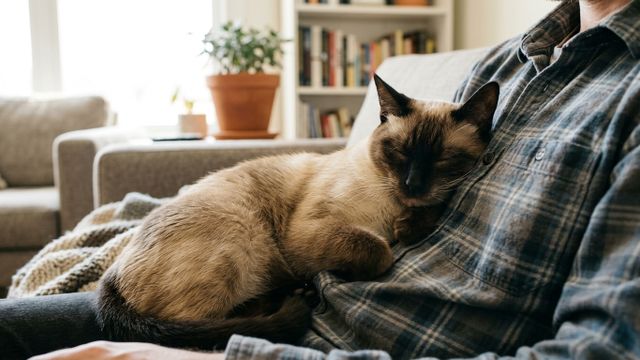
Why Do Cats Like to Lie on People and Sleep Clingy? Understanding Trust, Warmth, and Territory
Cats enjoy lying on people primarily because they trust you, consider you their safest territory, and your body temperature is their preferred source of warmth. This article breaks down the three main reasons: trust, seeking warmth, and territorial marking.
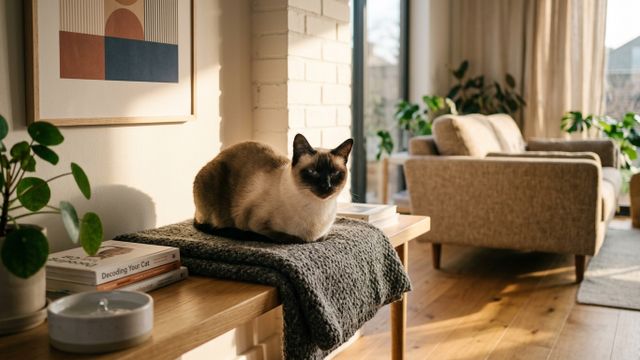
Is Your Cat's "Chicken Leg" Pose Always a Sign of Discomfort? Learn to Distinguish Between Relaxation and Hidden Pain
A cat's "chicken leg" pose is usually a natural posture for relaxation and warmth, not necessarily discomfort. The key is to assess it alongside appetite, energy levels, and breathing. This article teaches you how to tell when to worry.
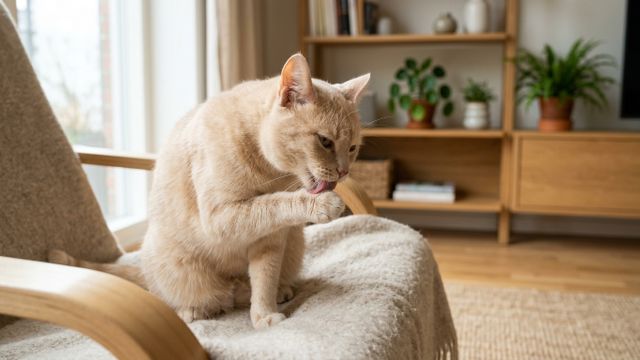
Is it Normal for Cats to Lick Their Paws, and Why Do They Lick Their Front Legs Constantly? Understanding Grooming, Anxiety, and Skin Conditions
Cats licking their paws is usually normal grooming behavior. However, if a cat constantly licks the same front paw, leading to hair loss, redness, or swelling, or if accompanied by behavioral changes, it could signal anxiety, pain, or a skin condition.
