Do Spayed Cats Need Monthly Baths? Check Their Sebum, Shedding, and Skin Condition First
Do spayed cats absolutely need a bath once a month? Spayed cats don't necessarily require monthly baths. The key factors to consider aren't "whether they're spayed," but rather their sebum production, coat condition, odor, and skin health. Many indoor cats groom themselves regularly.
Key Takeaways
- Spayed cats don't necessarily need monthly baths. The real indicators are sebum production, coat condition, odor, and skin health, not just the spay status.
- After spaying, some cats may become less active and gain weight, potentially leading to poorer grooming habits. Areas like the back, base of the tail, or belly might be harder to clean. In such cases, a slightly more frequent bathing schedule might be considered compared to more active cats.
- Prioritize addressing skin redness, excessive dander, scabs, or persistent licking over a dirty coat. Bathing cannot replace veterinary diagnosis; washing inflamed or wounded skin can actually irritate it further.
- In dry, air-conditioned environments, cats may develop dander or static electricity. This doesn't always mean they're dirty; it could be dry skin. Frequent bathing might exacerbate dryness.
- Elderly cats, those with weaker cardiopulmonary function, or cats that have experienced significant stress during baths should not adhere to a fixed monthly schedule. If a bath leads to decreased appetite, hiding, panting, or aggressive behavior, re-evaluate the frequency.
Do Spayed Cats Absolutely Need a Bath Once a Month?
Spayed cats don't necessarily require monthly baths. The real indicators are sebum production, coat condition, odor, and skin health, not just the spay status. Many indoor cats groom themselves regularly. If their environment is clean and their skin is stable, bathing frequency can be extended and doesn't need to be a strict monthly affair.
After spaying, some cats may become less active and gain weight, potentially leading to poorer grooming habits. Areas like the back, base of the tail, or belly might be harder to clean. In such cases, a slightly more frequent bathing schedule might be considered compared to younger, more active cats, but it should still be adjusted based on individual circumstances. If your cat becomes stressed, pants, or hides for a long time after each bath, it indicates that a "fixed monthly bath" might not be the best care approach.
Check Sebum, Odor, and the Base of the Tail First
When determining bathing frequency, gently feel the base of the tail, the spine, and behind the ears. If your fingers feel noticeably oily, or if the fur clumps together, or if the comb feels sticky, it indicates significant sebum buildup. While spayed male cats have reduced hormonal influence, the base of their tail can still become oilier than other areas.
Odor is also a useful clue, but it's important to distinguish between coat odor, bad breath, or smells from the litter box. If the smell is just from their sleeping area, cleaning their bedding and increasing brushing might suffice. If your cat has a sour or greasy smell, or if they quickly become smelly again after a bath, it's advisable to check their skin or ear condition in addition to adjusting bathing frequency.
Skin Condition is More Important Than Coat Appearance
A coat that looks dirty doesn't necessarily mean an immediate bath is needed. Redness, excessive dander, scabs, or persistent licking are more critical signals that require attention. Bathing can remove dirt and some oils, but it cannot replace veterinary diagnosis. Washing inflamed or wounded skin can actually irritate it further.
What we use for this
CatGarden’s own products, shipped from Taiwan

How Shedding Season, Rainy Season, and Air Conditioning Affect Bathing Frequency
During seasonal changes in Taiwan, many cats enter a noticeable shedding phase, especially long-haired or double-coated breeds, which can lead to matting. While bathing frequency doesn't necessarily need to increase during this time, brushing frequency usually does. If undercoat is trapped or mats are forming, brushing them out before bathing is safer than submerging them directly in water.
The rainy season and humid summers can make the coat feel stuffy and can contribute to moisture buildup in bedding, cat trees, and window sills. In small, poorly ventilated urban homes, cats' odors might be more noticeable than during drier seasons. In such cases, consider shortening the bathing interval, but also address dehumidification and cleaning of sleeping mats and litter boxes.
Air-conditioned rooms present a different scenario. When the air is dry, some cats may develop dander or static electricity in their fur. This doesn't always mean they're dirty; it could be dry skin. If you frequently bathe your cat to remove dander, it might actually make their skin drier. It's better to adjust brushing habits, environmental humidity, and use moisturizing cleaning products.
Which Cats Are Not Suited for a Strict Monthly Bath Schedule?
Elderly cats, those with weaker cardiopulmonary function, or cats that have experienced significant stress during baths should not adhere to a fixed monthly schedule simply because the calendar dictates it. For cats, bathing involves being held, blow-dried, exposure to new sounds, and physical restraint, which can be more stressful than owners realize. If your cat shows decreased appetite, hides, pants, or exhibits aggressive behavior after a bath, re-evaluate the bathing frequency.
Cats with skin wounds, suspected fungal infections, severe itching, or abnormal ear discharge should also not have their grooming baths scheduled without veterinary consultation. These conditions require veterinary assessment to determine if medicated baths, treatment, or a temporary pause in bathing is necessary. Grooming can help clean and manage the coat, but medical issues should not be treated as mere dirt.
Short-Haired Cats Don't Necessarily Need More Frequent Baths Either
Short-haired cats' coats lie closer to the skin, making oiliness and dander sometimes more apparent. However, this doesn't mean they require monthly baths. If they groom normally, have clean skin, and no strong odor, regular brushing and spot cleaning can maintain a good condition. In fact, overweight cats, those with joint discomfort, or those with reduced flexibility may need more frequent checks of areas they can't easily reach.
Home Checks to Perform Before Booking a Cat Groomer
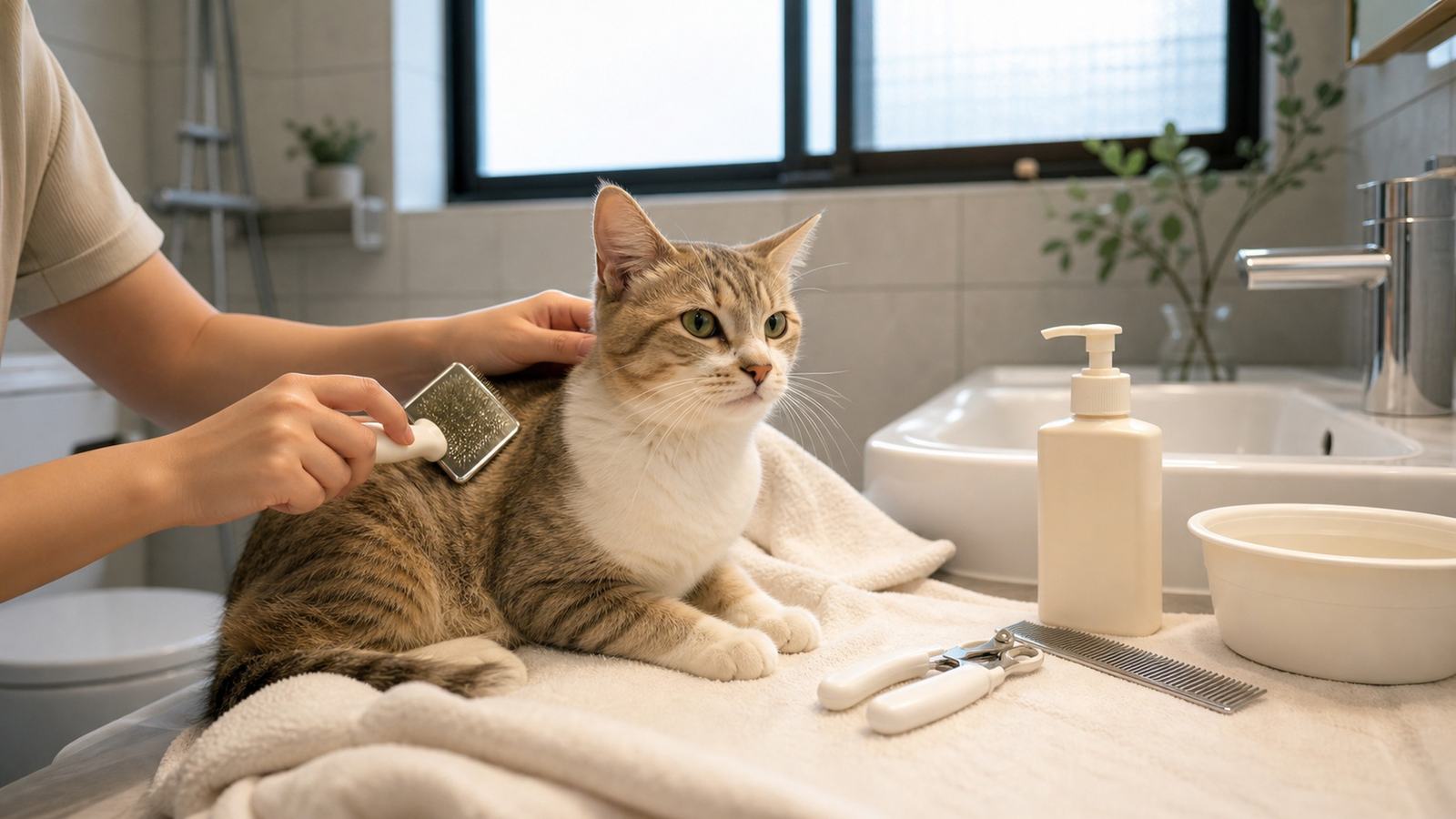
Before booking a professional grooming session, owners can give their cat a full-body check. Feel for any mats, dander, red spots, scabs, or unusual lumps. Check the ears for excessive dark discharge, trim nails if they're too long, and inspect the area around the hindquarters for any fecal matter or litter residue. This information helps the groomer determine the appropriate bathing frequency and treatment plan.
It's also recommended to record the date of the last bath, your cat's reaction afterward, and any recent changes in diet, litter, or cleaning products. If your cat is easily stressed, inform the groomer beforehand about their fear of blow dryers, strangers, or any history of biting or scratching. More complete information helps reduce stress and risks during the grooming process.
- Feel: Check the base of the tail, back, armpits, and belly for oiliness or mats.
- Look: Examine the skin for redness, flaking, scabs, or any unknown wounds.
- Smell: Differentiate between a musty coat smell, urine odor, or potential ear or mouth issues.
- Record: Note the date of the last bath, the cat's condition afterward, and recent environmental changes.
For Help with Assessment, Trust Grooming Services Familiar with Cats
If you're unsure about your cat's bathing frequency, instead of sticking to a rigid schedule, consider a comprehensive coat and skin assessment. Cat Garden is familiar with common issues faced by indoor cats in Taiwan, such as humidity, shedding, oily tails, and stress. They can arrange a suitable grooming rhythm based on your cat's age, coat type, personality, and skin condition.
It's also helpful to have suitable cat brushes, cleaning wipes, nail clippers, and a carrier readily available for more stable daily care. If you want to start with home grooming, choosing cat products can be tailored to coat length, shedding volume, and sensitivity, eliminating the need to wait until mats form or odors appear.
FAQ
How often should a spayed cat be bathed?
Most healthy indoor cats do not need a fixed monthly bath. Frequency can be adjusted based on sebum production, odor, shedding, and skin condition. A common range might be every few weeks to several months, but there's no single standard. If your cat tends to get oily, is overweight, or has reduced grooming ability, discuss bathing frequency with a groomer.
My cat's tail base is oily; does it need a bath?
An oily tail base can be due to sebum buildup, or it might be related to insufficient cleaning or skin conditions. For mild oiliness, try increasing brushing and spot cleaning to see if it improves. If there's redness, black spots, scabs, or odor, it's recommended to have a veterinarian or professional groomer assess it first.
Does the rainy season require increased bathing frequency?
Not necessarily. Start by improving dehumidification, cleaning bedding, tidying the litter box, and increasing brushing. If oiliness or odor persists, then consider shortening the bathing interval.
My cat is very afraid of baths; does it still need regular grooming?
Cats that are very afraid of baths don't necessarily need to be forced. You can start with nail trimming, brushing, spot cleaning, or stress-reducing grooming techniques. If your cat experiences severe stress during every bath, reduce the frequency and choose a grooming environment familiar with feline behavior. If necessary, consult a veterinarian to confirm their physical condition is suitable for bathing.
Further Reading
- What to Do If Your Cat Suddenly Develops More Dandruff? Check Bathing Frequency, Humidity, and Diet First
- Should Cat Nails Be Trimmed Before Bathing? Consider Scratch Risks, Desensitization, and Grooming Appointment Order
- How to Choose a Pet Hair Dryer? Compare Airflow, Noise, and Drying Methods for Your Cat After a Bath
Common Questions
How often should a spayed cat be bathed?
Most healthy indoor cats do not need a fixed monthly bath. Frequency can be adjusted based on sebum production, odor, shedding, and skin condition. A common range might be every few weeks to several months, but there's no single standard.
My cat's tail base is oily; does it need a bath?
For mild oiliness, try increasing brushing and spot cleaning to see if it improves. If there's redness, black spots, scabs, or odor, it's recommended to have a veterinarian or professional groomer assess it first.
Does the rainy season require increased bathing frequency?
Not necessarily. Start by improving dehumidification, cleaning bedding, tidying the litter box, and increasing brushing. If oiliness or odor persists, then consider shortening the bathing interval.
My cat is very afraid of baths; does it still need regular grooming?
Cats that are very afraid of baths don't necessarily need to be forced. You can start with nail trimming, brushing, spot cleaning, or stress-reducing grooming techniques. If your cat experiences severe stress during every bath, reduce the frequency and choose a grooming environment familiar with feline behavior.
What home checks can be done before booking a cat groomer?
Give your cat a full-body check for mats, dander, red spots, scabs, or lumps. Also, check ear discharge, nail length, and the condition around the hindquarters. Record the date of the last bath, the cat's reaction afterward, and any recent environmental changes.
CatGarden offers curated supplies, cat boarding, and grooming
Book services or shop online.