The Complete Guide to Cat Neutering | Post-Op Care for Male & Female Cats, Appetite Changes, and Debunking 5 Myths
"I heard neutered cats get super fat!" "It's better for female cats to have one litter before being spayed for better health..." Do you often hear these "urban legends" and myths about cat neutering from neighbors, friends, or even online, leaving you hesitant and confused about whether to take your feline friend for "egg removal" or "ovary removal"?
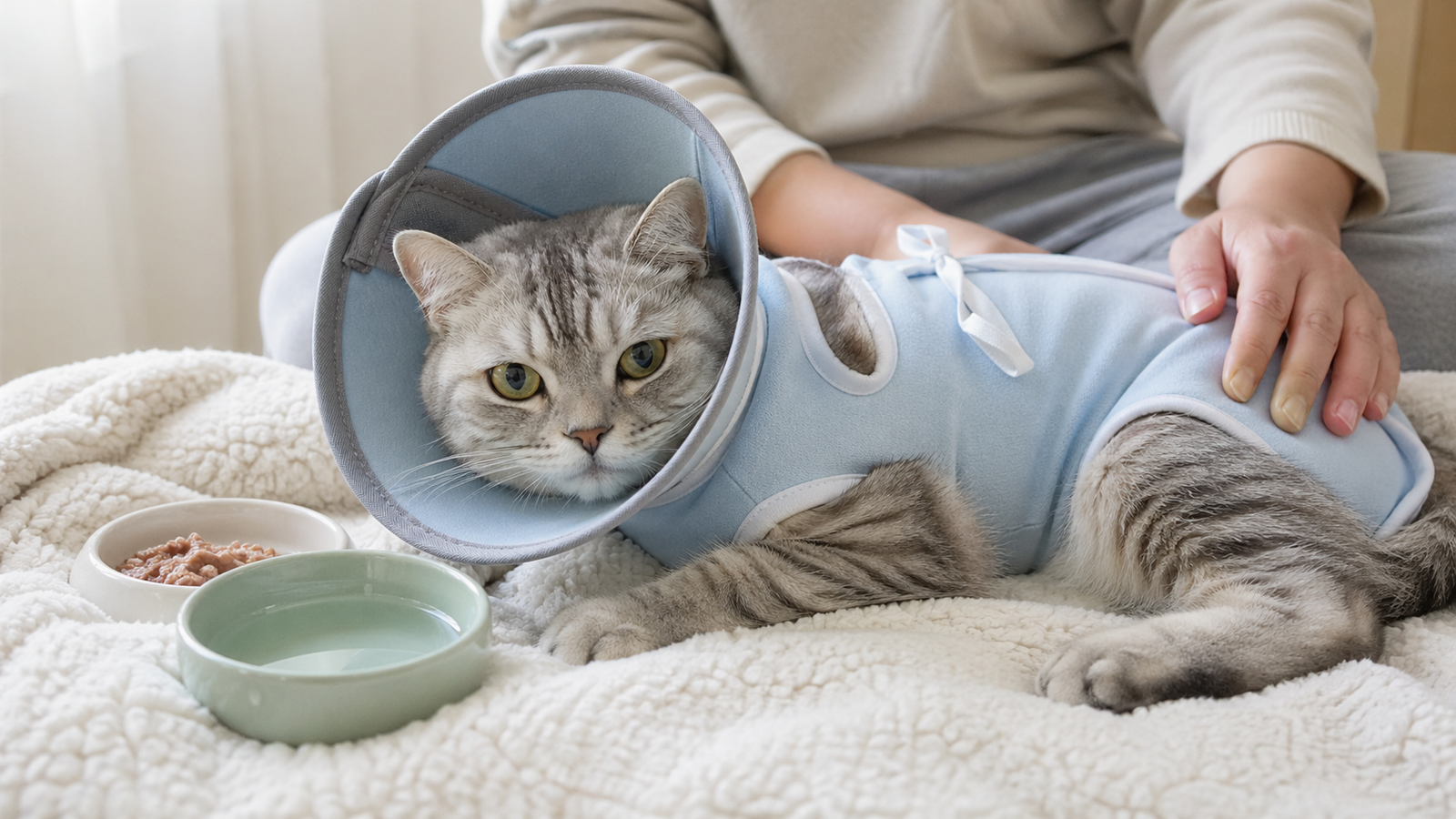
"I heard neutered cats get super fat!" "It's better for female cats to have one litter before being spayed for better health..." Do you often hear these "urban legends" and myths about cat neutering from neighbors, friends, or even online, leaving you hesitant and confused about whether to take your feline friend for "egg removal" or "ovary removal"? Don't worry! Today, we're going to debunk these 5 most common cat neutering myths one by one, so you can understand the truth more clearly and make the best decision for your furry friend's health with peace of mind!
Myth Buster 1: "Neutered cats will definitely get as fat as a pig raised by grandma?"
Wrong! Very wrong! Whether a cat becomes a "fatty" or a "chubby bunny" mainly depends on the balance between their "food intake" and "exercise," and it's not directly related to the neutering surgery itself. After neutering, due to hormonal changes, a cat's metabolism might slightly decrease, and their activity level might not be as frantic as before. However, as long as owners strictly control their food portions, don't let them eat and drink endlessly, and spend some time playing with them daily with a feather wand or encouraging them to run and jump to maintain adequate exercise, you don't have to worry too much about your cat getting uncontrollably fat!
Myth Buster 2: "It's better for female cats to have one litter and experience the fullness of life before being spayed?"
This is absolutely an outdated and incorrect notion! Pregnancy and childbirth are very energy- and nutrient-depleting events for female cats, posing a certain burden and risk to their health. Furthermore, there is no scientific evidence to suggest that letting a female cat have a litter before spaying is better for their health. Instead, it is recommended to spay the cat when she is an adult and in good health (usually before or after her first heat, discuss the best timing with your veterinarian). This approach can also effectively and significantly reduce their risk of developing gynecological diseases such as mammary tumors and pyometra in the future!
Myth Buster 3: "Neutering cats too early will stunt their growth and make them 'small cats'?"
This is also a false statement! A cat's size is primarily determined by the "growth hormone" secreted by their pituitary gland. It's the "sex hormones" (like testosterone in male cats and estrogen in female cats) that cause the growth plates in the bones to close prematurely, thus affecting the final development of their physique. Therefore, timely neutering might actually cause the growth plates to close later, and theoretically, the cat might even grow a bit larger! (Of course, genetics play the main role!)
Myth Buster 4: "Neutered cats are more prone to urinary tract diseases?"
Actually, feline urinary tract diseases (such as cystitis, urinary stones, etc.) are mainly related to their "insufficient water intake" or "prolonged emotional stress," and have no direct connection to the neutering surgery itself. To effectively prevent cats from developing urinary tract diseases, the most important thing is to encourage them to drink more water! It is recommended to have multiple water bowls placed around the house or use a pet drinking fountain. In terms of diet, you can also incorporate some wet food with higher water content, such as CatGarden Luxury Functional Cans, to increase your cat's water intake and help maintain urinary tract health.
Myth Buster 5: "Male cats don't give birth, so is it really necessary to neuter them?"
If you can completely accept that a male cat in heat might spray urine around the house to mark territory, meow incessantly at night "looking for a partner," or even try every means to "escape" in search of love... then perhaps you can consider it. But honestly, unneutered cats during their heat cycle often become more anxious, restless, and lose their appetite, which severely affects their quality of life and can be a significant nuisance for owners. Therefore, unless you plan to breed your cat, it is still recommended to neuter male cats!
How to Help Your Cat Maintain Good Health After Neutering Surgery?
After neutering surgery, due to hormonal changes, a cat's metabolic rate may indeed decrease slightly. At this time, dietary adjustments and moderate exercise become even more important:
- Dietary Management: It is recommended to choose nutritionally balanced, high-quality cat food or wet food. For example, you might consider products like CatGarden Luxury Functional Cans, which provide rich protein and essential nutrients for your cat while also helping with hydration. Remember to adjust feeding portions according to your cat's age, weight, and activity level to avoid overfeeding.
- Regular Exercise: Dedicate some time each day to play with your cat using a feather wand or other toys. This not only helps them expend energy and maintain a healthy physique but also strengthens the bond between you and your cat!
After reading this article, do you have a clearer answer to your questions about cat neutering? If you have any other questions about cat neutering or any experiences you'd like to share, feel free to leave a comment below and let's discuss!
Key takeaways
- The best time for cat neutering/spaying is when they weigh over 2 kg and are around 6 months old. For male cats, it's recommended between 6 to 8 months before they start spraying urine. For female cats, spaying before their first heat (around 5 to 6 months) significantly reduces the risk of mammary tumors.
- After neutering/spaying, due to hormonal changes and decreased metabolism, cats may have an increased appetite 2 weeks to 3 months post-surgery. It's recommended to switch to scheduled feeding, reduce portion sizes, and lower daily calorie intake by about 20% to 30% to prevent obesity.
- A cat's size is determined by growth hormones, not the timing of neutering/spaying. Timely neutering/spaying can delay the closure of growth plates stimulated by sex hormones, and will not stunt a cat's growth.
- Male cats have both testicles removed during neutering and can go home the same day. It's normal for them to exhibit brief mating behaviors within 1 to 2 months post-surgery due to residual hormones, which is a normal physiological transition.
- Urinary tract diseases in cats, such as cystitis or urinary stones, are primarily related to insufficient water intake or chronic emotional stress and are not directly linked to the neutering/spaying surgery itself.
At What Age Can Male and Female Cats Be Neutered? The Best Timing Revealed
This is the most frequently asked question by new cat owners. The current consensus among veterinarians is: cats weighing over 2 kg and around 6 months old can undergo neutering surgery.
- Male Cats: It is ideal to neuter them between 6-8 months old, before they start spraying urine. If spraying behavior has already developed, it may not completely disappear after neutering.
- Female Cats: It is recommended to spay them before their first heat (around 5-6 months old) to minimize the risk of mammary tumors. If they have already gone into heat, it is advisable to schedule the surgery within 2 weeks after the heat cycle ends.
As for "what happens if male cats are neutered too early?" As long as they are over 4 months old, meet the weight requirement, and are in good health, early neutering (pediatric neuter) has been standard practice in shelters abroad for many years without significant observed side effects, so owners can rest assured.
What Happens After Male Cat Neutering? Will the "Testicles" Still Be There?
Male cat neutering involves the removal of both testicles. The incision is very small and usually does not require stitches. The cat can go home the same day of the surgery. Many owners ask: "Will the scrotum still be visible after neutering?" The answer is—the scrotal sac remains, but it will be empty. It will naturally shrink within a few weeks, appearing as a small wrinkled fold.
After neutering, male cats typically exhibit these changes:
- Significant reduction in urine spraying and yowling for mates.
- Decreased territoriality and lower risk of fighting injuries.
- More affectionate and clingy personality.
- May still experience brief heat cycles within 1-2 months post-surgery due to residual hormones, which is normal.
Are Increased Appetite and Decreased Appetite After Cat Neutering Normal?
Hormonal changes after neutering affect both "satiety" and "basal metabolic rate," leading to two common extremes:
- Increased Appetite: This is most common between 2 weeks and 3 months post-surgery, where cats will constantly beg for food. It is recommended to switch to scheduled feedings and reduce daily calorie intake by about 20-30% to prevent them from becoming obese within a year.
- Decreased Appetite: It is normal for cats to temporarily not eat much for 1-3 days post-surgery due to anesthesia and pain. If they completely refuse to eat for over 48 hours, be sure to return for a veterinary check-up. During the recovery period, choose highly palatable and easily digestible wet food to supplement hydration and protein, such as CatGarden Luxury Functional Cans, along with probiotics to aid in digestive transition.
Will Female Cat's Emotions and Personality Change After Neutering?
Most female cats may experience a temporary period of low mood, hiding, and aloofness towards their owners within 1-2 weeks after spaying, due to the drop in hormones and post-operative discomfort. This is a normal physiological adjustment period. After recovery, most female cats become more affectionate and stable, no longer yowling at night, rolling around, or having erratic appetites due to heat cycles.
FAQ: Common Questions About Cat Neutering
Q1: What happens if a male cat is not neutered?
The most common issues include urine marking, nocturnal howling, risk of getting lost outdoors, fighting injuries, and an increased risk of prostate diseases in old age.
Q2: Will a male cat still go into heat after neutering?
Within 1-2 months post-surgery, due to incomplete hormone metabolism, brief heat behaviors may still occur, after which they will completely stop. If heat behavior continues beyond 3 months, a veterinary check-up is recommended to rule out residual testicular tissue.
Q3: How to care for a male cat after neutering?
The incision is small and usually does not require an Elizabethan collar, but the cat should be prevented from licking or biting it. Reduced activity and potential lack of eating/drinking within 24 hours post-surgery are normal. It is recommended to use low-dust cat litter such as Ultra-Fine Tofu Litter 3.0 to prevent wound infection.
Q4: Will female cats get fat after spaying?
Yes, but the main reason is that owners do not adjust their food intake. As long as the calorie intake is reduced post-surgery and 15-20 minutes of interactive play are maintained daily, their physique can be kept in good condition.
References
FAQ
At what age are male and female cats recommended to be neutered/spayed?
The general consensus among veterinarians is that cats can be neutered/spayed when they reach over 2 kg and are around 6 months old. For male cats, it's recommended between 6 to 8 months before they start spraying urine. For female cats, the surgery should be completed before their first heat (around 5 to 6 months).
Is it better for female cats to get pregnant and have a litter before being spayed?
No, it is not necessary. Pregnancy poses health burdens and risks for female cats, and there is no scientific evidence suggesting that spaying after a litter is better. Spaying before the first heat significantly reduces the risk of mammary tumors and pyometra.
Why do neutered male cats still exhibit mating behaviors?
Within 1 to 2 months post-surgery, residual hormones in the body may cause brief mating behaviors, which will then cease. If the behavior continues beyond 3 months, it's recommended to consult a veterinarian to check for any remaining testicular tissue.
Is it normal for cats to have a poor appetite after neutering/spaying? How long should I wait before seeking veterinary care?
A reduced appetite for 1 to 3 days post-surgery due to anesthesia and pain is normal. However, if your cat completely refuses to eat for more than 48 hours after surgery, it is crucial to take them back to the veterinarian immediately for examination.
CatGarden offers curated supplies, cat boarding, and grooming
Book services or shop online.