Does a Disinfectant Smell at the Cat Groomer Mean It's Clean? Check Cleaning Frequency, Antiseptic Products, and Cat Stress First
Why a cat groomer's cleanliness can't just be judged by the smell of disinfectant. Many owners walk into a cat grooming salon and their first thought is, "It smells like disinfectant, so it must be clean." However, for cats, scent is not a source of security; it can actually be a source of stress.
Key Takeaways
- A disinfectant smell at a cat grooming salon doesn't necessarily mean it's clean. The scent only indicates that cleaning agents were used, not that tools, cages, and the environment have been thoroughly cleaned. Key indicators are cleaning frequency, ventilation, residual fur, and the establishment's ability to explain their procedures.
- Cats have a much keener sense of smell than humans. Overpowering disinfectant, fragrance, or cleaning agent residues can make cats anxious even before grooming, becoming a source of stress rather than security.
- Tool segregation is crucial. Items like brushes, clippers, and nail scissors that come into contact with skin, fur, and dander should be cleaned after each cat. Having backup tools for rotation is also important.
- When visiting a cat groomer for the first time, observe five details: ventilation, flooring, fur, scent, and traffic flow. The cat waiting area should be away from dogs, high foot traffic, and the entrance to minimize stress.
- If the establishment cannot explain their cleaning frequency, becomes impatient with questions, or if there's a strong pungent odor, dirty cages, mixed-up tools, slippery floors, or if cats are placed in noisy areas, consider finding another groomer.
Why a Cat Groomer's Cleanliness Can't Just Be Judged by the Smell of Disinfectant
Many owners walk into a cat grooming salon and their first thought is, "It smells like disinfectant, so it must be clean." However, for cats, scent is not a source of security; it can actually be a source of stress. Cats have a much keener sense of smell than humans, and overpowering disinfectant, fragrance, or cleaning agent residues can make them anxious even before grooming.
What's truly worth observing isn't just whether the place smells clean, but whether cleaning is done regularly, tools are segregated, and the environment is well-ventilated. Taiwan's humid climate, especially during the plum rain season and summer, makes it easier for fur, moisture, and odors to accumulate. A good cat grooming salon won't just mask environmental issues with strong scents; they'll integrate cleaning procedures into their daily routine.
Before Booking: Ask About Cleaning Frequency, Tool Segregation, and Cage Cleaning
Before booking, you can ask the establishment a few simple questions, such as, "Is the table and tools cleaned after each cat's grooming session?" "Are brushes, scissors, and nail clippers disinfected?" "How often are the cat waiting area and grooming area cleaned?" These questions don't need to be sharp; the key is whether the establishment can answer them clearly. If they simply say, "We disinfect everything," but can't explain the general process, further observation is warranted.
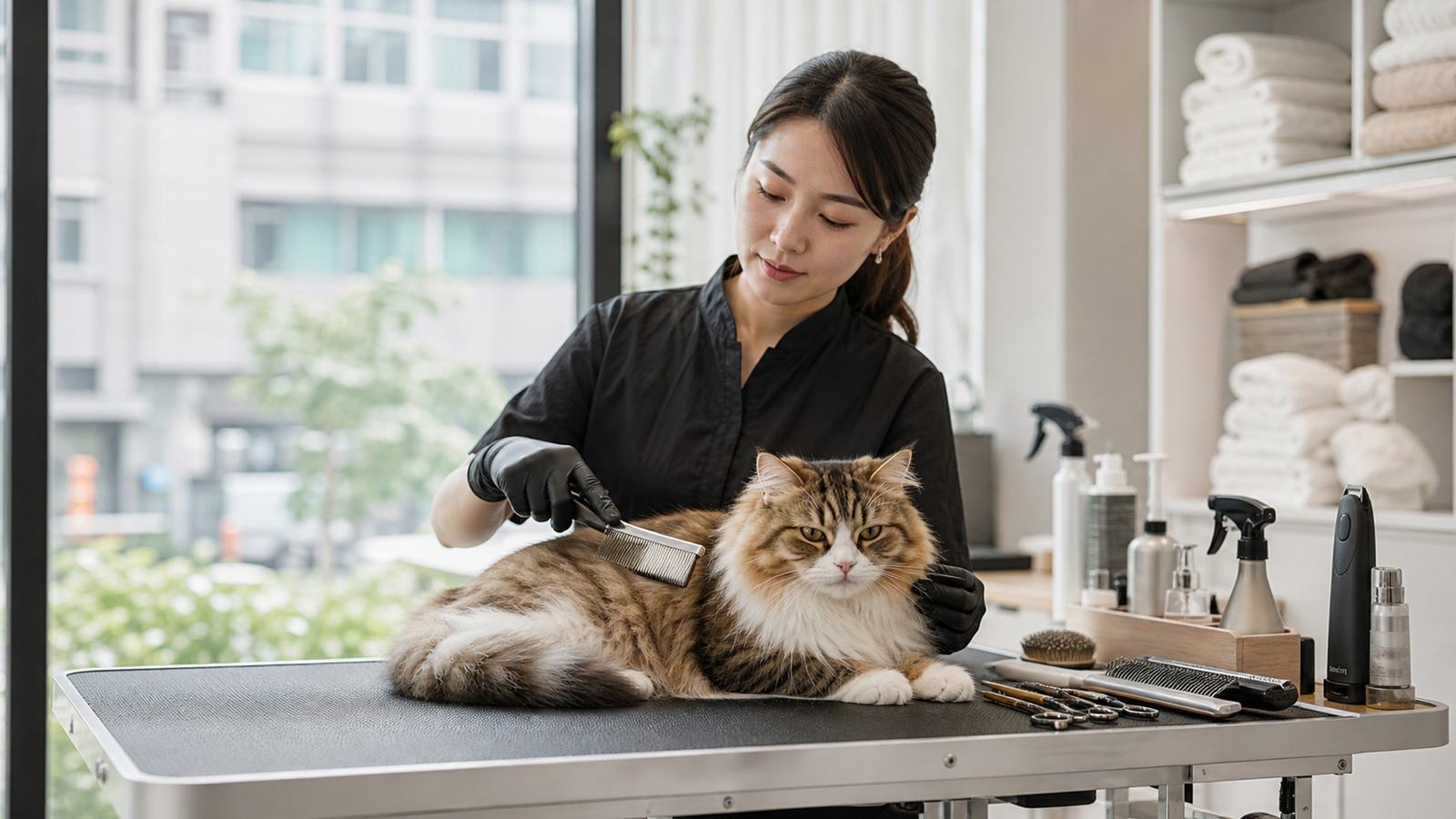
Tool segregation is also important, especially for items like brushes, clippers, and nail scissors that come into contact with skin, fur, and dander. Ideally, these should be cleaned after each cat, and backup tools should be available for rotation. If fur is piled up and tools are casually placed on uncleaned surfaces, even if the air smells of disinfectant, it doesn't mean the procedures are reliable.
Cages and Waiting Areas: Observe "What Happens After the Last Cat Leaves"
Some cats need to wait or rest, so cage cleanliness can't just be superficial. Bedding, towels, food and water bowls, and corners of the cage can retain fur, saliva, or odors. You can ask if the establishment replaces bedding and wipes down cages after each use, and confirm that cats are placed in quiet locations.
What we use for this
CatGarden’s own products, shipped from Taiwan

How to Assess Antiseptic Sprays and Cleaners to Avoid Irritating Cats
More antiseptic products aren't necessarily better; the key lies in their ingredients, where they are used, and drying time. If cleaning agents are sprayed and cats are immediately placed on the grooming table, they might inhale the fumes or come into contact with residues. A more ideal approach involves sufficient ventilation and waiting time after cleaning to avoid irritating the cat's nose, eyes, and skin.
Owners can look for establishments that use low-irritant cleaning products suitable for pet environments, rather than relying solely on fragrances or strong bleach odors. If staff can explain which areas are cleaned with what methods and how often, it usually indicates a more systematic management approach. Conversely, if the cat grooming salon is constantly spraying air fresheners or antiseptic sprays without clear cleaning actions, be cautious, as it might just be odor management.
Inform Them About Sensitive Cats in Advance
If your cat has previously shown sensitivity to odors, sprays, detergents, or environmental changes, inform the establishment when booking. This includes excessive drooling, panting, hiding, hissing, or skin redness after grooming. Professional establishments will adjust waiting times, minimize irritating scents, and may even suggest booking during quieter periods if necessary.
Observe 5 Details on-Site: Ventilation, Flooring, Fur, Scent, and Traffic Flow
When visiting a cat grooming salon for the first time, don't rush to hand over your cat. Take a few minutes to observe the environment. Ventilation is the first priority; the air should circulate, but cats shouldn't be directly exposed to strong drafts. If the salon feels stuffy and humid, mixed with fragrances and animal odors, it suggests the environment might be difficult to keep dry.
Second, look at the floors and corners for excessive fur, wet spots, urine odors, or cleaning blind spots. Third, check the grooming table and tool area for residual fur from the previous cat. Fourth, assess the scent; it doesn't need to be completely odorless, but it shouldn't be pungent. Fifth, observe the traffic flow; ensure the cat waiting area is away from dogs, high foot traffic, and the entrance, as this directly impacts their stress levels.
- Ventilation: Air circulation, low humidity, no pungent disinfectant smell.
- Flooring: No slippery surfaces, fur accumulation, or obvious odors.
- Fur: No significant fur residue on grooming tables, tools, or in corners.
- Scent: No masking with fragrances; cleaning scents should not be uncomfortable for humans or cats.
- Traffic Flow: Cats are not disturbed by frequent door openings, human voices, or other animals.
When to Consider Changing Groomers or Booking with a Professional Cat Groomer
If the establishment cannot explain their cleaning frequency or seems impatient with owner inquiries, it's advisable not to proceed. Cat grooming isn't just about getting them clean and looking good; it also involves safe handling, emotional observation, and environmental control. This is especially important for timid, elderly, cats with previous skin issues, or those prone to anxiety, who require a stable process.
If there's a strong pungent odor, dirty cages, mixed-up tools, slippery floors, or if cats are placed in noisy areas, consider finding another groomer. Once a cat accumulates stress during grooming, they may be even more resistant to future outings. Choosing a professional cat groomer who understands cat behavior and is willing to explain their procedures is usually more important than just price or distance.
Don't Just Aim for "Quick Completion"
Some owners want their cats to be groomed as quickly as possible, but rushing can also increase risks. A good groomer will adjust steps based on the cat's condition, such as providing comfort, grooming in stages, or pausing if it's not suitable to continue. If the establishment honestly informs you that the cat is not suitable for a full grooming session that day, it indicates they prioritize safety.
FAQ
Does a disinfectant smell at a cat groomer mean it's cleaner?
Not necessarily. A disinfectant smell only indicates that cleaning agents may have been used, and doesn't directly equate to thoroughly cleaned tools, cages, and environment. It's recommended to also consider cleaning frequency, ventilation, fur residue, and the establishment's ability to explain their procedures.
Are cats afraid of cleaning agents or antiseptic sprays?
Some cats are very sensitive to odors, especially fragrances, alcohol, or freshly sprayed cleaning agents. If your cat is prone to anxiety, inform the groomer in advance and ask them to arrange a time with better ventilation and fewer disturbances.
What should I ask when visiting a cat groomer for the first time?
You can ask if the table and tools are cleaned after each grooming session, how tools are disinfected, if cages are cleaned for each cat, and if cats will be exposed to other animals while waiting. The more specific the establishment's answers, the easier it is to determine if they have stable procedures.
Is it normal for a cat to lick its fur excessively after grooming?
Short-term grooming of the fur might be a normal reaction, but if the cat continues to lick, scratch, hide, or develops redness on its skin, observe if it's due to the shampoo, shaving, or stress. If the situation persists, consult a veterinarian and avoid applying any unknown products yourself.
How often should a cat be groomed?
This depends on fur length, shedding amount, skin condition, and the cat's tolerance for going out. Long-haired cats, those prone to matting, or those experiencing significant shedding may require more regular brushing and grooming. Short-haired cats don't necessarily need frequent baths; the focus should be on daily brushing and a clean environment.
Conclusion
When choosing a cat grooming salon, don't be swayed solely by the smell of disinfectant. What truly provides peace of mind is visible cleaning frequency, reasonable use of antiseptic products, clear tool segregation, and procedures that understand how to reduce cat stress. CatGarden prioritizes the cat's habits in arranging the environment and services, focusing on scent, traffic flow, waiting areas, and grooming rhythm, making bathing, brushing, and trimming not just tasks, but care processes designed to minimize stress as much as possible. If you are looking for a more reassuring cat grooming experience, we welcome you to book a consultation starting with your cat's personality and needs.
Further Reading
- Can You Stockpile Buy-One-Get-One Cat Food? Check Expiration Dates, Ingredients, and Transition Risks First
- How to Choose an Anti-Itch Cat Shampoo? Look at Herbal Ingredients, Fragrance, and Post-Wash Skin Reactions
- Is It Safer for Cats Not to Be Leashed During Grooming? Consider Two-Person Handling, Escape Risks, and Stress Signals
Common Questions
Does a disinfectant smell at a cat groomer mean it's cleaner?
Not necessarily. A disinfectant smell only indicates that cleaning agents may have been used, and doesn't directly equate to thoroughly cleaned tools, cages, and environment. It's recommended to also consider cleaning frequency, ventilation, fur residue, and the establishment's ability to explain their procedures.
Are cats afraid of cleaning agents or antiseptic sprays?
Some cats are very sensitive to odors, especially fragrances, alcohol, or freshly sprayed cleaning agents. If your cat is prone to anxiety, inform the groomer in advance and ask them to arrange a time with better ventilation and fewer disturbances.
What should I ask when visiting a cat groomer for the first time?
You can ask if the table and tools are cleaned after each grooming session, how tools are disinfected, if cages are cleaned for each cat, and if cats will be exposed to other animals while waiting. The more specific the establishment's answers, the easier it is to determine if they have stable procedures.
Is it normal for a cat to lick its fur excessively after grooming?
Short-term grooming of the fur might be a normal reaction, but if the cat continues to lick, scratch, hide, or develops redness on its skin, observe if it's due to the shampoo, shaving, or stress. If the situation persists, consult a veterinarian and avoid applying any unknown products yourself.
How often should a cat be groomed?
This depends on fur length, shedding amount, skin condition, and the cat's tolerance for going out. Long-haired cats, those prone to matting, or those experiencing significant shedding may require more regular brushing and grooming. Short-haired cats don't necessarily need frequent baths; the focus should be on daily brushing and a clean environment.
CatGarden offers curated supplies, cat boarding, and grooming
Book services or shop online.