Is It Safer for Cats to Be Groomed Without Restraints? First, Consider Double-Handed Restraint, Escape Risks, and Stress Signals
No restraints doesn't mean no restraint: See how the shop stabilizes the cat first. Many owners instinctively think "no restraints" is gentler, but at a cat grooming session, the key isn't the presence of a leash, but how the shop stabilizes the cat safely.
Key Takeaways
- "No restraints" for cat grooming doesn't automatically mean safer; the crucial factor is how the establishment stabilizes the cat. Without proper restraint, handling, or escape prevention measures, cats can still jump off tables or bolt.
- Ideal low-stress restraint involves wrapping the cat in a towel, supporting its chest and pelvis with hands, and keeping it close to the table or a non-slip mat, rather than simply pulling its neck or limbs.
- Cat stress signals go beyond vocalizations; flattened ears, rapid breathing, sweating paws, and frequent nose licking are all indicators to watch for. A quiet, stiff posture can also signal fear.
- Cats prone to bolting during baths, extreme fear of water, difficulty breathing when outside the home, or those with cardiopulmonary diseases, a history of seizures, or advanced age are not suitable for forceful bathing. Skin conditions like redness, wounds, or suspected fungal infections should be checked by a veterinarian first.
- Many cats fear the blow dryer more than the bath itself. The strong wind, heat, noise, and confinement of the drying area can cause cats to bolt or hit the cage, requiring constant supervision and adjustments based on their reactions.
No Restraints Doesn't Mean No Restraint: See How the Shop Stabilizes the Cat First
Many owners instinctively think "no restraints" is gentler. However, in a cat grooming setting, the key isn't the presence of a leash, but how the establishment stabilizes the cat safely to complete the process. Unlike dogs, cats aren't accustomed to standing on grooming tables and can easily become anxious due to unfamiliar environments, the sound of blow dryers, or water. If there are no restraints or handling procedures, the risk of the cat jumping off the table, bolting, or getting injured can actually increase.
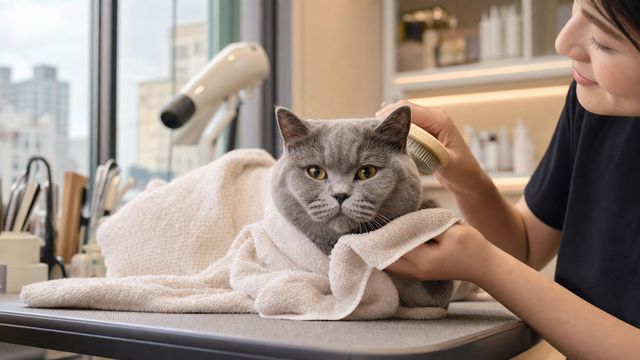
A more ideal approach involves using low-stress, short-duration, and segmented methods to help stabilize the cat. This might include wrapping the cat in a towel, supporting its chest and pelvis with your hands, and keeping the cat close to the table or a non-slip mat, rather than simply pulling its neck or limbs. A good cat grooming service considers both "minimal restriction" and "preventing loss of control," rather than using "no restraints" as a sole guarantee of safety.
What to Confirm with Double-Handed Service? Division of Labor, Techniques, and Observing Cat Stress
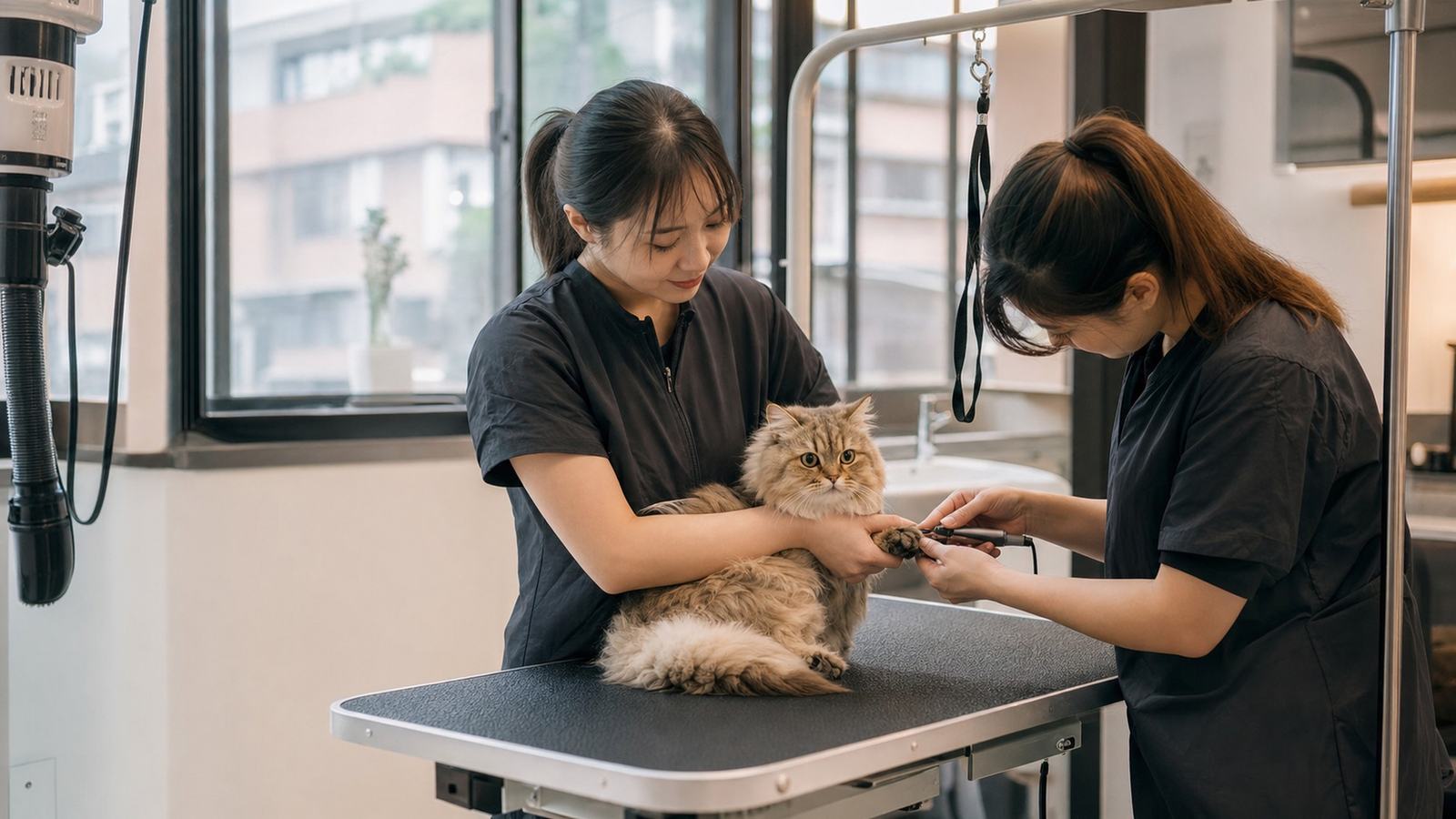
If a shop advertises double-handed service, owners can ask about the division of labor between the two individuals. Typically, one person handles the main tasks like bathing, nail trimming, shaving, or drying, while the other focuses on stabilizing the cat and observing its breathing and body language. This arrangement has a better chance of reducing pulling compared to one person struggling alone and allows for an earlier pause if the cat's stress levels rise.
However, two people don't automatically guarantee safety; the key lies in their skill and technique. If both individuals simply hold the cat down simultaneously, it might panic even faster, exhibiting hissing, dilated pupils, rapid tail flicking, growling, or attempts to escape. Professional cat grooming should focus on observing stress signals rather than solely aiming to "complete the bath."
Stress Signals Aren't Just About Vocalizations
Some cats will meow, hiss, or swat when scared, but others become quietly rigid, leading people to mistakenly believe they are cooperating. Flattened ears, rapid breathing, sweating paws, and frequent nose licking are all signals that require attention. Establishments that can adjust their pace when these reactions occur are generally more trustworthy than those that push through regardless.
Before booking, you can ask the shop how they handle an overly stressed cat. Reasonable responses should include pausing, completing the service in stages, rescheduling, recommending a veterinary consultation, or performing only essential tasks. If the shop guarantees they can groom even the "fiercest" cats, you should evaluate them more cautiously.
What we use for this
CatGarden’s own products, shipped from Taiwan

Which Cats Are Not Suitable for Forceful Bathing? Fear of Water, Bolting, Cardiopulmonary Risks, and Skin Conditions
Not every cat is suitable for direct bathing, especially those that have bolted during previous baths, have an extreme fear of water, experience shortness of breath when outside the home, have a history of cardiopulmonary disease, or are elderly. Taiwan's summers are humid and hot, and long-haired cats, or those prone to oily or matted fur, may indeed need grooming. However, individual conditions must be considered. Cat grooming isn't about sending the cat in for a full wash regardless; it's about assessing risks first.
If a cat has skin redness, wounds, suspected fungal infections, severe shedding, or unexplained itching, it's recommended to consult a veterinarian first to determine if bathing or shaving is appropriate. Groomers can assist with cleaning and brushing but should not replace medical diagnosis. Cats with heart conditions, asthma, or a history of seizures are particularly vulnerable, as the stress of bathing and drying can worsen their condition.
Forceful Bathing Can Make Future Grooming More Difficult
Some owners might think, "It's just a little discomfort, it will pass." However, cats have strong memories of fearful experiences. If a cat's first grooming session involves being forcibly held down, subjected to prolonged blow-drying, or constantly frightened, it might hide or become aggressive the next time a carrier is brought out. Completing a cleaning session quickly might not be worth the trade-off of long-term, severe resistance.
A better strategy is to start with nail trimming, brushing, partial cleaning, or short adaptation sessions. For cats that fear water, alternatives like dry baths, spot cleaning, or targeted shaving of mats can be discussed. Safe grooming procedures should allow for adjustments based on the cat's condition that day, rather than rigidly applying the same routine.
Escape Risks at the Grooming Salon: Entry Control, Layout, Drying Area, and Carriers
Once a cat escapes in an unfamiliar environment, the risks are higher than with dogs, as they might hide in cabinets, ceiling spaces, under doors, or bolt directly out of the shop. Shops in Taiwanese urban areas are often located along roads, arcades, or on the ground floor, making entry and layout design crucial. When choosing a cat grooming salon, owners should look not only at technical skills but also at the presence of escape prevention measures.
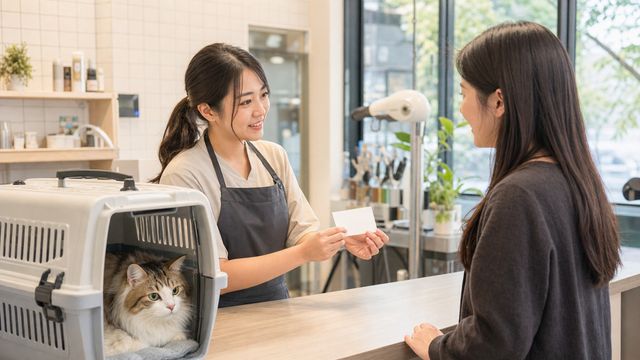
Observe if the shop has double doors, gates, or a buffer zone. Is the path from the grooming table to the exit too direct? Is the drying area a separate, enclosed space? Carriers are also important. When taking a cat out, use a sturdy, lockable hard-sided or reliable soft-sided carrier; carrying the cat or using a simple bag is not recommended. When entering or leaving the shop, it's best to wait until staff confirm the environment is safe before opening the carrier door.
The Drying Area is a Common Stress Escalator
Many cats fear the blow dryer more than the bath itself. The strong wind, heat, noise, and confinement can cause cats to suddenly bolt or hit the cage. Whether the shop uses drying boxes, hand dryers, or low-noise equipment, they should explain temperature control, monitoring methods, and the frequency of mid-process checks.
Owners can ask if someone will be supervising the drying process continuously and how they will handle situations where the cat is panting, drooling, agitated, or repeatedly hitting the cage. Safety isn't just about new equipment; it's about continuous human judgment. A good cat grooming process views drying as part of risk management, not just waiting for the fur to dry.
6 Safety Questions to Ask Before Booking
Asking questions before booking isn't about being difficult; it's about reducing risks for yourself and your cat. Professional establishments are usually willing to explain their procedures and will likely ask about the cat's age, health status, past grooming experiences, whether it bites or scratches, and if it has any medication or medical history. If a shop doesn't inquire about the cat's condition at all and is only eager to schedule an appointment, owners should be more cautious.
The following 6 questions can help you quickly assess whether the shop understands cat safety. The answers don't have to be identical for every shop, but you should be able to discern a concrete procedure rather than just vague assurances like "Don't worry" or "We have a lot of experience." Especially when arranging cat grooming for the first time, prior confirmation is far more important than post-incident remedies.
- 1. When not using restraints, how will the cat be stabilized? Confirm if towels, non-slip mats, double-handed support, or staged handling are used, rather than allowing the cat complete freedom of movement on the table.
- 2. What is the division of labor for double-handed service? Understand who performs the tasks, who observes the cat's condition, and how they will pause if the cat struggles.
- 3. Will the service stop if the cat becomes too stressed? Professional establishments should be willing to perform partial cleaning, reschedule, or suggest a veterinary consultation.
- 4. How does the shop prevent cats from escaping? You can inquire about entry controls, waiting areas, drying areas, and carrier opening procedures.
- 5. How are drying temperature and time controlled? Confirm if someone checks regularly and if adjustments are made based on the cat's reactions.
- 6. What health information needs to be provided in advance? This includes age, history of cardiopulmonary disease, skin issues, medications, vaccinations, and past grooming reactions.
The truly suitable grooming arrangement for a cat isn't about finishing the bath as quickly as possible, nor is it solely about whether restraints are used. It involves checking the restraint methods, double-handed division of labor, stress observation, escape prevention layout, and drying safety together. If you are evaluating cat grooming services, it's recommended to first compile your cat's age, health status, and past bathing reactions, then discuss suitable service options with the shop. Cat Garden offers care and cleaning plans centered around feline behavior, allowing owners to book cat grooming based on their actual needs for safe bathing, brushing, mat removal, and daily care.
FAQ
Q1: Is cat grooming without restraints always safer?
Not necessarily. While avoiding restraints can reduce the risk of strangulation or pulling, cats can still jump off tables or bolt if there isn't proper restraint, handling, or escape prevention. The key is how the establishment stabilizes the cat, not just whether a leash is used.
Q2: For a cat's first grooming session, is a full bath recommended?
A full grooming session isn't always recommended initially. If the cat rarely goes out or is easily stressed, start with nail trimming, brushing, partial cleaning, or short adaptation sessions. Once the cat is more comfortable with the environment, then consider a full cat grooming session.
Q3: If a cat is very aggressive, can the grooming salon force a bath?
Forceful bathing is not recommended as a primary option. Aggression, bolting, or extreme fear usually indicate excessive stress. Forcing the process can lead to injury and make future grooming more difficult. Discuss staged or partial grooming with the shop, or consult a veterinarian first.
Q4: How often should cat grooming be scheduled?
The frequency depends on fur length, skin condition, home humidity, shedding, and the cat's self-grooming ability. Short-haired cats mostly need daily brushing and occasional cleaning, while long-haired or easily matted cats may require more regular grooming. During Taiwan's rainy season and humid summers, check skin and fur conditions more frequently.
Further Reading
- What Skin Checks Are Needed Before Summer Cat Grooming? Redness, Dandruff, and Itching Aren't Just From Heat
- Is Cat Corn Litter Good? Consider Dust, Clumping, and Storage Risks Before Switching from Clay Litter
- Should Cats Be Groomed Before Summer Break? Check Boarding, Shedding, and Skin Conditions Before Booking
Common Questions
Is cat grooming without restraints always safer?
Not necessarily. While avoiding restraints can reduce the risk of strangulation or pulling, cats can still jump off tables or bolt if there isn't proper restraint, handling, or escape prevention. The key is how the establishment stabilizes the cat, not just whether a leash is used.
For a cat's first grooming session, is a full bath recommended?
A full grooming session isn't always recommended initially. If the cat rarely goes out or is easily stressed, start with nail trimming, brushing, partial cleaning, or short adaptation sessions. Once the cat is more comfortable with the environment, then consider a full cat grooming session.
If a cat is very aggressive, can the grooming salon force a bath?
Forceful bathing is not recommended as a primary option. Aggression, bolting, or extreme fear usually indicate excessive stress. Forcing the process can lead to injury and make future grooming more difficult. Discuss staged or partial grooming with the shop, or consult a veterinarian first.
How often should cat grooming be scheduled?
The frequency depends on fur length, skin condition, home humidity, shedding, and the cat's self-grooming ability. Short-haired cats mostly need daily brushing and occasional cleaning, while long-haired or easily matted cats may require more regular grooming. During Taiwan's rainy season and humid summers, check skin and fur conditions more frequently.
What questions should I ask the grooming shop before booking a cat grooming appointment?
You can inquire about how the cat will be stabilized without restraints, the division of labor for double-handed service, whether the service will stop if the cat becomes too stressed, how the shop prevents escapes, how drying temperature and time are controlled, and what health information needs to be provided in advance.
CatGarden offers curated supplies, cat boarding, and grooming
Book services or shop online.