How to Choose an Anti-Itch Shampoo for Cats: Focus on Herbal Ingredients, Scent, and Post-Wash Skin Reaction
Does your cat's scratching mean you need to switch to an anti-itch shampoo? First, identify the 4 common causes of itching.
Key Takeaways
- The common causes of cat scratching can be divided into 4 categories: parasites (fleas, ticks, ear mites), fungal/bacterial infections or inflammation, allergies (food, dust mites), and irritation from residue due to incomplete rinsing or drying.
- When choosing an anti-itch shampoo, prioritize these four indicators: "For Cats" or "For Cats & Dogs," hypoallergenic and soap-free, clear ingredient list, and complete usage instructions (dilution ratio, contact time, rinsing method, and precautions).
- Common irritants in cat shampoos include artificial fragrances, certain essential oils, alcohol, harsh surfactants, and deodorizing formulas unsuitable for cats.
- Observe your cat for 24 to 72 hours after using an anti-itch shampoo. If scratching gradually decreases and the skin shows no redness or flaking, the cleaning method may be suitable. If scratching worsens, discontinue use.
- If your cat has scratched to the point of broken skin, bleeding, scabbing, or patchy hair loss, or if their skin is visibly red, swollen, has an odor, or produces greasy discharge, it's not suitable to just switch shampoos. A veterinary examination is necessary first.
Does Your Cat's Scratching Necessitate an Anti-Itch Shampoo? First, Identify 4 Common Causes
Does your cat's constant scratching mean the current shampoo is unsuitable or that you immediately need to switch to an anti-itch formula? Taiwan's humid summers and long rainy seasons can lead to a stuffy, damp coat and increased environmental allergens, all of which can make cats scratch more frequently. Owners should first observe the location of the scratching, the skin's condition, and recent changes in the cat's environment before deciding whether to change bathing products.
Common causes can generally be divided into four categories: first, parasites like fleas, ticks, or ear mites; second, fungal or bacterial infections, or skin inflammation; third, allergies caused by food, dust mites, detergents, or fragrances; and fourth, irritation from residue due to incomplete rinsing or drying after bathing. If your cat only scratches occasionally, has a normal appetite and energy level, and no redness or broken skin, you can start by focusing on environmental cleaning, brushing, and observing post-bath.
What we use for this
CatGarden’s own products, shipped from Taiwan Quick-Dry Pet TowelFrom CA$49.35 per pieceFree shipping on multi-packs
How to Read Herbal, Hypoallergenic, and Anti-Itch Ingredients: Pay Attention to These Labels Before Choosing
When selecting an anti-itch shampoo, first check if the product is clearly labeled "For Cats" and avoid using dog or human shampoos as substitutes. Cat skin is more sensitive than human skin, and cats groom themselves frequently, increasing the risk of ingredient residue. If a product only claims to be herbal, natural, or gentle without a clear ingredient list, it can be difficult to determine its suitability.
Common herbal ingredients include oats, aloe vera, chamomile, and calendula. The key isn't how natural the name sounds, but whether the formula is low-irritant and easy to rinse. Hypoallergenic products typically avoid strong fragrances, irritating surfactants, and excessive dyes. If your cat has a history of skin conditions, it's recommended to photograph the ingredients and consult with a veterinarian or a cat grooming professional before deciding to use an anti-itch shampoo.
Prioritize These Labels When Choosing
- For Cats or For Cats & Dogs: Avoid products labeled only for dogs.
- Hypoallergenic, Soap-Free: Better suited for cats with sensitive skin or those prone to dryness and itching after bathing.
- Clear Ingredient List: Allows you to identify the presence of fragrances, essential oils, or potential irritants.
- Complete Usage Instructions: Includes dilution ratio, contact time, rinsing method, and precautions.
Is a Milder Scent Better? Common Irritants in Cat Shampoos
For cats, a stronger scent doesn't necessarily mean cleaner. Many owners enjoy a pleasant scent after bathing, but cats have sensitive noses, and overpowering fragrances can cause stress, as well as irritate their skin and respiratory system. When choosing an anti-itch shampoo, formulas with a light scent, no scent, or scents that dissipate quickly are usually more suitable than those with long-lasting fragrances.
Common irritants include artificial fragrances, certain essential oils, alcohol, harsh surfactants, and deodorizing formulas unsuitable for cats. Especially in small, urban homes with limited ventilation, lingering scents in the bathroom and living space after bathing can be more noticeable, leading cats to groom excessively to remove the smell. If your cat exhibits frequent grooming, head shaking, hiding, or increased scratching after bathing, discontinue use and observe.
Still Scratching After Bathing? Rinsing, Drying, and Observation Time
If your cat is still scratching after using an anti-itch shampoo, don't rush to bathe them again immediately. Shampoo residue is a common cause of irritation, especially for long-haired or dense-coated cats, where the chest, armpits, abdomen, and base of the tail can be difficult to rinse thoroughly. Water temperature should not be too hot during bathing, and rinsing time should be more generous than soaking time.
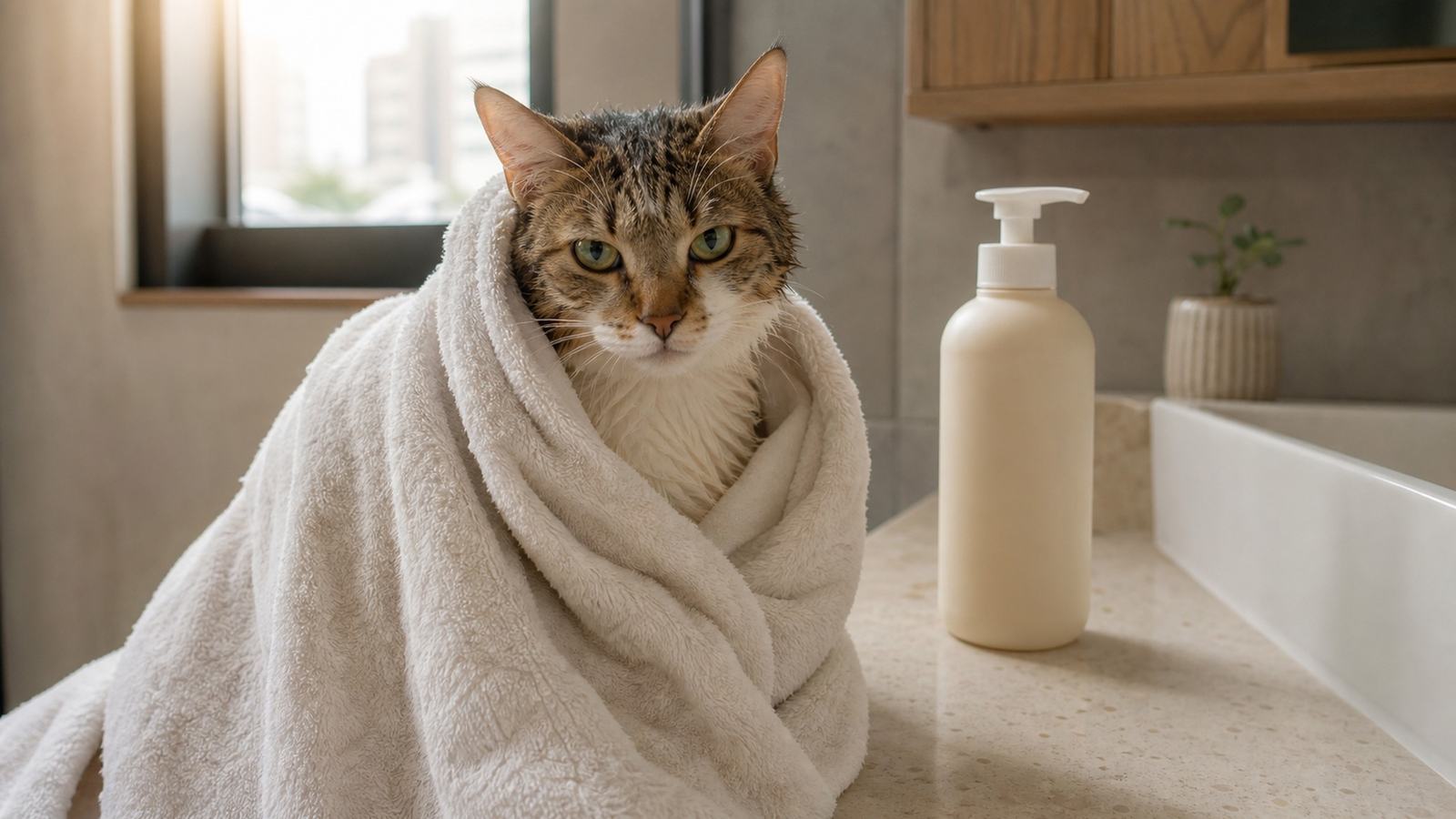
Drying is equally important. In Taiwan's humid climate, a damp coat can trap moisture against the skin. It's recommended to first towel-dry the cat thoroughly with absorbent towels, then use a low-temperature, consistent airflow to slowly dry the coat down to the skin. After bathing, observe your cat for 24 to 72 hours. If scratching gradually decreases and the skin shows no redness or flaking, the cleaning method may be suitable. If scratching worsens, it's not recommended to continue using the same product.
When Not to Switch Shampoos Independently: Consult a Vet or Groomer First
If your cat has scratched to the point of broken skin, bleeding, scabbing, or patchy hair loss, or if their skin is visibly red, swollen, has an odor, or produces greasy discharge, simply switching to an anti-itch shampoo is not sufficient. These conditions may involve infections, parasites, fungal issues, or allergies, and require veterinary diagnosis to determine the cause. Shampoo can only aid in cleaning; it cannot replace diagnosis and treatment.
Additionally, for kittens, senior cats, cats with chronic illnesses, pregnant cats, or cats that have experienced severe stress during previous baths, seeking professional advice is recommended. Groomers can help assess coat condition, sensitive skin areas, and bathing/drying techniques, while veterinarians can determine if medicated baths or other treatments are necessary. For owners, the most stable approach isn't to seek the strongest anti-itch solution, but to find a cleaning routine that minimizes stress on the cat's skin.
FAQ
Can cats use anti-itch shampoo frequently?
It's not recommended to bathe frequently just because of scratching. Over-bathing can strip the skin of its natural oils, leading to dryness and itching. Bathing frequency should generally be adjusted based on the cat's skin condition, coat type, living environment, and professional advice.
Can anti-itch shampoo treat skin diseases?
Most commercially available products are for cleaning and soothing and cannot replace veterinary treatment. If there are fungal or bacterial infections, parasites, or severe allergies, a veterinarian must determine if medicated baths or medications are needed. Do not mix multiple products on your own.
Is it normal for cats to lick themselves excessively after bathing?
Some grooming is normal, but if your cat licks for a long time, chews at their skin, or becomes agitated, pay attention. It could be due to a strong scent, incomplete rinsing, or skin irritation. It's recommended to stop using the product and observe the skin's reaction.
Is unscented shampoo always better?
Unscented formulas generally cause less olfactory burden, but you still need to check the full ingredient list and observe your cat's individual reaction. Some cats can be sensitive to specific plant extracts or cleaning ingredients. Prioritize cat-specific, low-irritant, and easy-to-rinse products.
What should I do if my cat is still scratching after using anti-itch shampoo?
Don't rush to bathe them again immediately. Shampoo residue is a common cause of irritation, especially for long-haired cats, where the chest, armpits, abdomen, and base of the tail can be difficult to rinse thoroughly. You should focus on improving rinsing and drying techniques and observe the skin's reaction.
Conclusion
When choosing an anti-itch shampoo for your cat, the focus shouldn't be on how fragrant or how much lather it produces, but on clear ingredients, minimal irritation, thorough rinsing, and a stable post-wash skin reaction. If you're unsure about which cleaning products are suitable for your cat, or if bathing and drying cause them significant stress, CatGarden can help assess your cat's coat and skin condition from a cat grooming perspective. We can also help you select more suitable options for daily cleaning from our range of cat products. Let bathing become a form of care, not a source of new irritation.
Further Reading
- Is it Safer for Cats to Groom Without Restraints? Consider Two-Person Handling, Escape Risks, and Stress Signals
- Is Cat Corn Litter Good? Before Switching from Clay Litter, Consider Dust, Clumping, and Storage Risks
- Should Cats Get a Grooming Bath Before Summer Vacation? Check Boarding, Shedding, and Skin Condition Before Booking
Frequently Asked Questions
Can cats use anti-itch shampoo frequently?
It's not recommended to bathe frequently just because of scratching. Over-bathing can strip the skin of its natural oils, leading to dryness and itching. Bathing frequency should generally be adjusted based on the cat's skin condition, coat type, living environment, and professional advice.
Can anti-itch shampoo treat skin diseases?
Most commercially available products are for cleaning and soothing and cannot replace veterinary treatment. If there are fungal or bacterial infections, parasites, or severe allergies, a veterinarian must determine if medicated baths or medications are needed.
Is it normal for cats to lick themselves excessively after bathing?
Some grooming is normal, but if your cat licks for a long time, chews at their skin, or becomes agitated, pay attention. It could be due to a strong scent, incomplete rinsing, or skin irritation. It's recommended to stop using the product and observe the skin's reaction.
Is unscented shampoo always better?
Unscented formulas generally cause less olfactory burden, but you still need to check the full ingredient list and observe your cat's individual reaction. Some cats can be sensitive to specific plant extracts or cleaning ingredients. Prioritize cat-specific, low-irritant, and easy-to-rinse products.
What should I do if my cat is still scratching after using anti-itch shampoo?
Don't rush to bathe them again immediately. Shampoo residue is a common cause of irritation, especially for long-haired cats, where the chest, armpits, abdomen, and base of the tail can be difficult to rinse thoroughly. You should focus on improving rinsing and drying techniques and observe the skin's reaction.
CatGarden offers curated supplies, cat boarding, and grooming
Book services or shop online.