Cat Rolls Over in Front of You: Is It Affection or a Problem?
Many cat owners have experienced this: your cat walks up to you, suddenly flops down with a "thump," rolls over, wiggles, and even meows while looking at you. This scene is adorable and easily misinterpreted as an invitation to pet their belly. However, for cats, exposing their belly doesn't always mean they want to be touched.

Many cat owners have experienced this: your cat walks up to you, suddenly flops down with a "thump," rolls over, wiggles, and even meows while looking at you. This scene is adorable and easily misinterpreted as an invitation to pet their belly. However, for cats, exposing their belly doesn't always mean they want to be touched. More often, it's a combination of signals indicating trust, relaxation, an invitation to play, or a desire for your attention.
If your cat kicks like a rabbit or bites your hand when you try to pet their belly, don't rush to label them as moody. Your cat might have already been signaling you with their tail, ears, pupils, and body posture, but we might have reached out too quickly. This article breaks down the common meanings of a cat rolling over in everyday situations, helping you determine when to pet, when to play, and when to simply observe.
Key takeaways
- A cat exposing its belly and rolling over signifies a sense of security and trust in its environment, but it doesn't necessarily invite petting. Most cats prefer being touched on their cheeks, chin, head, or back.
- If a cat rolls over with a flicking tail, slightly bent hind legs, and bright eyes fixated on you, it's often an invitation to play, a prelude to hunting. In such cases, use toys like feather wands for interaction instead of your hands, to avoid them being mistaken for prey.
- The safe way to respond to a belly-up cat is to call its name and observe. If the cat approaches, gently pet its chin or cheeks for 2-3 seconds, then pause and observe if the cat is willing to continue.
- Engaging your energetic cat in 2-3 short 'hunting' play sessions daily, ending with a treat, effectively expends energy and reduces the likelihood of biting after rolling over.
- If rolling over is accompanied by panting with an open mouth, rapid breathing, a hardened abdomen, frequent licking of the lower belly, abnormal urination, or decreased appetite, it's not a sign of simple relaxation and requires prompt veterinary attention.
5 Common Meanings of a Cat Rolling Over
1. Your Cat Trusts You, But It Doesn't Mean Their Belly is Up for Grabs
The belly is a relatively vulnerable area for cats. Willingness to expose it in front of you usually indicates that your cat feels secure in their environment and trusts that you won't attack them. However, "trust" and "invitation to pet the belly" are two different things. Many cats simply want to relax near you in their most comfortable posture; the areas they truly enjoy being petted are still their cheeks, chin, the top of their head, or their back.
2. Your Cat Wants to Play, Not Be Petted
If your cat rolls over with their tail giving a slight swish, hind legs slightly bent, front paws positioned as if ready to grab something, and bright eyes fixed on you, this is often the prelude to a hunting game. Reaching out to pet their belly at this moment can easily lead to them mistaking your hand for prey. A better approach is to grab a wand toy, a fabric toy, or a small ball and redirect their interaction towards the toy, allowing them to expend their energy by biting, scratching, and kicking.
3. Your Cat Wants Attention
Some cats are quite the performers. Cats learn that if they flop over in front of you, you'll stop what you're doing, look at them, and talk to them. Over time, they'll turn this action into a way to get a response from you. This isn't necessarily a bad thing, but if you always immediately offer a treat, your cat might learn to use rolling over to get snacks. It's recommended to consistently respond with head scratches, talking, or a brief play session to avoid making treats the only reward.
4. It's Hot, and Your Cat is Cooling Down or Changing Position
Taiwan's spring and summer are hot and humid. Cats lying on tiles, wooden floors, or carpets in air-conditioned rooms and rolling over might simply find the position more comfortable. If your cat's breathing is steady, they are alert, and willing to drink water and eat, there's usually no need to worry too much. However, if they are simultaneously panting with their mouth open, breathing rapidly, or seem lethargic, it's not just simple rolling over, and you should contact your veterinarian as soon as possible.
5. Stress or Discomfort Can Also Cause Abnormal Rolling
Rolling over is typically a sign of relaxation, but if your cat starts rolling frequently, licking their belly, biting or scratching their body, urinates abnormally, or shows clear resistance when their abdomen is touched, it could be related to itchy skin, urinary discomfort, gastrointestinal bloating, or pain. In such cases, don't just interpret it behaviorally; it's best to record the time of occurrence, appetite, elimination, and mental state, and seek veterinary attention if necessary.
What we use for this
CatGarden’s own products, shipped from Taiwan Premium CatnipFrom CA$36.65 per jarFree shipping on multi-packs
How to Tell if You Can Pet Your Cat? Look for These 4 Signals First
- Tail: A relaxed tail with slow movements usually indicates a stable mood; a rapidly swishing tail or a twitching tail tip signifies excitement or impatience.
- Ears: Ears naturally pointing forward or slightly to the side indicate relaxation; if they are pressed back or swivel rapidly, pause your interaction.
- Pupils: Suddenly dilated pupils and a fixed stare at your hand might indicate readiness to play or attack.
- Body: A relaxed, lying-down body allows for gentle interaction; if the limbs are tensed or they grab your hand, it's time to stop touching.
The Right Response: Don't Rush to Pet Their Belly
When you see your cat roll over, the safest first step is to pause, call your cat in a gentle voice, and observe if they approach you proactively. If your cat rubs their head against you or offers their cheek, you can gently pet their chin or cheek for 2 to 3 seconds, then stop and observe their reaction. If your cat turns their head away, swishes their tail, kicks, or bites you, it means the interaction has become excessive.
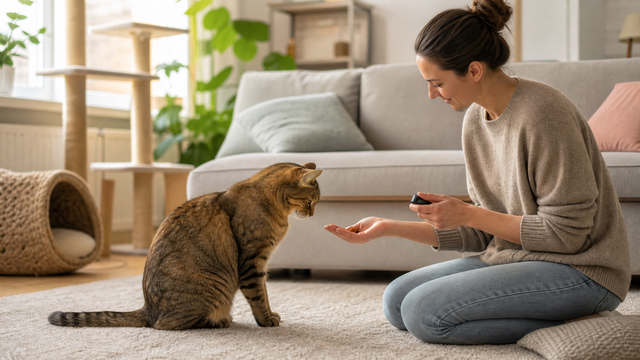
If your cat seems overly excited, retract your hand and use a toy instead. Especially for kittens, young cats, or energetic cats, they often mistake human hands and feet for prey. Arranging 2 to 3 short play sessions daily, ending with food or treats, can help your cat channel their energy appropriately and reduce the likelihood of sudden biting after rolling over.
When to Be Particularly Concerned?
If rolling over is accompanied by behaviors different from their usual, you should be on high alert. This includes suddenly not allowing touch, a hard abdomen, frequent licking of the lower abdomen, repeatedly entering and exiting the litter box without urinating, decreased appetite, hiding, rapid breathing, or a normally affectionate cat suddenly becoming aggressive. These situations might not be a "change in personality" but rather discomfort or high stress.
In multi-cat households, also pay attention to resource pressure. Your cat rolling over in front of you might be relaxing in a relatively safe spot; however, if they immediately flip over and run away, hiss, or hide when another cat approaches, it indicates that the home's traffic flow, litter boxes, food bowls, or resting areas may need redistribution.
Frequently Asked Questions FAQ
Does a cat rolling over mean they love me?
In most cases, it signifies that your cat feels secure around you, which is indeed a form of trust. However, affection doesn't automatically mean they want their belly petted; you still need to observe their tail, ears, and body language at the moment.
Why does my cat roll over for me to pet them, and then bite?
Your cat might simply be inviting play, or they might initially tolerate brief petting but quickly become overstimulated. It's recommended to pet for 2 to 3 seconds and then stop, letting your cat decide if they want to continue.
My kitten keeps rolling over and biting my hands, what should I do?
Don't play fight with your hands. Instead, use a wand toy or other toys. When they bite, stop the interaction. Wait until your cat calms down, then restart with a toy, teaching your cat that hands are not prey.
My cat is suddenly rolling around a lot, do I need to see a vet?
If they are alert, eating, drinking, and eliminating normally, it's usually fine to observe. However, if accompanied by belly licking, abnormal urination, signs of pain, decreased appetite, or rapid breathing, it's recommended to seek veterinary attention as soon as possible.
This article was written by the Cat Care Team based on years of practical experience at Banqiao Pure Cat Hotel and is for owner reference only. Please consult a veterinarian for any health concerns. If you need boarding or grooming services for your cat, you are welcome to use CatGarden's AI Smart Recommendation System to find the most suitable plan based on your cat's condition. All reservation information is managed in the cloud.
CatGarden | A Villa-Style Pure Cat Hotel in Banqiao, Offering Boarding and Grooming Services.
Further Reading
- Your Cat Asks for Pets But Suddenly Bites? 5 Body Signals and Safe Interaction Methods Owners Should Know
- Your Cat Doesn't Listen No Matter How You Teach Them? Introduction to Positive Reinforcement Training: 5 Techniques to Get Your Cat to Cooperate
- Will Playing with a Wand Toy Make Your Cat Wild? What Newbies Should Know About Hunting Games, Ending Techniques, and Interaction Pitfalls
A cat rolling over is a very cute and noteworthy signal. Observe first, then respond; this is usually more reassuring to your cat than reaching out directly. If your cat tends to get nervous during boarding, grooming, or when changing environments, feel free to chat with the professional care team at the cat hotel. Starting from daily behaviors, they can help your cat build more stable security.
→ Learn about [CatGarden - The Brand Closest to Cats](/ "CatGarden - The Brand Closest to Cats")
FAQ
What does it mean when a cat rolls over in front of me?
Rolling over usually indicates a cat feels relaxed and trusts you. However, it could also be an invitation to play, a bid for attention, or simply a way to cool down and find a comfortable position if they are hot.
Why do cats suddenly bite or kick when I pet them while they're rolling over?
The cat might perceive your hand movement as the start of a hunting game, or the petting might have become overstimulating. It's recommended to pet the chin or cheeks for 2-3 seconds and then pause to observe their reaction.
What should I do if a kitten keeps biting my hand while rolling over?
Never play-fight with your hands. If bitten, stop the interaction. Once the kitten calms down, redirect its energy with a wand toy or cloth toy, teaching it that hands are not prey.
What signs indicate that my cat needs to see a vet when it rolls over?
If the behavior is accompanied by open-mouth panting, rapid breathing, frequent belly licking, abnormal urination, a hardened abdomen, clear resistance to abdominal touch, or decreased appetite, contact your veterinarian immediately for an examination.
CatGarden offers curated supplies, cat boarding, and grooming
Book services or shop online.