Why Does Your Cat Always Stick to Someone Else? 5 Reasons They Choose Who to Trust
You prepare their food, scoop their litter, and buy their toys, yet your cat always gravitates towards someone else. They run away when you approach but jump onto the lap of a visitor. This disparity can be hurtful, but for cats, "liking someone" isn't usually decided by human fairness standards.

You prepare their food, scoop their litter, and buy their toys, yet your cat always gravitates towards someone else. They run away when you approach but jump onto the lap of a visitor. This disparity can be hurtful, but for cats, "liking someone" isn't usually decided by human fairness standards. Instead, it's about who they feel is safer, more predictable, and less stressful in their daily interactions.
A cat's affection isn't just about being cuddly, nor does it mean they dislike other family members. They might simply be choosing who to trust in their own way. Understanding the reasons can help mend many relationships without forcing hugs, pets, or excessive treat bribery.
Key takeaways
- Cats choose who to trust and be affectionate with based on who makes them feel safe, predictable, and stress-free during interactions, not just who provides food or cleans their litter box.
- When petting a cat, it's recommended to pet for 3 to 5 seconds and then stop proactively, observing if they rub back to ask for more. This avoids overstimulation that can lead to tail flicking or biting.
- Perfumes, essential oils, smoke, alcohol, and strong detergent scents can be irritating to cats. Maintaining stable and familiar scents helps cats approach willingly.
- To build trust, schedule 5 to 10 minutes of interactive play with a wand toy daily, ending with a treat. Short, regular interactions are more suitable for cats than long play sessions that tire them out.
- If a previously friendly cat suddenly hides, refuses to be petted, or becomes more aggressive, prioritize ruling out health issues like pain, urinary problems, or joint issues, as well as stress from environmental changes.
Why Does a Cat Prefer One Person Over Another?
1. That Person Moves Slowly, Making the Cat Feel Secure
Cats are highly attuned to the speed of things around them. Suddenly bending down, reaching out quickly, or approaching from behind can make them feel threatened. Conversely, people who move slowly, pause before interacting, and allow the cat to approach them are more likely to be seen as safe.
If you tend to rush over to pet your cat the moment you see them, they might not dislike you but rather aren't ready for such direct interaction. For a cat, the ability to "choose to approach or leave" is a source of trust.
2. Stable Voice and Emotions
Cats have sensitive hearing and are highly aware of loud noises, sudden laughter, arguments, and sharp tones. A person in the household who speaks softly and has more stable emotions will often be preferred company.
This doesn't mean you have to be silent, but you can lower your volume and slow your speech when interacting with your cat. This is especially important for new cats, or when they've just bathed, visited the vet, or returned from a cattery. A stable voice helps them reconfirm that their environment is safe.
3. The Way They Pet Matches Their Preferences
Many cats enjoy being petted on their cheeks, chin, and the top of their head, but may not like their belly, the base of their tail, or their limbs being touched. Some cats may seem compliant initially but then flick their tail, turn their head, or bite after a few seconds – this is often a signal of "overstimulation."
The people cats favor are usually not those who pet them the most, but rather those who know when to stop while the cat is still receptive. Try petting for 3 to 5 seconds and then pausing to see if they nudge back for more. If they don't solicit further interaction, end the session on a positive note.
4. Familiar Scent, Without Too Many Stimulating Smells
Cats use scent to identify people and their environment. Perfumes, essential oils, smoke, alcohol, and strong laundry detergent scents can be too stimulating for some cats. If a cat is attached to a particular person, it might be because that person's scent is more stable and less prone to sudden changes.
If you want your cat to be more willing to approach you, start by reducing strong fragrances. Upon returning home, avoid immediately picking up your cat. Especially after contact with other animals, the outdoors, or unfamiliar places, wash your hands and change clothes first. Letting them approach and sniff you will be better than forcing an interaction.
5. Daily Routines Make the Cat Feel Predictable
Cats thrive on routine. Fixed times for feeding, playing, cleaning the litter box, and sleeping help them know what to expect. The person who plays with them around the same time each day, without forcing interaction, easily becomes their safe base.
If you only play with them when you feel like it, or play so intensely that they become exhausted, overstimulated, or overly excited, they might keep their distance. Cats benefit more from short, frequent interactions with a clear end than from long play sessions.
To Build More Trust With Your Cat, Start With These 5 Things
- Don't chase your cat: When they walk away, stop and let them know you respect their refusal.
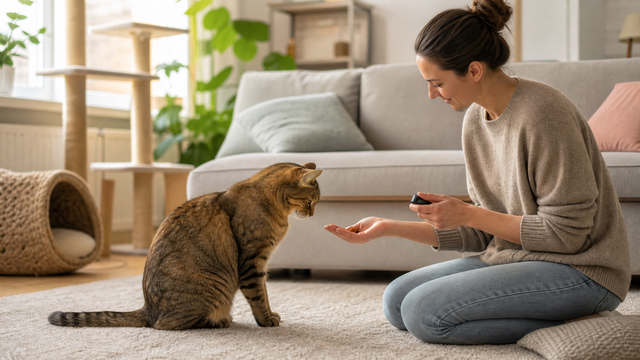
- Approach sideways: Don't stare directly at them as you approach. Approaching from the side, with slow blinks and a lowered posture, is less intimidating.
- Pet for a few seconds, then stop: Observe if they actively solicit more petting, rather than continuing until they become impatient.
- Schedule regular interaction times: Dedicate 5 to 10 minutes daily for interactive play with a wand toy, ending with a treat or small snack.
- Make care gentle: Break down tasks like nail trimming, brushing, and ear cleaning into short steps rather than trying to do it all at once. This makes them more manageable.
Don't Force Your Cat to Like You With These Methods
It's natural to want to be closer, but some methods can make your cat more wary. Forcing them out from hiding, constantly holding them while they sleep, continuing to approach when they hiss, or scolding them to "be good" can all link you with stress in their mind.
It's also not recommended to build a relationship solely on treats. Treats can be used for positive reinforcement, but if you offer food every time you approach, your cat might only learn that "people appear means food is available," without necessarily feeling relaxed. A better approach is to pair treats with gentle sounds, maintaining distance, and allowing them to approach you, slowly turning you into a signal of safety.
If Your Cat Suddenly Stops Being Affectionate, Rule Out Stress and Physical Discomfort First
Sudden changes in a cat's behavior aren't always just a matter of mood. If they were previously affectionate but are now hiding, avoiding touch, becoming more aggressive, losing their appetite, or exhibiting abnormal litter box habits, it's advisable to first assess their health. Pain, urinary issues, skin discomfort, or joint problems can all make a cat reluctant to interact.
Environmental changes are also common, such as moving house, new furniture, new family members, construction work, changes in routine, or even relocating the litter box, can all impact their sense of security. In such cases, don't rush to demand they return to their affectionate ways. Instead, ensure they have access to hiding spots, water, food, a litter box, and a quiet resting area, allowing them the space to adjust gradually.
Frequently Asked Questions (FAQ)
Does a cat only stick to the person who feeds them?
Not necessarily. Feeding increases positive association, but cats are more concerned with overall safe interactions. If the person who feeds them often forces hugs or moves too quickly, the cat might only approach during mealtimes and maintain distance otherwise.
If my cat doesn't like being held, does it mean they don't love me?
No. Many cats enjoy staying nearby, rubbing against your legs, or slow-blinking, but dislike being picked up and having their movement restricted. Respecting their aversion to being held can actually foster long-term trust.
How long does it take for a new cat to become affectionate?
This varies greatly from cat to cat. Some adapt in a few days, while others may need weeks or even months. The key isn't speed, but ensuring they have consistent resources, a quiet space, and predictable interactions.
Should I be concerned if my cat suddenly becomes very clingy?
If it's simply due to weather, changes in routine, or a deepening bond, it's usually not a cause for concern. However, if accompanied by changes in appetite, energy levels, urination, breathing, or activity, it's recommended to consult a veterinarian promptly.
Further Reading
- My Cat Asks for Petting But Suddenly Bites? 5 Body Signals and Safe Interaction Methods for Owners to Understand
- Does a Cat Bow Its Head in Apology When Scolded? A Guide to Stress Signals, Misguided Training, and Positive Guidance
- My Cat Suddenly Rolls Over in Front of Me, Is It Affection or a Problem?
If you are preparing for your cat to stay at a cattery, move house, or are worried about your cat becoming less friendly after a change in environment, discuss their personality, routine, and stress responses with the cattery beforehand. Clearly communicating their care needs will be more gentle and reassuring than demanding they "just adapt" at the last minute.
FAQ
Do cats only get attached to the person who feeds them?
Not necessarily. While feeding can increase affection, if the feeder is too quick or often forces cuddles, the cat might only approach during meal times and still prefer to be around someone who makes them feel safe the rest of the time.
Does a cat not letting me hold it mean it doesn't love me?
No. Many cats enjoy staying nearby or rubbing against your legs but dislike being picked up and having their movement restricted. Respecting their boundaries about not wanting to be held can actually help build long-term trust.
What daily interactions should I have to build more trust with my cat?
You can try approaching them sideways and crouching down, avoiding direct eye contact or chasing, petting for 3 to 5 seconds then stopping to observe, and engaging in 5 to 10 minutes of regular play daily. Respect their freedom to choose whether to approach or leave.
CatGarden offers curated supplies, cat boarding, and grooming
Book services or shop online.